

How to Cut FRP Wall Sheets Cleanly
To cut fiberglass reinforced plastic (FRP) panels, wear an N95 or better respirator and eye protection, then support and clamp the sheet on both sides of the cut. For straight cuts, guide a circular saw with a sharp, fine-tooth carbide blade along a marked line. Tape the line to limit chipping. Use a fine-tooth jigsaw for curves and openings. Very thin sheets may be scored several times with a utility knife and snapped instead.
At Western Wholesale Supply, our team of building materials specialists helps contractors source quality products for their commercial builds. That industry experience informs this guide on how to cut fiberglass reinforced plastic panels with less damage and waste.
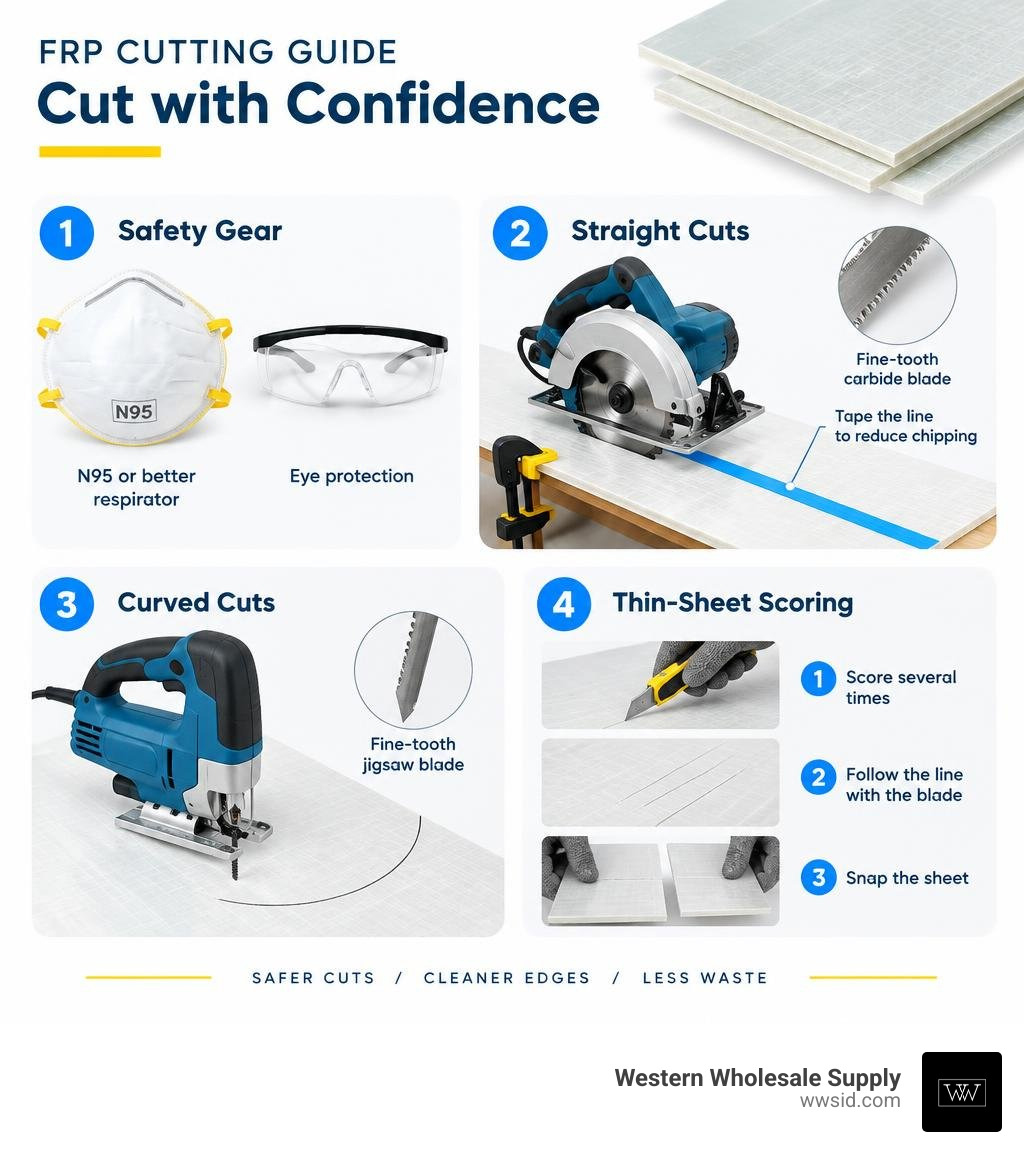
Easy how to cut fiberglass reinforced plastic panels glossary:
Essential Safety Gear and Dust Management

Cutting fiberglass reinforced plastic is not like cutting drywall or standard plywood. FRP is a thermoset polymer matrix packed with embedded glass fibers. When a high-speed saw blade hits those glass strands, it fractures them into microscopic airborne particles and resin dust. If you breathe that in, your lungs will remind you about it for days. Fiberglass dust can make you feel like you inhaled a tiny glass forest, and it is notoriously itchy on exposed skin.
You need personal protective equipment (PPE) before bringing any blade to a panel:
- Respiratory Protection: A simple cloth mask will not cut it. You must use a NIOSH-approved N95 particulate respirator or a P100 half-mask respirator capable of capturing microscopic glass fibers and resin particulates.
- Eye Protection: Sealed safety goggles or glasses with complete side shields protect against high-velocity fiberglass shards.
- Skin Barriers: Wear heavy work gloves, a snug long-sleeved shirt, and long pants. For large cutting sessions, a disposable Tyvek suit keeps sharp glass dust from embedding in your work clothes and transferring to your vehicle or home.
- Hearing Protection: High-RPM circular saws cutting dense composites produce high-pitched screeching that requires earmuffs or foam earplugs.
For dust control, always cut outside when possible or set up inside a well-ventilated work zone. Connect your power tools directly to a shop vacuum equipped with a HEPA filter. Avoid using standard shop-vac paper bags, as fine glass dust can blow straight through the exhaust. After cutting, vacuum the work area and clothing with a HEPA unit—never use an air compressor or dry broom to sweep up fiberglass dust, as that only launches settled fibers back into the air. Reviewing how to cut fiberglass safely: best tips & tools will help keep your crew protected on site.
Tool and Blade Selection for Cutting FRP
Choosing the right cutting tool and blade geometry makes the difference between a glass-smooth edge and a ragged, chipped mess. Because glass fibers are abrasive, standard carbon steel wood blades will dull within a few feet of cutting, generating friction, melting the polyester resin, and shattering the surface gel coat.
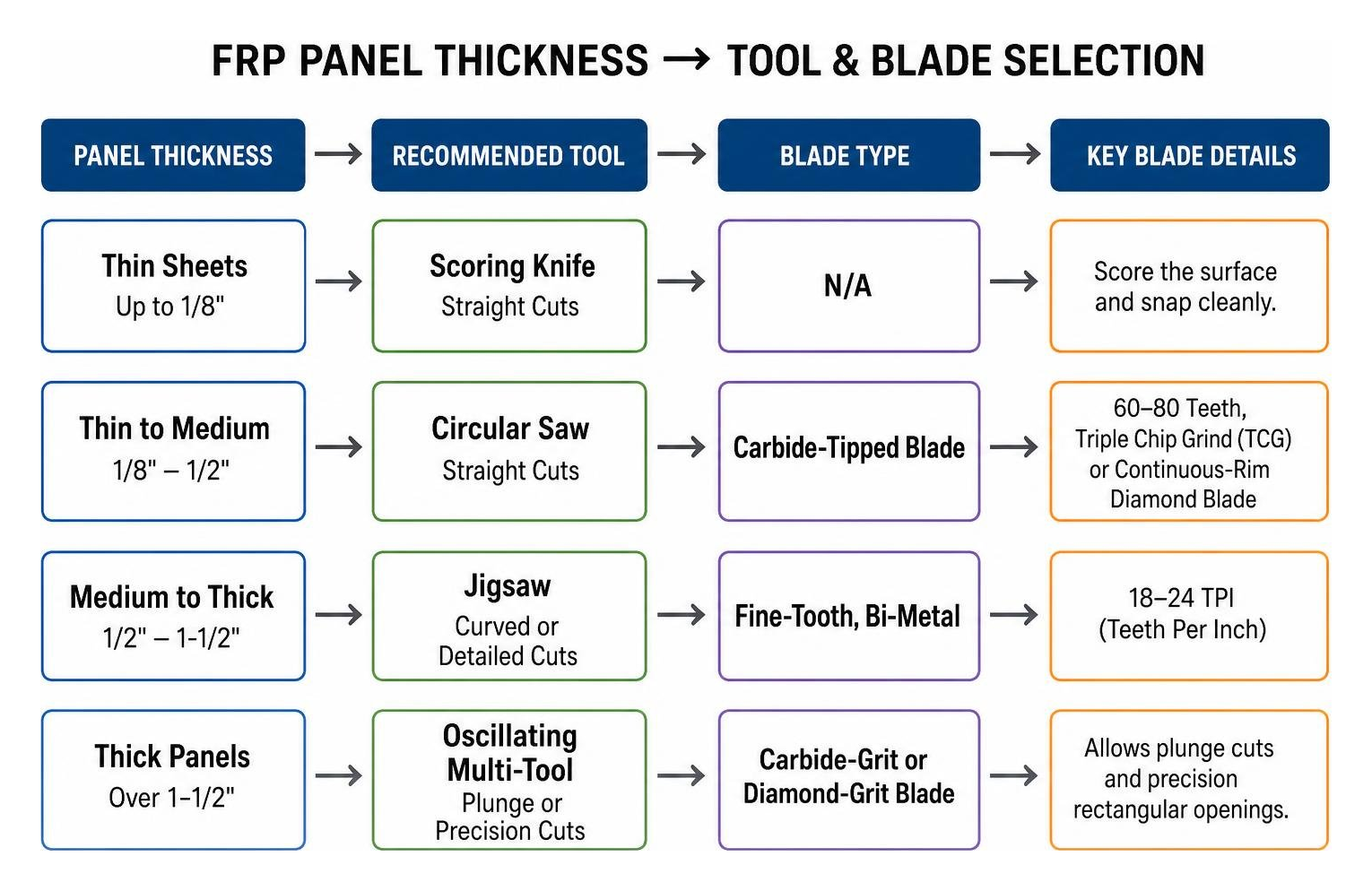
The Ideal Blades for Every Cut
- Circular Saw Blades: Use a fine-tooth carbide-tipped blade with 60 to 80 teeth (for a standard 7-1/4″ circular saw). Blades engineered with a Triple Chip Grind (TCG) tooth pattern last significantly longer than alternate top bevel (ATB) blades because the balanced trapezoidal tooth distributes abrasive wear evenly across the carbide tip. For ultra-dense commercial sheets, continuous-rim diamond blades deliver razor-sharp results.
- Jigsaw Blades: Choose fine-tooth, bi-metal blades designed for cutting sheet metal or laminate (18 to 24 teeth per inch, or TPI). A blade with teeth that are too coarse will catch the flexible panel, violently vibrating the sheet and blowing out large chips from the back.
- Oscillating Multi-Tool Blades: Carbide-grit or diamond-grit segment blades allow you to plunge directly into the face of a panel to make precision rectangular cuts for electrical boxes.
- Scoring Blades: For thin panels, a heavy-duty utility knife loaded with a fresh carbide or hook blade allows for quick score-and-snap cuts without creating airborne dust.
| FRP Thickness | Primary Tool | Recommended Blade Type | Best Application |
|---|---|---|---|
| Thin (≤ 0.090″) | Heavy-Duty Utility Knife | Standard Heavy-Duty or Hook Blade | Scoring and snapping straight wall panels |
| Standard (0.090″ – 0.120″) | Circular Saw / Track Saw | 60–80 Tooth Carbide (TCG) or Diamond Rim | Fast, long rips and crosscuts on wall sheets |
| All Thicknesses | Jigsaw | 18–24 TPI Fine Bi-Metal or Carbide-Grit | Sinks, pipe cutouts, curves, and radius corners |
| All Thicknesses | Oscillating Multi-Tool | Carbide-Grit Plunge Blade | Outlet boxes, switch penetrations, flush cuts |
| Heavy / Structural (> 0.120″) | Circular Saw | Continuous-Rim Diamond Blade | Thick structural sheets and high-abuse liners |
When planning commercial builds, reviewing our structural fiberglass sheets overview for modern commercial projects helps ensure you specify the right material thickness and structural profile before staging your tools.
Step-by-Step Guide: How to Cut Fiberglass Reinforced Plastic Panels
Field success comes down to solid material support and controlled tool feed rates. Whether you are prepping sheets for a commercial kitchen or a wash-down room, keeping the panel flat and rigid prevents chatter, binding, and fracturing.
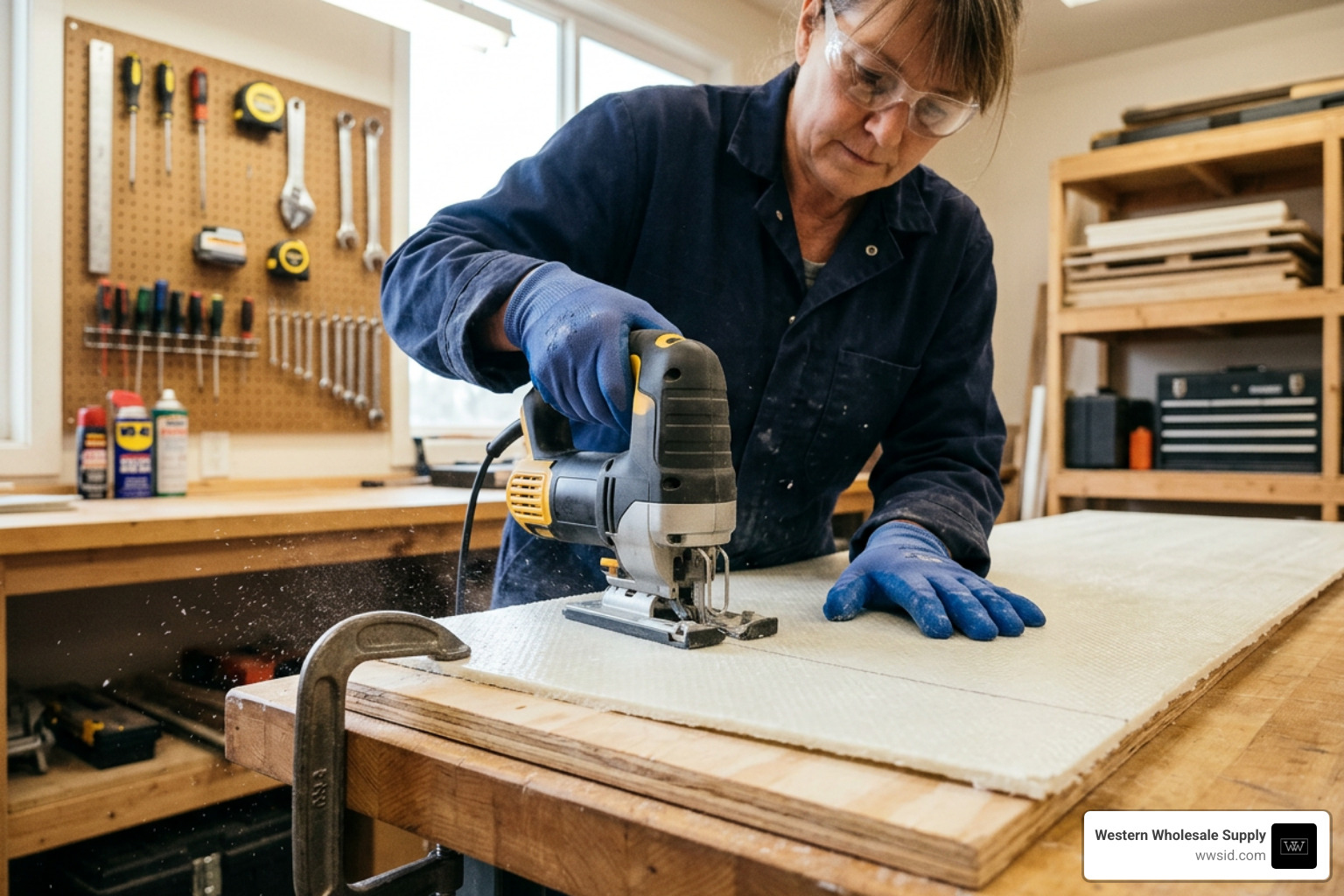
Workspace Preparation and Thermal Conditioning
Cold FRP panels become brittle. If sheets have been sitting in a cold delivery truck overnight during an Eastern Idaho winter, bring them into a heated space to acclimate before cutting. Cold gel coats crack easily under blade impact.
Set up a pair of sturdy sawhorses and lay down a sacrificial sheet of 1/2-inch or 3/4-inch plywood or rigid foam insulation. Supporting the FRP sheet across its entire surface prevents the offcut side from sagging under its own weight, which is the leading cause of blade binding and edge tear-out. Clamp your guide rails securely using standard bar clamps. For more tips on staging your work area, explore our step-by-step guide to FRP panel management tools.
Precision Straight Cuts Using a Circular Saw
- Mark the Panel: Measure your required dimensions and draw your cut line. Apply a strip of blue painter’s tape or heavy masking tape directly over the line. Re-mark your line across the tape. The tape fibers hold the brittle surface resin intact during the cut.
- Orient the Good Face Down: A standard handheld circular saw cuts on the upward stroke, pulling its teeth into the bottom of the base plate and exiting through the top. To keep the finished gel coat free from micro-chips, flip the panel so the textured or smooth decorative face points down. (If using a plunge-cut track saw with an anti-splinter strip, you can cut face-up).
- Set the Blade Depth: Adjust your circular saw’s shoe so the blade extends only 1/4 inch to 3/8 inch (roughly 6 to 10 mm) deeper than the panel thickness. Running an excessively deep blade increases tooth impact force, leading to edge chipping.
- Score the Gel Coat (Optional Pro Step): For critical visible cuts, score the cut line lightly with a utility knife before cutting to relieve surface tension.
- Execute the Cut: Bring the saw up to full operating speed before the blade touches the edge of the FRP sheet. Feed the tool forward with steady, continuous pressure. Do not force or rush the tool—let the carbide teeth grind cleanly through the glass fibers.
How to Cut Fiberglass Reinforced Plastic Panels for Curved Cutouts and Outlets
Cutting openings for electrical receptacles, light switches, cleanouts, and plumbing stubs requires a steady hand and controlled entry points.
- Drill Pilot Holes: For square or rectangular cutouts, drill 5/16-inch or 3/8-inch starter holes inside each corner of your marked opening. Use a carbide-tipped twist bit or a stepped drill bit backed by a scrap block of wood to eliminate exit blow-out.
- Jigsaw Method: Insert a fine-tooth bi-metal jigsaw blade into the starter hole. Keep the base plate flat against the panel surface to eliminate vibration. Cut carefully from corner to corner along your layout lines. Professional track and jigsaw systems, like those highlighted in the sawing GFRP guide to correctly cutting glass fibre reinforced panels, demonstrate how maintaining flat base-plate contact reduces edge fraying.
- Oscillating Multi-Tool Method: For gang boxes already framed behind drywall, hold an oscillating tool fitted with a carbide plunge blade perpendicular to the panel face. Plunge through the layout line with light, pulsed pressure.
- Round Pipe Penetrations: For circular holes, use a bi-metal or diamond-grit hole saw. Pro Tip: Run your drill in reverse with light pressure for the first few seconds to cleanly score the surface gel coat. Once a clean groove is established, switch the drill to forward rotation to cut through the core. Always leave roughly 1/8-inch of clearance around pipes to accommodate structural settling and thermal expansion.
Scoring and Snapping Thin FRP Sheets
For standard wall liners measuring 0.090 inches thick or less, you can skip power saws entirely to avoid creating airborne dust:
- Lay the FRP panel face-up on a flat workbench.
- Clamp a heavy-duty steel straightedge firmly along your cut line.
- Using a sharp utility knife, pull the blade firmly along the straightedge. Make 4 to 6 deliberate scoring passes, cutting through the top resin and into the core glass fiber layer.
- Slide the scored line to the exact edge of your workbench or table.
- Place a straight 2×4 board on top of the sheet just behind the score line, press down firmly to hold the panel, and use a quick downward snap on the overhang. The panel will break cleanly along the scored line.
Edge Finishing, Deburring, and Sealing
Even a well-executed saw cut can leave sharp fiberglass hairs, micro-burrs, or exposed fibers that can absorb moisture over time.
- Deburring the Edge: Run a 120-grit to 220-grit sanding block or a single-cut mill file along the cut edge at a 45-degree angle. This knocks down sharp burrs, smooths frayed glass fibers, and creates a clean bevel.
- Moisture Sealing: In wet environments such as commercial kitchens, car washes, and food processing plants, cut edges must be protected from liquid absorption. Seal any field-cut perimeter edges with a thin bead of 100% silicone sealant or an approved water-resistant polyurethane sealant before setting the sheet into PVC division bars, inside corners, or end caps.
When adhering cut sheets to walls, pair them with the right adhesives and fasteners. For broad-wall applications, review the ultimate guide to FRP adhesives for a bond that lasts to select VOC-compliant fast-grab bonding agents. If you are securing heavy panels to steel framing studs or furring channels, use premium corrosion-resistant screws from Grabber or Brighton Best. If your project transitions to adjoining drywall partitions, pair your installation with drywall taping knives from trusted brands like Hyde, USG Sheetrock Tools, Columbia Taping Tools, or Marshalltown to finish clean transition joints.
Frequently Asked Questions
How to Cut Fiberglass Reinforced Plastic Panels Without Chipping?
To prevent chipping, always apply painter’s tape along the cut line, use a fine-tooth carbide blade (60–80 teeth on a circular saw) or a diamond-grit blade, support both sides of the cut on a sacrificial backer board, and cut with the finished decorative face pointing down.
Can You Cut FRP Panels with a Utility Knife?
Yes, but only if the panels are 0.090 inches thick or thinner. Clamp a rigid straightedge over the line, score the surface deeply 4 to 6 times with a fresh blade, and snap the sheet cleanly downward over a sharp table edge.
What Drill Bits Work Best for Fiberglass Wall Panels?
Carbide-tipped twist drill bits, brad-point bits, or stepped drill bits work best. Standard high-speed steel (HSS) bits dull quickly in glass fibers and push through the back of the sheet, causing blow-out. Always back the panel with scrap plywood and apply painter’s tape over the hole location before drilling.
Conclusion
Cutting fiberglass reinforced plastic cleanly comes down to having the right blade, supporting your material, and controlling your feed speed. By using fine-tooth carbide or diamond-grit blades, taping your cut lines, and wearing proper respiratory PPE, you can achieve chip-free, factory-quality edges on every installation.
At Western Wholesale Supply, we have supported contractors, builders, and trades across Eastern Idaho and Western Wyoming since 1963. As an independent, veteran-owned, third-generation family business, we supply the materials, fasteners, and accessories you need to complete commercial jobs right the first time. From structural wall boards and acoustical ceiling tiles by CertainTeed to specialized sound-rated solutions like Quietrock EZ Snap and moisture-resistant tile backer boards like Durock, our team provides reliable, on-time delivery from Jackson, WY and Idaho Falls to Pocatello, Twin Falls, and everywhere in between.
To learn more about specifying composite wall systems for your next build, check out the ultimate guide to FRP fiberglass reinforced panels or reach out to our team at Western Wholesale Supply today.
