

Why Acoustical Ceilings Matter for Your Project
Acoustical ceilings are ceiling systems designed to absorb or block sound, creating more comfortable and productive indoor environments. They combine functionality with aesthetics, making them essential for commercial, residential, and industrial spaces where noise control is a priority.
What You Need to Know About Acoustical Ceilings:
- Primary Function: Absorb sound within a room and block sound transmission between spaces
- Key Performance Metrics: NRC (Noise Reduction Coefficient) for absorption, CAC (Ceiling Attenuation Class) for blocking
- Common Types: Suspended/drop ceilings with tiles, direct-mount panels, and specialty systems
- Popular Materials: Mineral fiber, fiberglass, metal, and wood panels
- Main Applications: Offices, schools, healthcare facilities, retail spaces, home theaters, and industrial buildings
- Additional Benefits: Energy efficiency through insulation and light reflection, improved air quality, fire resistance
Acoustical ceilings are vital for reducing noise and reverberation. In busy settings like open-plan offices and schools, noise-reduction ceilings minimize distractions and improve communication. Beyond sound control, they offer practical advantages for contractors and builders: they can improve energy efficiency through insulation and light reflection, are durable and easy to clean, and provide convenient access to utilities and ductwork while concealing the building’s infrastructure.
Western Wholesale Supply has worked extensively with acoustical ceilings across residential and commercial projects through our regional supply business. Our experience in operations and materials distribution has given us practical insight into how the right ceiling system impacts both project timelines and long-term building performance across Eastern Idaho and Western Wyoming.
Why Install an Acoustical Ceiling? Key Benefits Explained
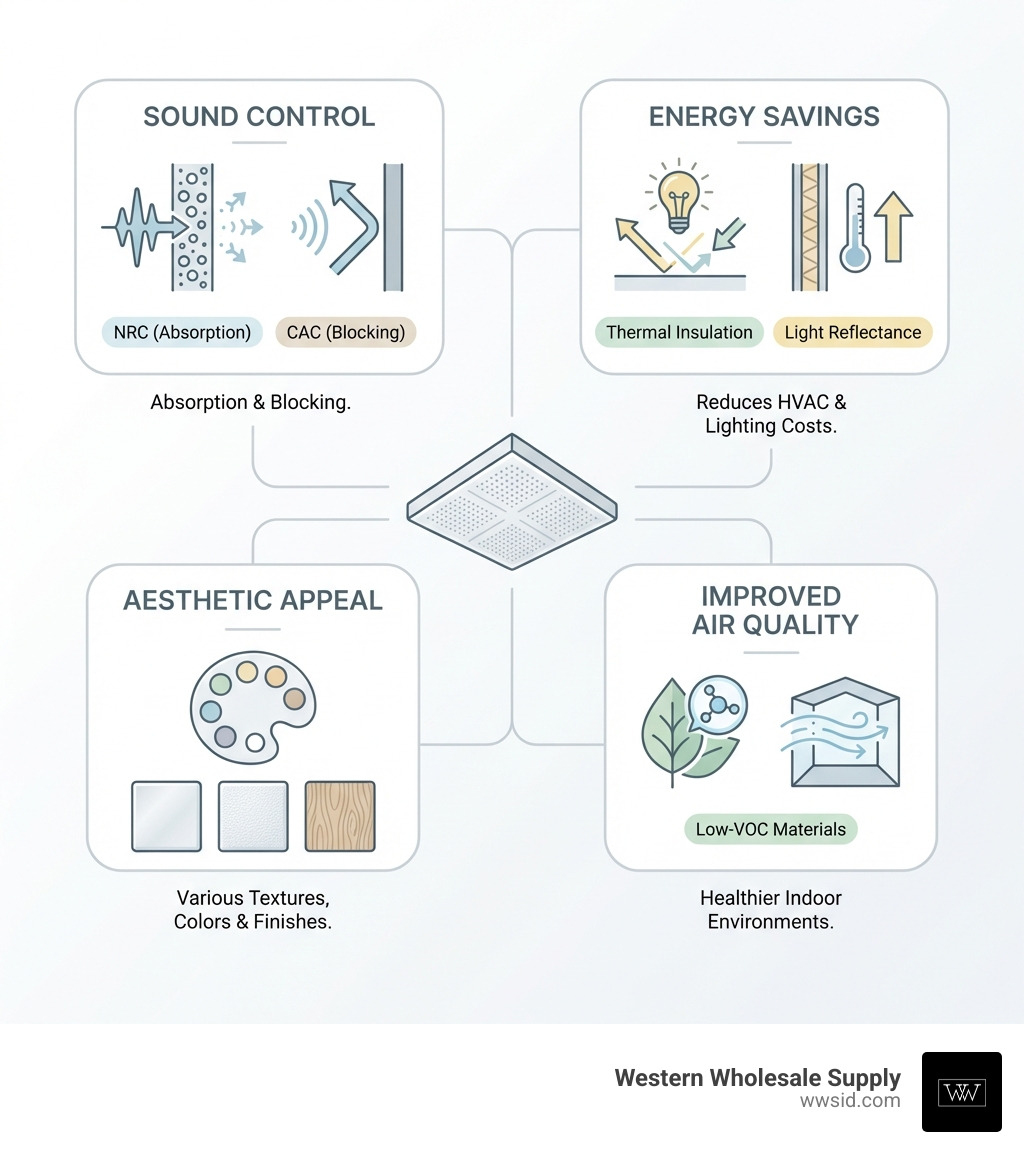
Choosing to install acoustical ceilings for your project, whether in Eastern Idaho or Western Wyoming, brings a wealth of advantages that extend far beyond simple aesthetics. From enhancing productivity to ensuring safety, these specialized ceiling systems are a smart investment. Let’s explore the primary benefits.
Sound Control The primary benefit of acoustical ceilings is sound management. They work in two key ways:
- Noise Reduction (Sound Absorption): They absorb sound waves within a room to reduce echo and overall noise levels. In an open-plan office, our noise-reduction ceilings create a calmer atmosphere for better concentration. In industrial zones, they make the environment safer for employees.
- Speech Intelligibility: By reducing reverberation, acoustical ceilings improve how clearly speech can be understood. This is critical in classrooms, conference rooms, and even open-concept homes.
- Sound Blocking (Sound Transmission): Some systems are designed to block sound from traveling between adjacent spaces, which is crucial for maintaining privacy in offices, medical rooms, or multi-family residences.
Aesthetic Appeal Modern acoustical ceilings offer a vast range of design possibilities. Available in various materials, textures, colors, and patterns, they can complement any interior style. They also neatly conceal unsightly ductwork, wiring, and plumbing, creating a clean, finished look.
Energy Efficiency Acoustical ceilings can help you save on energy bills.
- Thermal Insulation: Many acoustical materials, like mineral fiber and fiberglass, provide excellent thermal insulation. This helps regulate indoor temperatures, reducing reliance on HVAC systems and lowering energy costs.
- Light Reflectance: Tiles with high light reflectance (LR) values brighten rooms, which decreases the need for artificial lighting and further saves energy.
Indoor Air Quality Contemporary acoustical ceilings contribute to healthier indoor environments. Many are made with low-emitting materials that release minimal volatile organic compounds (VOCs), a crucial factor for schools, healthcare facilities, and offices in our region.
Durability & Maintenance Our acoustical ceilings are designed for longevity. They resist common issues like staining and sagging and are simple to maintain. Most can be wiped down or vacuumed, making them a cost-effective choice in the long run.
For more information about our products and how they can benefit your specific project in Eastern Idaho or Western Wyoming, please explore our offerings at More info about our products.
Understanding Acoustical Ceiling Systems and Materials
When we talk about acoustical ceilings, we’re not just referring to a single product; we’re encompassing a diverse range of systems and materials designed to meet specific needs for sound control, aesthetics, and functionality. Understanding these different types is key to selecting the right solution for your project.
Different Types of Acoustical Ceiling Systems
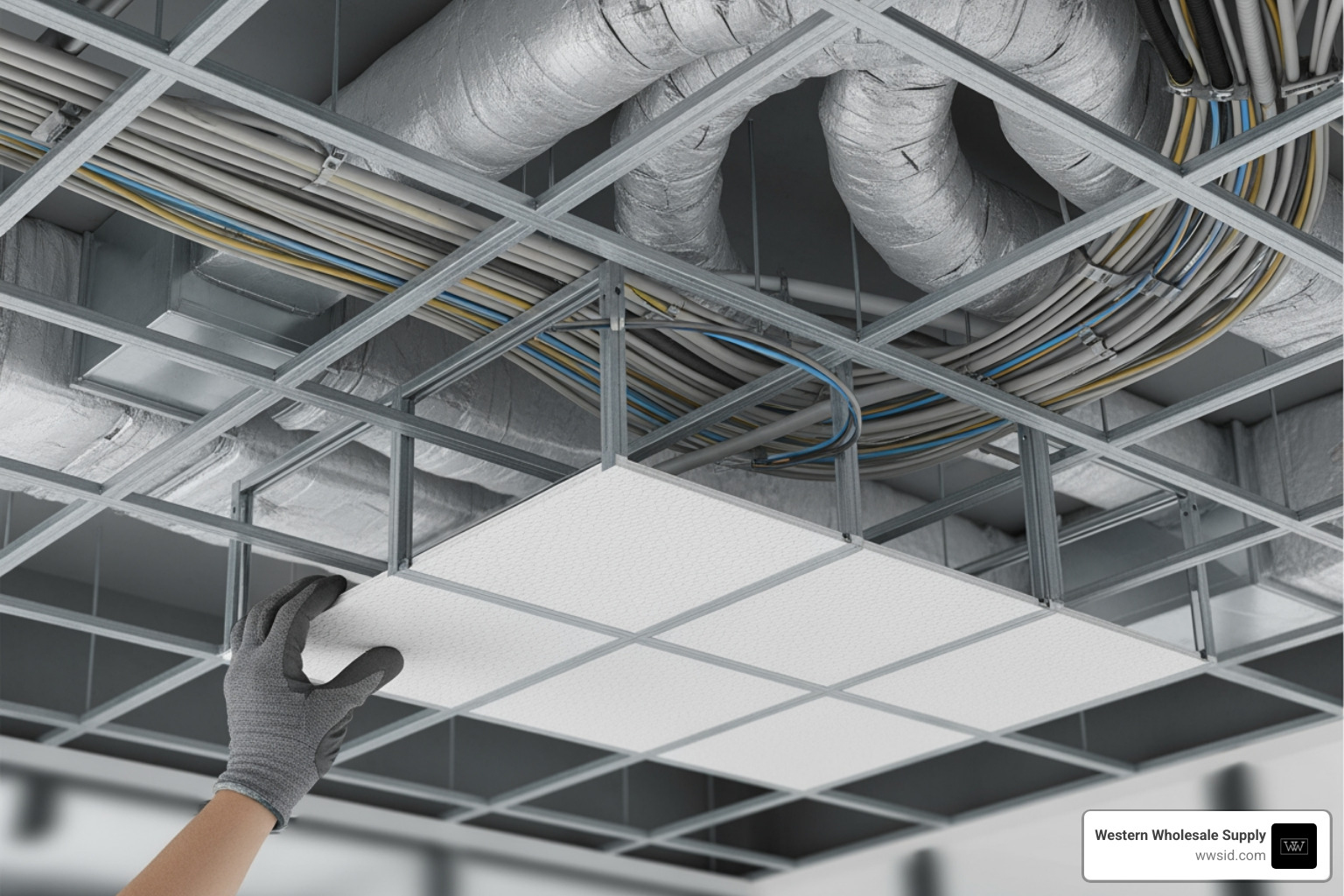
Suspended/Drop Ceilings: The most common system, consisting of a metal grid suspended from the structural ceiling. Acoustical tiles are then laid into this grid, creating a plenum space above for utilities.
- Benefits: This system provides invaluable access for concealing and servicing HVAC ducts, wiring, and plumbing. It also allows for flexible integration of lighting and sprinkler systems.
- Components: The system includes main runners, cross tees, and wall molding to support the panels.
Ceiling Tiles: These are the individual panels that fit into a suspended grid or are sometimes mounted directly. They are the workhorses of sound absorption and blocking.
Stretch Ceilings: A modern solution where a fabric or PVC membrane is stretched across a perimeter track. They offer a seamless appearance and can be backlit or combined with acoustical backing for sound absorption.
Grid Systems The grid is the backbone of any suspended ceiling.
- Concealed Grids: These systems hide the metal framework for a continuous, monolithic appearance.
- Exposed Grids: The most common type, where the grid lines are visible. This is a practical and cost-effective option that offers easy access to individual tiles.
Common Materials in Acoustical Ceilings
The material of an acoustical ceiling directly impacts its performance and appearance.
Mineral Fiber: The most popular choice for commercial ceilings. These tiles offer excellent sound absorption (NRC) and blocking (CAC), are Class A fire-resistant, provide thermal insulation, and often contain recycled content. Ideal for offices, schools, and healthcare.
Fiberglass: Lightweight panels offering superior sound absorption (high NRC). They are often fabric-wrapped for aesthetic appeal and have great thermal and moisture resistance.
Acoustic Wood Panels: A sophisticated choice combining natural beauty with sound control. Slat wood panels are a popular design for modern commercial or residential spaces.
Metal Panels: A durable, sleek option. They can be perforated and backed with acoustical material for sound absorption. Ideal for high-traffic areas, kitchens, or cleanrooms.
Fabric-Wrapped Panels: Typically fiberglass or mineral fiber cores wrapped in decorative fabric, offering excellent sound absorption and a wide range of aesthetic choices.
Recycled Content & Sustainable Materials: Many materials, especially mineral fiber, incorporate significant recycled content, aligning with our commitment to providing sustainable building solutions.
Suspended Ceilings vs. Direct-Mount Tiles
The choice between a suspended ceiling and direct-mount tiles depends on your project’s specific requirements, budget, and desired outcome, as outlined below.
| Feature | Suspended/Drop Ceilings | Direct-Mount Tiles |
|---|---|---|
| Plenum Space | Yes, creates space for utilities | No, tiles attach directly to structure |
| Utility Access | Excellent, easy to remove tiles | Limited, may require tile removal/damage |
| Installation | More involved (grid + tiles) | Simpler (adhere/fasten tiles) |
| Aesthetics | Wide variety of tile options, grid visible/concealed | Seamless look, but fewer material options |
| Ceiling Height Impact | Reduces room height more | Minimal impact on room height |
| Acoustic Performance | Excellent, wide range of specialized tiles | Good, but often limited to absorption |
| Repair/Replacement | Easy to replace individual tiles | Can be more challenging to replace single tiles |
Decoding Performance: How to Choose the Right Acoustical Ceilings
Choosing the right acoustical ceiling for your project in Eastern Idaho or Western Wyoming isn’t just about looks; it’s fundamentally about performance. We look at a range of metrics to ensure the ceiling system meets the specific needs of the space.

Performance Metrics
We focus on key performance indicators to assess how well an acoustical ceiling will function:
- Sound Absorption: How much sound the ceiling soaks up within a room, preventing echo.
- Sound Transmission: How effectively the ceiling blocks sound from passing through it to adjacent spaces.
- Fire Resistance: The ceiling’s ability to withstand fire, crucial for safety and building codes.
- Seismic Performance: The system’s capacity to remain intact during seismic activity, an important consideration in our region.
Understanding NRC and CAC Ratings
These two ratings are the superstars of acoustical ceiling performance, helping us quantify sound control.
Noise Reduction Coefficient (NRC): This rating (0-1.0) measures a material’s ability to absorb sound within a room. A higher NRC means less echo and reverberation. For rooms with multiple people or noisy equipment, an NRC of 0.80 or higher is beneficial. For example, high-performance acoustical ceiling panels offer an NRC of 0.70 for 16mm panels, making them ideal for many applications.
Ceiling Attenuation Class (CAC): This rating measures a ceiling system’s ability to block sound transmission between adjacent rooms that share a common plenum. A higher CAC indicates better sound blocking, which is essential for speech privacy. A CAC of 45 is considered acceptable, and 50 is optimal for privacy. When needed, lightweight acoustical plenum barriers can be installed to increase the CAC rating.
For more in-depth technical specifications and guidance on these ratings, we often refer to comprehensive resources like the Technical specifications guide.
Other Important Performance Factors
Beyond NRC and CAC, several other factors contribute to the overall performance of an acoustical ceiling.
- Light Reflectance (LR): This measures how much light a ceiling surface reflects. High LR values (e.g., 0.86 or higher) mean brighter rooms and less need for artificial lighting, contributing to energy savings.
- Fire Ratings: Safety is paramount. Acoustical ceilings must meet strict fire resistance standards. Many materials are rated Class A fire-resistant per ASTM E84, the highest rating. Some products also carry specialized fire-resistance ratings, indicating they meet life-safety codes for fire-rated assemblies.
- Seismic Design Categories: In areas like ours, ceiling systems must be designed to withstand earthquakes. We ensure our systems meet or exceed code requirements for seismic design, often involving specific grid systems and hold-down clips.
- Humidity Resistance: For environments with higher humidity, such as commercial kitchens or indoor pools, humidity-resistant units are crucial to prevent sagging and mold growth.
- Mold Resistance: Many modern acoustical ceilings are manufactured with materials that inhibit mold and mildew growth, contributing to better indoor air quality.
Design, Applications, and Installation
The beauty of modern acoustical ceilings lies in their versatility. They’re not just about controlling sound; they’re about shaping environments, enhancing aesthetics, and seamlessly integrating with other building systems.
Key Design and Integration Considerations
When designing with acoustical ceilings, we consider how they interact with other elements of a space to create a cohesive and functional environment.
- Textures, Colors, and Finishes: The aesthetic range is vast, from smooth or textured panels to a spectrum of colors and finishes. These choices significantly impact the room’s look and feel.
- Customization: Many systems allow for customization, including unique panel sizes, custom colors, or 3-dimensional designs like baffles or clouds that add architectural interest while enhancing acoustics.
- Lighting Integration: Ceilings are designed to seamlessly integrate with various lighting fixtures, from recessed cans to linear LEDs, for a clean, unified look.
- HVAC Integration: Air diffusers and grilles are easily incorporated into suspended ceiling systems, ensuring efficient air distribution without compromising aesthetics.
- Sprinkler Systems: Fire sprinkler heads are also integrated into the ceiling grid, requiring careful planning to maintain the ceiling’s fire-resistance and visual appeal.
- Wall Moldings: These perimeter trims provide a clean finish where the ceiling meets the walls.
- Edge Details: The tile’s edge profile affects its appearance. A Square Edge sits flush with the grid, while Bevel and Tegular edges drop below the grid to create shadow lines for a more dimensional look.
For more details on how we can customize acoustical solutions for your specific project needs, visit our Acoustical Ceilings page.
Typical Applications for Acoustical Ceilings
The versatility of acoustical ceilings makes them suitable for a vast array of applications across Eastern Idaho and Western Wyoming.
Commercial Settings:
- Offices: In open-plan and private offices, they reduce noise, improve communication, and improve privacy.
- Retail Stores: Controlling ambient noise creates a more pleasant shopping experience, while high light reflectance can make stores brighter.
- Healthcare Facilities: Crucial for patient comfort and privacy, they help create quiet recovery areas and reduce noise in busy corridors.
- Schools & Educational Facilities: Essential for improving speech intelligibility in classrooms and reducing noise in hallways and cafeterias.
- Restaurants & Hospitality: Managing noise levels in dining areas creates a more enjoyable atmosphere for patrons.
Residential Settings:
- Home Theaters: Key to achieving a cinema-like experience by absorbing sound and preventing outside noise intrusion.
- Basements: A drop ceiling can transform a basement into a bright, appealing, and updated living space.
- Open-Concept Homes & Apartments: Limiting sound travel between living areas helps maintain distinct acoustic zones.
Industrial Settings:
- Warehouses & Factories: In areas with loud machinery, noise-reduction ceilings improve communication, focus, and overall safety for employees.
Maintenance, Trends, and Innovations
One of the practical advantages of acoustical ceilings is their relative ease of maintenance and their continuous evolution to meet modern demands.
Simple Cleaning and Durability Our acoustical ceilings are chosen for their robustness. They are designed to be durable and resistant to common issues like staining and sagging. Cleaning is typically straightforward:
- Most mineral fiber and fiberglass tiles can be cleaned by wiping them with a damp cloth.
- Vacuuming with a soft brush attachment is also effective for removing dust.
- For specific instructions, always consult the manufacturer’s guidelines.
This simple maintenance, coupled with their durability, makes acoustical ceilings a long-lasting and cost-effective solution for any building in Eastern Idaho or Western Wyoming.
For any maintenance needs or questions about our products, our team is always ready to assist. Explore the full range of Services we offer.
Latest Trends and Innovations in Acoustical Ceiling Design and Technology
The world of acoustical ceilings is dynamic, with constant innovation pushing the boundaries of aesthetics, performance, and sustainability.
- Eco-Friendly Materials: There’s a strong push towards sustainability. Many products now feature high recycled content, are recyclable, and are manufactured with processes that minimize environmental impact. Certifications like GREENGUARD Gold are becoming standard.
- 3D Panels, Baffles, and Clouds: Design is moving beyond flat ceilings to three-dimensional elements. 3D panels add architectural interest, while suspended baffles and clouds offer striking visual features and highly effective sound absorption, especially in large, open spaces.
- Integrated Systems: The trend is toward comprehensive solutions that seamlessly combine sound control with lighting, ventilation, and other utilities into a single, functional ceiling plane.
- Customization and Design Flexibility: Manufacturers are offering endless design possibilities. Acoustical ceilings can now be customized to meet almost any aesthetic vision or specific acoustical challenge, including sophisticated options for high-end offices or retail spaces.
- Smart Ceilings: An emerging concept involves integrating sensors for environmental monitoring, occupancy detection, and smart lighting controls directly into the ceiling system to improve building efficiency.
Conclusion: Lift Your Space with the Right Ceiling Solution
As we’ve explored, acoustical ceilings are sophisticated systems that offer numerous benefits, from superior sound control to energy efficiency and aesthetic versatility. Whether for a commercial, educational, or residential project in Idaho Falls, Pocatello, or anywhere in Eastern Idaho and Western Wyoming, the right acoustical ceiling solution can profoundly impact the space.
Understanding performance metrics like NRC and CAC, along with factors such as fire resistance and seismic performance, is crucial for making an informed decision. The wide array of materials—from versatile mineral fiber to neat acoustic wood panels—ensures a perfect match for every functional and design need. With ongoing innovations, these ceilings continue to evolve, offering more sustainable, integrated, and visually compelling options than ever before.
For over 60 years, Western Wholesale Supply has provided quality building materials and reliable service throughout Eastern Idaho and Western Wyoming. Our experience ensures we bring practical insight into how the right ceiling system impacts both project timelines and long-term building performance. We’re here to guide you through the choices, helping you select the ideal acoustical ceiling solution for your next project.
Ready to transform your space with superior sound control and stunning design? Elevate Your Projects: Discover Western Wholesale Supply’s Acoustical Ceiling Solutions today.
