

Why Acoustic Ceiling Installation Transforms Your Space
Acoustic ceiling installation is a straightforward process that can dramatically improve noise control, hide unsightly infrastructure, and improve room aesthetics in both residential and commercial spaces. Whether you’re tackling a home office renovation or upgrading a commercial building, understanding the three main installation methods will set you up for success:
Three Core Installation Approaches:
- Suspended Grid System – Install wall angles, hang main beams at 4-foot intervals, add cross tees, then drop panels into place
- Direct Mount – Secure panels directly to ceiling joists or drywall using screws, adhesive, or specialized clips
- Cloud Panels – Suspend individual panels from cables at varying heights for dramatic visual and acoustic effects
Key Benefits You’ll Achieve:
- Noise Reduction – Panels with NRC ratings from 0.40 to 0.95 absorb sound waves and reduce echo
- Easy Access – Suspended systems provide instant access to wiring, plumbing, and HVAC in the plenum space
- Energy Efficiency – Ceiling coverage helps retain conditioned air and reduces heating/cooling costs
- Professional Appearance – Clean, finished look that hides structural imperfections and building systems
Most DIY installations take 2-3 days for a typical 2,000 square foot space. The process requires basic tools like a laser level, measuring tape, utility knife, and cordless screwdriver. Glass wool and mineral fiber panels from brands like CertainTeed offer the best combination of sound absorption, fire safety, and durability.
The standard 15/16″ wide grid system has been the industry workhorse for decades, while the newer 9/16″ slim grid provides a more modern, streamlined aesthetic. Both systems use the same basic installation principles and work with most acoustic panel types.
We’re Western Wholesale Supply, and we’ve spent years helping contractors source the right ceiling systems for projects across Eastern Idaho and Western Wyoming. Through many acoustic ceiling installation jobs, we’ve seen how solid planning and quality materials make the difference between a frustrating retrofit and a smooth, professional install.
Pre-Installation Planning and Site Assessment
Before we start swinging hammers or snapping chalk lines, we need to talk about the “boring” stuff that actually makes or breaks your acoustic ceiling installation. In our neck of the woods—from the windy plains of Idaho Falls to the snow-heavy peaks of Jackson—environmental factors are a big deal.
Site Assessment and Layout Planning
First, we look up. Are there leaking pipes? Frayed wires? A family of squirrels? Resolve those issues now. Next, we perform structural checks. If you are installing a suspended grid, your overhead structure (joists or concrete) must be able to support the weight of the grid, the panels, and potential lighting fixtures.
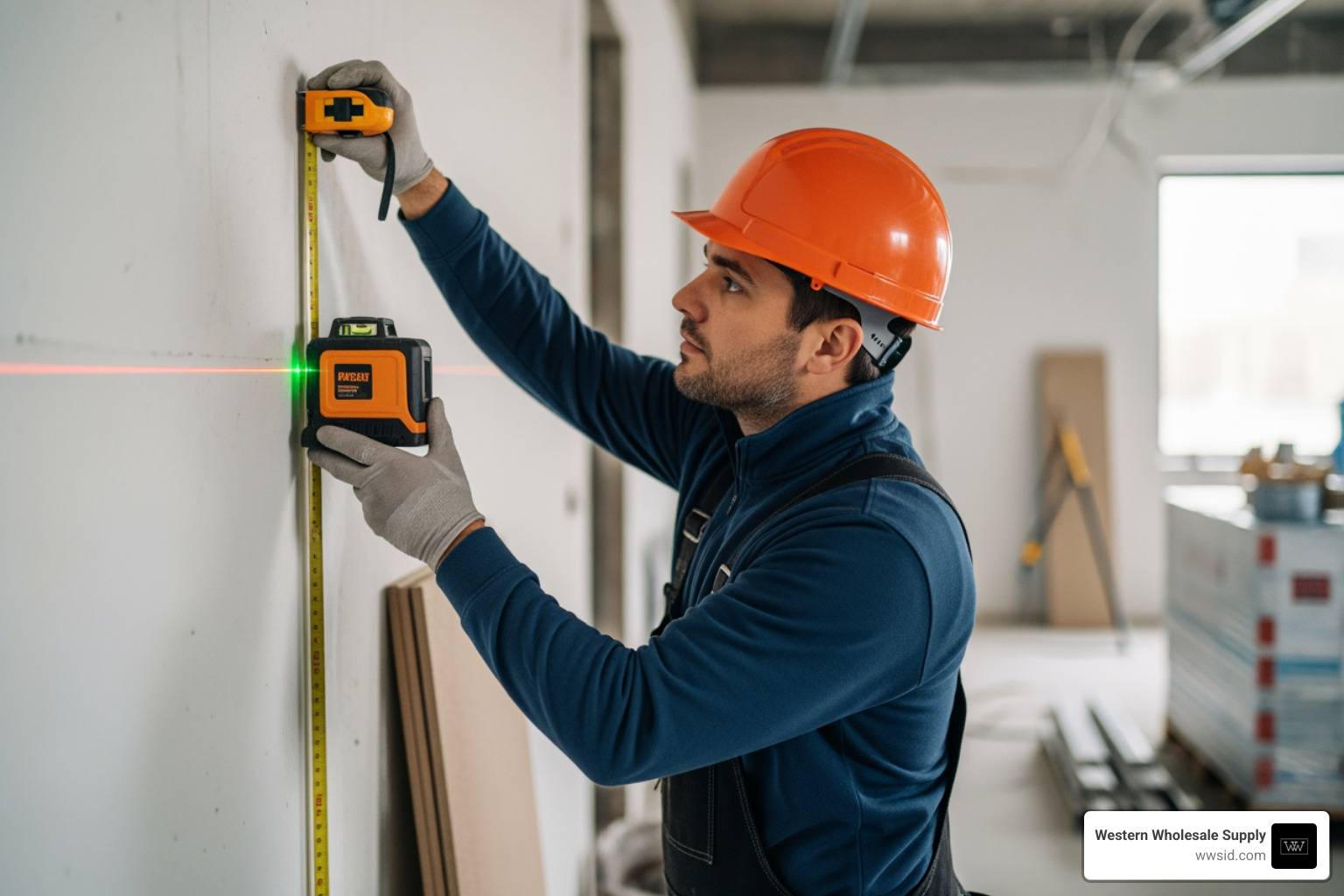
Layout planning is where most DIYers get a headache, but it’s just simple math. We want to avoid having a full 2-foot tile on one side of the room and a tiny 2-inch sliver on the other. It looks lopsided and unprofessional. To find your border tile size, measure the room, divide by the tile length, and split the remainder between the two opposite walls. Ensure your borders are at least 10 inches wide for a balanced look.
Humidity, Temperature, and Acclimatization
Acoustic panels are like sponges; they react to the air. In Eastern Idaho and Western Wyoming, our air can go from “bone dry” to “surprisingly humid” in a afternoon.
- The 48-Hour Rule: We always recommend bringing your panels into the room where they’ll be installed at least 48 hours before you start. This allows them to reach “equilibrium” with the room’s temperature and humidity.
- HVAC Status: The building’s HVAC system should be operational. Aim for a temperature range of 60-85°F and relative humidity no higher than 70%. If you install panels in a damp, unheated basement in Rexburg during January, don’t be surprised when they sag like a wet cardboard box by March.
For those of us who prefer digital help over long-hand math, the USG Ceiling Material Estimator is an absolute lifesaver for figuring out exactly how many mains, tees, and wires you’ll need.
Material Selection and Environmental Factors
Choosing the right material is about more than just color. We carry industry leaders like CertainTeed and Rockfon because they offer specialized solutions for our local climate.
- Mineral Fiber: The classic choice. Great for fire resistance and sound blocking.
- Glass Wool: These panels, like those from Rockfon, provide Class A sound absorption and are naturally resistant to moisture and mold—perfect for humid areas or schools.
- Wood Wool: If you want a natural, rustic look that fits the “mountain modern” aesthetic of Jackson or Victor, wood wool (made of wood fibers and cement) is incredibly durable and eco-friendly.
- Grid Sizes: The standard 15/16″ grid is the most common. However, if you want a sleek, designer look, the 9/16″ “fineline” grid is growing in popularity because it makes the grid almost disappear.
Mastering Acoustic Ceiling Installation Methods
There isn’t just one way to put up a ceiling. Depending on your headroom and your style, we usually look at three primary methods.
Essential Tools for Acoustic Ceiling Installation
You can’t build a masterpiece with a butter knife. For a professional-grade acoustic ceiling installation, we recommend:
- Laser Level: A must-have for large rooms to ensure the wall molding is perfectly level.
- Aviation Snips: For cutting the metal grid components.
- Utility Knife: For scoring and snapping the acoustic tiles.
- 12-Gauge Hanger Wire: The “muscles” of the operation.
- Cordless Screwdriver/Drill: For securing wall angles and eye-lag screws.
- Chalk Line: For marking long reference points.
- PPE: Safety glasses, a dust mask (especially when cutting mineral fiber), and clean white gloves to keep those tiles pristine.
Step-by-Step Acoustic Ceiling Installation in a Grid
This is the “Drop Ceiling” most people think of. Follow this Step-by-Step Guide to Install Acoustic Panels in Ceilings for a deep dive, but here is our “pro” sequence:
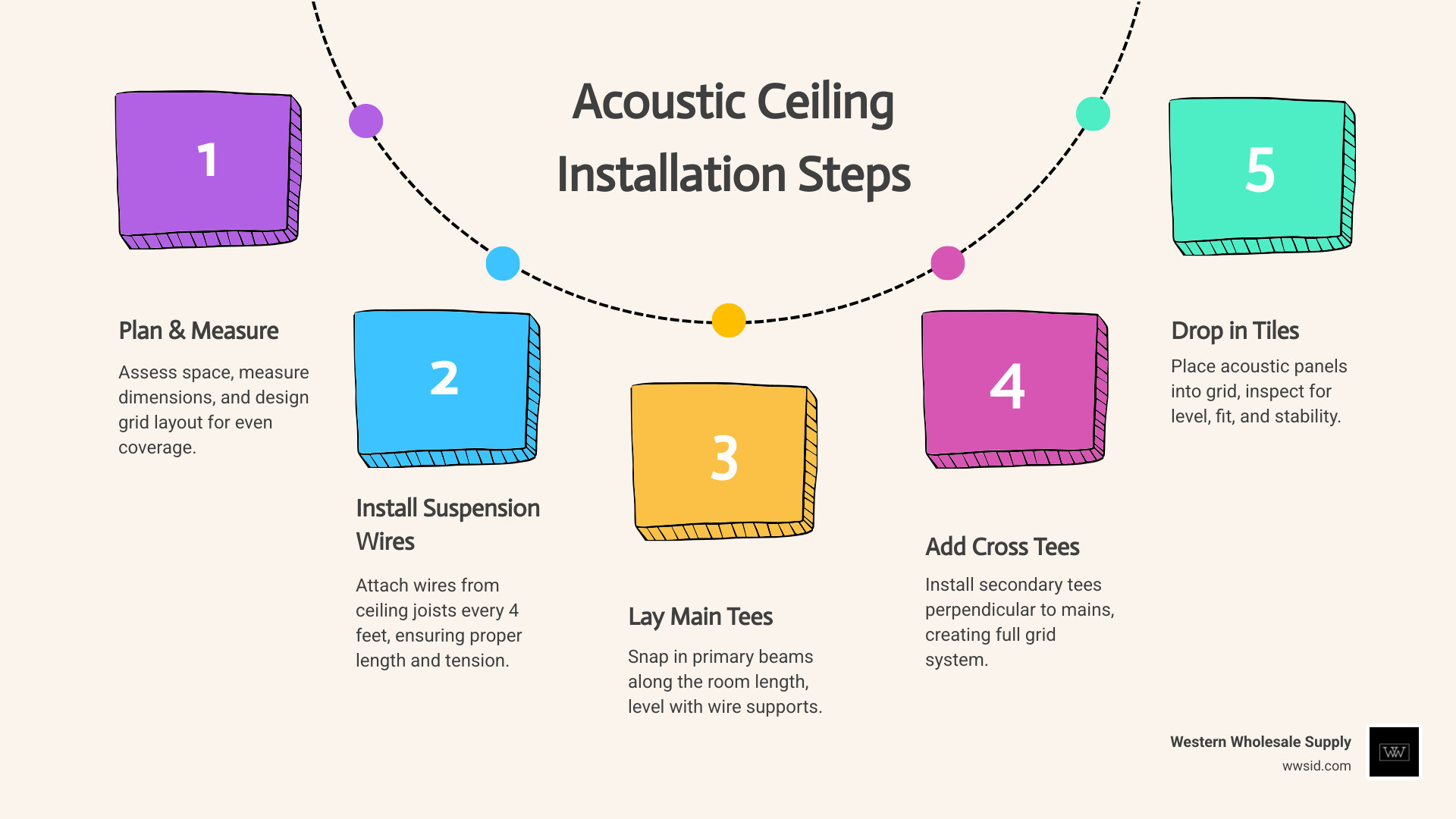
- Wall Angle: Install the L-shaped wall angle at your desired height. In rooms with low ceilings, remember you need at least a 3-to-4-inch gap from the structure to actually get the tiles into the grid.
- Hanger Wires: Fasten eye-lag screws into the joists every 4 feet. Attach your 12-gauge wire and let it hang.
- Main Beams: These are the long heavy-duty pieces. Hang them from the wires. Pro tip: Wrap the wire around itself at least 3-1/2 times within 3 inches for maximum security.
- Cross Tees: Snap these into the main beams. If you’re doing a 2×2 grid, you’ll have more tees than a 2×4 grid.
- Squareness Check: This is where DIYers get tripped up. Measure the diagonals of your grid openings. If the two diagonal measurements are identical, your grid is square. If not, give it a little nudge.
- Seating the Panels: Wear those white gloves! Tilt the panel up through the grid and let it drop into place.
Direct Mount and Cloud Systems
If you don’t have the “headroom” for a suspended grid, Direct Mount is your best friend. We see this often in basement “man caves” in Pocatello or home studios in Driggs. You can screw panels directly into the drywall or joists using specialized washers or “Z-clips.”
Cloud Panels are the “art pieces” of acoustics. These are individual panels suspended by thin cables. They look like they’re floating. They are fantastic for high-ceiling restaurants or open-plan offices because they catch sound on both the front and back of the panel, doubling the absorption area.
Cutting and Customizing Panels for a Perfect Fit
The perimeter of the room is rarely a perfect fit. You’ll need to cut tiles.
- Scoring: Use a sharp utility knife and a straight edge. Score the face of the tile, then snap it.
- Shadow Molding: If you’re using “tegular” (recessed) tiles, you’ll need to cut a “rabbet” or a notch into the edge of the cut tile so it sits at the same level as the factory edges.
- Obstacles: For round columns or light fixtures, we recommend using a fine-toothed saw or a compass saw. Always cut with the finish-side up to prevent chipping.
Acoustic Performance and Safety Considerations
Not all “white squares” are created equal. When we talk about acoustic ceiling installation, we’re looking at two main numbers: NRC and CAC.
- NRC (Noise Reduction Coefficient): Think of this as the “Sponge Rating.” It measures how much sound the tile absorbs. An NRC of 0.80 means 80% of the sound that hits it is absorbed.
- CAC (Ceiling Attenuation Class): Think of this as the “Shield Rating.” It measures how much sound is blocked from traveling to the room next door. If you’re building a private office in Shelley, you want a high CAC.
Performance Comparison Table
| Material Type | NRC (Absorption) | CAC (Blocking) | Best Use Case |
|---|---|---|---|
| Mineral Fiber (CertainTeed) | 0.55 – 0.75 | 35 – 40 | General Office, Schools |
| Glass Wool (Rockfon) | 0.85 – 0.95 | 20 – 25 | Open Offices, Libraries |
| Wood Wool (BAUX style) | 0.40 – 0.85* | 20+ | Gyms, High-Abuse Areas |
| *With backing |
For more on these technical specs, check out our page on Acoustical Ceilings.
Fire Safety and Seismic Requirements
In our region, safety isn’t optional—it’s the law.
- Fire Ratings: Most of the panels we supply from USG and CertainTeed are Class A fire-rated, meaning they have low flame spread and smoke development.
- Seismic Bracing: Believe it or not, parts of Idaho and Wyoming are in seismic zones. For commercial acoustic ceiling installation, building codes often require “splayed wires” and “compression posts” to keep the ceiling from swinging like a giant pendulum during an earthquake. We always recommend checking with your local building department in places like Teton County or Bonneville County for specific ASTM E-580 requirements.
HVAC Integration and Air Distribution
Your ceiling isn’t just for looks; it has to breathe.
- Air Diffusers: These must be supported independently or by a heavy-duty grid.
- Noise Criteria (NC): We aim for an NC of 35 in offices. This ensures the “hum” of the HVAC doesn’t interfere with your Zoom calls.
- Plenum Clearance: Always maintain at least 3 inches of clearance above the grid to allow for air movement and future maintenance.
Frequently Asked Questions about Acoustic Ceiling Installation
How long does it take to install acoustic ceiling panels professionally?
For a standard 2,000 square foot commercial space, we usually tell folks to budget 2 to 3 days. This includes the setup, the laser-leveling of the wall molding, hanging the grid, and dropping the tiles. If you’re a DIYer doing a 400-square-foot basement, you can usually knock it out in a productive weekend.
What spacing should be maintained between cloud panels?
For the best visual and acoustic balance, we recommend 12 to 24 inches of spacing between suspended clouds. This “air gap” allows sound to wrap around the back of the panel, which significantly improves low-frequency sound absorption.
Conclusion
At the end of the day, acoustic ceiling installation is one of the most rewarding home or office improvements you can make. It’s a project where you can truly “hear” the difference immediately. Whether you’re trying to quiet down a noisy restaurant in Jackson or finishing a basement in Twin Falls, the right materials and a little bit of planning go a long way.
At Western Wholesale Supply, we’ve been a part of the Eastern Idaho and Western Wyoming community since 1963. As a third-generation, veteran-owned family business, we pride ourselves on more than just selling drywall and grid; we provide the expertise that comes from 60 years of local experience. We know the climate, we know the codes, and we know how to get your materials to the job site on time, every time.
Ready to start your project? Whether you’re in Idaho Falls, Blackfoot, or anywhere in between, Contact Us today. Let’s build something quiet together!
