

Why Moisture is Your Home’s Worst Enemy
By Western Wholesale Supply
If you’ve ever walked into a basement and smelled that telltale musty odor, you’ve encountered the enemy. Moisture doesn’t just make spaces uncomfortable—it actively destroys your building’s thermal performance and structural integrity.
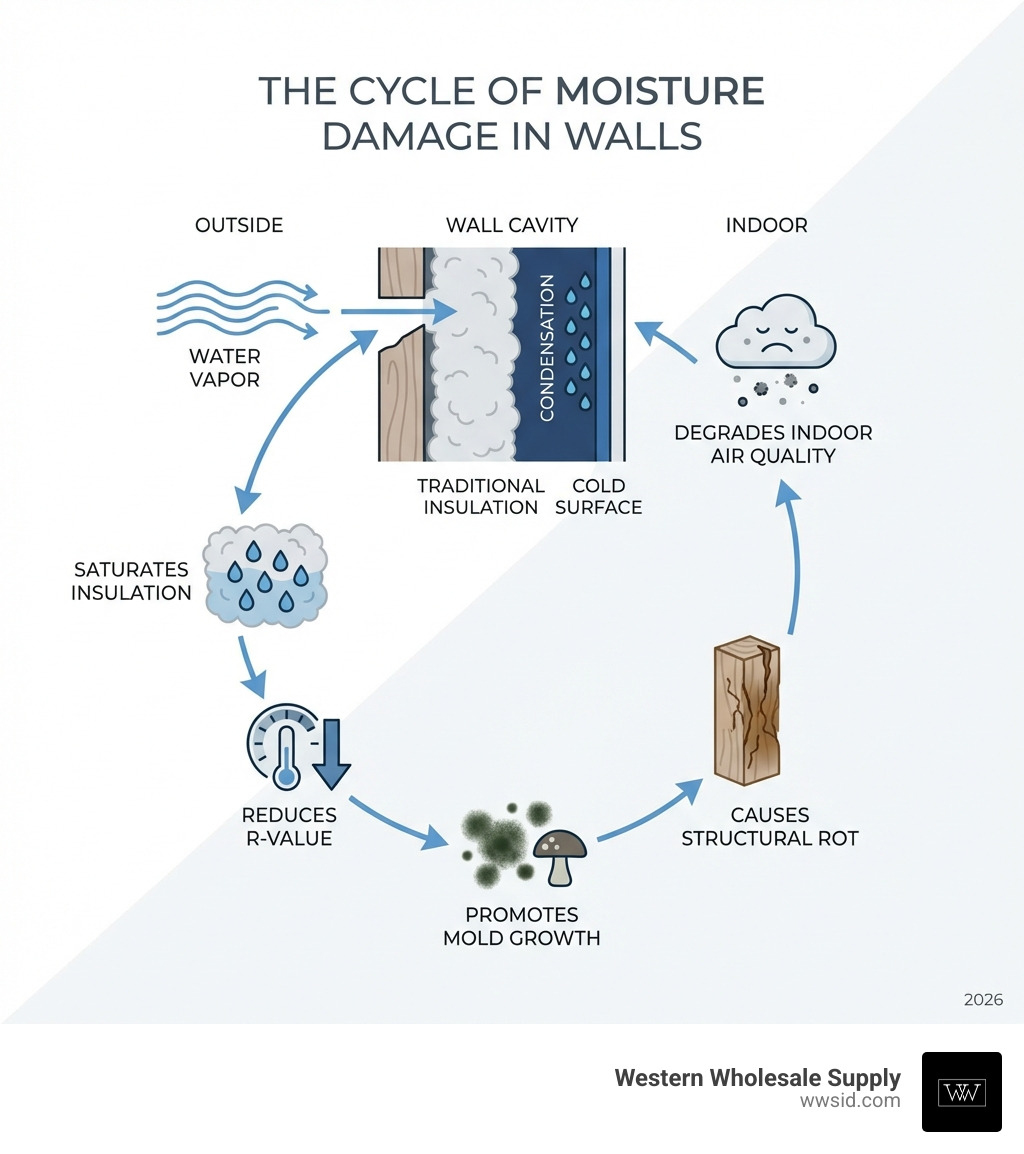
Traditional insulation materials like fiberglass and cellulose can absorb water like a sponge. Once wet, they lose their insulating ability, compress, and become breeding grounds for mold. The consequences are serious: increased heat loss, corrosion, and poor indoor air quality from mold growth.
The good news? Not all insulation fails when moisture shows up. Moisture resistant insulation is a specialized category of building materials designed to maintain thermal performance and structural integrity even when exposed to water. Key options include:
- Closed-cell spray foam: Provides an air and moisture barrier with a high R-value.
- Extruded polystyrene (XPS): A rigid foam board with low permeability, ideal for below-grade applications.
- Mineral wool (stone wool): Water repellent yet vapor permeable and non-combustible.
- Cellular glass: Completely waterproof and vapor-tight for the life of the building.
Choosing the right insulation prevents costly callbacks and keeps projects on schedule, especially in the demanding climates of Idaho and Wyoming.
Understanding Moisture Resistance in Insulation
Moisture is a persistent adversary in any building, especially in the varied climate of Eastern Idaho and Western Wyoming. When insulation absorbs water, it loses its ability to resist heat flow, leading to higher energy bills and potential damage to building components. For a comprehensive overview of insulation types, you can visit the U.S. Department of Energy’s Types of Insulation page.
What Makes an Insulation Material Moisture Resistant?
Moisture resistant insulation stands apart from traditional materials due to a few key properties:
- Closed-Cell Structure: Materials like extruded polystyrene (XPS) and closed-cell spray foam have tiny, sealed pockets that prevent water from penetrating the material. This makes them highly resistant to water absorption.
- Vapor Permeability (or Impermeability): Some materials, like XPS, have low permeability and act as a vapor barrier, stopping moisture from passing through. Others, like mineral wool, are vapor permeable, allowing the wall system to “breathe” and dry out.
- Water Repellency (Hydrophobic Materials): Materials like mineral wool are inherently hydrophobic, meaning they shed water rather than absorbing it.
- Air Barrier Capability: Many rigid boards and spray foams also act as air barriers, preventing moisture-laden air from entering wall cavities where it can condense.
- Dimensional Stability: Quality insulation maintains its shape and R-value despite temperature and moisture changes, preventing gaps and thermal bridges.
These properties work together to provide robust protection for your building envelope, ensuring long-term thermal performance and structural integrity.
How Moisture Degrades Traditional Insulation
Traditional insulation like fiberglass and cellulose can act like sponges. When they get wet, their performance plummets. The water displaces trapped air, drastically reducing the R-value and causing your heating and cooling systems to work harder. This saturation can also lead to compaction and sagging, creating uninsulated voids in your walls. Furthermore, damp organic materials become a breeding ground for mold and mildew, which compromises indoor air quality and can lead to the physical breakdown of the insulation itself.
Key Types of Moisture Resistant Insulation
Choosing the right moisture resistant insulation is crucial for the longevity and efficiency of your building projects in Eastern Idaho and Western Wyoming. Here’s a comparison of the best options available:
| Insulation Type | R-Value per Inch (approx.) | Moisture Handling | Best Applications |
|---|---|---|---|
| Rigid Foam Boards | 3.8 – 6.5 | Low permeability, closed-cell, resists moisture absorption. | Below-grade foundations, under slabs, exterior sheathing, cathedral ceilings. |
| Spray Polyurethane Foam (SPF) | 3.6 – 6.5 | Closed-cell is an air/moisture barrier; open-cell is vapor permeable. | Irregular cavities, air sealing, attics, wall cavities, basements. |
| Mineral Wool (Stone Wool) | 3.0 – 4.0 | Water-repellent and vapor-permeable, allowing structures to dry. | Exterior walls, below-grade walls, under slabs, rainscreens. |
| Cellular Glass | ~3.4 | Completely waterproof and vapor-tight. | Flat roofs, floors, below-ground, high-humidity environments. |
For a comprehensive range of quality insulation products, we invite you to visit our Insulation page.
Rigid Foam Boards (XPS & EPS)
Rigid foam boards like Extruded Polystyrene (XPS) and Expanded Polystyrene (EPS) are excellent for applications where moisture contact is likely.
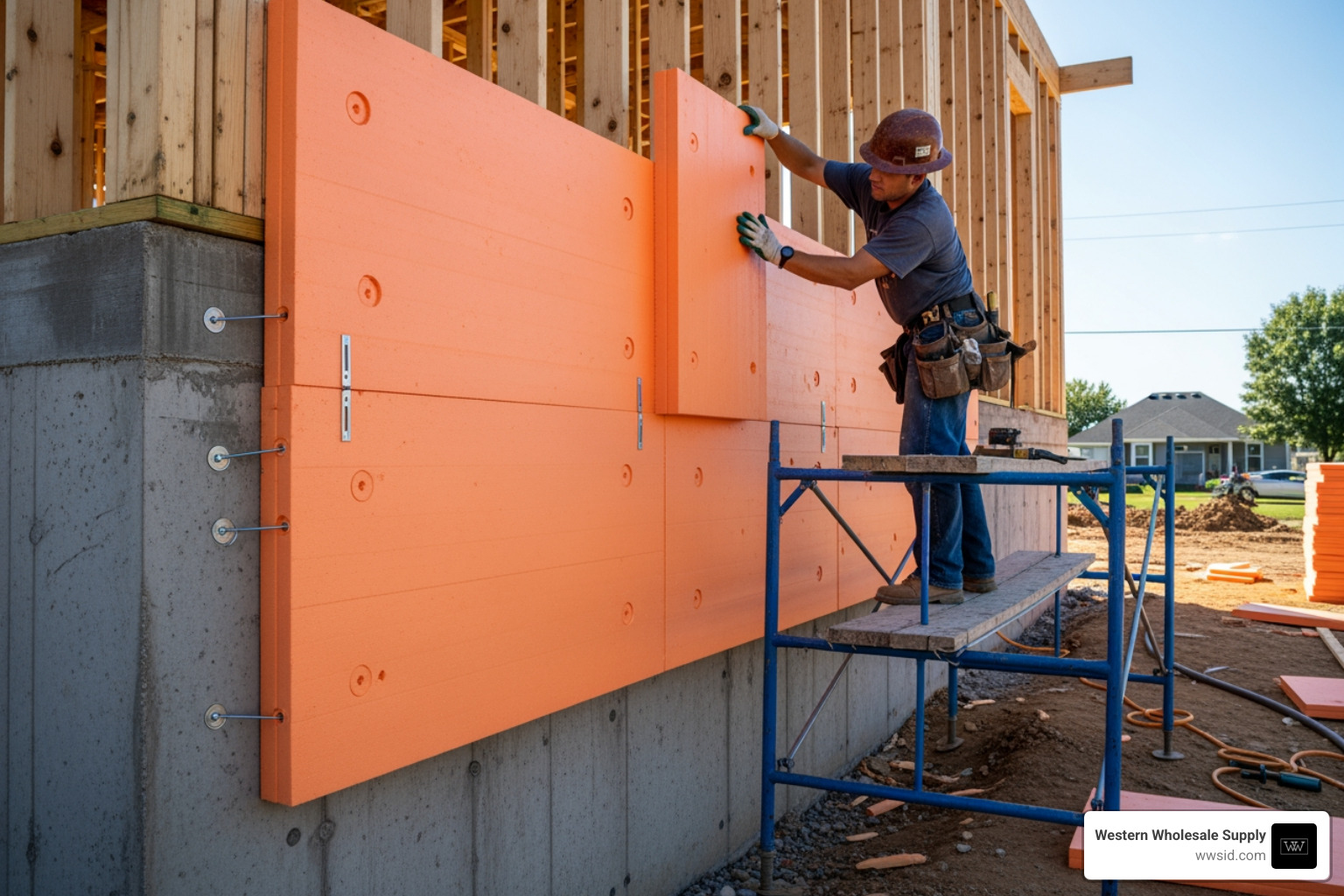
XPS has a closed-cell structure that resists moisture absorption, making it ideal for below-grade foundation walls and under concrete slabs. When sealed, it can also act as an air and vapor barrier. Graphite polystyrene (GPS) insulation is a great example, offering a durable, moisture-resistant board with a film on both sides for added protection. It’s perfect for continuous insulation, reducing thermal bridging and maintaining its R-value for the life of the product. Interior applications of foam board require a fire-resistant covering like drywall.
Spray Polyurethane Foam (SPF)
Spray Polyurethane Foam (SPF) is a versatile option that provides excellent insulation and air sealing.
- Closed-cell SPF is dense, with a high R-value, and acts as an effective air and moisture barrier. It expands to fill every crack and crevice, making it ideal for sealing complex areas.
- Open-cell SPF is lighter, more flexible, and vapor-permeable, allowing moisture to escape.
Because it’s applied as a liquid, SPF conforms perfectly to any surface, creating a superior air seal. However, installation requires a certified professional to ensure safety and performance.
Mineral Wool and Cellular Glass
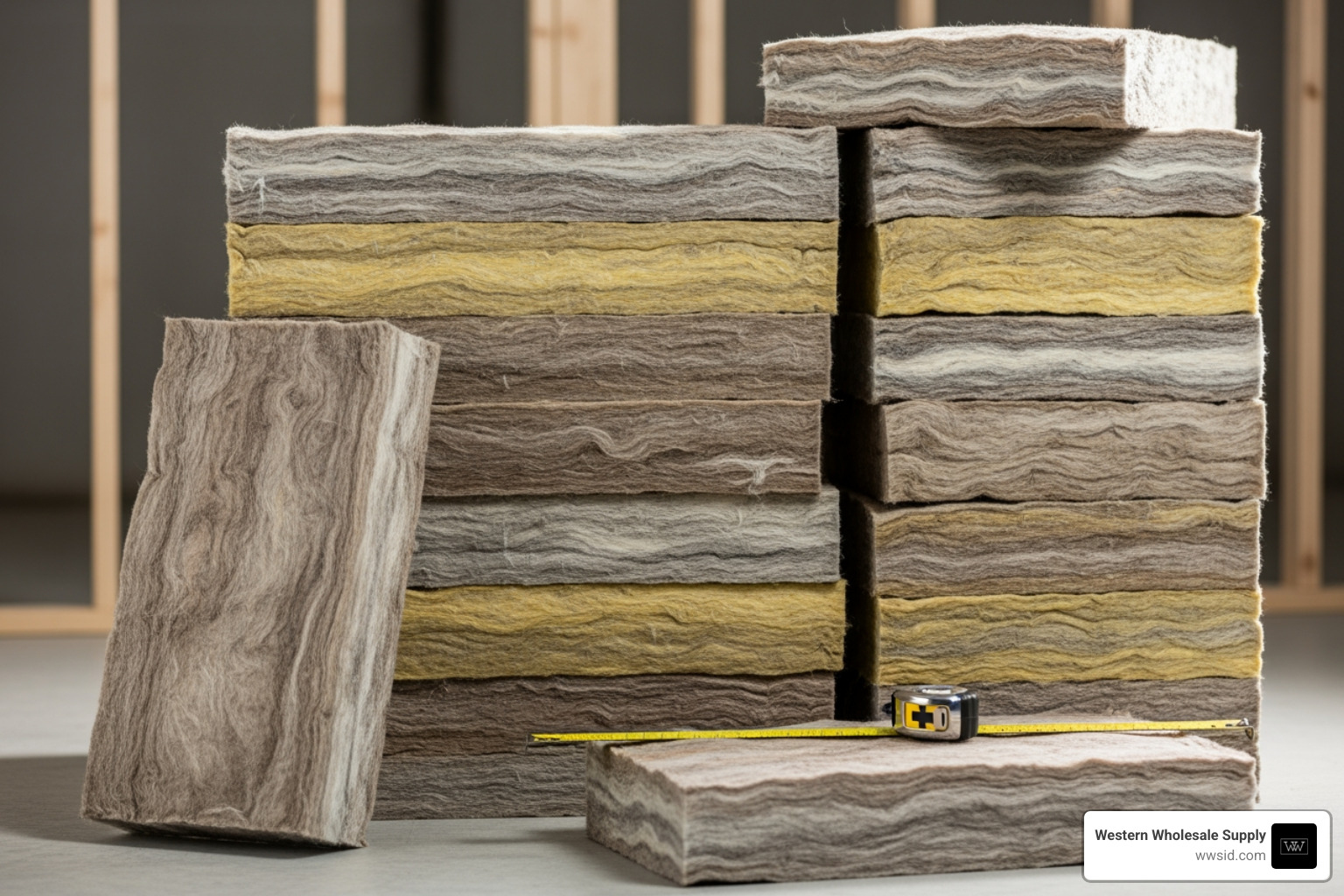
Mineral Wool (Stone Wool): Mineral wool batts are water-repellent and vapor-permeable. This unique combination means they shed water but also allow the wall assembly to dry out, preventing trapped moisture. Mineral wool is also non-combustible, providing excellent fire resistance and sound dampening. Its dimensional stability ensures it won’t sag or lose its shape over time.
Cellular Glass: For the ultimate in moisture protection, cellular glass insulation is completely waterproof and vapor-tight. It’s made of millions of completely sealed glass cells, so it cannot absorb water and doesn’t require a separate vapor barrier. Its high compressive strength makes it suitable for load-bearing applications like flat roofs and under-slab insulation. It is also non-combustible and resistant to pests and chemicals.
Critical Applications: Where to Install Water-Resistant Insulation
In the challenging climates of Eastern Idaho and Western Wyoming, the strategic placement of moisture resistant insulation is paramount for a durable and energy-efficient building.
Basements and Crawlspaces
Basements and crawlspaces are notoriously damp and are prime candidates for moisture-resistant insulation.
- Foundation Walls: Insulating foundation walls with materials like XPS rigid foam or mineral wool is critical. These materials resist moisture absorption from the surrounding soil and prevent condensation.
- Under Slab Insulation: Placing rigid foam insulation under a concrete slab prevents heat loss to the ground and blocks moisture from wicking up into the building.
- Band Joists: Sealing and insulating the band joist (the area where the wall framing meets the foundation) with spray foam or cut-to-fit rigid foam is crucial for stopping air leaks and moisture intrusion.
Properly insulating these below-grade areas creates a thermal break and a moisture barrier, preventing condensation, mold growth, and structural damage.
Exterior Walls and Roofs
A building’s exterior shell must withstand rain, snow, and temperature swings. Moisture resistant insulation is key to its long-term performance.
- Continuous Exterior Insulation: Applying a layer of rigid foam or mineral wool to the exterior sheathing is a best practice. This “insulating wrap” minimizes thermal bridging through studs and creates a more energy-efficient wall.
- Rainscreen Systems: Pairing continuous insulation with a rainscreen system provides superior moisture management. The air gap allows any water that gets behind the siding to drain away, and the wall can dry out effectively.
- Roofs: Cathedral ceilings and flat roofs are prone to moisture issues. Closed-cell spray foam, rigid foam, and cellular glass are excellent choices for these applications, providing high R-values and robust protection against leaks and condensation.
High-Moisture Interior Areas
Certain interior spaces, like bathrooms, laundry rooms, and kitchens, generate high levels of humidity. Using moisture resistant insulation in these areas is a smart move.
- Walls and Ceilings: Insulating the walls and ceilings of these rooms with materials like XPS or mineral wool helps prevent moisture from condensing within the wall cavities, which can lead to mold and rot.
- Specialty Areas: For extreme-humidity environments like indoor pools or spas, a completely waterproof and vapor-tight solution like cellular glass insulation is essential to prevent severe structural damage.
In all these areas, proper ventilation is just as important as insulation for controlling moisture and maintaining healthy indoor air quality.
The Long-Term Payoff: Investing in a Drier, Healthier Home
Choosing moisture resistant insulation is an investment in your property’s durability, energy efficiency, and value. While the initial cost may be higher than traditional options, the long-term benefits are significant.
Long-Term Benefits of Moisture Resistant Insulation
- Stable R-value: Unlike materials that lose insulating power when wet, these products maintain their thermal performance for the life of the building.
- Building Longevity: By preventing moisture from reaching structural components, you protect your investment from rot, corrosion, and deterioration.
- Improved Air Quality: A dry building is a healthy building. Eliminating dampness prevents the growth of mold and mildew, which are known to cause respiratory issues and allergies.
- Reduced Maintenance & Costs: A well-protected building envelope means fewer moisture-related problems, saving you from costly repairs and high energy bills down the road.
Certifications and Building Standards
When selecting insulation, look for products that meet recognized standards to ensure quality and safety.
- ENERGY STAR®: This label indicates that the insulation has been independently tested for performance and fire safety. You can find certified products on the ENERGY STAR insulation guidance page.
- ASTM Standards: These are technical standards for a wide range of properties, including moisture resistance (ASTM C1338 for fungi resistance) and fire safety (ASTM E84).
- Building Codes: Always check with your local building department in Idaho or Wyoming for specific R-value requirements and installation codes, especially regarding fire barriers for foam insulation.
- GreenGuard Gold: This certification indicates that a product has low chemical emissions, contributing to healthier indoor air.
Frequently Asked Questions about Water-Resistant Insulation
Here are answers to some common questions about moisture resistant insulation.
Does moisture-resistant insulation prevent all mold?
No. While these materials resist water absorption and don’t act as a food source for mold, mold can still grow on their surfaces if dust and moisture are present. Moisture resistant insulation is a critical part of a complete moisture management strategy that should also include proper ventilation and sealing air leaks.
Can I install moisture-resistant insulation myself?
It depends on the product:
- DIY-Friendly: Mineral wool batts and rigid foam boards can be installed by a skilled DIYer. Proper cutting, fitting, and sealing are crucial for effectiveness. Always use appropriate safety gear.
- Professional Installation Required: Spray polyurethane foam (SPF) should always be installed by a certified professional. It involves a chemical process and requires specialized equipment and safety protocols to ensure a safe and effective application.
What R-value do I need for my basement?
The required R-value depends on your location in Idaho or Wyoming, as both states cover multiple climate zones. For basement walls in our region, codes often require R-15 to R-25 for continuous insulation or R-13 to R-19 for cavity insulation. Always consult your local building codes for specific requirements. For more guidance, the ENERGY STAR insulation guidance is a helpful resource. We can also help you determine the right R-value for your project.
Conclusion: Secure Your Home’s Foundation with the Right Choice
Moisture is a constant threat to a building’s integrity, efficiency, and health. In the varied climate of Eastern Idaho and Western Wyoming, choosing the right moisture resistant insulation is essential. By using materials like rigid foam, spray foam, or mineral wool in critical areas like basements and exterior walls, you can prevent costly damage, improve energy efficiency, and create a healthier indoor environment.
At Western Wholesale Supply, we’re an independent, veteran-owned, third-generation family business that has served this region since 1963. Our commitment to reliable, on-time delivery and exceptional customer service means you’re not just getting materials—you’re getting a partner.
Don’t let moisture compromise your next project. Take the next step toward a dry, comfortable, and durable building by exploring our insulation solutions and letting our team of experts help you choose the ideal materials for your needs. For personalized assistance, contact our Idaho Falls or Pocatello locations in Eastern Idaho, or reach out for service across Western Wyoming.
