

Why Commercial Interior Ceilings Matter More Than You Think
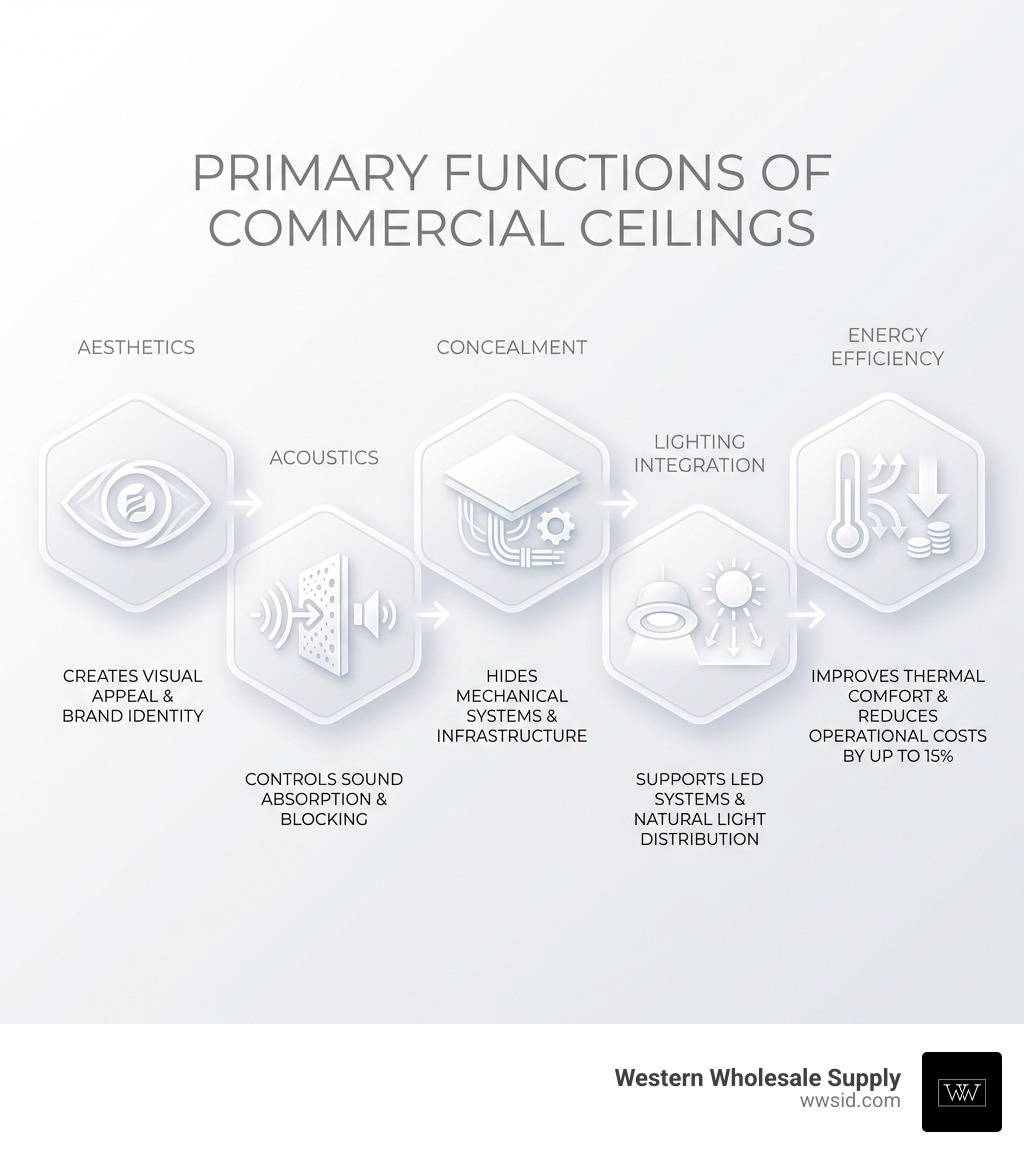
Commercial interior ceilings are far more than just overhead surfaces—they’re multifunctional systems that shape how a space looks, sounds, and performs. While often overlooked during the design phase, ceilings play a critical role in:
- Acoustics – Controlling noise levels and reducing echo in busy environments
- Concealment – Hiding HVAC systems, electrical wiring, plumbing, and ductwork
- Lighting Integration – Supporting LED systems and maximizing natural light distribution
- Energy Efficiency – Improving thermal comfort and reducing energy costs
- Aesthetics – Creating first impressions and setting the tone for the entire space
- Fire Safety – Providing crucial fire resistance ratings required by building codes
When it comes to designing an office space, the ceiling is often an overlooked element, yet it plays a crucial role in setting the tone and ambience of the environment. From acoustic performance in open-plan offices to moisture resistance in healthcare facilities, selecting the right ceiling system directly impacts occupant comfort, productivity, and operational efficiency.
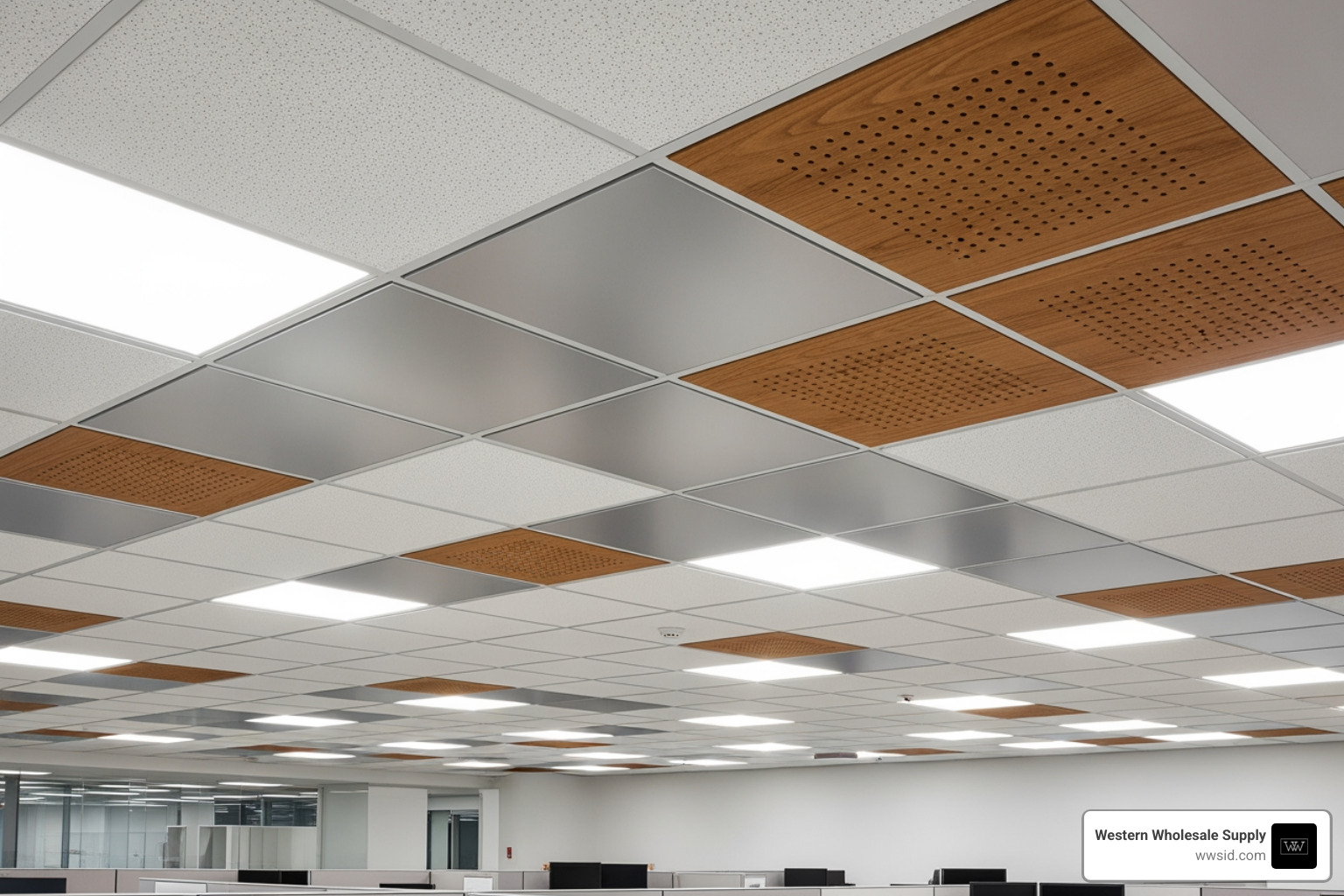
Understanding your options is essential for making informed decisions. Suspended ceilings (also called drop ceilings) remain the most common choice for commercial buildings due to their ease of access, low maintenance costs, and performance benefits. The most common office ceiling tiles are 2×2 or 2×4 in size, with materials ranging from mineral fiber and fiberglass to metal, wood, and gypsum.
Beyond traditional drop ceilings, today’s market offers specialty systems like stretch ceilings, 3D panels, exposed structural designs, and even green (living) ceilings that can reduce CO2 levels by 10 to 25%. Each option brings unique benefits—from the industrial aesthetic of exposed beams to the hygienic, easy-to-clean surfaces of stretch ceilings ideal for medical facilities.
At Western Wholesale Supply, we’ve helped countless contractors and builders select the right Commercial interior ceilings for projects ranging from schools to medical facilities. With extensive product knowledge and decades of experience, our team can help you find a the right ceiling solution to keep your project on time and on budget.
The Core of Commercial Ceilings: Popular Materials and Systems
When we look up, we often see the unsung heroes of commercial design: our Commercial interior ceilings. These aren’t just pretty faces; they’re integral to the function and feel of any space, from busy offices in Idaho Falls to quiet medical facilities in Pocatello. Most commonly, we encounter suspended ceilings, often called drop ceilings, which use a grid system of metal channels or T-bars to hold ceiling tiles or panels. These systems are popular for a reason—they offer ease of access to the hidden infrastructure above, are cost-effective for maintenance, and provide essential performance benefits. We often see them in standard 2×2 or 2×4 sizes, versatile enough for almost any application.
Mineral Fiber & Fiberglass
Let’s start with two of the most ubiquitous materials in commercial ceilings: mineral fiber and fiberglass. Mineral fiber tiles are a common choice, well-regarded for their acoustic properties. Depending on the product, mineral fiber ceiling tiles can offer impressive sound absorption (NRC) ratings up to 0.90 and sound blocking (CAC) ratings up to 50. This makes them fantastic for managing noise in environments from lively retail spaces to focused classrooms. They are also quite cost-effective, with prices for commercial ceiling tiles ranging from $0.97 to $8 per square foot.
Fiberglass ceilings, on the other hand, are lightweight, durable, and easy to clean and maintain. Their inherent resistance to moisture and mold makes them suitable for areas where humidity might be a concern. Both mineral fiber and fiberglass can include recycled content, contributing to more sustainable building practices.
To give you a clearer picture, here’s a quick comparison of these and other popular materials:
| Attribute | Mineral Fiber | Fiberglass | Metal | Wood | Gypsum Board (Drywall) |
|---|---|---|---|---|---|
| Aesthetics | Versatile textures, colors, perforated/non-perforated | Textured surface, clean, often white/light colors | Modern, industrial, sleek, various finishes, can be ornate | Warm, natural, biophilic, grilles, planks, panels | Smooth, seamless, paintable, versatile |
| Cost | Moderate (e.g., $0.97 – $8/sq.ft.) | Moderate to High (e.g., $5 – $11/sq.ft.) | Moderate to High | High | Low to Moderate |
| Durability | Good, some sag/humidity resistance | Lightweight, durable, moisture/mold resistant | Highly durable, resistant to damage, long-lasting | Good, durable, long-lasting | Good, excellent fire resistance |
| Acoustic Perf. | Good absorption (up to 0.90 NRC), good blocking (up to 50 CAC) | Excellent absorption (high NRC) | Can be acoustic with backing/perforations | Improves sound quality, reduces echo | Good sound insulation, some absorption with treatment |
| Maintenance | Easy to clean, some specialized for hygiene | Easy to clean and maintain | Low maintenance, easy to clean | Varies, generally low | Easy to paint, repair |
Metal Ceilings
For a sleek, modern, or even industrial aesthetic, metal ceilings are a fantastic choice. They’re highly durable, resistant to damage, and remarkably low maintenance, making them a long-lasting investment for your commercial space. Metal ceilings also offer excellent fire resistance, a crucial safety feature for any building. From a variety of finishes to perforated options that improve acoustics, metal provides a robust and stylish solution. If you’re looking to explore more about these systems, you can Explore metal ceiling systems. We’ve seen metal ceilings transform spaces in Western Wyoming into contemporary hubs, offering both resilience and visual appeal.
Wood Ceilings
Bringing the warmth and beauty of nature indoors, wood ceilings are gaining popularity, especially with the rise of biophilic design. They offer a natural aesthetic that can create a tranquil and inviting atmosphere, making them perfect for lobbies, restaurants, or executive offices. Beyond their stunning looks, wood ceilings can significantly improve sound quality within a space, helping to manage echo and reduce noise levels. This makes them a surprisingly effective acoustic solution as well. Whether you prefer the clean lines of planks, the intricate patterns of grilles, or the broad expanse of panels, there are many ways to incorporate this material. View wood ceiling design options to see the possibilities.
Gypsum & Drywall Ceilings
Sometimes, simplicity and seamlessness are key. Gypsum board (drywall) ceilings offer a smooth, continuous finish that can be painted to match any interior design. They provide excellent fire resistance and can be quite effective for sound insulation. Their versatility makes them a go-to for many commercial projects where a traditional, finished look is desired. For corridors and other long spans, innovations like the QuickSpan™ Locking Drywall Grid System offer the industry’s longest unsupported spans and widest hanger spacing, leading to stronger, more rigid construction with fewer hanger wires and faster installation. This means lower labor costs and quicker project completion, something we always appreciate in Eastern Idaho and Western Wyoming.
Specialty Systems (Stretch & 3D)
For those looking for something truly unique, specialty ceiling systems push the boundaries of design and functionality. Stretch ceilings, gaining traction in the U.S. after years of popularity in Europe, offer a sleek, modern look with endless design flexibility. They can be backlit to create stunning visual effects and are hygienic, easy to clean, and resistant to dampness, making them ideal for medical and educational facilities.
Then there are 3-Dimensional panels, often made from materials like Glass Fiber Reinforced Gypsum (GRG). These can create dramatic focal points, adding depth and architectural interest to any space. From geometric shapes to artistic clouds, these systems allow designers to sculpt the overhead environment, turning a ceiling into a true work of art.
The Science of Sound: How Ceilings Master Acoustics
Imagine trying to hold a productive meeting in a conference room that echoes every word, or a busy restaurant where diners have to shout to be heard. Not ideal, right? This is where the science of sound, and specifically how Commercial interior ceilings manage it, becomes absolutely critical. Good acoustics directly impact occupant productivity, reduce stress, and improve overall user experience. In open-plan offices, for example, effective sound management can mean the difference between a productive, collaborative environment and a chaotic, distracting one. It’s about creating spaces where people feel comfortable and can focus, or conversely, enjoy lively conversation without disrupting others.
Whether we’re designing an office in Pocatello or a school in Idaho Falls, controlling noise and ensuring speech privacy are paramount. For deeper insights into optimizing sound, you can find More info about acoustical ceilings.
Key Performance Metrics for Commercial Interior Ceilings
When evaluating a ceiling’s acoustic performance, we look at a few key metrics:
- Noise Reduction Coefficient (NRC): This measures how much sound a ceiling material absorbs within a room. An NRC rating ranges from 0 (no absorption) to 1 (perfect absorption). A higher NRC means less echo and reverberation, making a space quieter. For instance, mineral fiber ceiling tiles can offer up to 0.90 NRC, which is excellent for absorbing sound in busy areas.
- Ceiling Attenuation Class (CAC): Unlike NRC, CAC measures how well a ceiling system blocks sound from traveling between adjacent rooms through the plenum (the space above the ceiling). A higher CAC rating indicates better sound blocking, which is essential for speech privacy. Mineral fiber tiles can achieve up to 50 CAC, providing a good barrier against sound transfer.
- Articulation Class (AC): This metric assesses how well a ceiling system supports speech intelligibility within a given space. It’s particularly useful in open-plan environments where you want conversations to be clear for the speaker and listener, but not easily overheard by others further away.
Understanding these numbers helps us specify the right solution for each unique challenge. For example, a conference room needs high CAC for privacy, while an open-plan office benefits from high NRC to reduce overall noise.
Acoustic Design Strategies
Achieving optimal acoustics often involves a combination of strategies. Acoustic ceiling tiles, made from materials like mineral fiber or fiberglass, are designed specifically to absorb sound. But beyond flat tiles, we can get creative:
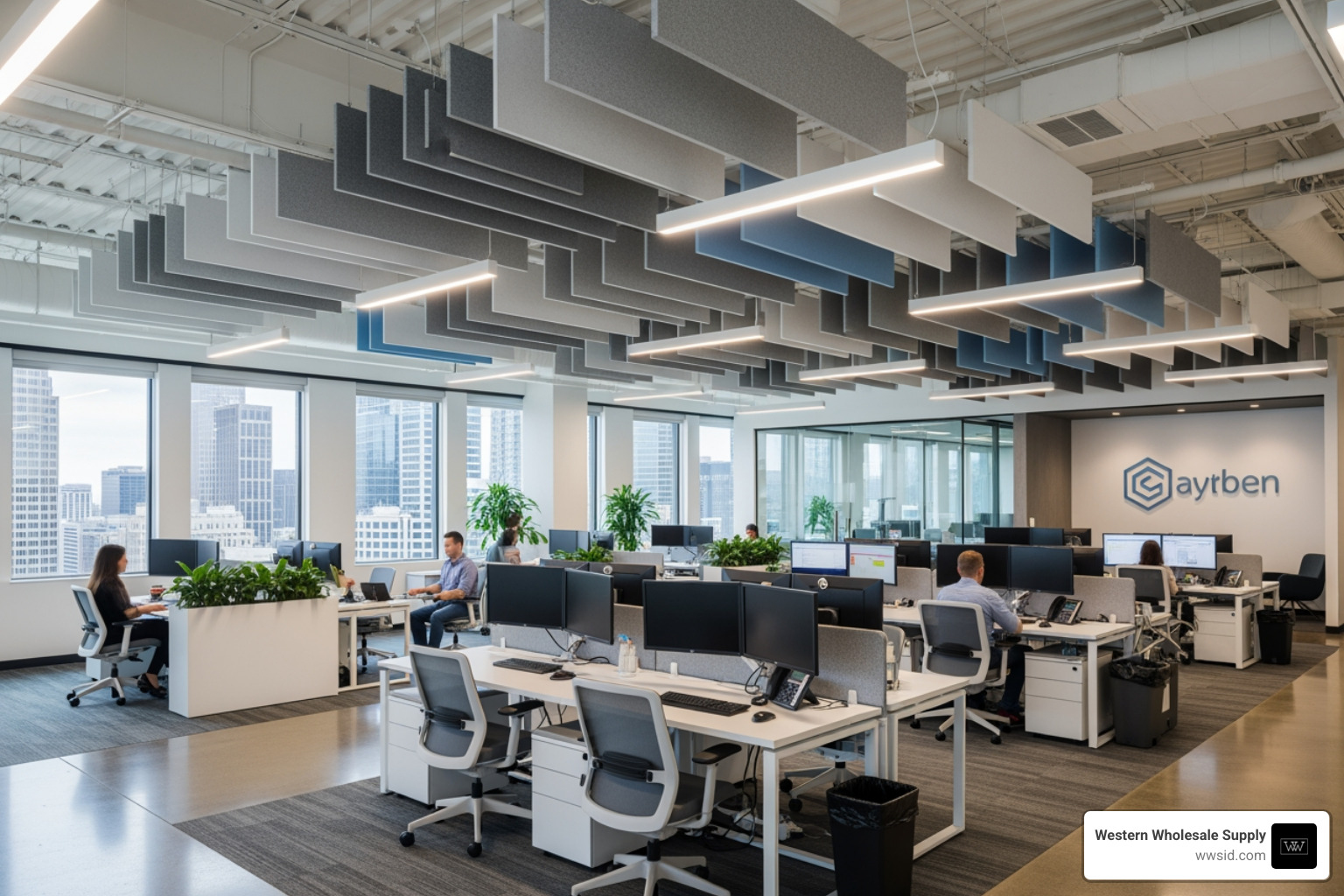
- Baffles and Clouds: These suspended acoustic elements hang below the structural ceiling, offering additional surface area for sound absorption. They are particularly effective in large, open spaces with high ceilings, where traditional tiles might not be enough.
- Perforated Panels: Metal or wood panels with perforations, often backed with an acoustic material, can provide both aesthetic appeal and sound absorption.
- Sound-Absorbing Materials: Incorporating specialized materials behind ceiling finishes or within cavities can significantly boost a space’s acoustic performance.
We believe that every project deserves custom acoustic solutions. To learn more about how we approach this, Elevate Your Projects: Discover Western Wholesale Supply’s Acoustical Ceiling Solutions. By carefully combining different materials and designs, we can create environments that sound as good as they look, promoting comfort and productivity across Eastern Idaho and Western Wyoming.
Choosing the Right Commercial Interior Ceilings for Your Space
Selecting the perfect Commercial interior ceilings isn’t a one-size-fits-all endeavor. It’s a thoughtful process driven by the specific application, budget constraints, and adherence to local building codes. Just as you wouldn’t use a hammer to drive a screw, you wouldn’t specify a standard acoustic tile for a cleanroom environment. Every space has its unique demands, and our goal is to match those needs with the ideal ceiling solution. To help you get started, you can even Use this ceiling material estimator to gauge material needs.
Selection by Commercial Application
Different commercial spaces have vastly different requirements for their ceilings:
- Office Spaces:
- Open-plan offices: High NRC (Noise Reduction Coefficient) is crucial to absorb sound and reduce ambient noise, improving focus and productivity.
- Private offices and conference rooms: High CAC (Ceiling Attenuation Class) is paramount to ensure speech privacy and prevent sound from traveling between rooms.
- Retail Environments:
- Showrooms: Aesthetics often take center stage, with decorative panels, unique lighting integration, or even exposed ceilings to create a specific brand ambiance. Durability and ease of maintenance are also key.
- Back of house: Functionality, durability, and cost-effectiveness are prioritized, often utilizing standard suspended mineral fiber tiles for easy access to utilities.
- Healthcare Facilities: Hygiene and cleanability are non-negotiable. Ceilings must be resistant to mold, mildew, and often chemicals for disinfection. Products like Ceramaguard mineral fiber tiles, which offer moisture resistance, are often specified. Acoustic performance in waiting rooms and patient areas is also important for patient comfort and privacy. Stretch ceilings are also ideal due to their hygienic, easy-to-clean nature and resistance to dampness.
- Education: Classrooms need good acoustics (high NRC) to ensure clear communication between teachers and students. Gymnasiums and auditoriums require robust, impact-resistant solutions that can also manage significant reverberation.
- Hospitality:
- Restaurants: Aesthetics play a huge role in creating atmosphere, but acoustics are vital to ensure comfortable conversation. Wood ceilings can significantly improve sound quality, and specialized acoustic panels can help.
- Lobbies: Often a first impression, demanding visually striking and durable ceilings that can also handle heavy foot traffic and potential noise.
Special Considerations for Commercial Interior Ceilings
Beyond the general application, several specific factors weigh heavily on our ceiling choices:
- Lighting Integration: Modern designs frequently integrate lighting directly into the ceiling system. This can range from sleek LED strips in metal panels to backlighting for stretch ceilings, or even the strategic placement of fixtures within a grid system to maximize natural light. Exposed ceilings, with their open structure, can also increase natural lighting with skylights, providing a modern interior design finish.
- Moisture and Sag Resistance: In areas prone to humidity, such as restrooms, kitchens, or even swimming pool facilities, selecting materials that won’t sag or develop mold is critical. Products with “ClimaPlus™” performance or specifically designed moisture-resistant fiberglass or mineral fiber tiles (like Ceramaguard) are essential to maintain appearance and structural integrity over time.
- Ease of Maintenance and Cleaning: High-traffic or hygiene-sensitive environments require ceilings that are easy to clean and maintain. Metal ceilings are highly durable and low maintenance. Stretch ceilings are hygienic, easy to clean, and resistant to dampness, making them excellent choices for these demanding conditions.
- Fire Resistance Ratings: Building codes in Eastern Idaho and Western Wyoming, like anywhere else, mandate specific fire resistance ratings for commercial structures. Gypsum board offers excellent fire resistance, and many acoustic ceiling tiles are rated Class A for surface burning characteristics, providing crucial safety.
- Durability and Impact Resistance: In areas like gymnasiums or industrial settings, ceilings need to withstand potential impacts. Metal and certain specialized panels offer superior durability compared to standard mineral fiber.
Contribution to Sustainability and Energy Efficiency
Our choices for Commercial interior ceilings can also have a significant positive impact on the environment and your bottom line. We’re not just building for today; we’re building for a more sustainable future.
- Energy Savings: Suspended ceilings, particularly those with insulating properties or specialized energy-saving tiles like TEMPLOK, can save up to 15% energy and improve thermal comfort for occupants. This is a considerable saving over the lifetime of a building in places like Idaho Falls and Pocatello, where heating and cooling costs can fluctuate.
- Recycled Content: Many modern ceiling tiles, especially mineral fiber and fiberglass, incorporate a high percentage of recycled materials, reducing waste and supporting a circular economy. Fiberglass ceilings, for instance, can often be sourced from recycled materials.
- Biophilic Design & Green Ceilings: Incorporating nature into our built environments is a growing trend. Green (living) ceilings, with integrated plants, can help remove VOCs (volatile organic compounds) from the air and reduce CO2 levels by 10 to 25%, significantly improving indoor air quality. This biophilic approach not only benefits the environment but also improves occupant well-being and productivity.
For those committed to environmentally conscious construction, finding products that align with sustainable practices is easier than ever. You can View sustainable architectural solutions that marry performance with ecological responsibility.
The Future is Up: Innovations and Trends in Ceiling Design
The world of Commercial interior ceilings is anything but stagnant. Designers and manufacturers are constantly pushing boundaries, creating solutions that are not only functional but also visually stunning and technologically advanced. We’re seeing a shift away from purely utilitarian surfaces towards dynamic, integrated elements that define a space.
One of the most prominent trends is the exposed ceiling. Embracing an industrial aesthetic, this design choice leaves structural elements, ductwork, pipes, and electrical conduits visible. When executed thoughtfully, with painted or carefully arranged infrastructure, it creates a modern, spacious, and often dramatic look. It’s particularly popular in creative offices, retail spaces, and restaurants across Eastern Idaho and Western Wyoming, offering a raw, authentic vibe.
Beyond exposed structures, innovation is soaring with 3D and geometric panels, as well as canopies and clouds. These aren’t flat, utilitarian ceiling tiles. We’re talking about sculptural elements that add depth, texture, and visual interest, turning a ceiling into a dynamic art installation. Arktura’s decorative ceiling tiles, for example, bring both functionality and creativity to ceiling tile design, changing spaces into more inviting areas with better acoustics. Vaulted ceilings, too, make a small area feel much larger and more open, enhancing the overall atmosphere.
Integrated systems are also becoming the norm. This means ceilings that seamlessly incorporate lighting (often LED for energy efficiency), HVAC diffusers, and even smart technology for environmental control. These systems streamline the overhead plane, creating a clean, uncluttered look while offering advanced functionality.
Finally, we’re seeing a rise in specialized materials like felt ceilings. Felt offers excellent acoustic properties and a unique textural aesthetic, often used in baffles, panels, and clouds to create warm, inviting, and quiet spaces.
The possibilities are truly limitless, allowing architects and designers to create environments that inspire and perform at the highest level. To dive deeper into these exciting developments, you can Explore innovative ceiling possibilities.
Frequently Asked Questions about Commercial Ceilings
We often get asked about the best ways to approach Commercial interior ceilings for various projects across Eastern Idaho and Western Wyoming. Here are some of the most common questions we hear, along with our insights:
What are the most common types of commercial ceilings?
The most common type we encounter is the suspended, or drop, ceiling. This system uses a metal grid to hold removable tiles, typically made of mineral fiber or fiberglass. This popularity stems from its practical benefits: easy access to the plenum (the space above the ceiling) for maintenance of utilities like wiring and HVAC, and excellent acoustic performance. However, exposed structural ceilings (showcasing ductwork and beams for an industrial look) and traditional gypsum board (drywall) ceilings for a seamless finish are also very widely used, depending on the desired aesthetic and functional needs of the space.
How do I choose the right ceiling for a high-humidity area?
Choosing the right ceiling for a high-humidity area, such as a commercial kitchen, restroom, or even an indoor pool facility, requires careful material selection. We always recommend looking for materials with high sag and moisture resistance. Fiberglass ceilings are naturally resistant to moisture and mold, making them an excellent choice. Specially treated mineral fiber tiles, like those with “ClimaPlus™” performance or products like Armstrong’s Ceramaguard, are also designed to withstand high humidity without sagging or degrading. Metal ceilings are another highly durable and moisture-resistant option. Always check the manufacturer’s specifications to ensure the product is rated for the specific humidity levels of your application.
What do NRC and CAC mean for ceiling tiles?
These are two crucial metrics for understanding a ceiling tile’s acoustic performance:
- NRC (Noise Reduction Coefficient): This number tells us how effectively a ceiling tile absorbs sound within a room. It’s measured on a scale from 0.0 (no sound absorption) to 1.0 (perfect sound absorption). A higher NRC value means the tile will soak up more sound, reducing echo and reverberation, which is ideal for noisy spaces like open-plan offices, cafeterias, or classrooms. Mineral fiber ceiling tiles, for example, can offer up to 0.90 NRC.
- CAC (Ceiling Attenuation Class): This rating measures how well a ceiling system blocks sound from passing through it to an adjacent room via the shared plenum space above. A higher CAC value (typically ranging from 0 to 50) indicates better sound blocking, providing more speech privacy between rooms. If you’re designing a private office or a consultation room, a ceiling tile with a high CAC is essential to prevent conversations from being overheard. Some mineral fiber tiles can achieve up to 50 CAC.
In simple terms, NRC is about quieting your room, while CAC is about keeping sound out of or in your room from next door.
Conclusion: Elevating Your Commercial Space from the Top Down
From the busy streets of Idaho Falls to the serene landscapes of Western Wyoming, we’ve seen how Commercial interior ceilings are much more than mere overhead coverings. They are dynamic elements that critically influence acoustics, energy efficiency, aesthetic appeal, and overall functionality of any commercial space. Whether your project calls for the sound-absorbing power of mineral fiber, the robust durability of metal, the natural warmth of wood, or the innovative flair of a stretch ceiling, understanding the nuances of each material and system is key.
The right ceiling choice can transform an environment, enhancing user experience, boosting productivity, and even contributing to a healthier, more sustainable building. It’s about making informed decisions that consider not just the initial look, but the long-term performance, maintenance, and impact on everyone who steps into that space.
For over 60 years, we at Western Wholesale Supply have been proud to provide quality building materials and expert advice to businesses across Eastern Idaho and Western Wyoming. Our team understands the unique challenges and opportunities of our region, and we’re here to help you steer the vast world of Commercial interior ceilings with confidence.
Ready to explore how the perfect ceiling can lift your next project? Find the perfect acoustical ceilings for your next project with our specialized solutions. Or, if you’re looking for a broader view of what we offer, View our full range of products. We also invite you to Explore our resources for more insights and guidance to help you build better, smarter, and with greater success. We’re here to help you build spaces that truly stand out, from the ground up, and especially, from the top down!
