

Why Thermal Bubble Wrap Matters for Your Projects
Heat resistant bubble wrap is a reflective insulation material that uses metalized foil layers and air-filled bubbles to reduce heat transfer, primarily through radiation. Here’s what you need to know:
Quick Facts:
- Material R-Value: Approximately R-1 to R-1.4 for the material itself
- How It Works: Reflective foil surface blocks radiant heat; trapped air pockets resist conductive heat flow
- Key Requirement: Needs an air gap to function as a radiant barrier
- Best Applications: Duct insulation, greenhouse coverings, attic radiant barriers, cold chain shipping
- Not a Replacement: Works differently than traditional insulation like fiberglass; primarily blocks radiant heat, not conductive heat transfer
- Installation Critical: Performance depends heavily on proper installation with spacers and sealed air spaces
If you’ve ever been frustrated by misleading R-value claims or seen bubble wrap installed directly against ductwork without an air gap, you’re not alone. The truth is that heat resistant bubble wrap works best when you understand what it actually does—and what it doesn’t do.
This material is a radiant barrier first, insulation second. The shiny foil surface reflects radiant heat away from your building or shipment, while the bubble core provides modest resistance to heat flow. But here’s the catch: without that critical air space, you’re basically paying for expensive R-1 bubble wrap that won’t perform as marketed.
At Western Wholesale Supply, we’ve spent years helping contractors across Idaho and Wyoming choose the right building materials—and we’ve seen both smart wins and expensive missteps with heat resistant bubble wrap and other thermal insulation products. In this guide, we’ll cut through the marketing hype and show you exactly when this material makes sense for your projects—and when it doesn’t.
What is Heat Resistant Bubble Wrap and How Does It Work?
When we talk about heat resistant bubble wrap, we’re primarily discussing a specialized material designed to resist heat transfer. Unlike the bubble wrap you use to protect fragile items, this version is engineered for thermal performance. Its core function is to act as a barrier against heat, making it invaluable for various applications in construction and packaging.
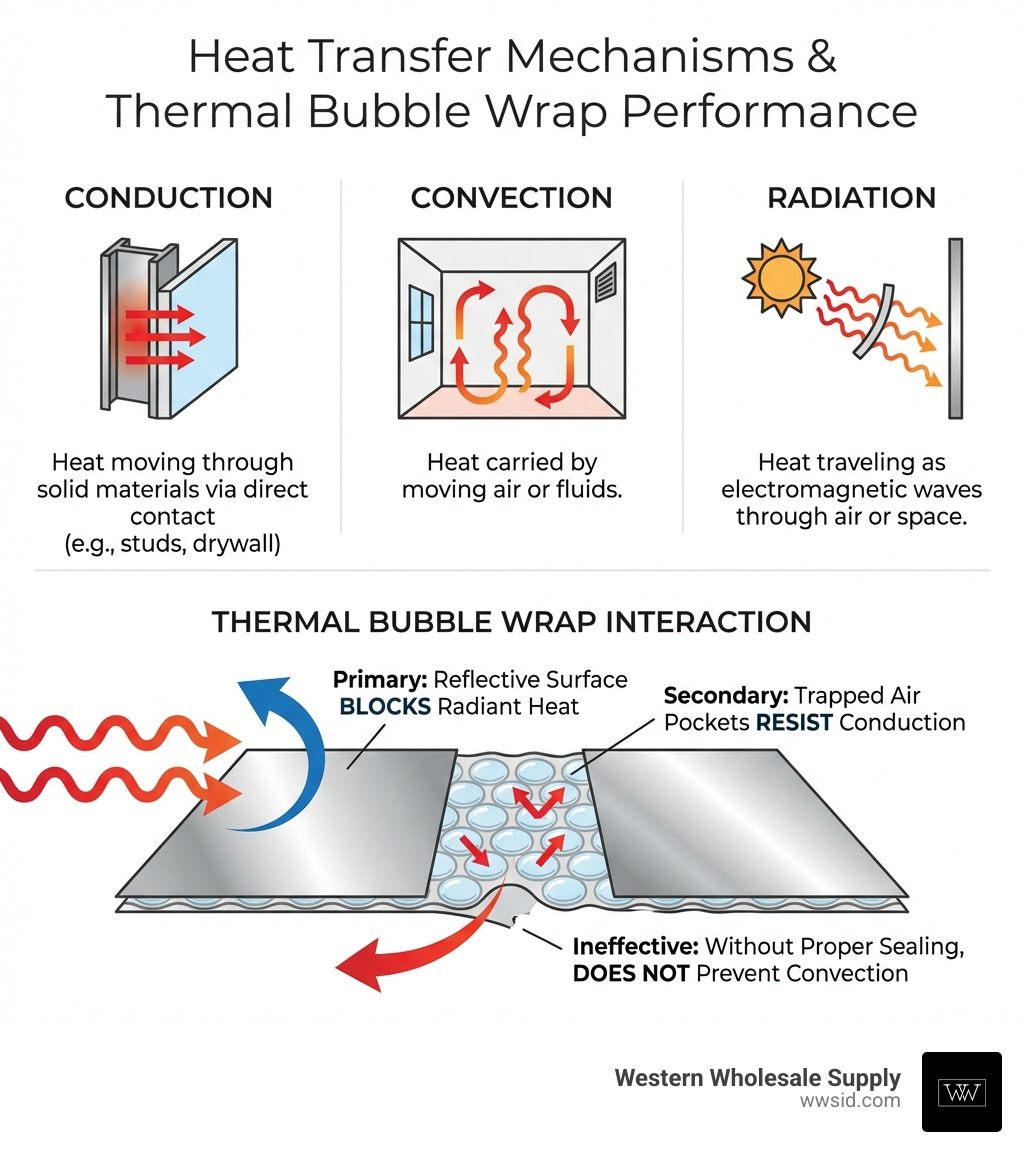
At its heart, heat resistant bubble wrap is a dual-layered system. It combines a highly reflective outer surface, often metalized or foil-faced, with an internal layer of encapsulated air bubbles. This unique combination targets the three main ways heat moves: conduction, convection, and radiation.
Think of it this way: traditional insulation, like fiberglass, primarily slows down conductive and convective heat transfer by trapping air within its fibers. Heat resistant bubble wrap, however, excels at blocking radiant heat. The reflective surface bounces heat away, much like a mirror reflects light. The air bubbles, meanwhile, contribute to resisting conductive heat flow, though to a lesser extent than traditional insulation. Without the reflective surface, you essentially have standard bubble wrap, which has minimal thermal resistance.
The technologies that make this bubble wrap heat-resistant are fairly straightforward but highly effective when understood and applied correctly. It’s all about creating a low-emissivity surface and using the power of trapped air.
The Science of the Shine: The Reflective Layer
The most distinctive feature of heat resistant bubble wrap is its shiny, often metallic, outer layer. This isn’t just for aesthetics; it’s the superhero of its heat-resisting capabilities. This reflective layer is a radiant barrier, designed to reflect radiant heat energy, which is heat that travels in waves, like sunlight.
How does it work? Radiant heat travels from warmer surfaces to cooler surfaces. Our reflective layer has a very low emissivity, meaning it doesn’t absorb much radiant heat, and conversely, it emits very little heat. Instead, it reflects a significant portion of it. For example, when used for thermal shipping, the metalized, reflective layer prevents heat from radiating into a shipment from the surrounding environment.
The effectiveness of this reflection depends on the material’s emissivity value. A new, clean reflective surface might have an average emissivity of 0.05, meaning it reflects 95% of radiant heat. However, this performance can degrade over time. Dust, oxidation, or even light condensation can significantly increase the surface emissivity. Research shows that normal deterioration can increase emissivity to over 0.2, and light condensation can push it to 0.30, drastically decreasing its thermal performance. This is a crucial consideration for long-term applications.
The reflective layer also works best when paired with a low thermal mass. This means the material itself doesn’t hold onto much heat, allowing it to reflect quickly and efficiently without becoming a heat sink itself. This combination of high reflectivity and low thermal mass is ideal for heat resistance.
To dive deeper into the science of how these reflective barriers work, we recommend checking out the Radiant Barrier Fact Sheet from Oak Ridge National Laboratory.
The Power of the Pocket: The Bubble Core
Beneath that shiny exterior lies the familiar bubbled core, but in heat resistant bubble wrap, these aren’t just for cushioning. The internal bubbler layer plays a crucial role in the material’s thermal performance by providing substantial resistance against heat flow.
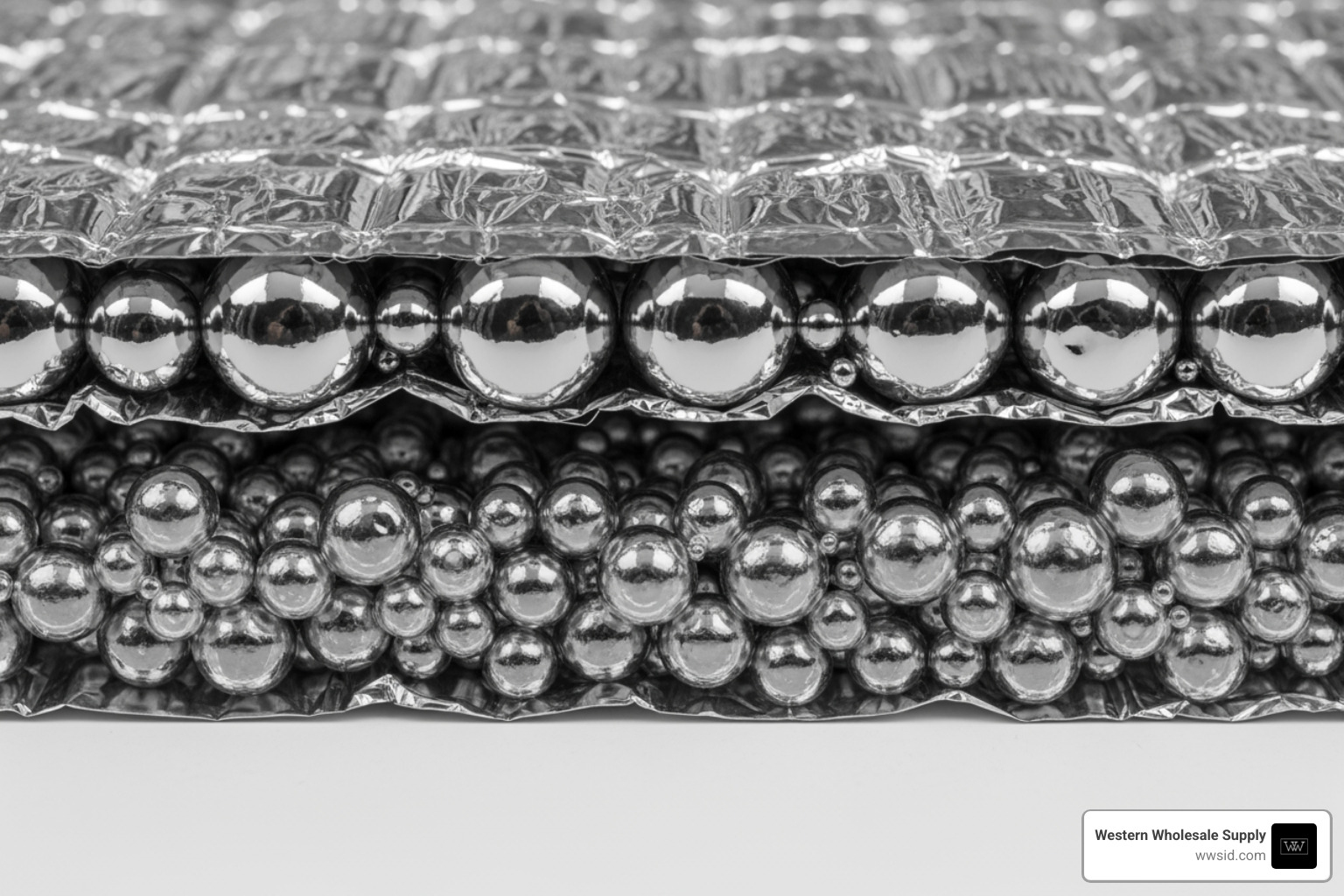
Each individual air bubble acts as a tiny, sealed pocket of air. Air is a poor conductor of heat, so by trapping it, these bubbles effectively reduce conductive heat transfer through the material. The more air pockets, and the more effectively they’re sealed, the better they resist conduction.
Furthermore, these trapped air pockets help to minimize convective heat transfer within the material itself. Convection occurs when heat is carried by moving air. By compartmentalizing the air into small, contained bubbles, the bubble layer prevents large-scale air circulation, reducing heat movement through convection.
You’ll often hear about “single bubble” versus “double bubble” heat resistant bubble wrap. Double bubble simply means there are two layers of bubbles, offering more trapped air and thus greater resistance to heat flow. For instance, greenhouse twinwall bubble insulation, which is a type of double bubble, is only 3/16″ thick but can provide 15% more insulation than other bubble materials twice as thick. This unique construction can drastically reduce greenhouse heating costs by as much as 45%. The internal bubble material’s unique structure provides substantial resistance against heat flow, a testament to over a decade of research into perfecting bubble technology for real-world efficiency.
Thermal Performance: R-Value Reality vs. Marketing Myths
When we talk about insulation, R-value is usually the first thing that comes to mind. It’s a measure of thermal resistance, indicating how well a material resists heat flow. However, with heat resistant bubble wrap, understanding R-value can be a bit tricky, and frankly, sometimes misleading.
The core issue lies in the difference between a material’s inherent R-value and the R-value claimed for an entire assembly. The R-value of the heat resistant bubble wrap material itself is quite low—typically around R-1 to R-1.4. Independent testing of some manufacturers’ products has shown that the actual R-value is approximately 1.1 when tested in accordance with ASTM C 518.
However, manufacturers often make claims of much higher R-values, sometimes as high as R-15.4 or more. These claims are usually for an assembly that includes air gaps. For heat resistant bubble wrap to perform as a radiant barrier, it absolutely requires an air gap on at least one side. Without this air gap, the reflective surface is in direct contact with another material, largely negating its radiant barrier function. This is why you’ll often hear experts like Martin Holladay state that “The claim that bubble wrap is equivalent to R-6 duct insulation is a scam and a fraud.”
The key takeaway here is that heat resistant bubble wrap is not a miracle insulation product that will give you R-15 in a thin layer. Its strength lies in its ability to reflect radiant heat, and this ability is heavily dependent on proper installation that includes an air gap. For a deeper dive into the complexities of R-value, we recommend reading Martin Holladay’s article called Understanding R-Value.
What is the Typical R-Value of heat resistant bubble wrap?
As we’ve mentioned, the R-value for the heat resistant bubble wrap material itself is relatively modest, typically falling in the R-1 to R-1.4 range. For example, Greenhouse Twinwall Bubble Insulation has an R-value of 1.4. This R-value is attributed to the trapped air within the bubbles, which resists conductive heat transfer.
However, when manufacturers claim higher R-values, they are usually referring to a “system R-value” or “assembly R-value.” This includes the R-value of the air spaces adjacent to the reflective surface. For instance, a radiant barrier with a 3/4-inch air space can significantly increase the effective R-value of an assembly by reducing radiant heat flow across that air space. If the material is installed with an unvented air space of 3/4″ or more, it can contribute to a higher overall system R-value.
Several factors can impact these claimed R-values in real-world applications:
- Heat Flow Direction: The R-value performance of reflective insulation can vary depending on whether heat is flowing up, down, or horizontally. Radiant barriers are generally more effective at blocking heat flowing downwards.
- Sealed Air Space: The air gap must be sealed to prevent convective loops, which are currents of air that can carry heat across the gap, diminishing the radiant barrier’s effectiveness.
- Emissivity Degradation: As we discussed, dust, dirt, and oxidation on the reflective surface can increase its emissivity, reducing its ability to reflect heat and thus lowering the effective R-value.
So, while the material itself offers a low R-value, its true thermal performance as a radiant barrier hinges on a combination of its reflective properties and the presence of properly maintained air spaces.
Limitations and Potential Drawbacks
While heat resistant bubble wrap has its merits, it’s crucial to be aware of its limitations and potential drawbacks. We believe in providing you with all the facts so you can make informed decisions for your projects in Idaho and Wyoming.
One of the most significant concerns revolves around fire safety. While many reflective bubble pack insulations can pass standard fire tests like ASTM E 84 for surface burning characteristics, these tests don’t always tell the whole story. When tested in a corner wall test (UL 1715), samples of reflective bubble pack insulation resulted in flash-over fire conditions within 2-1/2 minutes. This is a serious concern, especially if the material is used in exposed applications or areas with specific fire safety requirements.
Another drawback is the potential for performance degradation over time. The effectiveness of the reflective surface relies on its low emissivity. As we’ve noted, normal deterioration, dust accumulation, or oxidation can increase the emissivity value from 0.05 to over 0.2, significantly decreasing thermal performance. The presence of light condensation can further increase surface emissivity to 0.30, turning a highly reflective surface into a less effective one.
Condensation itself can be an issue. If heat resistant bubble wrap is used to insulate ducts, for instance, and installed without a proper air gap, it can become a surface where condensation forms, leading to moisture problems.
Finally, for applications requiring sound dampening, heat resistant bubble wrap offers minimal acoustic value. Due to its closed-cell construction, it doesn’t absorb sound nearly as effectively as fibrous insulations like fiberglass. If noise reduction is a priority, this material won’t be your primary solution.
For a comprehensive look at these issues, particularly concerning residential applications, we recommend reading Stay Away from Foil-Faced Bubble Wrap.
Best Applications and Installation for Thermal Bubble Wrap
Understanding the true nature of heat resistant bubble wrap helps us identify its ideal applications. It’s not a one-size-fits-all solution, but when used correctly, it can be incredibly effective.
Ideal Use Cases for heat resistant bubble wrap
Given its primary function as a radiant barrier and secondary role in resisting conductive heat, heat resistant bubble wrap shines in specific scenarios:
- Duct Insulation: When properly installed with an air gap, it can be an effective way to prevent heat gain or loss from HVAC ducts, especially in unconditioned spaces like attics or crawl spaces. This helps keep the conditioned air at its desired temperature as it travels through your home or business.
- Attic Radiant Barriers: In warmer climates or during the hot Idaho and Wyoming summers, installing heat resistant bubble wrap along the underside of roof rafters can significantly reduce radiant heat transfer into the attic space. This can lead to a cooler attic and reduced cooling loads on your HVAC system.
- Greenhouse Insulation: For our agricultural clients, twinwall bubble insulation can be a game-changer. It provides excellent thermal retention, drastically reducing heating costs by as much as 45% while allowing 80% light transmission. This dual benefit makes it perfect for managing greenhouse temperatures year-round.
- Cold Chain Shipping: This is where thermal bubble rolls truly excel. They are designed to create custom thermal packaging, protecting temperature-sensitive goods like food, plants, and medical supplies during transit. These bubble rolls can provide an effective barrier against moisture, vapor, and odors, and some are even FDA compliant for incidental contact with food. This makes them ideal for ensuring products arrive fresh and intact.
- Crawl Space Walls: In encapsulated crawl spaces, heat resistant bubble wrap can be used on the foundation walls to reduce radiant heat transfer, contributing to a more stable temperature and moisture-controlled environment.
- Metal Buildings: The large, uninsulated metal surfaces of barns, workshops, and commercial buildings can be major sources of radiant heat gain in summer and heat loss in winter. Applying heat resistant bubble wrap to the interior surfaces can help mitigate these temperature swings.
Installation Essentials for Effectiveness
The effectiveness of heat resistant bubble wrap is overwhelmingly dependent on correct installation. Without adherence to these principles, you’re likely to be disappointed with the results.
The single most critical factor is creating an air gap. As we’ve emphasized, the reflective surface needs an air space (typically 3/4 inch or more) adjacent to it to function as a radiant barrier. If the material is directly against another surface, it acts merely as a low R-value conductive insulator. This means using spacers when installing it on surfaces like ductwork or wall studs. These spacers ensure that crucial air pocket is maintained.
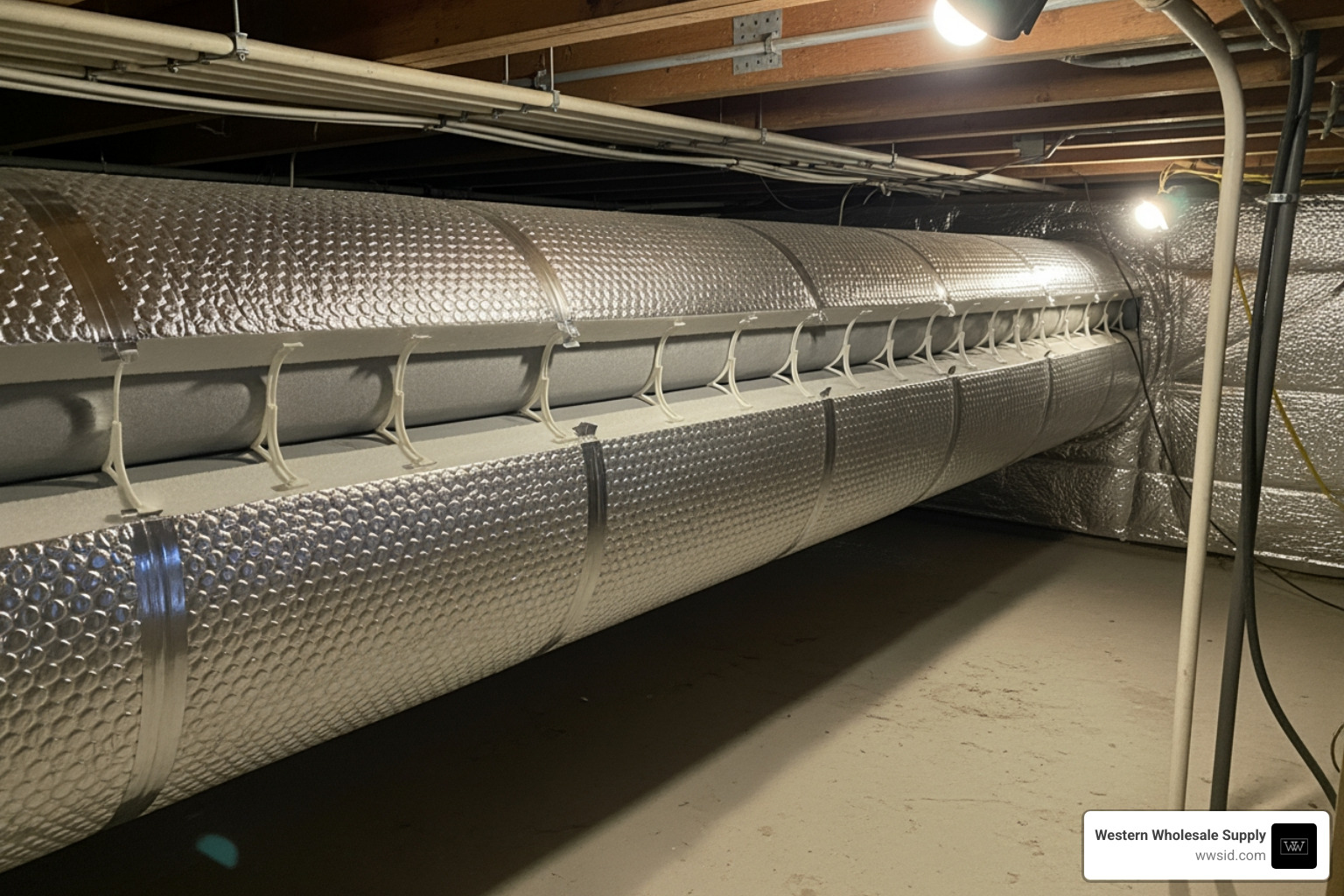
Sealing seams is another non-negotiable step. Any gaps or unsealed edges will allow air movement, leading to convective heat transfer and undermining the barrier’s performance. For greenhouse applications, for instance, it’s recommended to tape sections together with greenhouse poly patching tape (4″ or wider). For other applications, a high-quality foil tape can be used to ensure a tight seal.
Consider the reflective side placement. Generally, the reflective side should face the source of radiant heat you’re trying to block. In an attic in summer, the reflective side would typically face the hot roof deck to reflect heat away. In a cold climate, to retain heat, it might face inward.
For our clients in Idaho and Wyoming, understanding these installation nuances is key to maximizing the benefits of heat resistant bubble wrap. We have the expertise to guide you through these processes and ensure your projects achieve optimal thermal performance. For more detailed guidance on various insulation types and services, explore our offerings at More info about insulation services.
How Does It Compare to Traditional Insulation?
It’s easy to get confused when comparing heat resistant bubble wrap with traditional insulation materials like fiberglass, mineral wool, or cellulose. They both aim to reduce heat transfer, but they do it in fundamentally different ways. Understanding these differences is crucial for selecting the right material for your project.
Performance and Function
The primary distinction lies in how each material tackles heat transfer:
| Feature | Thermal Bubble Wrap (Foil-Faced) | Fiberglass Insulation (Batts/Rolls) |
|---|---|---|
| Primary Function | Radiant barrier (reflects radiant heat) | Conductive/convective barrier (traps air to slow heat flow) |
| R-Value per Inch | ~R-1 to R-1.4 (material only); higher for systems with air gaps | ~R-3 to R-4 per inch (material only) |
| Installation | Requires an air gap to be effective; seams must be sealed | Fills cavities; minimal air gaps within material |
| Moisture Barrier | Often acts as a vapor barrier; can reduce moisture/vapor migration | Not a vapor barrier; requires separate vapor retarder |
| Fire Performance | Can exhibit flash-over in large-scale tests (UL 1715); potential for melting/dripping | Non-combustible; good fire resistance |
| Acoustic Value | Minimal | Good |
| Best Climate Use | Hot/mixed climates (to block heat gain); also for cold chain to maintain temperature | All climates (to slow heat transfer in/out) |
Radiant vs. Conductive Barrier: Traditional insulation materials are designed to slow down conductive and convective heat flow by trapping air within their structure. The R-value of fiberglass, for instance, directly measures its resistance to these forms of heat transfer. Heat resistant bubble wrap, on the other hand, is primarily a radiant barrier. Its reflective surface is excellent at blocking radiant heat from moving across an air space.
Climate Considerations: This difference makes climate a significant factor. In hot or mixed climates (like our warm Idaho summers), a radiant barrier can be highly effective in reducing heat gain from the sun, especially in attics. It reflects the sun’s energy before it can penetrate and heat up your building. In very cold climates, while it still reflects heat, its overall contribution to preventing heat loss might be less significant compared to a thick layer of traditional insulation, which more effectively combats conductive heat loss through walls and ceilings.
Hybrid Approaches: Often, the best solution is a hybrid approach. For example, using a radiant barrier in an attic to reduce radiant heat gain, and then supplementing with traditional insulation to tackle conductive and convective heat transfer through the ceiling. This layered approach leverages the strengths of both materials.
Cost-Effectiveness
Evaluating the cost-effectiveness of heat resistant bubble wrap means looking beyond the sticker price.
Material Cost: Generally, heat resistant bubble wrap can be more expensive per square foot than basic fiberglass batts. However, its cost can be justified in specific applications where its unique properties are beneficial. For instance, for cold chain shipping, the cost of specialized thermal packaging is often a necessary investment to protect valuable, temperature-sensitive goods.
Installation Labor: Installation can sometimes be quicker for large, flat surfaces, but the critical requirement for an air gap means that precise installation, often involving spacers and meticulous sealing, can add to labor costs. If not installed correctly, any savings in material or initial labor could be negated by poor performance.
Long-Term Energy Savings: In the right application, heat resistant bubble wrap can lead to significant energy savings. Reducing radiant heat gain in an attic, for example, can lower cooling bills. For greenhouses, the reported 45% reduction in heating costs is a substantial saving over time. However, if improperly installed or used in an unsuitable application, the energy savings could be minimal, making it a less cost-effective choice.
Choosing the right product for the job requires a clear understanding of heat transfer, the specific needs of your project, and the true capabilities of each material. We’re here to help you weigh these factors for your projects across Eastern Idaho and Western Wyoming.
Conclusion
We’ve peeled back the layers (pun intended!) on heat resistant bubble wrap, revealing its true capabilities and limitations. What we hope you’ve taken away is a nuanced understanding of this unique material.
To recap, heat resistant bubble wrap is first and foremost a radiant barrier. Its metalized, low-emissivity surface excels at reflecting radiant heat, preventing it from entering or escaping a space. The internal air bubbles offer modest resistance to conductive heat transfer. This dual-action mechanism is most effective when a crucial air gap is maintained during installation, allowing the reflective layer to do its job. Without that air gap, you’re left with minimal thermal benefit.
While it’s not a direct replacement for high R-value traditional insulation like fiberglass, it has invaluable applications. From slashing heating costs in greenhouses and protecting sensitive shipments in the cold chain, to enhancing the thermal performance of ducts and attics, heat resistant bubble wrap fills specific niches where its radiant barrier properties are most beneficial. However, we’ve also highlighted its drawbacks, including potential fire safety concerns in exposed applications, susceptibility to performance degradation from dust and condensation, and its limited acoustic value.
At Western Wholesale Supply, we’ve been serving contractors and builders in Eastern Idaho and Western Wyoming since 1963. Our over 60 years of experience have taught us that the right material, properly installed, makes all the difference. We’re committed to providing you with quality building materials and the expertise to ensure your projects are successful and energy-efficient.
Don’t let marketing hype lead you astray. Understand the science, consider the application, and install it correctly. When you do, heat resistant bubble wrap can be a valuable tool in your thermal management arsenal.
