

Why Linear Metal Ceilings Are Changing Modern Spaces
Linear metal ceilings are ceiling systems made from aluminum or steel panels arranged in continuous linear lines, offering a sleek, modern aesthetic combined with excellent durability and acoustic performance. These systems are widely used in commercial, public, and residential spaces where both visual impact and functional performance matter.
Key Benefits at a Glance:
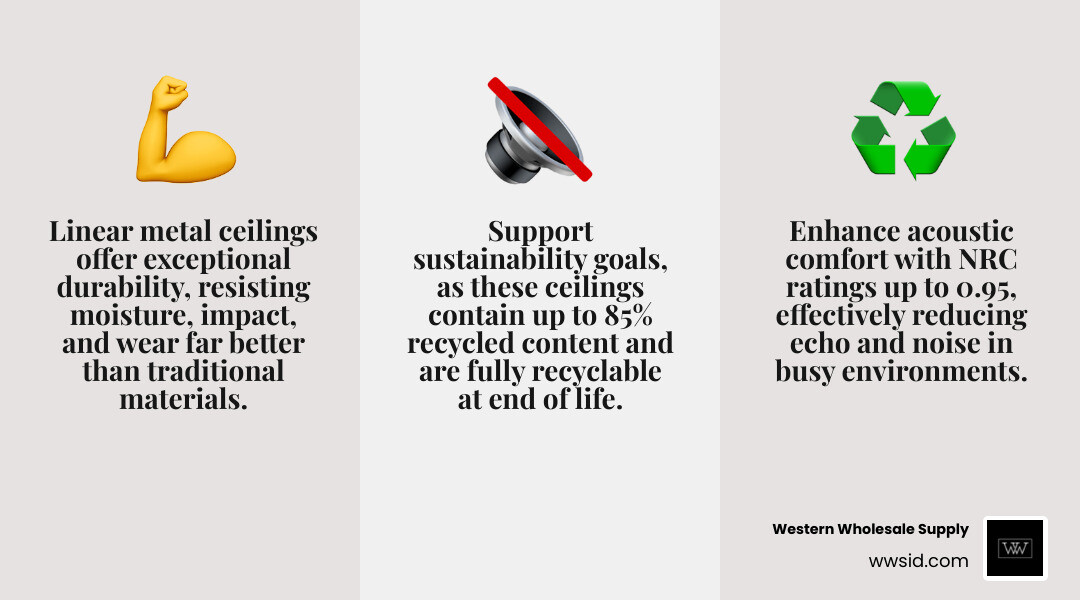
- Durability – Resist moisture, impact, and wear better than traditional ceiling materials
- Acoustic Control – Achieve NRC ratings up to 0.95 with perforated panels and backing
- Design Flexibility – Available in multiple widths, depths, finishes, and configurations
- Low Maintenance – Easy to clean with simple wiping or vacuuming
- Sustainability – Made with up to 85% recycled content and fully recyclable
Linear metal ceilings create clean, contemporary planes or gently rolling waves that add depth and movement to any space. Whether you’re working on an office building, transportation hub, healthcare facility, or retail environment, these systems deliver both visual appeal and long-term performance.
The systems are modular and adaptable. You can choose from closed-reveal panels for a smooth, continuous look, open-reveal systems for better airflow and plenum access, or perforated panels for improved sound absorption. Panel widths typically range from 2″ to 13″, with depths from 1″ to 4″, giving you significant design control.
Installation is straightforward. Most systems use suspension grids or carrier systems that allow for easy panel attachment and removal. This means you maintain full access to utilities above the ceiling—important for HVAC maintenance, electrical work, or future modifications. Many panels are demountable without special tools, making repairs or reconfigurations simple.
Fire safety is built in. Most linear metal ceiling products carry a Class A fire rating, the highest rating available, with flame spread of 25 or less and smoke development of 50 or less. Some systems are engineered as complete fire-resistant assemblies, achieving two- or three-hour ratings in accordance with UL designs.
I’m Jake Bean, a third-generation building materials professional who has worked extensively with ceiling systems including linear metal ceilings across commercial and residential projects throughout Idaho and Wyoming. My background in operations and distribution has given me hands-on insight into what contractors need for successful installations and long-term client satisfaction.
The Core Benefits of Linear Metal Ceilings
When we talk about linear metal ceilings, we’re not just discussing a functional component of a building; we’re exploring an architectural element that significantly improves both the aesthetic and practical aspects of any space. For our clients in Eastern Idaho and Western Wyoming, these ceilings offer a combination of benefits that truly set them apart.
Visual Impact and Design Flexibility
One of the most compelling reasons to choose linear metal ceilings is their unparalleled visual impact. They provide a sleek, contemporary design that can transform an ordinary room into an extraordinary one. Imagine continuous visual planes stretching across a room, creating a sense of depth and movement. This design can be particularly effective in large commercial spaces, where it guides the eye and adds an element of sophistication.
Manufacturers have innovated to allow for incredible design flexibility. We can achieve striated visuals by mixing panel widths, or create dramatic, dimensional effects by varying both widths and depths. For example, some systems offer nominal widths ranging from 2″ to 13″ and depths from 1″ to 4″, allowing for countless configuration possibilities. This versatility extends to creating curved and undulating forms, turning the ceiling into a dynamic architectural feature rather than just a flat surface. These systems are adept at hiding the plenum—the space above the ceiling where ductwork, wiring, and pipes reside—while still allowing easy access. The result is a clean, modern, and professional appearance that lifts the entire environment.
Durability and Low Maintenance
Beyond their good looks, linear metal ceilings are incredibly robust. They are crafted from high-quality metals such as aluminum and steel, ensuring exceptional durability and strength. These materials inherently resist common issues like sag and humidity, making them suitable for a wide range of environments, from the dry climate of Idaho to areas with higher moisture. We’ve seen them hold up remarkably well in various conditions, maintaining their integrity and appearance for years.
Their inherent properties also contribute to excellent impact and scratch resistance, which is a huge plus in high-traffic commercial spaces. When it comes to maintenance, these ceilings are a dream. They are designed for easy cleaning, often requiring just a simple wipe with a damp cloth or a quick vacuum to remove dust and dirt. Some products are even part of “CLEANASSURE” families, meaning they are disinfectable, which is crucial for healthcare facilities and other hygiene-sensitive areas. This ease of maintenance contributes to their longevity and helps preserve the increased property value they bring.
For detailed information on how to keep your ceilings pristine, you can download our cleaning guidelines and download our disinfecting guidelines.
To learn more about the specific products we offer that embody these benefits, please visit our products page.
Types and Customization of Linear Metal Systems
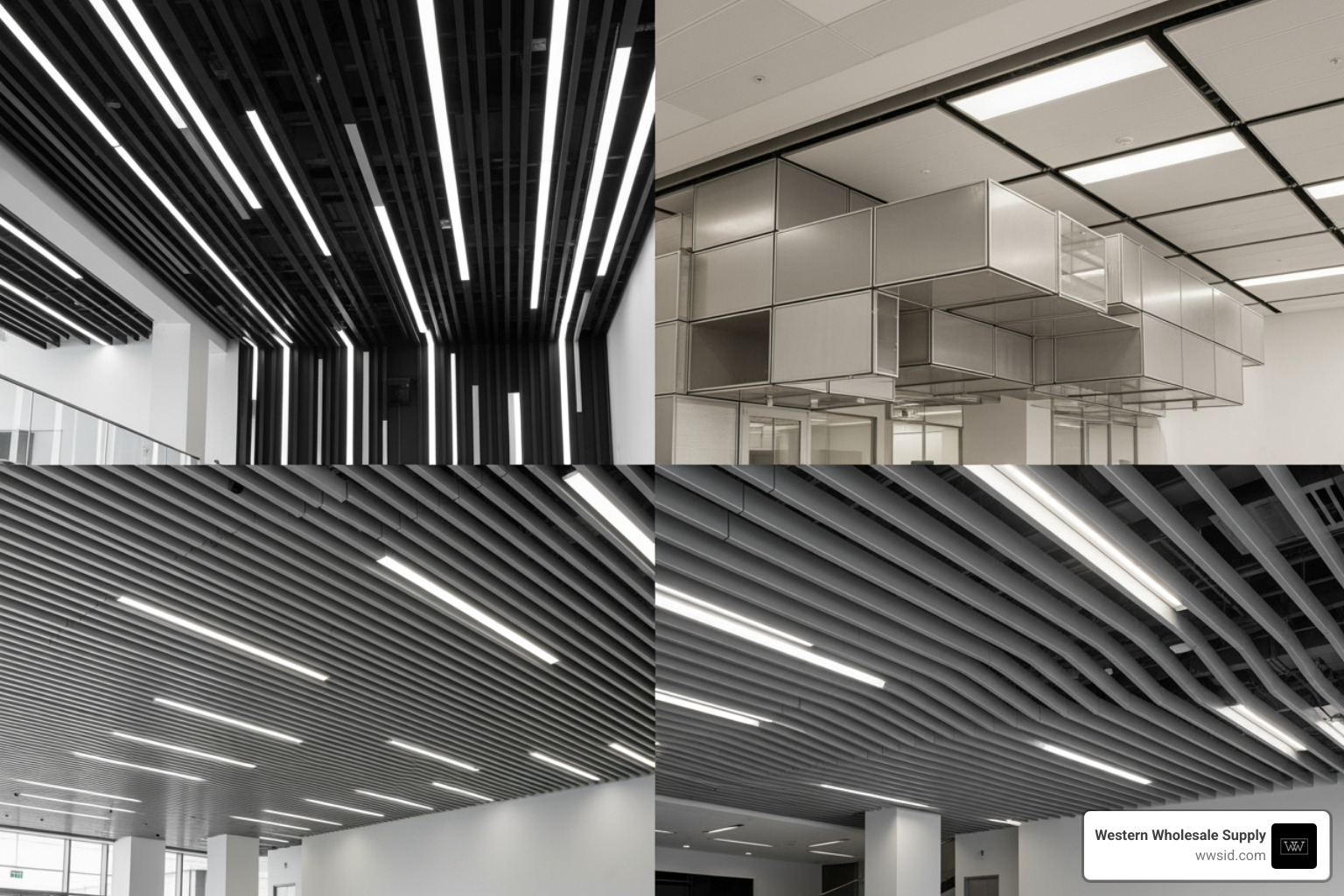
The world of linear metal ceilings is rich with diverse options, each designed to meet specific aesthetic and functional requirements. We often guide our clients through these choices, helping them understand how different modular designs and system components can achieve their vision.
Common System Types
Linear metal ceilings come in several primary configurations:
- Closed-reveal panels: These panels interlock or fit snugly together to create a smooth, continuous surface with minimal gaps. They offer a very sleek and monolithic look, ideal for spaces where a uniform appearance is desired.
- Open-reveal panels: In contrast, these systems feature intentional gaps or “reveals” between the panels. These reveals can be narrow or wide, creating visual interest, and often allow for better airflow or integration of lighting and utilities. They also provide easier access to the plenum above.
- Linear planks: These are individual, elongated panels that are installed in a parallel fashion. They can be of varying widths and depths, and their modular design makes them highly versatile for creating different visual patterns, including striated effects.
- Beam baffles: Instead of forming a continuous ceiling plane, baffles are typically deeper, vertically oriented metal blades suspended from the ceiling structure. They create a strong linear design, add significant design depth, and are excellent for acoustic control without fully closing off the plenum, maintaining an open feel.
- Open-cell systems: These systems use a grid of interlocking metal channels to create an open, cellular look. They provide a unique aesthetic and allow for maximum visibility into the plenum while still defining the ceiling plane.
- Hook-on systems: Designed for convenience, these metal ceiling panels feature specialized cross tees or carriers that allow panels to simply hook on. This design facilitates easy installation and, more importantly, easy plank removal and alignment for maintenance or access.
- Torsion spring systems: These aluminum ceiling panels conceal the suspension grid by utilizing pre-installed torsion springs. This provides a very clean, monolithic look while still offering easy access to the plenum by simply springing the panels down. Some large format panels, up to 4’x10′, are available with torsion spring systems, making installation and plenum access even more efficient.
Each of these systems uses various suspension systems and carrier systems, engineered to ensure stability, proper alignment, and often, ease of installation and access.
Customization Options for Linear Metal Ceilings
One of the most exciting aspects of linear metal ceilings is the vast array of customization options available. Manufacturers understand that every project in Eastern Idaho and Western Wyoming has unique requirements, and they strive to provide solutions that bring architectural visions to life.
Here’s a look at some key customization possibilities:
- Panel widths and depths: As mentioned, panels are available in a wide range of nominal widths (e.g., 2″, 4″, 6″, 8″, 10″, 12″, 13″) and depths (e.g., 1″, 2″, 3″, 4″). This allows for incredible flexibility in creating unique visual patterns and dimensional effects.
- Finishes: The aesthetic possibilities are nearly endless. You can choose from:
- Matte, glossy, and metallic finishes: These provide different levels of sheen and sophistication.
- Wood-grain effects: For those who desire the warmth and natural look of wood but with the durability and performance of metal, realistic wood-look finishes are a popular choice.
- Painted colors: A vast palette of painted colors, including custom options, ensures that the ceiling can perfectly match or complement any interior design scheme.
- Perforation patterns: Beyond aesthetics, perforations play a crucial role in acoustic performance. Different patterns and perforation percentages (e.g., 1/16″ perforations at 5% open reveal) are available, often paired with acoustical backing, to achieve specific sound absorption targets.
- Round vs. square edges: The choice of edge type can subtly alter the overall look, with round edges offering a softer appearance and square edges providing a sharper, more defined line.
This level of customization ensures that whether you’re designing a vibrant retail space or a serene healthcare facility, we can help you specify a linear metal ceiling that perfectly fits your project’s needs and aesthetic goals.
Performance, Safety, and Integration
Modern building design demands more than just good looks; it requires high performance, safety, and seamless integration with other building systems. Linear metal ceilings excel in these areas, offering solutions that contribute to a building’s overall efficiency and occupant comfort.
Enhancing Acoustics and Thermal Performance
Acoustics are paramount in many commercial and public spaces, from busy airports to quiet university libraries. Linear metal ceilings can significantly contribute to a comfortable acoustic environment.
- Sound absorption: Many linear metal systems, especially those with microperforated planks or panels, are designed to achieve high sound absorption. When paired with acoustical backing or insulation in the plenum, they can dramatically reduce echo and reverberation. We’ve seen systems achieve impressive Noise Reduction Coefficient (NRC) ratings, with some reaching up to 0.95. This means they can absorb up to 95% of the sound that strikes their surface, creating much quieter and more comfortable environments.
- Ceiling Attenuation Class (CAC): Beyond absorption, some systems also offer good sound blocking capabilities. A high CAC rating indicates how well a ceiling blocks sound from traveling between adjacent spaces through the plenum.
- Sound reflection: While perforated panels absorb sound, solid or plain metal panels have good sound reflection properties, which can be desirable in spaces like concert halls or theaters where sound projection is key.
- Thermal insulation contribution: While metal itself is a conductor, when used as part of a complete ceiling system with appropriate insulation in the plenum, it can contribute to the overall thermal efficiency of a space by helping to regulate temperature.
Sustainability and Eco-Friendly Aspects
In today’s construction landscape, sustainability is not just a buzzword; it’s a responsibility. Linear metal ceilings align well with green building initiatives.
- High recycled content: Many metal ceiling products boast significant recycled content, with some reaching up to 85%. This reduces the demand for virgin materials and supports a circular economy.
- Recyclable materials: At the end of their long lifespan, aluminum and steel panels are fully recyclable, further minimizing environmental impact.
- LEED criteria support: These products often support various LEED (Leadership in Energy and Environmental Design) criteria, including Common Materials Framework, Climate Health, Human Health, Ecosystem Health, Circular Economy, Occupant Experience, and Energy and Atmosphere.
- Environmental Product Declaration (EPD): Many manufacturers provide EPDs, which offer transparent, third-party verified information about the environmental impact of their products throughout their lifecycle. This commitment to sustainable production practices is something we value deeply for our projects in Idaho and Wyoming.
Integration with Lighting and HVAC
A well-designed ceiling isn’t just a surface; it’s an integrated system. Linear metal ceilings are expertly engineered for seamless integration with other building systems, particularly lighting and HVAC.
- Lighting: They can accommodate a variety of lighting solutions, including recessed downlights that sit flush with the plank face for a sleek aesthetic, or linear light fixtures that complement the ceiling’s linear design. This integration creates a clean, uncluttered look that improves the overall design.
- Air distribution: Many linear metal systems are designed to integrate with air distribution components. Specialized air boots and labyrinth diverters can be incorporated directly into the ceiling, ensuring efficient and aesthetically pleasing airflow. This is particularly evident in systems like USG’s Paraline, which offers various air boot sizes and CFM delivery rates.
- Easy access to plenum: A key functional advantage is the inherent ability of most linear metal systems to provide easy access to the plenum space above. Whether through demountable panels, hook-on systems, or torsion springs, technicians can quickly reach concealed cables, HVAC units, and other utilities without damaging the ceiling.
Fire Performance and Safety Ratings
Safety is non-negotiable. Linear metal ceilings offer robust fire performance and safety ratings that meet stringent building codes.
- Class A fire rating: Most metal ceiling products achieve a Class A fire rating, which is the highest possible rating. This means they have a flame spread of 25 or less and smoke developed of 50 or less, significantly slowing the spread of flames and minimizing smoke production in a fire event.
- Fire-resistant systems: Some products are engineered as part of a complete fire-resistant system, including the tile, grid, and structure itself. These systems can achieve two- or three-hour fire ratings in accordance with UL (Underwriters Laboratories) designs, providing improved safety in floor/ceiling assemblies. For additional information on these crucial safety features, you can refer to resources on fire-resistant ceilings.
- Seismic suitability: For regions like ours that may experience seismic activity, many linear metal ceilings are tested and approved for seismic areas (e.g., zones A-F). This ensures structural integrity and safety during an earthquake, a critical consideration for any building project in Idaho and Wyoming. Wind load resistance is also tested for exterior applications, with some systems resisting winds up to 120 mph.
Applications and Installation Considerations
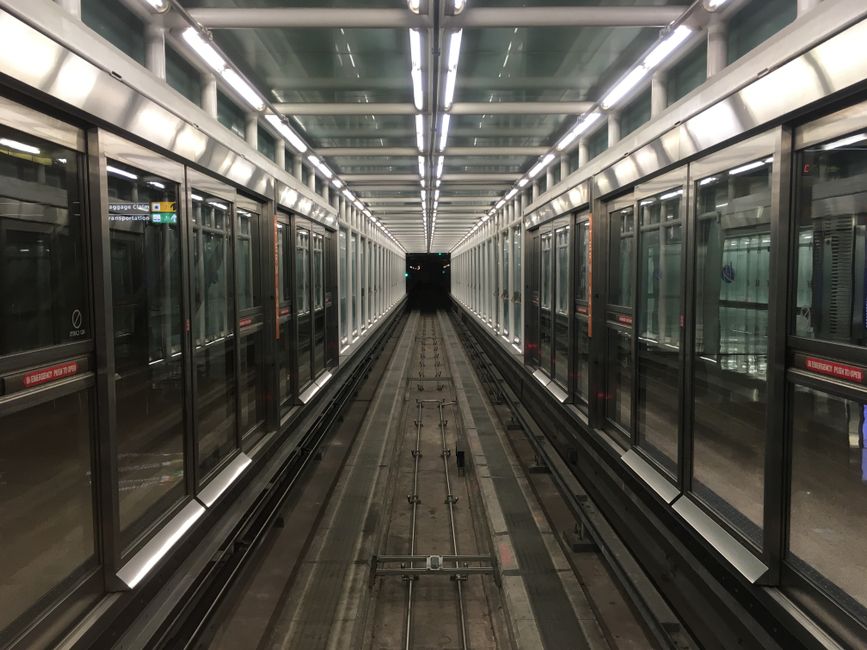
The versatility and performance of linear metal ceilings make them suitable for an incredibly diverse range of applications. From busy public spaces to neat residential interiors, we see them changing environments across Eastern Idaho and Western Wyoming.
Typical Applications and Environments
- Office buildings: Creating professional, modern appearances that improve productivity and reflect a forward-thinking brand identity.
- Retail stores: Designing inviting and visually appealing environments that lift the shopping experience.
- Transportation hubs: Providing durable and sleek solutions for high-traffic areas like airports, train stations, and bus terminals.
- Healthcare facilities: Offering easy-to-clean surfaces, mold resistance, and acoustic control for hospitals and clinics.
- Educational institutions: Delivering robust, functional, and acoustically sound ceilings for schools and universities.
- Hospitality spaces: Adding a touch of elegance and contemporary style to hotels, restaurants, and entertainment venues.
- Exterior soffits: Utilizing moisture-resistant and wind-uplift-tested systems for outdoor covered areas, maintaining design continuity from interior to exterior.
- High-humidity areas: Their moisture-resistant properties make them ideal for basements, bathrooms, and even swimming pool areas.
Key Considerations for Installing Linear Metal Ceilings
While linear metal ceilings are designed for efficient installation, proper planning and execution are crucial for optimal performance and aesthetics.
- Framework setup: The installation begins with establishing a robust support structure or suspension system. This foundational framework must be accurately leveled and aligned to ensure the entire ceiling system is straight and true.
- Suspension systems: Depending on the chosen linear metal system, various carrier systems (e.g., T-bar carriers, symmetrical carriers, hook-on systems) are used to suspend the panels. These systems are often engineered for quick and secure panel attachment.
- Panel alignment: Precision is key. Panels must be correctly aligned and positioned to maintain continuous linear lines and consistent reveals. This is especially important for systems with open reveals or those creating intricate patterns.
- Demountable panels: A significant advantage is the demountability of many linear metal panels. This allows for quick and easy access to the plenum above without specialized tools, simplifying maintenance of HVAC, electrical, and plumbing systems.
- Access to plenum: Ensure that the chosen system provides adequate and convenient access points to the plenum for future service and inspections.
- Field-cut panels: While many systems come in standard lengths, some panels may need to be field-cut to fit perimeter conditions or integrate with various fixtures. Proper tools and techniques are essential to ensure clean, precise cuts that maintain the panel’s integrity and finish.
- Curved construction: For projects requiring curved or radius ceilings, specific installation methods and components are available. This might involve custom-formed carriers or field manipulation of standard components to achieve the desired architectural curve.
- Professional installation: Given the precision and integration required, professional installation is highly recommended to ensure the ceiling system performs as designed and meets all aesthetic and safety standards. Our team can connect you with experienced installers who understand the nuances of these advanced systems.
Frequently Asked Questions about Linear Metal Ceilings
We often get excellent questions from our clients in Eastern Idaho and Western Wyoming about linear metal ceilings. Here are some of the most common inquiries we address:
Are linear metal ceilings good for acoustics?
Yes, many systems are designed for acoustic performance. Perforated panels combined with acoustical insulation backing can achieve excellent sound absorption, with NRC ratings as high as 0.95, making them ideal for reducing noise and echo in open spaces. We’ve seen microperforated planks, for example, achieve an NRC of 0.70, significantly improving speech intelligibility in various environments. The presence of reveals between panels can also allow sound to enter the plenum, where it can be absorbed by insulation.
Can linear metal ceilings be used in outdoor or high-humidity areas?
Absolutely. Many linear metal ceiling systems are made from aluminum and are treated with finishes that resist moisture, corrosion, and wind uplift. This makes them an excellent choice for exterior soffits, covered walkways, bathrooms, and swimming pool areas. These systems are specifically engineered to withstand various weather conditions and high-humidity environments, offering durability and aesthetics where traditional materials might fail.
How are linear metal ceilings maintained?
Maintenance is minimal. They are durable and easy to clean. Dust and loose dirt can be removed with a soft brush or vacuum. For more thorough cleaning, they can typically be wiped down with a damp cloth and a mild, non-abrasive cleaner. For products that are part of disinfectable families, specific guidelines are available for spray, wipe, or fog disinfection. Periodic inspections for any signs of corrosion or damage are recommended, especially in harsh environments, but generally, these ceilings require very little upkeep.
How Manufacturers Differentiate Their Linear Metal Ceiling Offerings
Manufacturers in the linear metal ceiling industry differentiate their offerings through a combination of design innovation, performance capabilities, ease of installation, and commitment to sustainability.
- Design Flexibility and Aesthetics: Some manufacturers focus on providing an expansive range of panel widths and depths, allowing for unique dimensional designs and visual effects. This includes options for various reveal types (open, closed, narrow, wide) and a broad palette of finishes, from standard painted colors to realistic wood-grain effects, custom color matching, and metallic options. They might offer round or square edge types, or systems specifically designed for creating curved or undulating ceiling forms.
- Superior Performance: A key differentiator is often acoustic performance, with some systems offering microperforated panels and specialized acoustic backing to achieve high NRC ratings, sometimes up to 0.95. Others prioritize specific fire ratings (Class A, UL-rated assemblies), seismic suitability (tested for zones A-F), or robust wind load resistance for exterior applications.
- Installation and Maintenance: Ease of installation is a major selling point. This can include systems with simple hook-on mechanisms, torsion springs for concealed grids and easy plenum access, or modular designs that speed up the installation process. Manufacturers also highlight low maintenance requirements, with some offering disinfectable product lines and protective films for faster, cleaner installation.
- Sustainability: Companies distinguish themselves by offering products with high recycled content (up to 85%), providing Environmental Product Declarations (EPDs) and Health Product Declarations (HPDs), and ensuring their products support green building certifications like LEED. Their commitment to eco-friendly manufacturing processes is also a strong differentiator.
- Specialized Applications and Integration: Some offerings are custom for specific environments, such as high-humidity areas or exterior use, with improved moisture and corrosion resistance. The ability to seamlessly integrate with lighting (e.g., flush-mounted downlights, linear fixtures) and HVAC systems (e.g., specialized air boots) is also a significant differentiator, allowing for comprehensive ceiling solutions.
- Service and Support: Beyond the product itself, manufacturers differentiate through comprehensive project support. This includes providing detailed technical specifications, installation guides, complimentary design assistance, custom acoustical reports, and efficient lead times for standard products.
By focusing on these areas, manufacturers ensure that their linear metal ceiling systems meet the diverse and evolving needs of architects, designers, and contractors across various project types.
Conclusion
As we’ve explored, linear metal ceilings offer an unparalleled blend of modern aesthetics, robust durability, and high-level performance. From creating a sleek, professional appearance in an office to providing critical acoustic control in a busy transportation hub, these systems deliver on multiple fronts. Their design flexibility allows for everything from continuous visual planes to dramatic curved forms, while their metal composition ensures longevity, resistance to environmental factors, and minimal maintenance.
The ability of linear metal ceilings to seamlessly integrate with lighting, HVAC, and other building systems, coupled with their strong fire safety and sustainability credentials, makes them a smart choice for any contemporary construction project. We are proud to offer innovative solutions that bring design freedom and functional excellence to our clients in Eastern Idaho and Western Wyoming.
At Western Wholesale Supply, we believe in providing not just products, but solutions. As a third-generation family business with over 60 years of experience in Eastern Idaho and Western Wyoming, we can help you find the perfect ceiling solution for your project. Our commitment to reliable, on-time delivery and exceptional customer service ensures that your project runs smoothly from start to finish.
Ready to transform your space with the elegance and performance of linear metal ceilings? Let us help you lift your next project.
Elevate Your Projects: Discover Western Wholesale Supply’s Acoustical Ceiling Solutions
