

Why Steel Framing is Changing Modern Construction
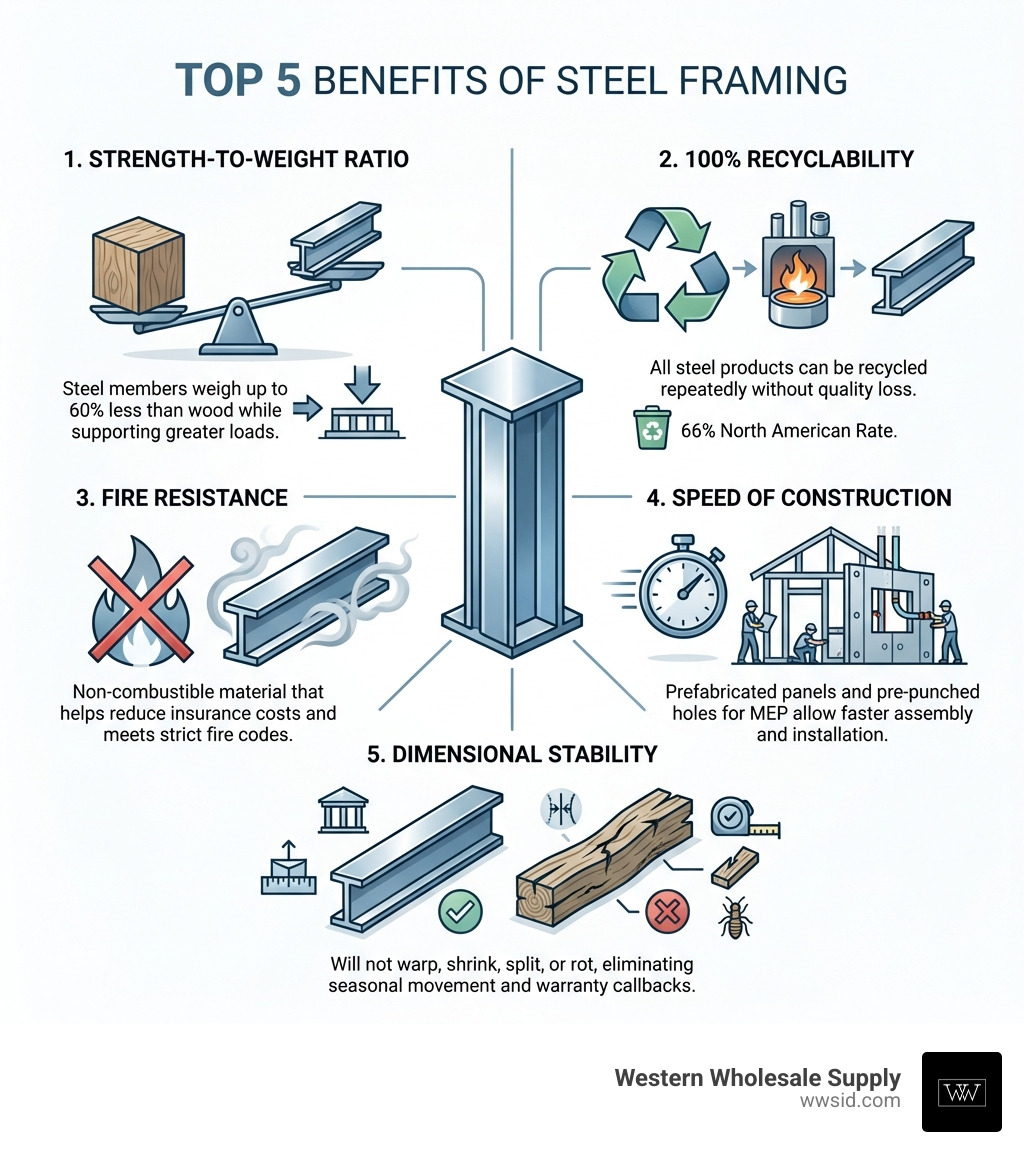
Steel framing is a building method that uses structural steel members—formed either through hot-rolling or cold-forming—to create the skeleton of a building. It has become the dominant choice for commercial construction and is rapidly gaining ground in residential projects due to its exceptional strength, durability, and sustainability.
Key Facts About Steel Framing:
- Material Types: Hot-rolled steel (heavy beams and columns) and cold-formed steel or CFS (lightweight studs and joists)
- Primary Benefits: Superior strength-to-weight ratio, 100% recyclable, non-combustible, dimensionally stable, and resistant to rot, termites, and warping
- Common Applications: Commercial buildings, mid-rise residential, student housing, hotels, and increasingly single-family homes
- Market Share: Over 50% of non-residential construction in the U.S. uses structural steel framing
- Weight Advantage: Steel members weigh up to 60% less than comparable wood members, reducing foundation loads
- Standards: Governed by AISC (American Institute of Steel Construction) and AISI (American Iron and Steel Institute) specifications
For contractors, steel framing offers predictable performance, reduced callbacks, and faster project completion. Unlike wood, steel doesn’t shrink, warp, or split, which eliminates common issues like nail pops and drywall cracks that lead to warranty calls. The material arrives precisely manufactured, often with pre-punched holes for MEP routing, speeding up installation and reducing jobsite waste to just 2% (compared to 20% for wood).
The evolution from iron to steel frames in the late 1800s made skyscrapers possible. Today, technological advances in cold-formed steel manufacturing have extended these benefits to projects of all sizes, from single-family homes to multi-story commercial buildings.
At Western Wholesale Supply, through our history of supplying building materials in Eastern Idaho and Western Wyoming, we’ve seen how steel framing‘s reliability and performance benefits contractors. While it requires some adjustment in tools and techniques, the long-term benefits—from reduced callbacks to improved structural performance—make it a smart choice for modern construction.
The Fundamentals of Structural Steel
The history of steel framing is tied to modern architecture. Before the mid-19th century, buildings relied on masonry or iron. The development of the Bessemer process in 1855 made mass-produced, high-strength steel available, ushering in the age of the skyscraper. Steel’s ability to form a strong “structural skeleton” changed construction, allowing buildings to reach new heights. The Home Insurance Building (Chicago, 1885) pioneered this method, and the Rand McNally Building (Chicago, 1890) became the first true steel-framed building in the U.S.
At its core, steel framing uses a grid of vertical steel columns and horizontal I-beams to create a “structural skeleton” that supports the floors, roof, and walls. This system is strong in both tension and compression, offering immense design flexibility. Steel beams can support long spans, which is ideal for creating large windows and open floor plans without numerous load-bearing walls. This adaptability makes steel framing a versatile choice for nearly any architectural layout.
Our team at Western Wholesale Supply knows the importance of understanding the materials that form the backbone of your projects. We’re proud to offer a wide range of building Products to meet your construction needs.
Hot-Rolled vs. Cold-Formed Steel (CFS) Framing
When we talk about steel framing, it’s important to distinguish between its two primary forms: hot-rolled steel and cold-formed steel (CFS). While both are steel, their manufacturing processes and applications differ significantly.
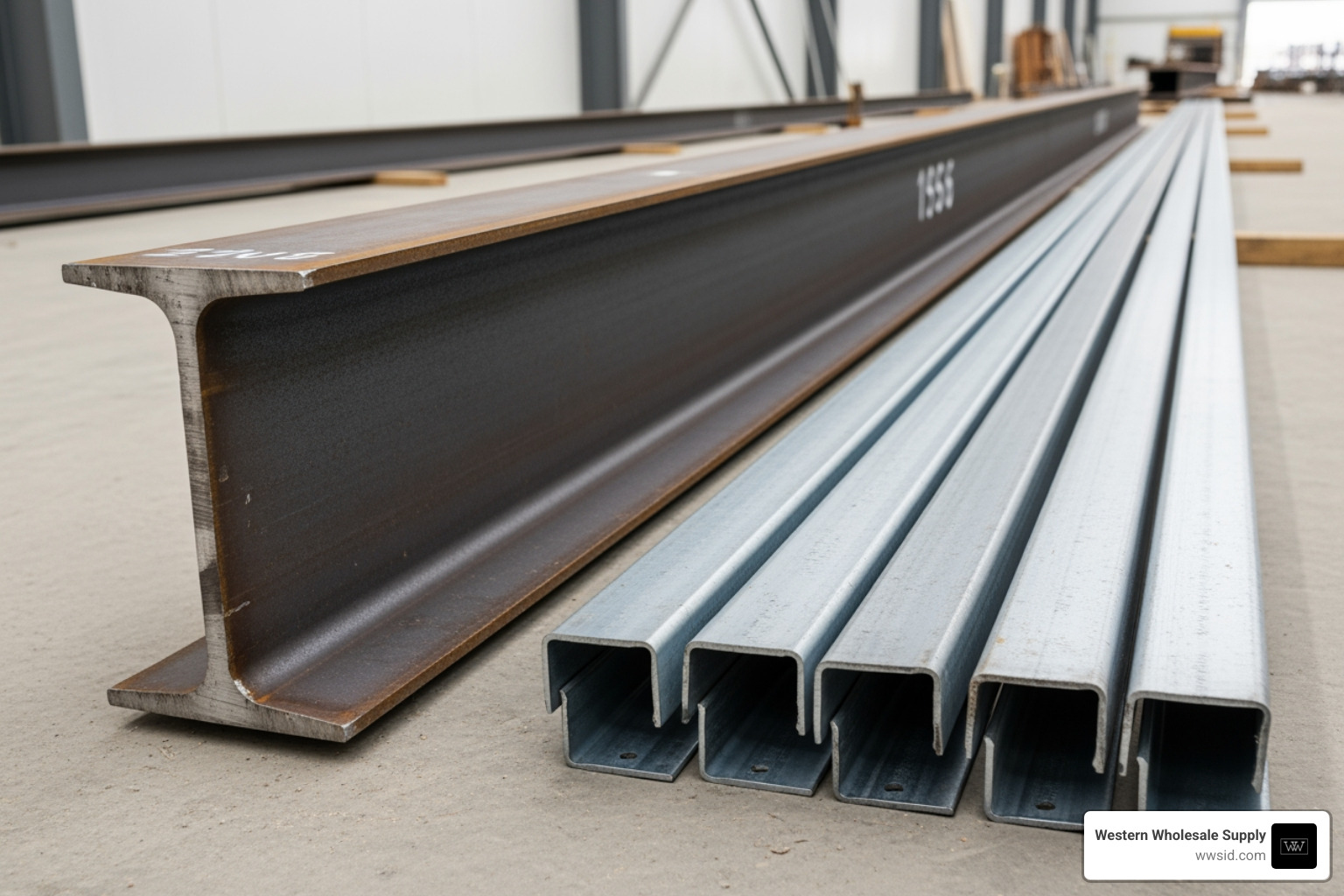
Hot-rolled steel is formed at high temperatures (over 1,700 °F) into large, robust sections like I-beams and columns. These thick, strong members form the primary “heavy steel” skeleton in large commercial and industrial buildings, carrying immense loads and providing the foundational strength for skyscrapers.
In contrast, cold-formed steel (CFS) framing, or lightweight steel framing (LSF), is made by roll-forming galvanized sheet steel at room temperature. This process creates precise profiles like C-sections and U-shaped tracks. CFS members come in various thicknesses (gauges) for a wide range of structural and non-structural applications.
The applications for these two types of steel framing are quite distinct:
- Hot-rolled steel is used for the primary structural skeleton—the large columns and beams—in high-rise commercial buildings, industrial complexes, and large-span structures.
- Cold-formed steel (CFS) is standard for interior, non-load-bearing partition walls in commercial construction. It is also increasingly used for structural applications in mid-rise residential buildings, hotels, and single-family homes, especially where resistance to rot or termites is needed.
Key North American Standards and Organizations
Ensuring the safety and quality of steel framing in our projects across Eastern Idaho and Western Wyoming relies on adherence to established standards. In North America, key organizations govern the design, fabrication, and erection of structural steel.
The primary authority in the United States is the American Institute of Steel Construction (AISC). AISC develops comprehensive standards and specifications for structural steel construction, ensuring buildings are designed to withstand various loads and environmental conditions.
For cold-formed steel (CFS) framing, the American Iron and Steel Institute (AISI) is crucial. AISI publishes extensive standards and design guides for CFS. Local building codes in Idaho and Wyoming often reference AISI publications, such as the North American Standard for Cold-Formed Steel Structural Framing (AISI S240), providing builders with comprehensive provisions.
These standards are integrated into national and international building codes, such as the International Building Code (IBC). By following these guidelines, we ensure that every steel-framed structure we supply materials for is built to the highest levels of safety, performance, and durability.
For a deeper dive into the foundational documents that guide steel framing construction, we encourage you to explore the AISC steel standards overview.
Best Advantages of Using Steel Framing
When we consider steel framing for a project, we’re opting for a suite of advantages that contribute to a superior, more resilient, and sustainable build. From its inherent strength to its environmental benefits, steel framing offers compelling reasons to be the material of choice for modern construction.
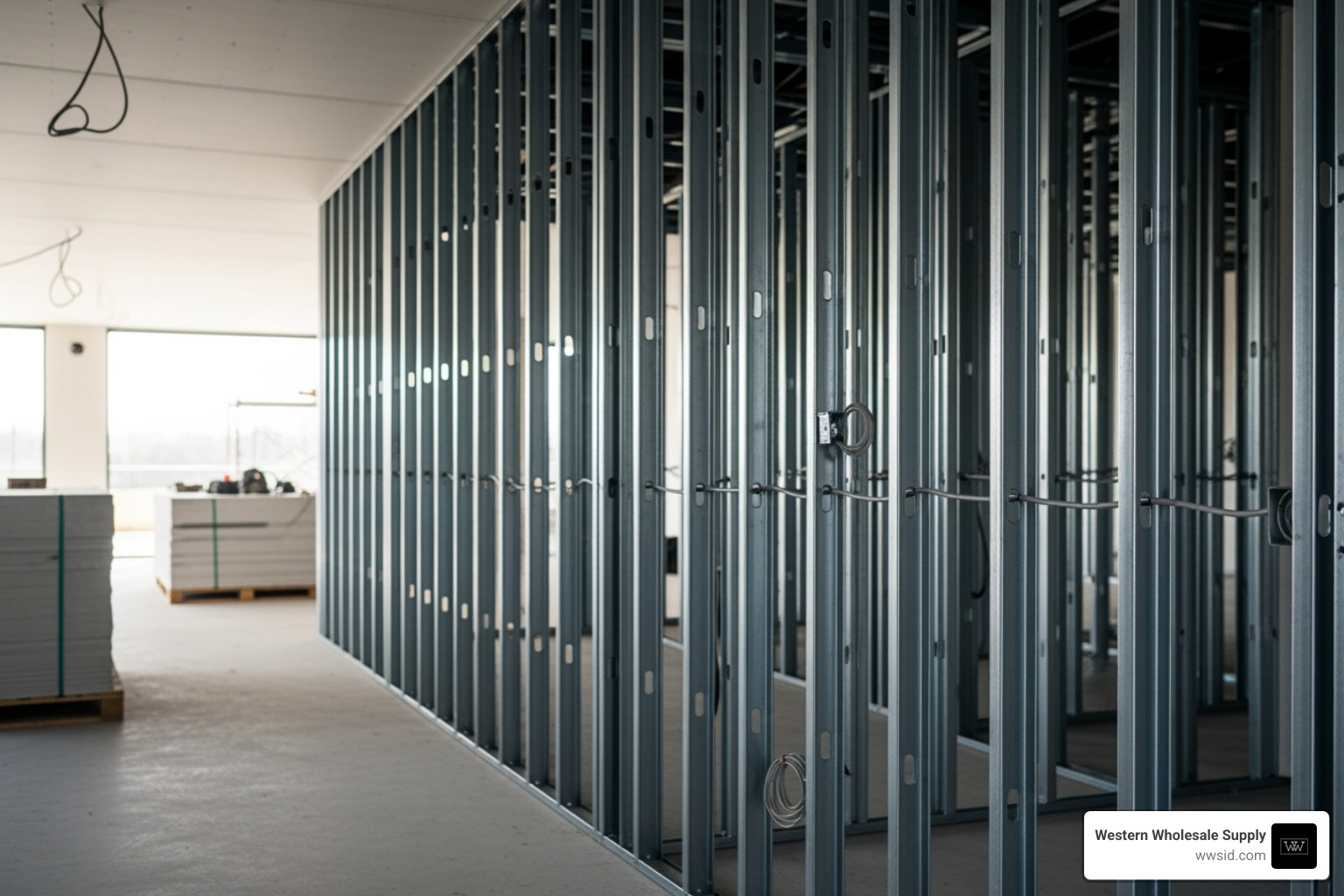
One of the most appreciated benefits on the job site is the dimensional stability of steel. Unlike wood, steel framing will not shrink, warp, split, or rot. This means walls stay perfectly straight, eliminating common issues like nail-pops and drywall cracks. This consistency translates directly into fewer warranty callbacks, saving builders time and money and giving homeowners peace of mind.
Beyond stability, steel framing boasts exceptional durability and longevity. It is non-combustible, meaning it won’t fuel a fire, which can contribute to reduced insurance premiums. It is also inherently resistant to termites, vermin, rot, and mold—a significant advantage where moisture or pests are a concern. This resistance protects the building’s structural integrity and contributes to improved indoor air quality by preventing mold growth and not emitting volatile organic compounds (VOCs). The zinc coating on steel framing materials can protect against corrosion for hundreds of years, suggesting a very long service life.
Superior Strength and Resilience
The strength-to-weight ratio of steel framing is remarkable. Cold-formed steel (CFS) offers a much higher strength-to-weight ratio than wood, meaning it can achieve greater load-bearing capacity with less material. Steel members weigh up to 60% less than comparable wood members, which can lead to lighter foundation and seismic loads—a key advantage in our region.
This superior strength also translates into exceptional resilience against natural disasters. Because of its strength and ductility, steel framing is excellent at resisting earthquakes by absorbing seismic energy without catastrophic failure. The inherent strength and robust connections of steel framing also make it highly resistant to high winds and other severe weather events.
A unique property of cold-formed steel is its post-buckling strength. Unlike timber, which fails abruptly once it buckles, CFS retains significant strength even after initial buckling. The material redistributes stresses, allowing the stud to continue carrying a load. This gives engineers a valuable design advantage, making CFS a more reliable material for demanding applications.
Environmental and Sustainability Benefits
In today’s construction landscape, sustainability is a critical consideration. Steel framing stands out as an exceptionally environmentally friendly choice.
One of its most compelling attributes is its 100% recyclability. All steel products can be recycled repeatedly without any degradation or loss of properties. At the end of a building’s life, the steel frame can be recovered and reused indefinitely. The steel industry is North America’s largest recycler, with an impressive overall recycling rate of 66% for all steel products.
Furthermore, steel framing contains a high percentage of recycled content. Each piece of CFS, for instance, typically contains a minimum of 25% recycled material, which significantly reduces the environmental footprint of steel-framed buildings.
Another practical environmental benefit is the dramatic reduction in jobsite waste. Because steel framing can be supplied to the exact lengths required, it reduces waste to around 2%, compared to 20% for wood framing. This minimizes landfill contributions and lowers costs for waste disposal.
Practical Considerations for Building with Steel Framing
Embracing steel framing for your construction projects in Eastern Idaho and Western Wyoming brings a host of practical advantages that streamline the building process.
One of the most significant benefits is the potential for prefabrication and panelization. Steel members are manufactured to precise standards, making them ideal for off-site assembly into wall panels, floor systems, and roof trusses. These components can be delivered to the job site ready for fast assembly, which can significantly reduce project timelines and labor costs.
Lighter material handling is another clear advantage. Steel members weigh up to 60% less than wood, making them easier to handle on-site. This often reduces the need for heavy equipment and improves worker safety.
The precision and consistency of steel members are unparalleled. Uniformly manufactured, every stud is straight and true, eliminating the variability of wood. This precision ensures that walls are plumb, floors are level, and the structure is built with exceptional accuracy.
Integration with MEP (Mechanical, Electrical, Plumbing) trades is often smoother with steel framing. Many CFS studs come with pre-punched holes for rapid installation of wiring and pipes, saving time for trades. Plastic grommets can be used to protect wires from the sharp edges of the steel, ensuring a safe installation.
Insulation, Fire, and Acoustic Performance
When building with steel framing, we pay careful attention to insulation, fire protection, and acoustic performance to ensure a comfortable and safe building.
Thermal bridging, or heat transfer through conductive materials, is a key consideration with steel. To counteract this, all steel framing must incorporate a ‘thermal break’—a layer of insulating material placed between the steel framing and the exterior cladding to improve energy performance.
Effective Insulation strategies for steel walls are crucial. Insulation must be installed snugly within steel profiles, leaving no gaps. Proper planning for junctions and openings is key to ensuring a continuous thermal envelope. Using wider framing or adding exterior insulation can further improve thermal performance.
Regarding fire performance, while steel won’t burn, it will deform under high heat. Therefore, steel frames require protection to maintain structural integrity during a fire. This is typically achieved by encasing members in fire-resistant materials like concrete or specific Drywall assemblies. We help contractors select the right fire-rated systems to meet local fire codes.
Acoustic performance is another area where thoughtful design is key. While steel is a poor sound insulator, effective acoustic isolation can be achieved by using high-performance materials like Quietrock EZ Snap and separating the interior linings from the steel framing. This prevents sound from traveling directly through the steel, ensuring a quieter environment.
Tools and Training for Cold-Formed Steel Framing
Transitioning to cold-formed steel (CFS) framing might seem daunting, but experienced framers adapt relatively easily. It’s less about relearning framing principles and more about becoming familiar with new components and tools.
The learning curve primarily involves adapting to a specific set of tools and fasteners unique to steel framing. The basic skills of measurement, cutting, and assembly remain.
Here’s a list of essential tools for cold-formed steel framing:
- Adjustable-torque screw gun: Crucial for driving screws without over-tightening.
- Aviation snips: For quick, clean cuts in lighter gauge steel.
- Chop saw: Equipped with a metal-cutting blade for straight, accurate cuts.
- Clamps: Invaluable for holding members in place during assembly.
- Pneumatic pin-nailer: Used for attaching sheathing and drywall.
- Hand seamer: For bending and shaping lighter gauge steel.
- Swivel-head electric shear: Offers efficient, precise cutting.
- Magnetic level: Essential for ensuring plumb and level installations.
Regarding fasteners, the most common types are self-drilling and self-piercing screws. Self-piercing screws are for thin-gauge steel, while self-drilling screws have a drill bit-like tip ideal for thicker steel. Structural connections typically use No. 8 and No. 10 screws. Other methods include powder-actuated fasteners, crimping, and riveting.
Frequently Asked Questions about Steel Framing
We often hear similar questions from builders and homeowners considering steel framing for their projects. Let’s address some of the most common ones.
How does the cost of steel framing compare to wood?
This is perhaps the most frequent question we get. While the initial material cost of steel framing might sometimes be slightly higher than wood, it’s crucial to look at the total cost of construction and ownership.
Steel framing offers significant savings that offset this difference:
- Reduced Labor: Steel can be installed on 24” centers instead of 16” for wood, requiring fewer studs. Prefabrication further reduces on-site labor.
- Less Waste: Supplied to exact lengths, steel framing reduces jobsite waste to around 2% (vs. 20% for wood), lowering disposal costs.
- Insurance Savings: The non-combustible nature of steel can lead to discounts on builders’ risk and property insurance.
- Minimized Warranty Callbacks: Steel’s dimensional stability virtually eliminates issues like nail-pops and drywall cracks, saving builders significant repair costs.
- Price Stability: Steel prices have historically been more stable than fluctuating lumber prices, allowing for better budget forecasting.
When all these factors are considered, steel framing can be cost-neutral or even less expensive than wood framing over the life of a project.
Is steel framing suitable for residential homes?
Absolutely! While historically dominant in commercial construction, steel framing is rapidly becoming a material of choice for residential homes, particularly in our areas of Eastern Idaho and Western Wyoming.
The benefits for homeowners are substantial:
- Straight Walls and Floors: Steel framing ensures a level, plumb structure that maintains its integrity, eliminating nail pops and squeaky floors.
- Pest and Rot Resistance: Steel is impervious to termites, insects, rot, and mold—a huge advantage in damp or pest-prone areas.
- Improved Safety: Steel is non-combustible, offering superior fire resistance. Its strength also makes it excellent at resisting earthquakes and high winds.
- Design Flexibility: The strength of steel allows for larger open spaces and longer spans, enabling creative and open-plan designs.
- Improved Indoor Air Quality: Steel does not off-gas VOCs, contributing to a healthier indoor environment.
The skeletons of homes we see in the early stages of construction are increasingly replacing wood framing with CFS, especially in areas where wood quickly rots or becomes infested with termites.
What are the main applications for cold-formed steel (CFS)?
Cold-formed steel (CFS) framing is incredibly versatile and has a wide range of applications.
Initially, CFS was widely used for interior, non-load-bearing partition walls in commercial buildings because it is lightweight, strong, non-combustible, and easy to install.
However, advancements now allow CFS to be used for structural applications, including:
- Load-bearing walls in mid-rise and multi-housing buildings.
- Floor joists and roof trusses for entire building envelopes.
- Columns, decking, and load-bearing support.
- It has become the material of choice for student dormitories, assisted living facilities, and hotels, where developers seek efficiency, durability, and safety.
CFS members have been adapted to meet almost any project need, including specialized connectors. Its strength and ductility make it ideal for construction in regions subject to high winds or earthquakes. Our team at Western Wholesale Supply has been serving Eastern Idaho and Western Wyoming since 1963, and we’ve seen the evolution of construction materials. You can learn more about our company’s history and our commitment to providing the best materials for your projects.
Build Stronger and Smarter with Steel
As we’ve explored, steel framing offers a compelling combination of strength, sustainability, and efficiency that makes it a superior choice for modern construction. From its ability to create robust, resilient structures that stand up to natural disasters, to its environmental benefits of 100% recyclability and reduced waste, steel framing is truly a material for the future.
Its dimensional stability eliminates common construction headaches, leading to fewer warranty callbacks and happier clients. The precision manufacturing and potential for prefabrication translate into faster, more efficient builds, saving valuable time and resources. For homeowners, steel-framed buildings offer peace of mind with improved safety, pest resistance, and improved indoor air quality. For builders, it provides predictable performance and a competitive edge.
For your residential and commercial construction projects in Eastern Idaho and Western Wyoming, Western Wholesale Supply is your trusted partner. With over 60 years of experience, we provide high-quality steel framing, drywall (including Quietrock EZ Snap), insulation, and CertainTeed acoustical ceiling materials, backed by reliable, on-time delivery and exceptional customer service. We understand the unique needs of building in our region and are here to help you complete projects efficiently and confidently.
Ready to build with the strength and precision of steel? Explore our comprehensive steel framing solutions today to talk with our team in Idaho Falls or Pocatello.
