

Why Acoustic Control Matters in Every Build
Acoustic grid ceiling tiles are specialized drop-in panels designed to absorb sound and reduce noise within a space. Here’s what makes them different from standard ceiling tiles:
Key Benefits:
- Sound absorption – NRC ratings from 0.70 to 1.05 (higher = better)
- Noise reduction – Controls echo and reverberation in rooms
- Sound blocking – CAC ratings measure sound transmission between spaces
- Easy installation – Fits standard T-bar suspended grid systems
- Design flexibility – Available in multiple materials, textures, and colors
- Economical Options – Come in a wide price range to fit any budget
Common Materials:
- Mineral fiber
- Fiberglass
- Polyester (PET) with up to 60% recycled content
- Stone wool
Unwanted noise is one of the most overlooked problems in commercial and residential construction. Echo bounces off hard surfaces. Conversations become difficult to follow. Workers lose focus. Customers feel uncomfortable.
Acoustic grid ceiling tiles solve this problem by absorbing sound waves instead of reflecting them back into the room. Unlike standard ceiling tiles that act as hard barriers, acoustic tiles use porous materials to trap sound energy and reduce reverberation time. The result is a quieter, more comfortable space where speech is clearer and concentration is easier.
These tiles work within standard suspended ceiling systems—the T-bar grids you already know how to install. They drop into place just like regular tiles, but deliver measurable acoustic performance. Whether you’re building an office, school, healthcare facility, or restaurant, the right acoustic tile can transform how a space sounds and feels.
At Western Wholesale Supply, we’ve spent decades helping contractors select and source acoustic grid ceiling tiles for projects ranging from quiet office spaces to busy school cafeterias. We’ve seen how the right ceiling system can make or break a project’s success, affecting everything from comfort and speech clarity to the overall look and function of the space.
The ABCs of Acoustic Ceilings: What They Are and Why They Matter
In Eastern Idaho and Western Wyoming, creating comfortable, productive environments means managing sound. It’s not just about what you see, but what you hear—or rather, what you don’t. This is where acoustic grid ceiling tiles truly shine.
What Are Acoustic Grid Ceiling Tiles?
At their core, acoustic grid ceiling tiles are specialized panels made from porous materials like mineral fiber, fiberglass, or stone wool, designed to absorb sound waves. Unlike standard tiles that reflect sound and create echo, acoustic tiles act like a sponge. Their composition allows sound waves to enter and dissipate as heat, effectively trapping the noise and reducing reverberation.
These tiles are made to fit into a suspended ceiling system, also known as a “drop ceiling.” A metal grid hangs from the structural ceiling, and the acoustic tiles simply “drop in.” This makes them a versatile solution for new construction and renovations, allowing for sound quality improvements without major structural changes.
The key difference from standard tiles is purpose. While regular tiles offer basic aesthetics and hide ductwork, acoustic tiles are engineered for sound absorption, turning a ceiling into an active part of your building’s acoustic design.
The Primary Benefits of Improved Acoustics
The benefits of acoustic grid ceiling tiles go beyond just making a room quieter; they fundamentally improve the experience of a space. In a busy office in Idaho Falls or a school cafeteria in Pocatello, proper acoustics can prevent spaces from becoming overwhelming.
- Noise Reduction: By absorbing sound, acoustic tiles prevent noise from building up, leading to a calmer environment.
- Improved Speech Clarity: Reduced reverberation makes voices clearer and easier to understand, which is crucial for meeting rooms, classrooms, and restaurants.
- Reduced Stress: Quieter environments promote relaxation and well-being, an important factor in healthcare settings and workplaces.
- Increased Focus: Minimizing distracting background noise helps people concentrate and maintain productivity in offices and libraries.
- Comfortable Environments: These benefits combine to create spaces that feel better, whether it’s a doctor’s office in Idaho Falls or a retail store in Jackson, Wyoming.
More Than Just Sound: Added Advantages
Beyond sound control, acoustic grid ceiling tiles offer other practical advantages:
- Hiding Plumbing and Ductwork: Like standard drop ceilings, they conceal infrastructure like wiring, HVAC ducts, and plumbing while allowing easy access for maintenance.
- Improved Light Reflectance (LR): Many tiles have high LR values, reflecting more light into the room. This can make a space feel brighter and reduce energy costs from artificial lighting.
- Improved Room Aesthetics: Modern tiles come in a vast array of colors, textures, and designs, turning a plain ceiling into an architectural feature.
- Increased Property Value: A building with superior acoustics and modern finishes is more desirable, potentially increasing its market value and tenant satisfaction.
- Fire Safety: Many acoustic tiles are Class A fire-rated (ASTM E84 and UL723), meeting stringent safety standards and providing peace of mind.
We believe in providing solutions that not only meet but exceed expectations. To learn more about how these versatile solutions can improve your projects, explore our guide: Elevate Your Projects: Discover Western Wholesale Supply’s Acoustical Ceiling Solutions.
Decoding the Specs: How to Choose the Right Acoustic Grid Ceiling Tiles
Choosing the right acoustic grid ceiling tiles requires understanding key performance metrics that directly impact how a space sounds and feels. Just as you’d select skis based on terrain and skill, you should select tiles based on your project’s acoustic goals.
Understanding Key Performance Metrics: NRC and CAC
Two acronyms are essential for acoustic performance: NRC and CAC.
-
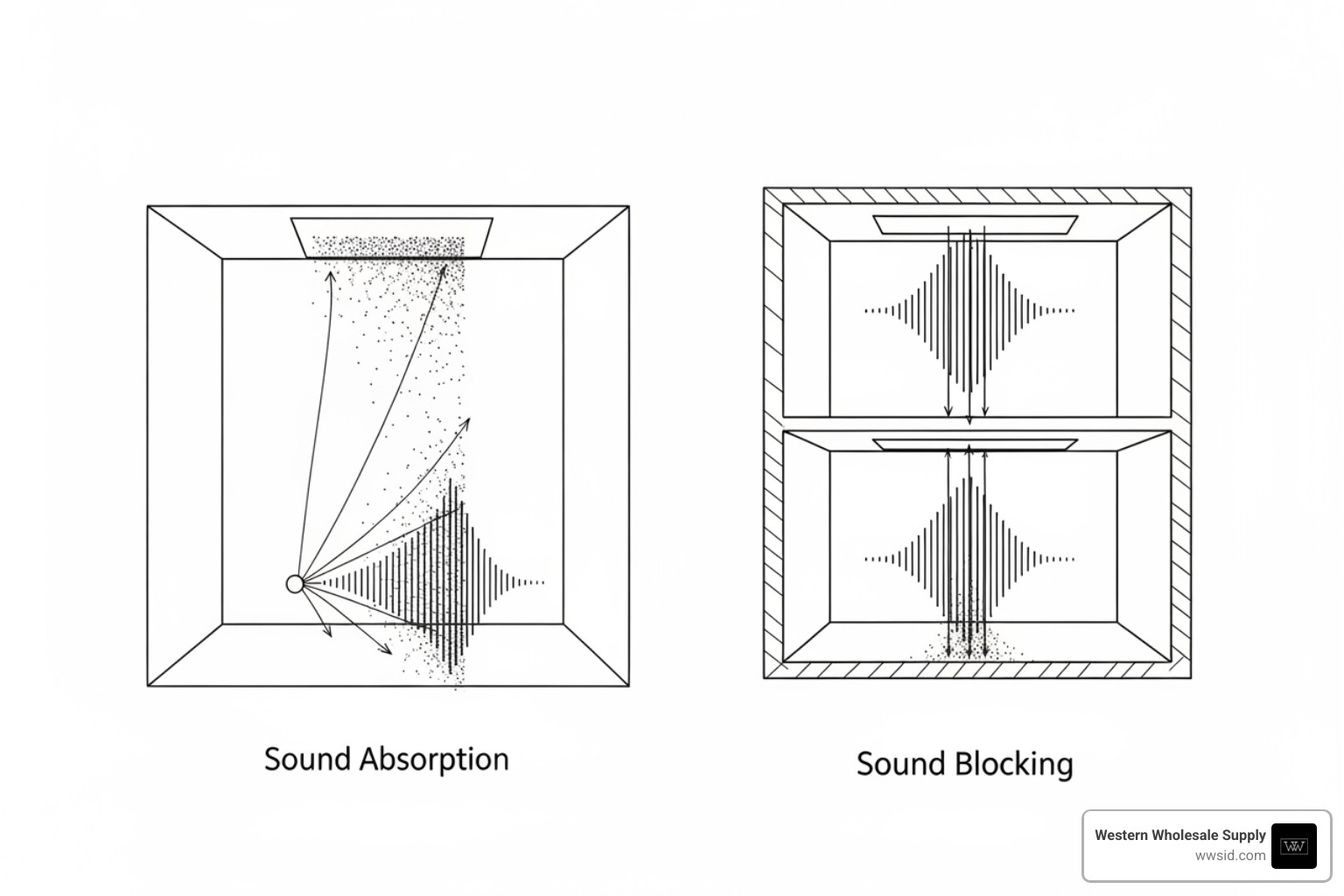
Noise Reduction Coefficient (NRC): This metric measures how much sound a panel absorbs within a room. Rated on a scale from 0.0 (total reflection) to 1.0 (total absorption), a higher NRC means better sound absorption. An NRC of 0.70 indicates the tile absorbs 70% of sound. Ratings typically range from 0.70 for general use to 1.05 for specialized environments. A good balance for many commercial spaces is an NRC of 0.75 to 0.90.
-
Ceiling Attenuation Class (CAC): While NRC handles sound within a room, CAC rates a tile’s ability to block sound transmission between adjacent rooms sharing a common plenum (the space above the ceiling). A higher CAC value means less sound will travel into the next room, which is critical for privacy in offices or meeting rooms.
The right balance depends on the application. An open-plan office in Jackson, Wyoming, needs a high NRC to reduce chatter, while private offices require a high CAC for confidentiality.
Other Important Ratings to Consider
Beyond NRC and CAC, other ratings affect a tile’s performance:
- Light Reflectance (LR): Measures how much light a tile reflects. A high LR (0.80+) can make a room feel brighter and reduce lighting costs.
- Fire Rating (Class A, ASTM E84, UL723): A Class A fire rating is non-negotiable for most commercial buildings, indicating low flame spread and smoke development for occupant safety.
- Sag and Humidity Resistance: Essential for humid environments like kitchens or areas with temperature fluctuations, this ensures tiles maintain their shape and appearance.
- Mold and Mildew Resistance: Important for our climate, this feature prevents microbial growth, promoting healthier indoor air quality.
- Durability: In high-traffic areas, durable tiles that resist impact and scratches reduce long-term maintenance and replacement costs.
Budgeting for Your Project
The cost of acoustic grid ceiling tiles typically ranges from $0.97 to $13.09 per square foot. This wide range reflects the different materials, performance levels, and designs available. Factors influencing the final price include:
- Material Type: Basic mineral fiber is most affordable, while high-performance fiberglass, stone wool, or specialty PET panels cost more.
- Performance Ratings: Tiles with higher NRC/CAC ratings or specialized features like extreme humidity resistance are more expensive.
- Design Complexity: Standard white tiles are economical. Textured, colored, patterned, or 3D tiles increase the cost.
- Thickness and Size: Thicker tiles or custom dimensions may cost more than standard 2×2 ft or 2×4 ft tiles.
At Western Wholesale Supply, we help you balance performance, aesthetics, and cost. To estimate your material needs, please use our convenient tool: Use our material estimator to plan your needs. For more in-depth information, visit our Resources page.
A World of Design: Materials, Styles, and Customization
Today’s acoustic grid ceiling tiles offer a playground for designers, blending superior sound control with stunning visual effects. This means you don’t have to compromise on your architectural vision in Eastern Idaho or Western Wyoming.
Common Materials and Their Properties
The core material of an acoustic grid ceiling tile determines its performance, cost, and durability. Here’s a comparison of common types:
| Material Type | Performance (Acoustic) | Cost Range | Durability | Key Properties |
|---|---|---|---|---|
| Mineral Fiber | Good (NRC 0.55-0.75) | Low to Moderate | Good | Most common, affordable, fire-resistant, available in many textures. |
| Fiberglass | Excellent (NRC 0.70-1.00) | Moderate to High | Good | Lightweight, high NRC, good humidity resistance, often faced with fabric for aesthetics. |
| Polyester (PET) | Very Good (NRC 0.10-0.85) | Moderate to High | Excellent | Highly customizable, durable, often made from recycled content (e.g., 60% post-consumer), carbon neutral options. |
| Stone Wool | Excellent (NRC 0.90-1.05) | Moderate to High | Excellent | Inherently fire-resistant, moisture-resistant, durable, excellent sound absorption, often anti-static. |
Each material offers unique benefits. For instance, our PET tiles often contain a minimum of 60% post-consumer recycled content, making them a great choice for sustainable projects. Stone wool is renowned for its fire resistance and high NRC values, ideal for demanding environments.
From Standard to Standout: Styles and Aesthetics
The days of plain white ceiling tiles are over. Acoustic grid ceiling tiles now come in a wide array of styles:
- Textured vs. Smooth Finishes: Choose from smooth, non-fissured surfaces for a modern look, or opt for textures and patterns to add visual depth.
- Edge Details: The tile’s edge profile impacts the final look.
- Square Edge (Lay-in): Tiles drop into the grid, leaving it visible. This is the most straightforward and economical option.
- Tegular Edge: A recessed edge drops the tile below the grid, creating a shadow line that partially conceals the grid for a more refined look.
- Tongue and Groove: These interlock for a seamless appearance, though they are less common for grid systems.
The combination of grid size (e.g., 15/16″ or 9/16″ wide) and edge profile dramatically affects the ceiling’s visual impact. To dive deeper, you can Learn more about edge profile details.
- Colors and Patterns: Beyond white, tiles are available in a spectrum of colors and patterns, from subtle scoring to bold geometric designs.
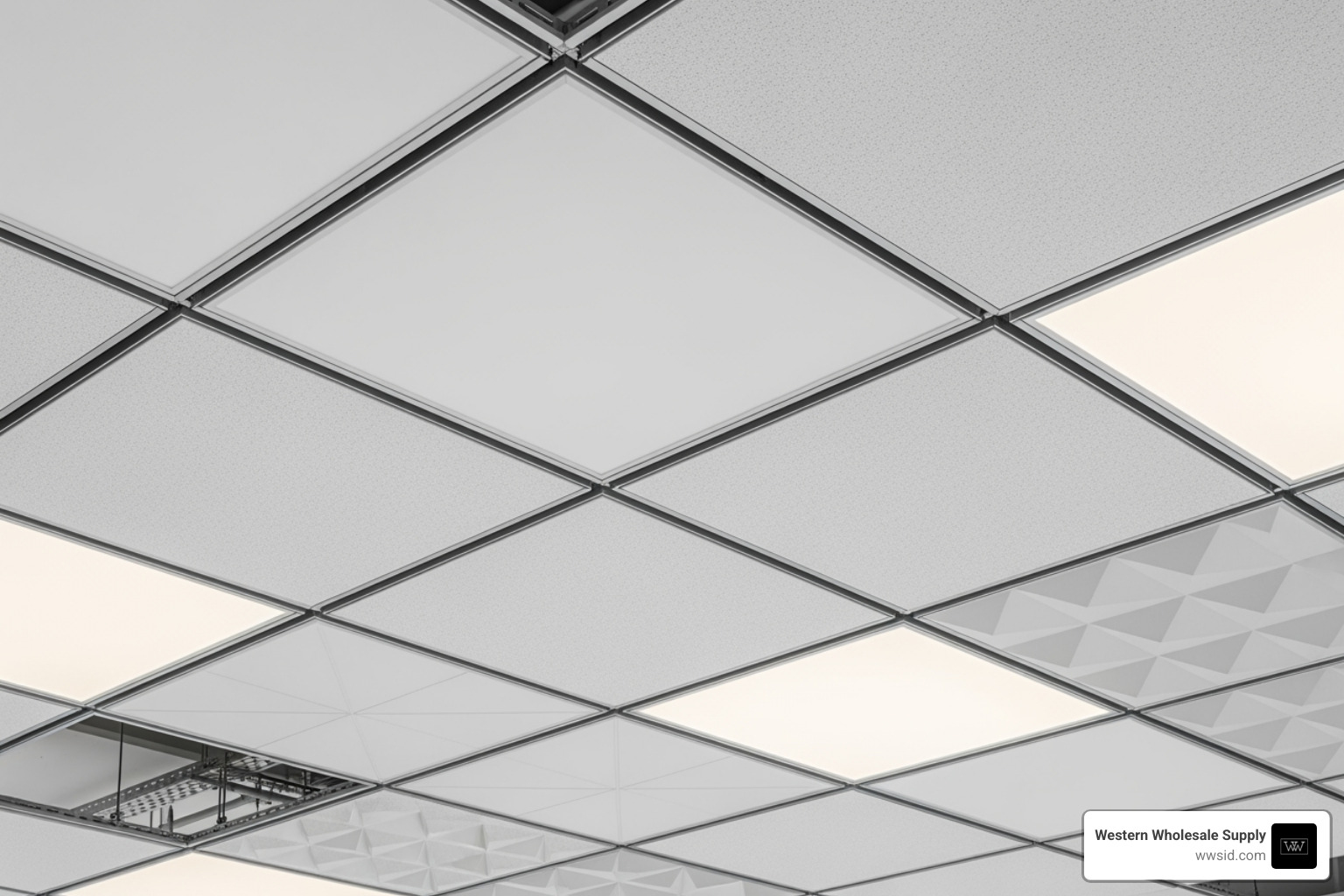
- 3D and Geometric Shapes: For unique architectural statements, 3D tiles integrate with standard systems to create dynamic, eye-catching ceilings.
Contribution to Green Building
Sustainability is a key part of modern construction. Acoustic grid ceiling tiles can help create environmentally responsible buildings:
- LEED and WELL Standards: Many acoustic tiles, like our GridWay panels, contribute to LEED and WELL Building Standard certifications by promoting energy efficiency and occupant health.
- Post-Consumer Recycled Content: It’s common to find tiles with significant recycled content. Some PET tiles, for example, contain at least 60% post-consumer materials, reducing waste.
- Carbon Neutral Products: Some manufacturers now offer carbon-neutral tiles, offsetting their carbon footprint to minimize environmental impact.
- Healthier Indoor Environments: Many tiles are low-VOC (Volatile Organic Compound), contributing to better indoor air quality, which is crucial for schools, healthcare facilities, and offices.
From Plan to Placement: Installation and Applications
Acoustic grid ceiling tiles are versatile and relatively easy to install, offering a practical solution for diverse projects across Idaho Falls and Western Wyoming.
Common Applications for Acoustic Grid Ceiling Tiles
These tiles are suitable for a wide range of applications where acoustic control is needed:
- Commercial Offices: Reduce noise and improve speech intelligibility to boost productivity.
- Education Facilities: Control noise in classrooms, libraries, and cafeterias to improve student concentration.
- Healthcare Settings: Lower noise levels to improve patient comfort, privacy, and staff focus.
- Retail Spaces: Create a quieter, more inviting shopping environment for customers.
- Restaurants: Manage background noise so patrons can enjoy conversations.
- Home Theaters & Recording Studios: Absorb reflections for optimal sound quality.
- Industrial Environments: Reduce worker noise exposure to improve safety and comfort.
Installation and Grid System Basics
Installing acoustic grid ceiling tiles is a straightforward process using a suspended ceiling system.
- Suspended T-bar Grid System: A metal T-bar grid is suspended from the structural ceiling with hanger wires, creating a framework for the tiles.
- Lay-in Tile Installation: The acoustic tiles simply “lay in” or “drop in” to the grid openings. This is quick and allows easy access to the plenum space above for maintenance.
- Designing Around Fixtures: Best practice is to have lighting, sprinklers, and other fixtures supported by the grid itself, not the tiles. This allows for tile removal without disturbing them.
- Trimming Tiles: Tiles can be easily trimmed with a utility knife for a custom fit around perimeters and columns.
- Professional Installation: While DIY-friendly, professional installation ensures precision, optimal performance, and compliance with local building codes in Pocatello or Idaho Falls.
Maintenance and Durability
Acoustic grid ceiling tiles are designed for durability and simple maintenance.
- Cleaning Methods: Most tiles have cleanable surfaces that can be wiped with a damp cloth, ideal for hygienic environments.
- Impact and Scratch Resistance: In high-traffic areas, tiles with improved impact and scratch resistance prevent damage and reduce long-term costs.
- Long-Term Performance: Quality acoustic tiles maintain their NRC and CAC ratings over their lifespan, ensuring consistent sound control.
- Ensuring Acoustic Integrity: Proper maintenance, including regular cleaning and prompt repairs, preserves the acoustic properties of the tiles.
To explore the wide range of products we offer that combine excellent acoustic performance with durable, easy-to-maintain finishes, visit our Explore our range of products page.
Frequently Asked Questions about Acoustic Tiles
Here are answers to common questions we hear from contractors and builders across Eastern Idaho and Western Wyoming about acoustic grid ceiling tiles.
Are acoustic ceiling tiles good for soundproofing?
This is a common misconception. Acoustic grid ceiling tiles are excellent for sound absorption within a room, but not for complete soundproofing.
- Sound Absorption (NRC): This measures how well a tile absorbs sound inside a space to reduce echo and improve clarity.
- Sound Blocking (CAC): This measures how well a tile blocks sound from traveling between rooms through the ceiling plenum.
True soundproofing requires a comprehensive strategy, including specialized wall construction and sealed openings, to completely isolate a room from external noise. Acoustic tiles are a crucial part of sound control, but they won’t make a room soundproof on their own.
How much do acoustic ceiling tiles typically cost?
The cost for acoustic grid ceiling tiles generally ranges from $0.97 per square foot to $13.09 per square foot. The price depends on several factors:
- NRC/CAC Ratings: Tiles with higher sound absorption (NRC) or sound blocking (CAC) capabilities cost more.
- Material: Economical mineral fiber is at the low end, while high-performance fiberglass, stone wool, or specialty PET panels are at the high end.
- Design and Aesthetics: Standard white tiles are the most affordable. Textured, colored, patterned, or 3D designs increase the price.
- Brand and Certifications: Premium brands or tiles with special certifications (e.g., for LEED) may also cost more.
We can help you balance your budget with the acoustic and aesthetic needs of your project.
Can you paint acoustic ceiling tiles?
Generally, we advise against painting acoustic grid ceiling tiles unless specifically approved by the manufacturer.
- Impact on Acoustic Performance: Standard paint clogs the tile’s porous surface, which is essential for absorbing sound. This can significantly reduce or even eliminate its acoustic properties.
- Manufacturer Recommendations: If you must change the color, consult the manufacturer. Some offer specialized acoustic-friendly paints that maintain porosity. Using unapproved paints will likely void the warranty.
- Aesthetic Changes: Painting can also alter the tile’s texture, leading to an uneven appearance.
It is almost always better to select a tile that comes in the color and finish you desire from the factory.
Conclusion: Build a Quieter, Better Space
In the dynamic environments of Eastern Idaho and Western Wyoming, from busy commercial hubs to serene educational settings, the power of sound control cannot be overstated. Acoustic grid ceiling tiles offer a sophisticated and practical solution, changing noisy, echoey spaces into comfortable, productive, and aesthetically pleasing environments.
We’ve explored how these specialized tiles absorb sound, reduce stress, improve speech clarity, and contribute to overall well-being. We’ve also dug into the crucial performance metrics like NRC and CAC, the diverse materials available, and the exciting world of design possibilities. Beyond acoustics, these tiles offer functional advantages like concealing utilities, improving light reflectance, and contributing to vital fire safety standards.
For over 60 years, Western Wholesale Supply has been a trusted, independent, veteran-owned, third-generation family business, supplying quality building materials like drywall, steel framing, insulation, and, of course, acoustical ceilings. We pride ourselves on reliable, on-time delivery and exceptional customer service, backed by decades of experience serving our community.
Don’t let unwanted noise dictate the comfort or productivity of your next project. It’s time to build smarter, with acoustics in mind. Take control of your space’s sound with our premier acoustical ceilings.
