

Why Acoustic Control Matters in Modern Building Design
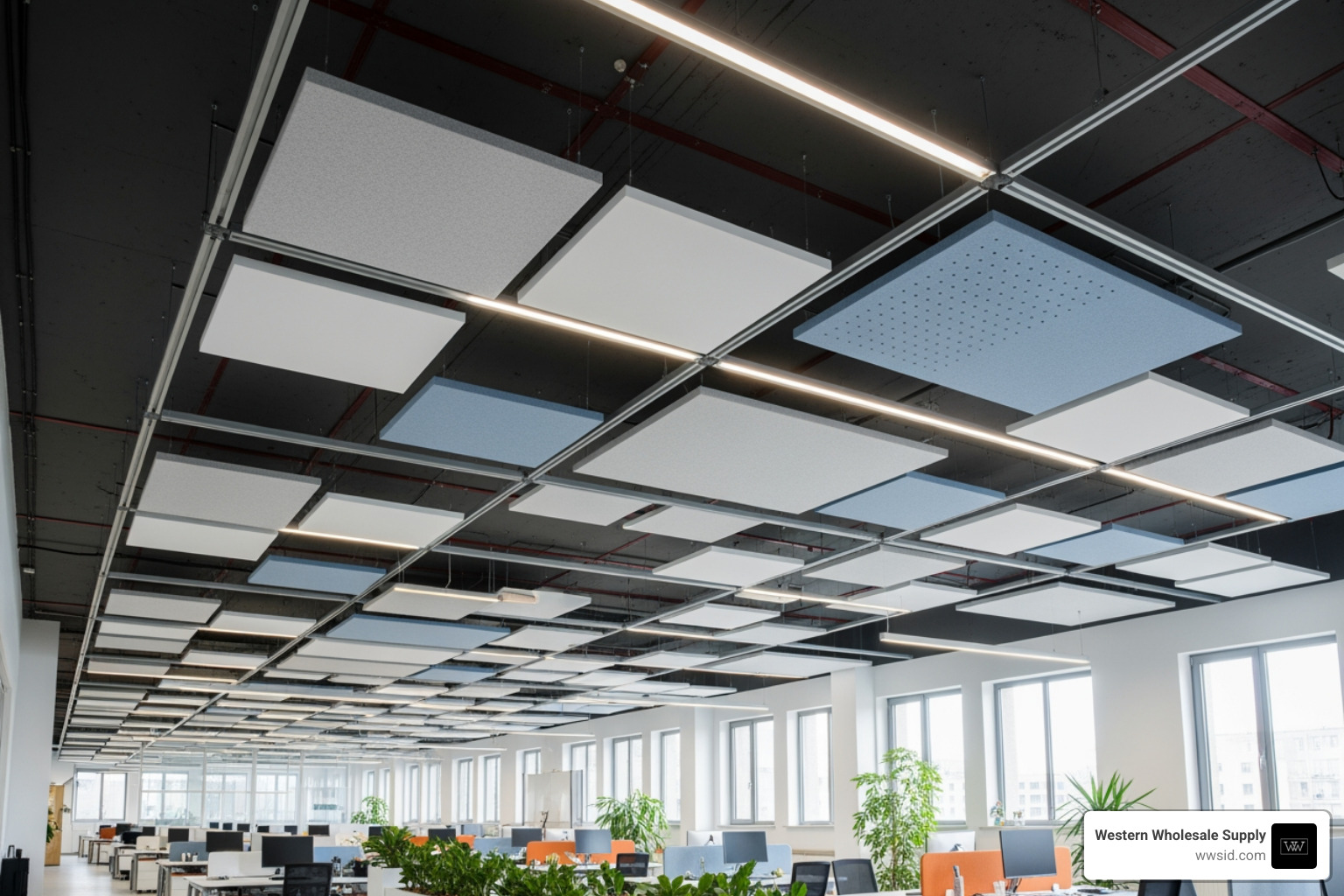
Acoustic ceiling solutions are specialized building materials designed to control sound in interior spaces through absorption, blocking, or both. Here’s what you need to know:
Primary Benefits:
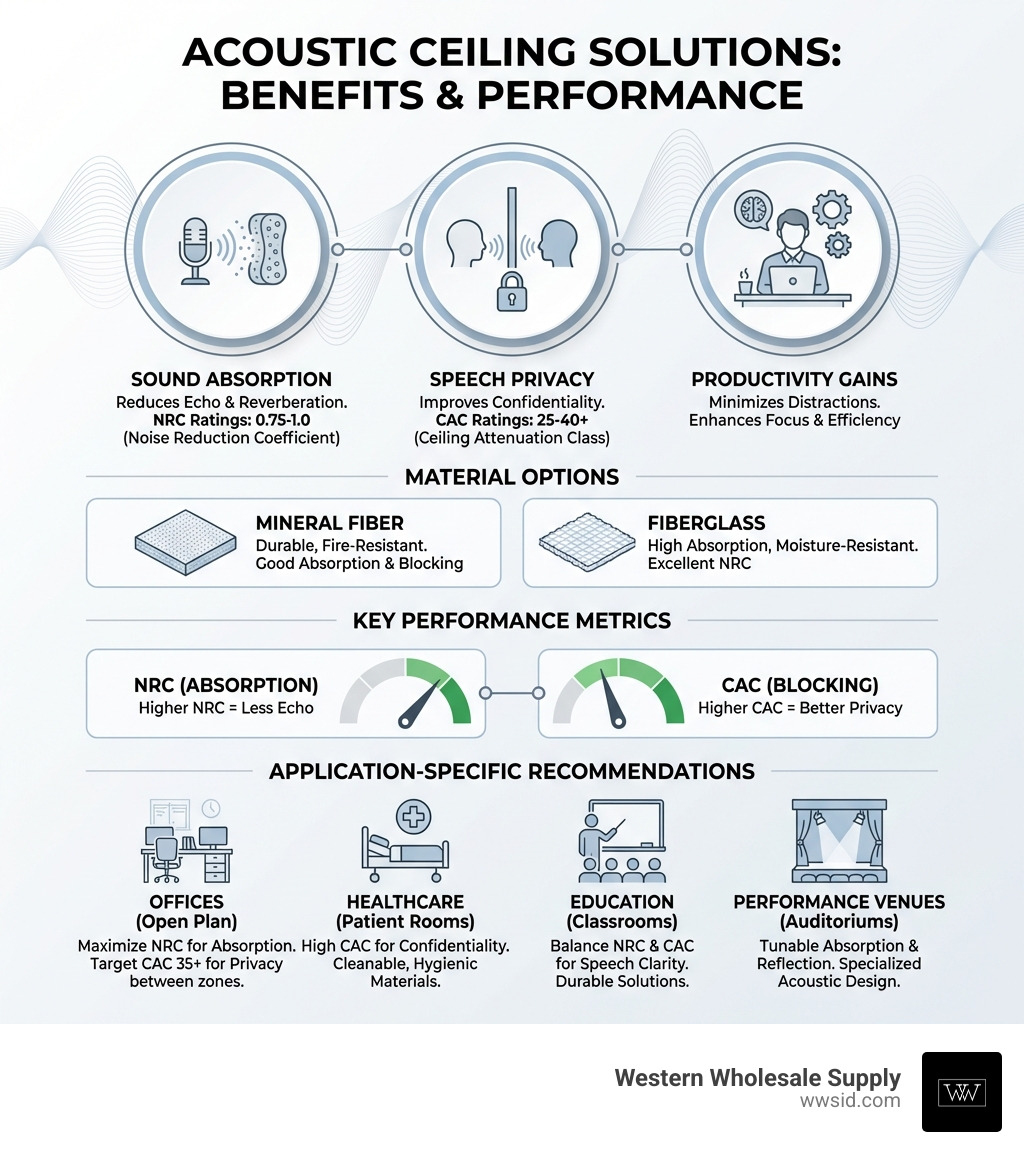
- Sound Absorption – Reduces echo and reverberation (NRC ratings 0.75-1.0)
- Sound Blocking – Prevents noise transfer between rooms (CAC ratings 25-40+)
- Speech Privacy – Improves confidentiality in offices and healthcare facilities
- Productivity – Minimizes distractions in workplaces and schools
- Health & Well-being – Creates comfortable, stress-reducing environments
- Design Flexibility – Available in 100+ colors, textures, and configurations
Common Materials: Mineral fiber, fiberglass, wood wool, gypsum panels, metal with acoustic backing
Key Applications: Offices, healthcare facilities, schools, restaurants, performance spaces
Excessive noise isn’t just annoying—it actively harms productivity, communication, and well-being. Traditional ceilings reflect sound waves back into a space, creating echoes and amplifying noise. This makes conversations harder to understand, reduces focus, and can even contribute to stress and fatigue.
The best acoustic solutions support the health, well-being, and productivity of the individuals in a space by managing how sound behaves. Whether you’re dealing with a noisy restaurant, an open-plan office, or a classroom where speech clarity matters, the right ceiling solution can transform the acoustic experience.
Understanding the science behind acoustic ceilings helps you make informed decisions. Different materials absorb different frequency ranges. Performance metrics like NRC (Noise Reduction Coefficient) measure sound absorption, while CAC (Ceiling Attenuation Class) measures sound blocking between spaces. Room shape, ceiling height, and existing materials all influence which solution works best.
At Western Wholesale Supply, we’ve experienced how the right acoustic ceiling solutions can make or break a project’s success. Our experience supplying contractors across Idaho and Wyoming has taught us that matching the right product to the specific acoustic challenge saves time, money, and callbacks.
Why Acoustic Control Matters: The Core Benefits
The primary benefits of integrating acoustic ceiling solutions in both commercial and residential spaces are profound, extending far beyond simply dampening noise. They create environments that are not only quieter but also more comfortable, productive, and aesthetically pleasing.
At its heart, acoustic control revolves around two key principles: sound absorption and sound blocking. Sound absorption is like a sponge for sound waves; it soaks up echoes and reverberation within a room, making speech clearer and background noise less intrusive. Sound blocking, on the other hand, acts as a barrier, preventing sound from traveling between adjacent spaces.
Think about it: in an open-plan office in Idaho Falls, a high level of sound absorption means fewer distractions from colleagues’ conversations or keyboard clicks, leading to improved focus and concentration. This directly translates to improved productivity. For healthcare facilities in Pocatello, improved speech privacy is paramount, ensuring confidential conversations remain private and creating a more serene environment for patients. In educational institutions across Western Wyoming, clearer communication and reduced distractions foster better learning outcomes.
The health and wellness benefits are also significant. Constant exposure to high noise levels can contribute to stress, fatigue, and even hearing issues. By mitigating these factors, acoustic ceiling solutions contribute to a healthier, more comfortable indoor environment. They allow us to create spaces where people can thrive, whether that’s a busy restaurant where diners can enjoy conversation without shouting, or a quiet home theater where every whisper of dialogue is heard. Our goal is to help you create productive and healthy workplaces and living spaces.
For more detailed information on how these solutions can transform your environment, explore More info about acoustical ceilings.
Decoding the Numbers: Key Performance Metrics
When selecting acoustic ceiling solutions, understanding the key performance metrics is crucial. These numbers help us quantify how effectively a material will absorb or block sound, guiding our choices for optimal results.
Sound Absorption Measures how much sound a ceiling material absorbs (0.0=no absorption, 1.0=total absorption). Higher NRC means less echo and reverberation within a room.
The NRC (Noise Reduction Coefficient) is a standard used to measure a material’s ability to absorb sound. It’s an average of a material’s sound absorption coefficients at four specific frequencies (250, 500, 1000, and 2000 Hz). This value ranges from 0.0 (perfect reflection) to 1.0 (perfect absorption). A higher NRC rating means the material is better at absorbing sound, which is crucial for reducing echo and reverberation within a room. For example, some of our acoustic ceiling panels boast an NRC rating of 0.75 to 0.95, indicating powerful sound absorption.
The CAC (Ceiling Attenuation Class) is another vital metric, but it measures something different: a ceiling’s ability to block sound transmission between adjacent spaces that share a common plenum. Unlike NRC, which focuses on sound within a room, CAC is about sound between rooms. A higher CAC rating means the ceiling system is more effective at preventing sound from traveling over walls and through the ceiling plenum into the next room. This is especially important for speech privacy in offices, medical examination rooms, or classrooms where confidentiality and quiet are key. Our suppliers, like CertainTeed, offer a wide range of products with various CAC ratings to meet diverse privacy needs.
Beyond NRC and CAC, we also consider:
- Reverberation Time (RT): This is the time it takes for sound to decay in a room. High reverberation times can make a space feel noisy and make speech unintelligible. Effective acoustic ceiling solutions significantly reduce RT.
- Speech Privacy (PI): This metric assesses how well a space prevents the intelligibility of conversations from adjacent areas. It’s a critical factor in maintaining confidentiality and reducing distractions in professional settings.
A Deep Dive into Acoustic Ceiling Materials and Types
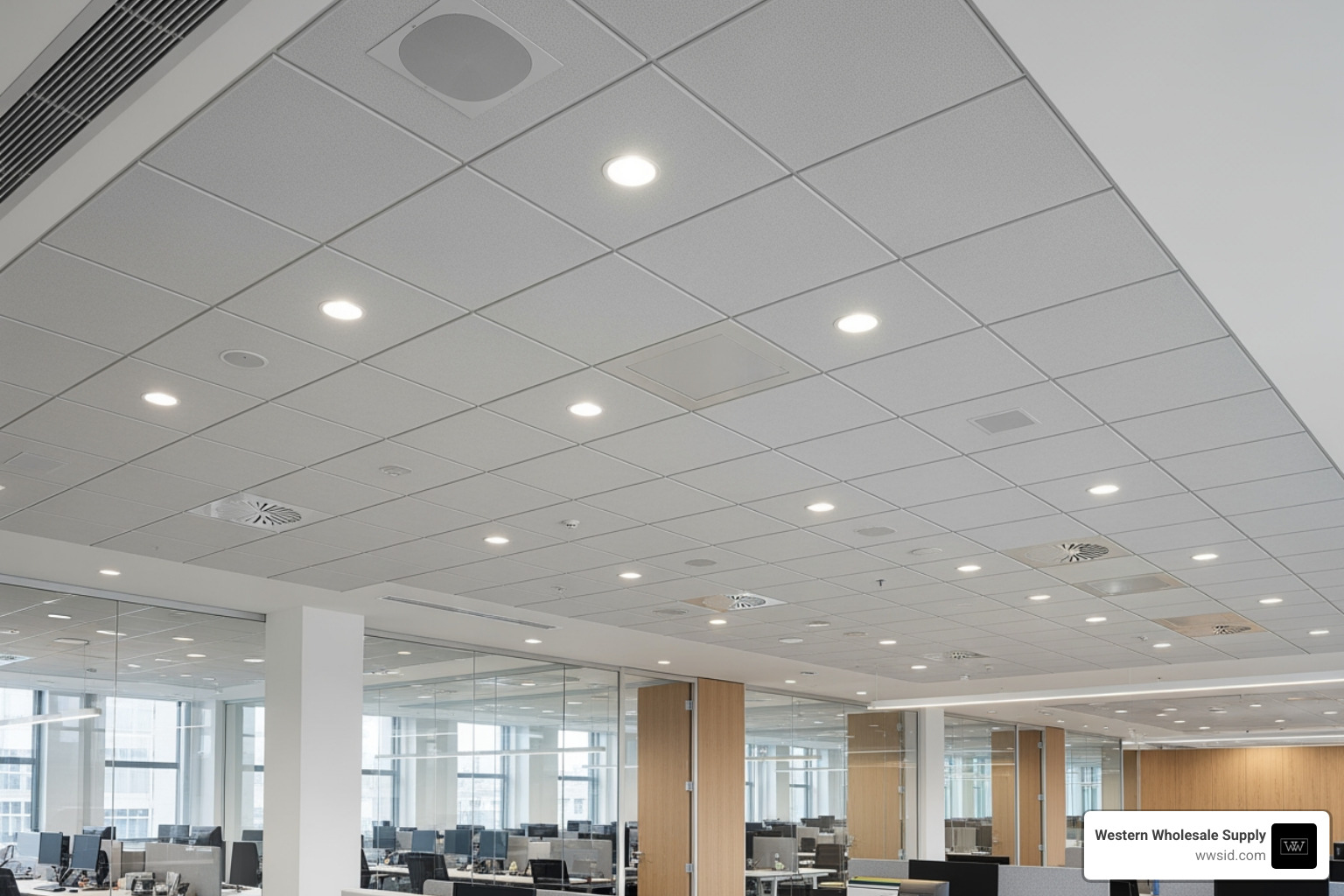
The choice of material is fundamental to the effectiveness and aesthetic appeal of any acoustic ceiling solution. Different materials offer unique properties that impact sound absorption, blocking capabilities, and even the sustainability profile of the product. Our extensive experience has shown us that the right material can dramatically alter the acoustic performance of a space, making it quieter, more comfortable, and more functional.
Manufacturers are continually innovating, not just in acoustic performance but also in ensuring the sustainability and environmental friendliness of their products. Many now focus on low energy use manufacturing, no emissions, no off-gassing or VOCs (Volatile Organic Compounds), no wastewater, and no adhesives in their production processes. Products with certifications like GREENGUARD Gold, Declare, and Environmental Product Declarations (EPDs) are increasingly available, reflecting a commitment to healthier indoor air quality and reduced environmental impact. When we explore our product offerings, we prioritize solutions that meet these high standards.
Explore our product offerings.
Key Materials in Modern Acoustic Ceiling Solutions
Let’s break down some of the most common and effective materials we see in modern acoustic ceiling solutions:
- Mineral Fiber: This is perhaps the most traditional and widely used material for acoustic ceiling tiles. Mineral fiber panels are excellent for sound absorption, often achieving good NRC ratings, and can also contribute to sound blocking (CAC). They are typically affordable, durable, and available in a wide range of textures, patterns, and colors. Many mineral fiber products also offer features like humidity resistance, mold resistance, and fire resistance, making them versatile for various commercial applications from offices to schools.
- Fiberglass: Fiberglass panels are renowned for their superior sound absorption capabilities, often boasting some of the highest NRC ratings. They are lightweight and come in a variety of premium finishes and expanded color palettes, allowing for greater design flexibility. Fiberglass is particularly effective in spaces where significant sound absorption is required to control reverberation, such as open-plan offices or large common areas.
- Wood Wool: Made from wood fibers bound with cement, wood wool panels offer a distinctive aesthetic with excellent acoustic properties. They are highly sustainable, often made from natural, renewable resources, and provide a rustic yet modern look. Beyond sound absorption, wood wool panels are durable and can contribute to thermal insulation and fire resistance. They are a fantastic choice for spaces where both natural aesthetics and strong acoustic performance are desired, like restaurants or community centers.
- Gypsum Panels: While standard gypsum board is primarily a sound blocker, acoustical gypsum panels are engineered with perforations or specialized backings to provide sound absorption. These panels are particularly useful in environments requiring repeated cleaning or needing to meet governmental sanitary standards, such as healthcare facilities or industrial kitchens. They offer durability and a smooth aesthetic.
- Metal Panels: Metal ceiling panels can be perforated and backed with acoustic fleece or infills to provide effective sound absorption. They offer a sleek, modern, and often industrial aesthetic, which can be integrated into contemporary designs. Metal panels are durable, easy to clean, and suitable for high-traffic areas or spaces where a specific architectural look is desired. Our suppliers, like Knauf, offer metal ceilings with factory-fitted infill solutions for easy, out-of-the-box installation.
Each of these materials comes with specific advantages, and our team helps you weigh these to find the perfect match for your project’s unique requirements in Eastern Idaho and Western Wyoming.
Innovations and Modern Alternatives
The world of acoustic ceiling solutions is constantly evolving, bringing forth exciting innovations that blend cutting-edge performance with sophisticated design. We’re seeing a shift from purely functional acoustic tiles to integrated systems that improve both the sound and the visual appeal of a space.
One of the most compelling modern alternatives is the acoustic stretch ceiling. Unlike traditional drop ceilings or even standard acoustic tiles, stretch ceilings use specialized acoustic fabric membranes engineered to absorb a wide range of frequencies. When combined with an insulation layer (like mineral wool or foam) behind the fabric, they effectively trap and absorb sound energy, significantly reducing echo and reverberation. These systems offer a sleek, modern aesthetic, free from the industrial look of traditional grid ceilings, and can be customized with various colors, textures, and even printed designs. This makes them ideal for changing busy offices, restaurants, or home theaters into tranquil, acoustically balanced environments.
Beyond stretch ceilings, other innovations include:
- 3D-shaped panels: These panels go beyond flat surfaces, incorporating geometric shapes, curves, and unique patterns that serve as bold focal points while providing powerful sound absorption. They seamlessly integrate with standard ceiling systems and offer endless design possibilities.
- Baffles and clouds: Suspended vertically or horizontally from the ceiling, baffles and clouds are highly effective at absorbing sound in large, open-plan spaces or areas with high ceilings. They offer significant design flexibility, allowing for creative arrangements and color combinations to improve interior aesthetics.
- Direct-to-deck options: For those seeking an alternative to suspended ceilings, direct-to-deck mounted panels offer a clean, minimalist look while providing excellent acoustic control. This approach is often favored in modern designs that celebrate exposed structural elements.
- Integrated ceiling systems: Manufacturers like USG are developing integrated portfolios that combine acoustic panels with lighting, HVAC, and other utilities into a cohesive, pre-engineered system. This streamlines installation, offers a cleaner aesthetic, and ensures optimal performance across all elements of the ceiling.
These innovations mean that you no longer have to sacrifice style for silence. We can help you find solutions that contribute to a quiet, comfortable space while elevating its overall design.
Choosing the Right Acoustic Ceiling Solutions for Your Space
Selecting the ideal acoustic ceiling solutions requires a thoughtful approach, considering the unique characteristics of your space. Factors like room shape, ceiling height, and existing building materials all play a significant role in how sound behaves and, consequently, which solution will be most effective.
For instance, a room with high ceilings and bare, hard surfaces will inevitably experience significant echo and reverberation. In such cases, materials with high NRC ratings will be critical to absorb excess sound energy. Conversely, a space with lower ceilings might benefit from panels that offer both absorption and blocking to prevent sound from escaping into adjacent rooms. The shape of a room can also influence sound reflection patterns, meaning that strategically placed acoustic panels, baffles, or clouds might be necessary to break up sound waves.
Our expertise lies in helping you match the right solution to your specific needs, whether that’s a new construction project in Eastern Idaho or a renovation in Western Wyoming. We consider these environmental factors to recommend solutions that not only perform exceptionally but also integrate seamlessly with the existing structure and design intent.
Tailoring Acoustics for Specific Environments
Different environments have distinct acoustic challenges and requirements. What works wonders in a recording studio won’t necessarily be ideal for a busy restaurant. Our goal is to tailor acoustic ceiling solutions to meet the unique demands of each space:
- Open-plan offices: These spaces are notorious for noise distractions. We focus on solutions with high NRC ratings (0.75-1.0) to absorb conversations and keyboard clicks, improving speech clarity and focus. Often, a combination of ceiling panels, baffles, and wall panels is used to create acoustic zones and improve speech privacy.
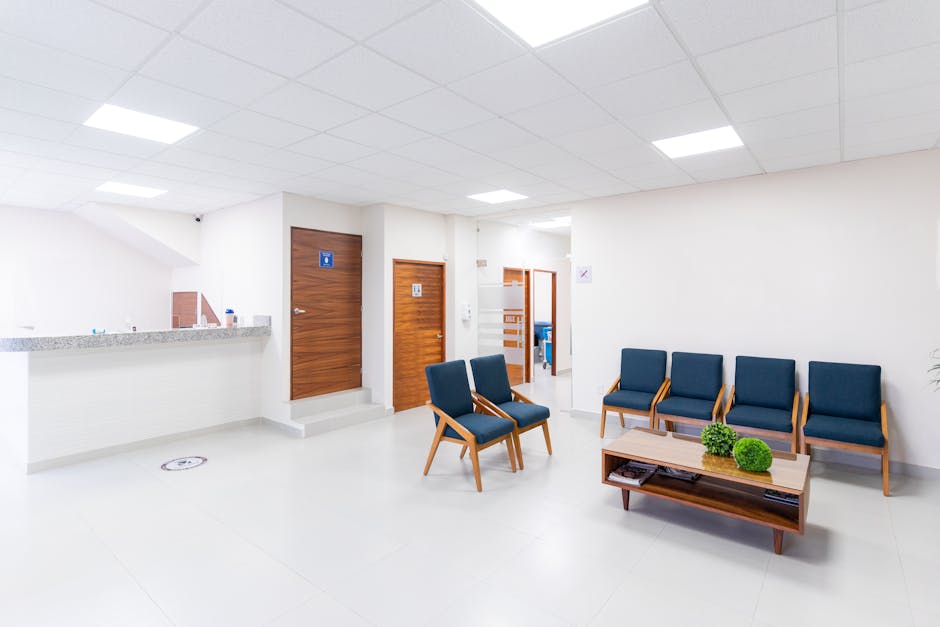
- Healthcare facilities: Cleanliness, hygiene, and speech privacy are paramount here. We recommend smooth, cleanable acoustic panels, often with Rx options or gypsum vinyl rock surfaces, that can withstand repeated cleaning and meet sanitary standards. High CAC ratings are crucial for patient privacy between rooms, and materials with mold and humidity resistance are often preferred.
- Educational institutions: Classrooms, lecture halls, and libraries require excellent speech intelligibility and reduced background noise to support learning. Solutions with high NRC are vital. Durable, sag-resistant panels are also important for long-term performance in active environments.
- Restaurants and hospitality: The aim is to create an inviting atmosphere where guests can converse comfortably without excessive noise. Aesthetic appeal is as important as acoustic performance. We often suggest decorative panels, wood wool, or acoustic stretch ceilings that offer both high sound absorption and design versatility.
- Performance spaces and home theaters: These environments demand precise acoustic control to optimize sound quality. Solutions with very high NRC ratings are essential to minimize reverberation, ensuring clear audio. We might also consider specialized materials and strategic placement of panels to achieve specific acoustic effects.
Beyond Function: Integrating Acoustics with Interior Design
Gone are the days when acoustic ceiling solutions were merely functional, often utilitarian, necessities. Today, they are integral design elements that can dramatically improve a space’s aesthetic while delivering superior sound control. Our team believes that acoustics should never compromise design; instead, they should lift it.
The aesthetic versatility of modern acoustic panels is truly remarkable. They come in a vast array of colors, textures, and finishes, allowing us to seamlessly integrate them into any design scheme, from minimalist modern to rustic charm. Geometric shapes are particularly popular, as they can be arranged to create striking visual patterns, acting as bold focal points or subtly blending into the overall design. Imagine a university hall in Eastern Idaho where hexagonal acoustic panels not only absorb sound but also create a dynamic visual interest on the ceiling.
Whether you prefer a concealed or exposed grid system, there are options to suit. Fully-concealed grid systems create a smooth, monolithic ceiling appearance, often favored in contemporary designs, while exposed grids can be used as a design feature themselves, especially in industrial or tech-forward spaces. We help designers and architects in Western Wyoming use these panels to create inspiring, healthy, and productive environments.
To see how we can help bring your design vision to life, Elevate Your Projects with our solutions.
Installation, Maintenance, and Sustainability
Ensuring the long-term performance of your acoustic ceiling solutions hinges on proper installation and consistent maintenance. Just like any quality building material, taking care of your acoustic panels will maximize their effectiveness and lifespan. Beyond functionality, we also consider the environmental impact of these products, advocating for sustainable practices from manufacturing to installation.
Practical Tips for Installing Acoustic Ceiling Solutions
While the specific installation method will vary depending on the product type (e.g., suspended tiles, direct-mount panels, stretch ceilings), there are some universal practical considerations:
- Pre-installation considerations: Before any panel goes up, it’s crucial to assess the existing space. This includes identifying the location of lighting fixtures, air ducts, sprinkler systems, and other HVAC components. Planning around these elements is key to a smooth and effective installation. Always adhere to fire safety regulations when mounting ceiling or wall panels.
- Working around lighting and HVAC: Many modern acoustic ceiling solutions are designed to integrate seamlessly with lighting and ventilation systems. Integrated ceiling systems, for example, combine acoustic panels with lighting and utilities for a cohesive look. For traditional grid systems, careful cutting and framing around fixtures are necessary.
- Grid systems: Suspended grid systems are common for acoustic tiles. They consist of a metal framework that hangs from the structural ceiling, into which the tiles are placed. This allows for easy access to the plenum above for maintenance of utilities.
- Direct mounting: Many acoustic panels can be directly mounted to the existing ceiling or wall surface using adhesives or mechanical fasteners. This often provides a cleaner, more minimalist aesthetic, especially for decorative panels or baffles.
- Professional vs. DIY installation: While some simpler acoustic panels might be suitable for DIY enthusiasts, complex systems like acoustic stretch ceilings or large-scale grid installations are best left to experienced professionals. This ensures optimal performance, aesthetic alignment, and adherence to safety standards.
Maintenance and Sustainable Practices
Maintaining your acoustic ceiling solutions is generally straightforward, but it’s important to follow manufacturer guidelines to ensure durability and long-term performance.
- Cleaning guidelines: Most acoustic panels can be cleaned with a soft cloth or vacuumed to remove dust. For cleanable surfaces, like some gypsum panels or Rx options, gentle detergents may be used. Always check specific product instructions to avoid damage. Regular cleaning helps maintain both the aesthetic and acoustic properties of the panels.
- Durability and lifespan: Quality acoustic panels are designed for longevity, often featuring resistance to sag, humidity, and mold. This is particularly important in the varied climates of Idaho and Wyoming. Investing in durable products means less frequent replacement and better long-term value.
- Manufacturer sustainability: We partner with manufacturers who are committed to sustainability. Many use recycled content in their products, such as fiberglass panels made with a high percentage of recycled glass. Their manufacturing processes often focus on reducing energy consumption, eliminating emissions, and minimizing waste.
- Low-VOC products: Selecting products that are low in VOCs contributes to healthier indoor air quality, which is beneficial for everyone occupying the space. Certifications like GREENGUARD Gold are indicators of products that meet stringent chemical emissions standards.
We believe in providing solutions that are not only high-performing but also responsible. You can find helpful guides and more information on product specifications in our Resources section.
Conclusion: Create Your Ideal Acoustic Environment
Where quiet and focus are increasingly valuable commodities, the importance of thoughtfully designed acoustic ceiling solutions cannot be overstated. We’ve explored how these innovative systems go beyond mere noise reduction, actively contributing to improved speech clarity, improved productivity, greater privacy, and overall well-being in both commercial and residential settings.
From understanding the critical performance metrics like NRC and CAC to delving into the unique properties of materials like mineral fiber, fiberglass, and wood wool, we’ve seen that the right solution is a blend of science, aesthetics, and practical application. The latest innovations, including acoustic stretch ceilings and 3D-shaped panels, further demonstrate that you no longer have to choose between a beautiful space and a quiet one.
Whether you’re designing a vibrant new office in Eastern Idaho, a serene healthcare facility in Pocatello, or a busy restaurant in Western Wyoming, selecting the appropriate acoustic ceiling solutions empowers you to create environments that truly support the people within them. Our commitment is to help you steer these choices, ensuring your space achieves its full potential for comfort and function.
For over 60 years, our family-owned business has supplied the quality acoustical ceilings needed to create quieter, more comfortable spaces across Idaho and Wyoming. Let us help you bring quiet comfort to your next project.
