

Why Prefabricated Steel Framing is Changing Modern Construction
Prefabricated steel framing is a construction method where cold-formed steel components—like walls, floors, and roof systems—are manufactured in a controlled factory setting and then delivered to the job site for rapid assembly. Here’s what you need to know:
- What it is: Lightweight steel members (typically 1.0 to 3.0 mm thick) formed into C-sections, U-tracks, and other shapes, assembled off-site into complete building sections
- Key benefits: Up to 50% faster installation, 70% less material waste, superior dimensional stability, and 100% recyclability
- Applications: Residential homes, multi-family housing, commercial buildings, hospitals, and industrial structures
- Why it matters: Reduces on-site labor, improves safety, ensures consistent quality, and cuts project timelines significantly
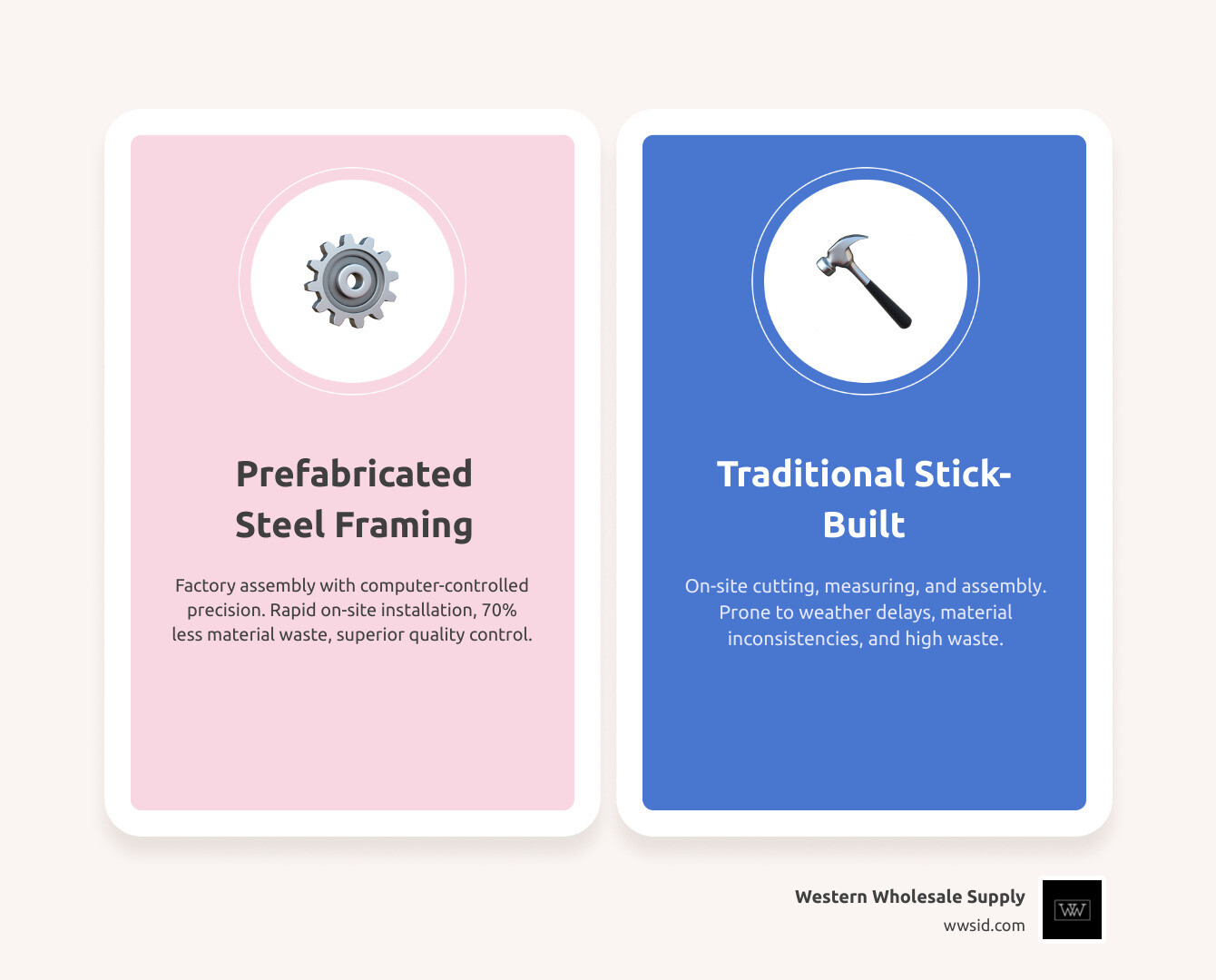
The construction industry is facing mounting pressure to build faster, safer, and more sustainably. Traditional stick-built methods struggle with material inconsistencies, weather delays, and high waste rates. Meanwhile, the prefabricated construction market is projected to grow from $112.4 billion in 2019 to $153 billion by 2023, driven by housing affordability demands and urbanization.
Cold-formed steel (CFS) framing sits at the center of this shift. Unlike hot-rolled structural steel, CFS is formed at room temperature through roll-forming, creating lightweight yet incredibly strong components. When manufactured as prefabricated panels in a factory, these steel members arrive on-site ready for assembly—eliminating the guesswork and delays that plague traditional framing.
For contractors and builders, this means predictable timelines, reduced callbacks, and fewer headaches. A hospital project that would typically take a year can be completed more than seven months faster using prefabricated steel wall panels. A two-story residential structure can go from foundation to framed in just three days.
I’m Jake Bean, and through years of supplying drywall, steel framing, and building materials to contractors across Idaho, I’ve seen how prefabricated steel framing transforms project outcomes by delivering speed, precision, and reliability when builders need it most. This guide breaks down everything you need to understand about this game-changing approach—from the core technology to real-world applications and future trends.
Understanding the Core Components: Cold-Formed Steel and Prefabrication
When we talk about prefabricated steel framing, we’re primarily referring to the use of Cold-Formed Steel (CFS), often known as Light-Gauge Steel Framing (LGSF). This material is at the heart of modern off-site construction, offering a host of benefits that traditional methods simply can’t match.
CFS is manufactured from structural quality sheet steel that is roll-formed into various shapes—like C-sections, U-tracks, and Z-purlins—at room temperature, without the application of heat. This cold-forming process strengthens the steel, making it incredibly strong yet lightweight. These components typically range from 1.0 to 3.0 mm thick, offering a high strength-to-weight ratio that is perfect for both portable and multi-story applications.
The inherent properties of CFS make it an ideal choice for prefabricated construction. It’s lightweight, extremely strong, and non-combustible, which immediately addresses several critical concerns on any construction project. Unlike wood, steel doesn’t warp, shrink, or expand with changes in humidity, ensuring exceptional dimensional stability. This precision is a dream come true for builders, leading to consistent quality and predictable outcomes. Furthermore, CFS is naturally resistant to rot, mold, termites, and other pests, offering a durable and long-lasting solution that requires minimal maintenance over its 50+ year lifespan.
What is Cold-Formed Steel (CFS) Framing?
Imagine taking a flat sheet of steel, and instead of heating it until it glows, you simply roll it through a series of dies that bend and shape it into the precise forms needed for construction. That’s the essence of cold-formed steel. These C-sections, tracks, and other profiles are designed to mimic the dimensions of traditional lumber, making the transition for builders relatively straightforward.
As we’ve seen, CFS is not just strong; it’s dimensionally stable. This means the components we deliver for your projects in Eastern Idaho and Western Wyoming won’t twist or bow, ensuring that your walls stay straight and true. This inherent stability also leads to fewer callbacks and happier clients, which is always a win in our book!
For a deeper dive into the specifics of this versatile material, we highly recommend exploring A comprehensive guide to cold-formed steel. It’s a fantastic resource for understanding what makes CFS such a powerhouse in modern construction.
The Relationship Between Off-Site Construction and Prefabrication
It’s easy to use “off-site construction” and “prefabrication” interchangeably, but there’s a nuanced difference worth understanding. Think of off-site construction as the broader umbrella, encompassing any building process where elements are manufactured away from the final construction site. As the National Institute of Building Sciences puts it, off-site construction involves “planning, designing, fabricating, transporting and assembling building elements for rapid site assembly to a greater degree of finish than in traditional piecemeal on-site construction.”
Prefabrication, then, is a specific and incredibly effective method within off-site construction. It’s the process where entire sections of a building – like wall panels, floor systems, or even bathroom pods – are manufactured in a controlled factory setting. These completed sections are then transported to the job site, ready for assembly. This differs from simply pre-cutting individual components; prefabrication delivers fully formed assemblies.
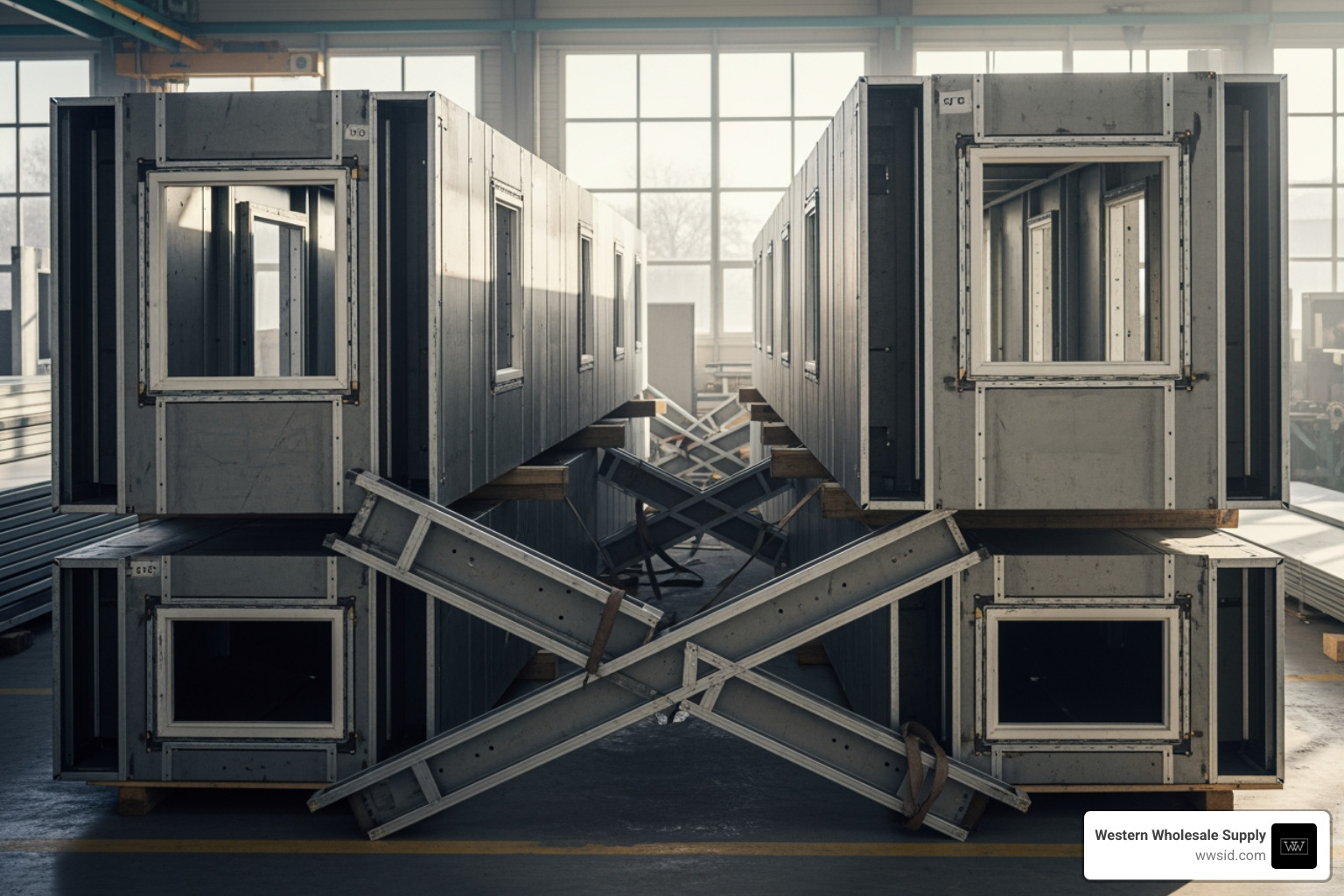
This distinction is crucial for understanding the efficiency gains. When we talk about prefabricated steel framing, we’re often discussing panelized steel systems, where entire walls, complete with openings for windows and doors, are built in a factory. This allows for precision manufacturing to exacting tolerances, leading to faster and cleaner builds on-site. The beauty of it is that these panels arrive on-site ready to be lifted into place, significantly reducing the chaos and labor traditionally associated with framing.
The Game-Changing Advantages of Prefabricated Steel Framing
The shift towards prefabricated steel framing isn’t just a trend; it’s a fundamental change in how we approach construction, driven by undeniable benefits in speed, cost, safety, and overall quality. We’ve seen how projects in Eastern Idaho and Western Wyoming transform when builders accept this innovative method.
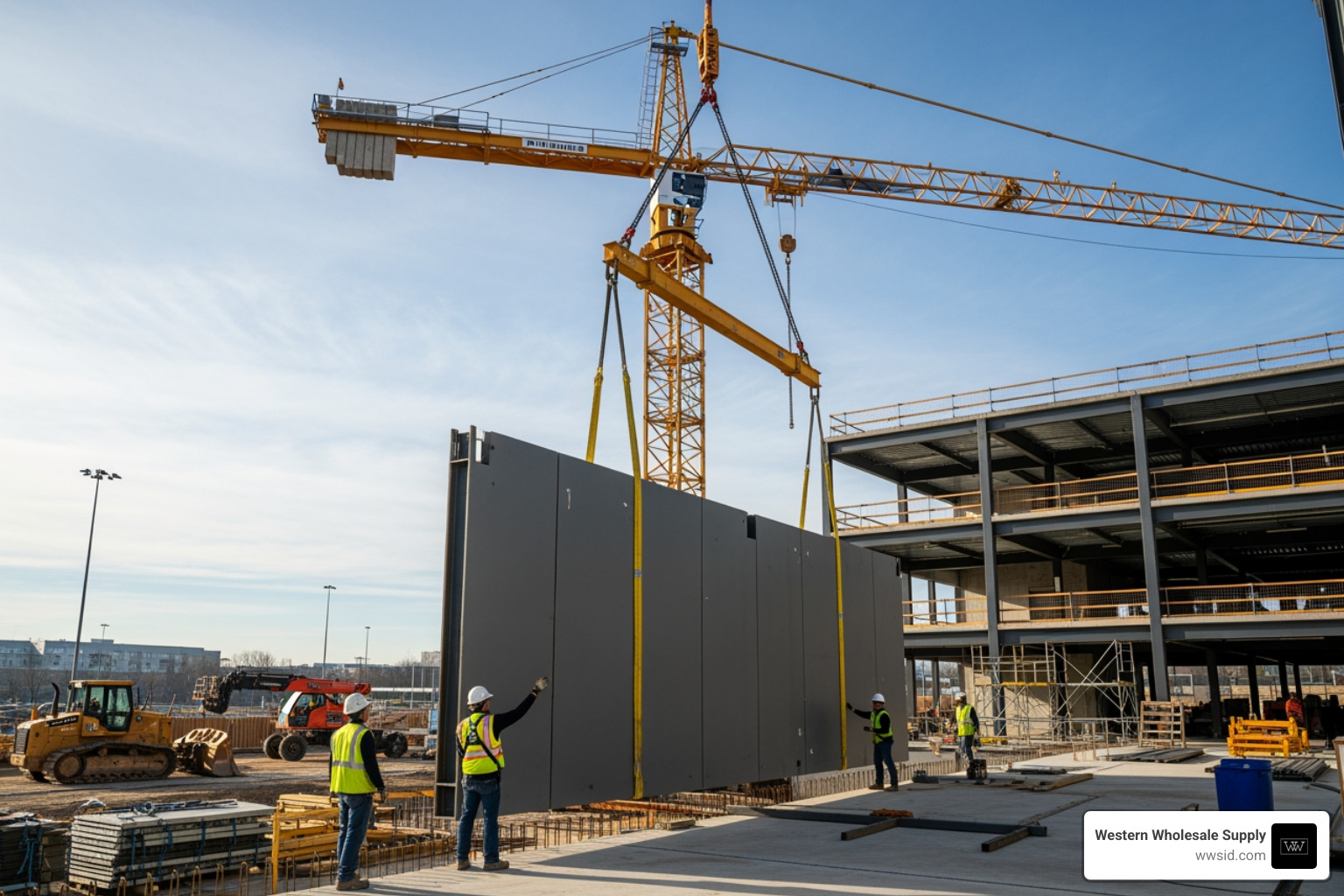
Consider the sheer efficiency. Imagine a two-floor structure where the entire framing portion is completed in just three days, or a first floor erected in a mere three hours! These aren’t pipe dreams; they’re real-world results achieved with prefabricated steel. This kind of speed is a game-changer, allowing projects to be completed significantly faster than traditional methods.
Speed, Cost, and Safety on the Job Site
Speed: Time is money, and prefabricated steel framing saves a lot of both. Installation of prefabricated wall panels can be up to 50% faster than conventional methods. This accelerated timeline can dramatically cut project delivery, as demonstrated by one hospital project that shaved over seven months off its construction schedule thanks to prefabrication. For our clients, this means getting projects done quicker, reducing carrying costs, and starting revenue generation sooner.
Cost: While the initial cost of steel framing might sometimes be perceived as higher than wood, the total cost of construction often tells a different story. Prefabrication significantly reduces on-site labor needs, which is a major cost driver. There are also fewer warranty callbacks due to steel’s dimensional stability (no shrinking or warping!). Plus, steel’s non-combustible nature can lead to reduced insurance premiums. The precision of factory-built components also means less material waste, further contributing to savings. When panels are built in a controlled factory environment, often on tables, they remain perfectly square, eliminating on-site adjustments and rework.
Safety: The factory setting is a huge win for worker safety. Building components “on a table four feet off the ground” means less work at heights, fewer trips and falls, and a more controlled environment overall. This reduced on-site labor also translates to fewer workers exposed to job site hazards. It’s about creating a safer, more predictable work environment, which is a priority for us and our partners.
Sustainability and Waste Reduction
As responsible suppliers in Eastern Idaho and Western Wyoming, we deeply care about building practices that protect our environment. Prefabricated steel framing stands out as a champion of sustainability.
Firstly, steel is 100% recyclable, and the CFS we supply often contains a minimum of 25% recycled content. When a steel-framed building reaches the end of its life, the steel can be recycled and reused without any degradation in quality. This circularity is a stark contrast to other materials that often end up in landfills.
Secondly, the precision of factory fabrication drastically reduces material waste. Compared to traditional construction, light-gauge steel framing can reduce material waste by up to 70%. Imagine how much less goes into the dumpster! This is partly because components are cut and drilled with computer-controlled accuracy, minimizing offcuts and errors. For example, scrap reduction in steel framing is typically around 2%, compared to as much as 20% for wood.
Beyond waste, steel framing contributes to a lower carbon footprint through its efficient manufacturing processes and the durability of the final product. It also promotes better indoor air quality by not emitting volatile organic compounds (VOCs). When combined with high-performance insulation, steel-framed structures offer superior thermal performance, leading to operational energy savings by reducing heating and cooling demands. This makes them excellent candidates for green building certifications.
To illustrate these points, let’s look at a quick comparison:
| Feature | Prefabricated Steel Framing | Traditional Wood Framing |
|---|---|---|
| Material Recyclability | 100% | Limited |
| Waste Reduction | Up to 70% | ~20% |
| Installation Speed | Up to 50% faster | Standard |
| Dimensional Stability | Excellent (no warp/shrink) | Susceptible to warp/shrink |
| Pest/Rot Resistance | Excellent | Susceptible |
| Fire Resistance | Non-combustible | Combustible |
For those looking to improve the sustainability and energy efficiency of their projects, combining prefabricated steel framing with high-quality insulation is a winning strategy. You can learn more about how our offerings contribute to sustainable building practices by exploring More on sustainable building materials like Steel Framing Insulation.
The Modern Blueprint: Technology, Systems, and Precision
The magic behind prefabricated steel framing isn’t just in the material itself; it’s in the sophisticated blend of technology and meticulous engineering that drives its production. This modern approach ensures that every component is crafted with unparalleled precision, leading to faster, cleaner, and more accurate builds.
At the core of this precision are advanced technologies like Building Information Modeling (BIM) and automation. These tools have revolutionized how steel framing is designed, fabricated, and assembled, virtually eliminating errors before a single piece of steel is cut. When components arrive on-site, they fit together perfectly, much like a giant Lego set, ensuring a smooth and efficient assembly process. This level of accuracy also makes it easier to integrate other building systems, such as our Drywall solutions, ensuring seamless compatibility across the entire project.
How Technology Enables Precision in Prefabricated Steel Framing
Gone are the days of manual calculations and hand-drawn blueprints. Today, prefabricated steel framing begins with highly detailed 3D modeling software, often using formats like Revit. This allows engineers and designers to create a comprehensive digital model of the entire structure, down to the smallest connection.
This BIM model isn’t just a pretty picture; it’s a powerful tool that enables:
- Clash Detection: Before fabrication, the software can identify any potential conflicts between structural elements, mechanical, electrical, and plumbing (MEP) systems, or other building components. This prevents costly on-site surprises and rework.
- Digital Fabrication: The precise data from the BIM model is fed directly into computer-controlled manufacturing equipment. This automation ensures that each steel component is cut, punched, and shaped with minimal error and perfect alignment. “Factory-engineered accuracy leads to predictable timelines, reduced on-site labor, minimal waste, and consistent quality,” as one expert notes.
- Optimized Resource Use: By simulating the construction process digitally, designers can optimize material usage, reduce waste, and streamline logistics, ensuring that only what’s needed is produced and transported.
This end-to-end digital workflow, from design to assembly, is what makes prefabricated steel framing so efficient and reliable. It’s a testament to how technology is enabling us to build smarter, not just harder. For a comprehensive overview of steel framing, including its design and engineering principles, you can refer to A Comprehensive Guide to Steel Framing.
Types of CFS Framing Systems and Connections
Prefabricated steel framing offers incredible versatility, catering to a wide range of structural needs. We commonly see it deployed in various systems:
- Panelized Wall Systems: These are perhaps the most common form of prefabricated steel framing. Entire walls, including openings for windows and doors, are assembled in the factory and shipped to the site as large, ready-to-install panels. These can be load-bearing or non-load-bearing, depending on the structural requirements.
- Floor and Roof Trusses: Similar to wall panels, floor and roof trusses are engineered and fabricated off-site, arriving as complete units. This significantly speeds up the installation of horizontal and sloped structural elements, providing precise spans and robust support.
- Lateral Force-Resisting Systems: CFS can be used to create shear walls, strap braced walls, and diaphragms, which are critical for resisting in-plane lateral loads from wind and seismic activity. Given our location in Eastern Idaho and Western Wyoming, building for resilience is always a top priority.
The strength and integrity of these systems depend heavily on their connections. CFS members are joined using a variety of methods, each suited to different loads and applications:
- Screws: Self-drilling and self-tapping screws are common for connecting thinner CFS members, offering a quick and efficient fastening method.
- Bolts: For heavier loads or critical structural connections, bolts provide robust and reliable joints.
- Welding: Welding is used for permanent, high-strength connections, particularly in more complex structural assemblies.
- Power-Actuated Fasteners: These can be used for attaching components to concrete or heavier steel.
Beyond these basic methods, there are specialized connection styles designed to accommodate specific structural behaviors:
- Drift Connections: Allow for relative movement between connected elements, often used in seismic zones.
- Deflection Connections: Designed to permit movement perpendicular to the plane of the connection, crucial for accommodating differential settlement or thermal expansion.
- Rigid Connections: Provide a fixed joint where no relative movement is desired, transferring both forces and moments.
- Hybrid Connections: Combine elements of different connection types to achieve specific performance characteristics.
- Fixed Connections: Similar to rigid connections, aiming for minimal movement.
Understanding these systems and connection styles is key to appreciating the engineering sophistication that goes into every prefabricated steel framing project.
Steel in the Real World: Proven Applications and Future Projections
The adoption of prefabricated steel framing isn’t just theoretical; it’s happening right now, across diverse building types in Eastern Idaho, Western Wyoming, and beyond. This widespread application, combined with impressive market growth projections, paints a clear picture of the future of construction.
The prefabricated construction market is projected to grow at a compound annual rate of 6.9% from $112.4 billion in 2019 to $153 billion by 2023. This robust growth is fueled by several key drivers. One major factor is the urgent need for more affordable housing solutions, especially in high-demand areas. Prefabricated methods offer a way to deliver quality housing more quickly and economically. Additionally, as urban areas become increasingly populated, traditional construction sites face tighter regulations and limited space for material storage, making off-site fabrication a practical necessity.
Prominent Examples of Prefabricated Steel Framing
From healthcare facilities to residential complexes, prefabricated steel framing is proving its mettle:
- Hospitals and Medical Centers: These facilities demand precision, speed, and strict quality control. Prefabricated exterior wall panels have been instrumental in cutting construction timelines for large hospital projects by more than seven months. Similarly, prefabricated bathroom pods, complete with metal studs and tracks, are a turnkey solution that delivers results faster and more safely for new medical centers. This allows for a significant portion of the work to be done in a controlled factory environment, reducing disruptions and improving cleanliness on the active construction site.
- Residential Buildings: Whether it’s single-family homes, villas, townhouses, or multi-family housing, prefabricated steel framing provides a durable, efficient, and cost-effective alternative to traditional wood framing. The speed of assembly means families can move into their new homes sooner.
- Hotels and Dormitories: Projects requiring repetitive units benefit immensely from prefabrication. Student dormitories and hotels, with their standardized room layouts, are ideal candidates for prefabricated wall panels and modular units, allowing for rapid construction and consistent quality across hundreds of rooms.
- Modular and Industrial Applications: Beyond traditional buildings, LGSF is perfect for modular construction, such as worker accommodation camps, portable site offices, and emergency housing. Its strength-to-weight ratio makes it ideal for structures that might need to be relocated or built quickly in challenging environments. We’ve seen this flexibility benefit various industrial projects across our service areas.
These examples highlight how prefabricated steel framing addresses critical needs across the construction spectrum, delivering efficiency and quality where it matters most.
Market Growth and Future Trends
The numbers speak for themselves: the prefabricated construction market is projected to grow to $153 billion by 2023, a testament to its increasing acceptance and necessity in our industry. You can dive into more details about this trend with this report on projected market growth to $153 billion by 2023.
This growth isn’t just a blip; it’s a sustained shift driven by the “push to make housing more affordable,” particularly in high-demand areas, which “will encourage developers to move toward prefabricated solutions,” according to Mordor Intelligence. The construction industry is evolving rapidly, and those who don’t adapt risk being left behind. One expert even suggests that “by 2025, if a large contractor hasn’t acceptd off-site construction for at least 25% of their workload, they might struggle to survive.” For multifamily contractors, that figure jumps even higher, to “50% to 75% by 2025.” This isn’t a threat; it’s a wake-up call to accept innovation.
Looking ahead, the future of prefabricated steel framing is even more exciting, powered by cutting-edge technologies:
- AI-Driven Design: Artificial intelligence is beginning to optimize designs, finding the most efficient and cost-effective ways to configure steel framing components.
- Robotics in Assembly: Automated robotic systems in factories are speeding up the assembly of panels and modules, further enhancing precision and reducing labor.
- 3D Steel Printing: While still emerging, 3D printing of steel components could offer unprecedented design freedom and customization.
- Hybrid Modular Systems: We anticipate seeing more hybrid solutions that combine prefabricated steel framing with other materials, like timber or composites, to leverage the best properties of each.
- Smart Monitoring: Embedded sensors within steel frames could provide real-time data on structural performance, maintenance needs, and even energy efficiency.
These advancements underscore a commitment to building smarter, lighter, and stronger. For us, staying at the forefront of these trends means we can continue to provide our clients in Eastern Idaho and Western Wyoming with the most advanced and efficient building materials available.
Conclusion: Build Smarter and Faster with Steel
As we’ve explored, prefabricated steel framing is not just an alternative to traditional construction; it’s a superior method that addresses many of the industry’s most pressing challenges. From its inherent strength and dimensional stability to its impressive speed of installation and significant sustainability benefits, CFS framing offers a compelling blueprint for the future of building.
The precision offered by factory-engineered components, enabled by advanced technologies like BIM and automation, ensures higher quality, fewer errors, and predictable project timelines. This means less waste, reduced labor costs, and a safer environment for everyone involved. For our clients in Eastern Idaho and Western Wyoming, this translates into projects delivered on time, within budget, and to the highest standards of quality.
At Western Wholesale Supply, we’ve been proudly serving our community since 1963, providing quality building materials like drywall, insulation, and, of course, steel framing. Our commitment to reliable, on-time delivery and exceptional customer service, backed by over 60 years of experience, means you can trust us to be your partner in embracing the future of construction.
We believe that building smarter and faster with steel isn’t just a possibility; it’s a necessity. Let us help you open up the full potential of prefabricated steel framing for your next project.
Explore our high-quality Steel Framing products and find how we can help you build with confidence and efficiency.
