

Why FRP Panels in Garage Spaces Deserve a Serious Look
FRP panels in garage settings are one of the most practical wall solutions available for both residential and commercial spaces — and if you’re weighing your options, here’s the short answer:
FRP (Fiberglass Reinforced Plastic) panels are worth it for garage walls because they:
- Resist moisture, mold, and mildew without absorbing water
- Handle impacts, scratches, and heavy daily use better than drywall or plywood
- Clean up easily — even after oil spills, grease, and chemical exposure
- Meet fire safety standards (ASTM E-84, Class A and Class C ratings)
- Install quickly over existing walls, reducing labor time and cost
Garages take a beating. Whether you’re running an automotive workshop, a car wash bay, or just a busy home garage, the walls face constant exposure to moisture, temperature swings, chemical spills, and physical impact. Traditional materials like drywall absorb moisture and deteriorate. Plywood warps, splinters, and rots. FRP panels are engineered to handle exactly these conditions — which is why they’ve moved from industrial settings into everyday residential and commercial garages.
At Western Wholesale Supply, we are a third-generation building materials professional team that has spent years helping contractors and builders source the right wall solutions — including frp panels in garage and workshop applications — across residential and commercial projects throughout Eastern Idaho and Western Wyoming. In the sections ahead, we’ll break down everything you need to know to make a confident decision.
What Are FRP Panels and Why Use FRP Panels in Garage Settings?
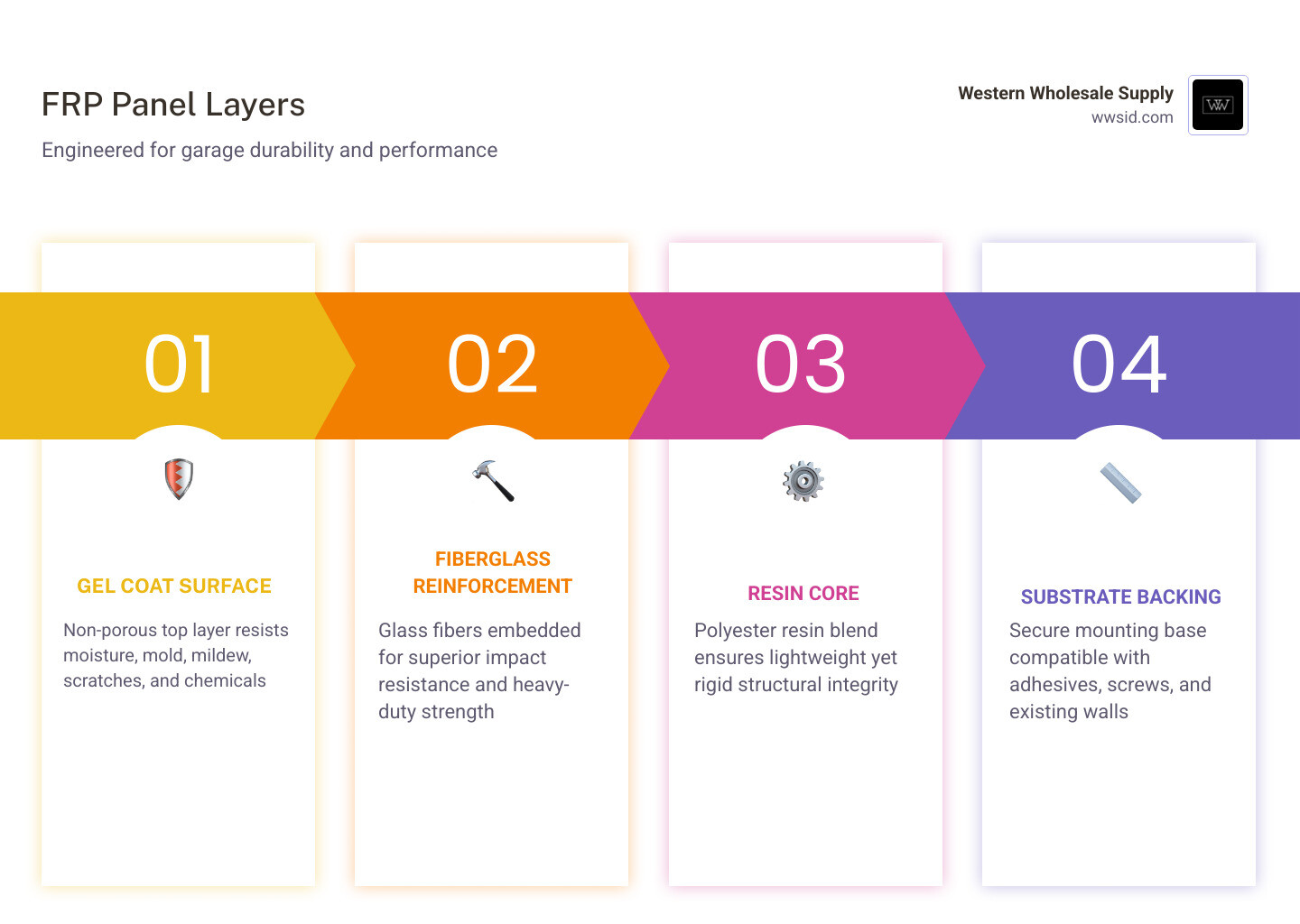
At Western Wholesale Supply, we often get asked what exactly “FRP” stands for. Simply put, it is Fiber Reinforced Plastic. These panels are a high-strength composite made from a blend of polyester resin reinforced with glass fibers. This combination creates a material that is incredibly strong yet lightweight, making it an ideal candidate for wall cladding in environments that see more action than a typical living room.
In a garage setting, walls are subjected to “active” conditions 24/7. Whether you are parking a snow-covered truck after a commute in Jackson, WY, or running a heavy-duty automotive repair shop in Idaho Falls, your walls are in the line of fire. FRP panels in garage environments offer a level of impact resistance that traditional materials simply can’t match. They don’t dent like thin metal, and they won’t shatter or crack easily under the pressure of a misplaced floor jack or a swinging car door.

The secret sauce to many high-quality FRP Panels is the gel coating. This specialized finish acts as a protective shield, making the panels up to 10 times easier to clean and significantly more resistant to stains and chemicals. For a garage, this means that oil, grease, and road salt—the “holy trinity” of garage grime—can be wiped away without leaving a permanent mark.
The Science Behind FRP Panels in Garage Environments
The technical performance of these panels is what truly sets them apart. Because FRP is non-porous, it does not absorb moisture. In the humid environment of a car wash or a garage with poor ventilation during a rainy Rexburg spring, this is a game-changer. Moisture absorption is the leading cause of wall failure in garages, leading to rot, swelling, and the dreaded growth of mold and mildew. FRP removes these risks from the equation entirely.
Safety is another critical factor. Garages often house flammable liquids and heat-producing tools. High-quality FRP panels comply with ASTM E-84 standards, which measure the surface burning characteristics of building materials. These panels are available in both Class A and Class C fire ratings. A Class A rating provides the highest level of fire resistance, which is often a requirement for commercial buildings or high-risk workshops, ensuring that your walls aren’t contributing to the spread of a potential fire.
Customizing FRP Panels in Garage Workshops
While durability is the headline, aesthetics and functionality shouldn’t be ignored. We’ve seen homeowners and shop owners in places like Rigby and Blackfoot use FRP to brighten up their workspaces significantly.
- Smooth Finishes: Ideal for those who want a sleek, modern look that is incredibly easy to wipe down.
- Textured Surfaces: Often preferred for their ability to hide small scuffs and provide a non-glare finish.
- Light Reflectivity: White FRP panels reflect a significant amount of light. This can make a dim garage feel much brighter and even improve energy efficiency by reducing the need for high-wattage overhead lighting.
Whether you are looking for a standard white “pebbled” look or a customized color to match your brand’s aesthetic in a commercial detailing shop, FRP offers the versatility to get the job done.
Comparing FRP to Traditional Garage Wall Materials
When deciding on a wall covering, it helps to see how FRP stacks up against the “old guard” of construction materials. In our 60 years of serving Eastern Idaho and Western Wyoming, we’ve seen it all.
| Feature | FRP Panels | Standard Drywall | Plywood/OSB |
|---|---|---|---|
| Moisture Resistance | Excellent (Waterproof) | Poor (Absorbs water) | Moderate (Prone to rot) |
| Impact Resistance | Very High | Low (Dents easily) | High (But splinters) |
| Cleaning | Easy (Soap & Water) | Difficult (Requires paint) | Hard (Porous surface) |
| Fire Rating | Class A or C available | Requires Type X for rating | Flammable unless treated |
| Mold/Mildew | Will not support growth | Common problem | Likely if damp |
While standard drywall is the cheapest upfront option, it is rarely the best bet for a garage. If you are looking for sound dampening in a workshop attached to a home, we might recommend Quietrock EZ Snap for the interior wall, but for the garage-facing side, FRP is the superior protective layer.
Additionally, we always emphasize the importance of what’s behind the panel. In our cold climate—from Driggs to Burley—thermal benefits are non-negotiable, especially in larger warehouse-style garages where heating costs can skyrocket. Pairing FRP with high-quality CertainTeed insulation ensures that your garage stays warm in the winter and cool in the summer, providing the critical thermal efficiency needed for large open environments while preventing the temperature fluctuations that can lead to condensation behind your walls.
Long-Term Cost Savings of FRP Panels in Garage Spaces
It’s true that the upfront material cost of FRP is higher than basic drywall. However, looking at the “life cycle cost” tells a different story.
Research suggests that using high-performance panels can cut down labor costs by up to 50% and material costs by 40% compared to complex traditional systems that require multiple coats of mud, sanding, and specialized epoxy paints. In a garage, an FRP installation is often a “one and done” project. You won’t be repainting every three years to cover up scuffs, and you won’t be cutting out chunks of water-damaged drywall after a heavy snowmelt. The long-term savings in maintenance and replacement frequency make FRP a financially savvy choice for the long haul.
Installation and Maintenance Best Practices
One of the reasons contractors in Pocatello and Jackson love FRP is the speed of installation. However, doing it right requires following a few specific steps to ensure the panels stay flat and secure for decades.
- Substrate Preparation: FRP panels should not be installed directly to studs. They need a solid backer. We recommend installing them over drywall or OSB. This provides the necessary support and ensures the fire rating of the assembly remains intact.
- Adhesive Application: Use a high-quality panel adhesive. The best practice is to use a notch trowel to spread the adhesive over the entire back of the panel. This prevents “bubbles” or loose spots.
- Mechanical Fasteners: While adhesive does the heavy lifting, using pan-head screws or plastic anchors (often called “drive rivets”) at the edges and seams provides extra security while the glue sets.
- Sealing Seams: This is the most important step for moisture-prone areas like car washes. Use color-matched caulk and PVC trim moldings (division bars, corner caps, and J-caps) to seal every edge. This prevents water from sneaking behind the panel and damaging your substrate.
Cleaning and Maintaining Your Garage Walls
Once installed, maintenance is almost laughably easy. Because gel-coated FRP is 6 times more resistant to stains and 10 times more resistant to chemicals than other wall coverings, you don’t need specialized cleaners.
- Routine Cleaning: A simple solution of water and mild detergent is usually enough to remove dust and dirt.
- Heavy Grime: For automotive shops dealing with oil and grease, FRP is oil-repellent. You can use standard degreasers without worrying about damaging the finish.
- Pressure Washing: In commercial settings like car wash garages, FRP can handle low-pressure power washing, making it possible to clean an entire bay in minutes.
Alternatives to FRP: PVC and NRP Panels
While FRP is a fantastic all-arounder, there are other plastic-based options worth considering depending on your specific needs.
PVC Panels: These are often used in high-moisture environments. Unlike FRP, some PVC panels are designed for direct-to-stud installation, which can simplify the process if you are starting from scratch. They are 100% waterproof and highly resistant to chemicals.
NRP (Non-Fiberglass Reinforced Plastic) Panels: These are an eco-friendly alternative made from recycled resins. The main benefit of NRP is that it is fiberglass-free. When you cut NRP, it doesn’t produce the “itchy” fiberglass dust that FRP does. It is chemically inert and meets high hygiene standards, making it a popular choice for utility rooms and “clean” garage workshops.
Frequently Asked Questions about FRP
Are FRP panels suitable for high-moisture car wash garages?
Absolutely. In fact, they are one of the industry standards for car washes. Because they don’t absorb water and are resistant to the chemicals used in car soaps and waxes, they perform exceptionally well. Just ensure that all seams are properly sealed with caulk and trim to protect the wall structure behind the panels.
Can FRP panels be installed over existing drywall?
Yes, and this is actually the preferred method for many garage upgrades. Installing frp panels in garage settings over existing drywall adds a layer of impact and moisture protection without requiring you to tear out your old walls. It’s a great way to “upcycle” a finished garage that is starting to show its age.
What is the difference between Class A and Class C fire ratings for garages?
These ratings refer to the “Flame Spread Index.” A Class A rating means the material has a very low flame spread (0-25), making it highly resistant to fire. A Class C rating (76-200) is standard for many residential building materials. For a home garage, Class C is often sufficient, but for commercial workshops or areas near welding stations, Class A is the safer, and often legally required, bet.
Conclusion
Choosing the right wall material for your garage is about balancing durability, maintenance, and long-term value. Whether you’re dealing with the intense winters of Driggs or the busy industrial needs of Twin Falls, frp panels in garage applications offer a level of protection that drywall and plywood simply cannot match.
At Western Wholesale Supply, we take pride in being a veteran-owned, third-generation family business. We’ve been serving Eastern Idaho and Western Wyoming since 1963, providing the same high-quality materials to our neighbors that we’d use in our own homes. From Idaho Falls to Jackson, we are committed to reliable, on-time delivery and exceptional customer service.
If you’re ready to upgrade your garage walls with a solution that will last for decades, we’re here to help you find the right panels and accessories for the job.
Contact Western Wholesale Supply today to discuss your project or visit one of our locations to see our FRP options in person.
