

Why Ceiling Supply Matters for Your Next Project
Ceiling supply encompasses all the materials and components needed to create functional, attractive overhead systems in commercial and residential buildings. Whether you’re installing a new suspended ceiling or replacing damaged tiles, understanding your options helps you deliver quality results on time and on budget.
Quick Answer: Essential Ceiling Supply Components
- Acoustical Tiles – 2×2 or 2×4 panels in mineral fiber, fiberglass, or wet-formed materials
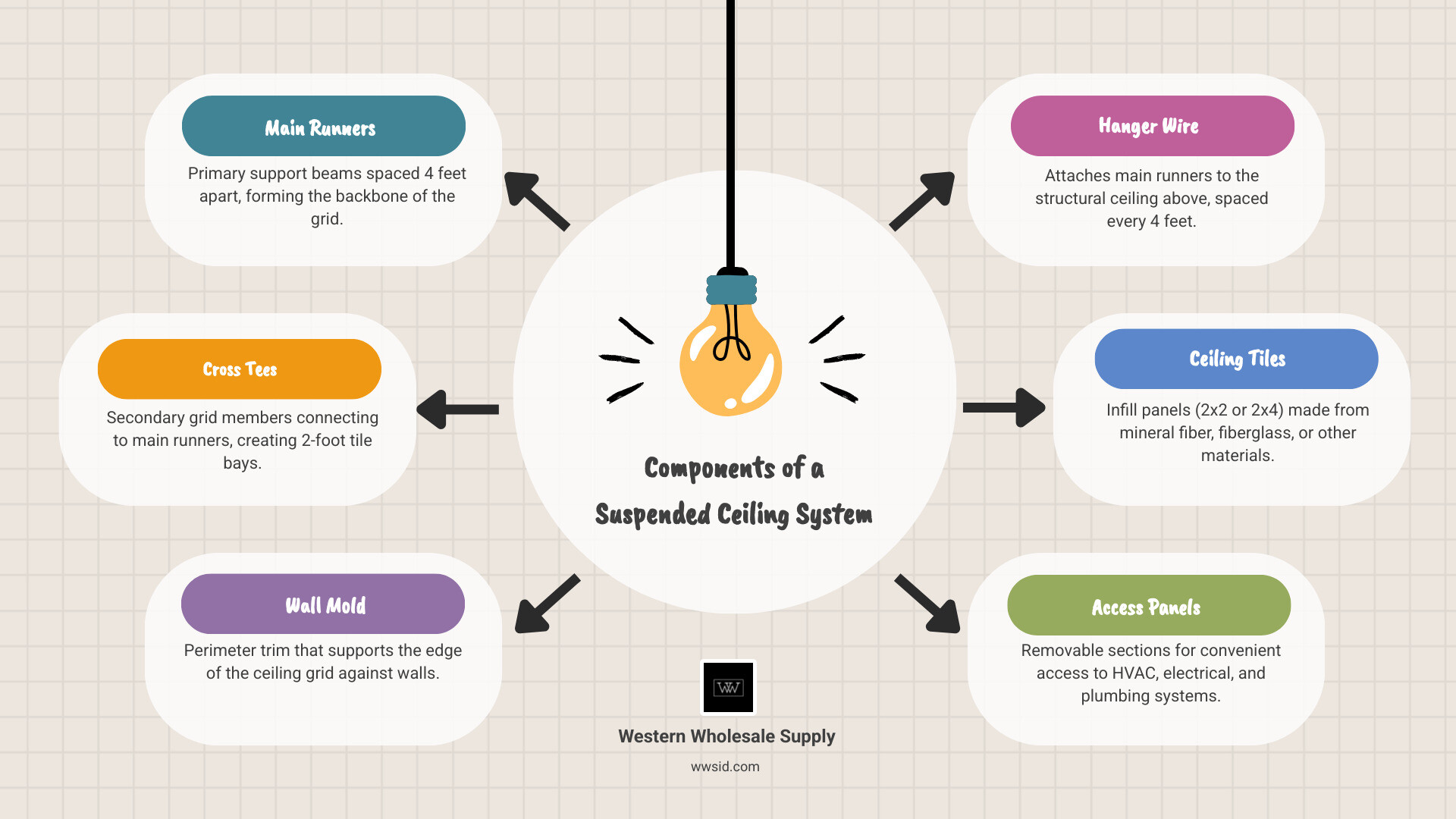
- Suspension Systems – Main runners, cross tees, wall mold, and hanger wire (15/16″ or 9/16″ grids)
- Specialty Materials – Metal, wood, or translucent panels for unique design needs
- Fasteners and Tools – Toggle bolts, eye-lag screws, wire, and installation equipment
- Access Panels – For maintenance of HVAC, electrical, and plumbing systems
The suspended ceiling market is projected to grow by $3.5 billion by 2028 at a 4.5% annual rate, driven by demand for better acoustics and flexible infrastructure access in modern buildings.
Why contractors care about ceiling supply:
- Sound control – Acoustical tiles reduce noise and improve speech clarity
- Building integration – Suspended systems hide and provide access to mechanical systems
- Design flexibility – Wide range of textures, colors, and materials match any aesthetic
- Code compliance – Fire-rated and specialty options meet strict safety requirements
The right ceiling does more than cover joists. It controls sound, reflects light, provides maintenance access, and transforms how a space looks and feels. From sterile hospital environments requiring sealed neoprene systems to schools needing durable metal ceilings, each project demands specific solutions.
I’m Jake Bean, a third-generation building materials professional who has spent years helping contractors source reliable ceiling supply products across Idaho and Wyoming. Through our family business, I’ve seen how the right materials and responsive support keep projects moving smoothly.
Essential Types of Ceiling Supply Materials
When we talk about ceiling supply, the conversation usually starts with the tiles themselves. The material you choose dictates everything from the room’s “quietness” to how often you’ll need to clean it. In our experience serving Eastern Idaho and Western Wyoming, we’ve found that most projects fall into three main material categories.
Mineral Fiber
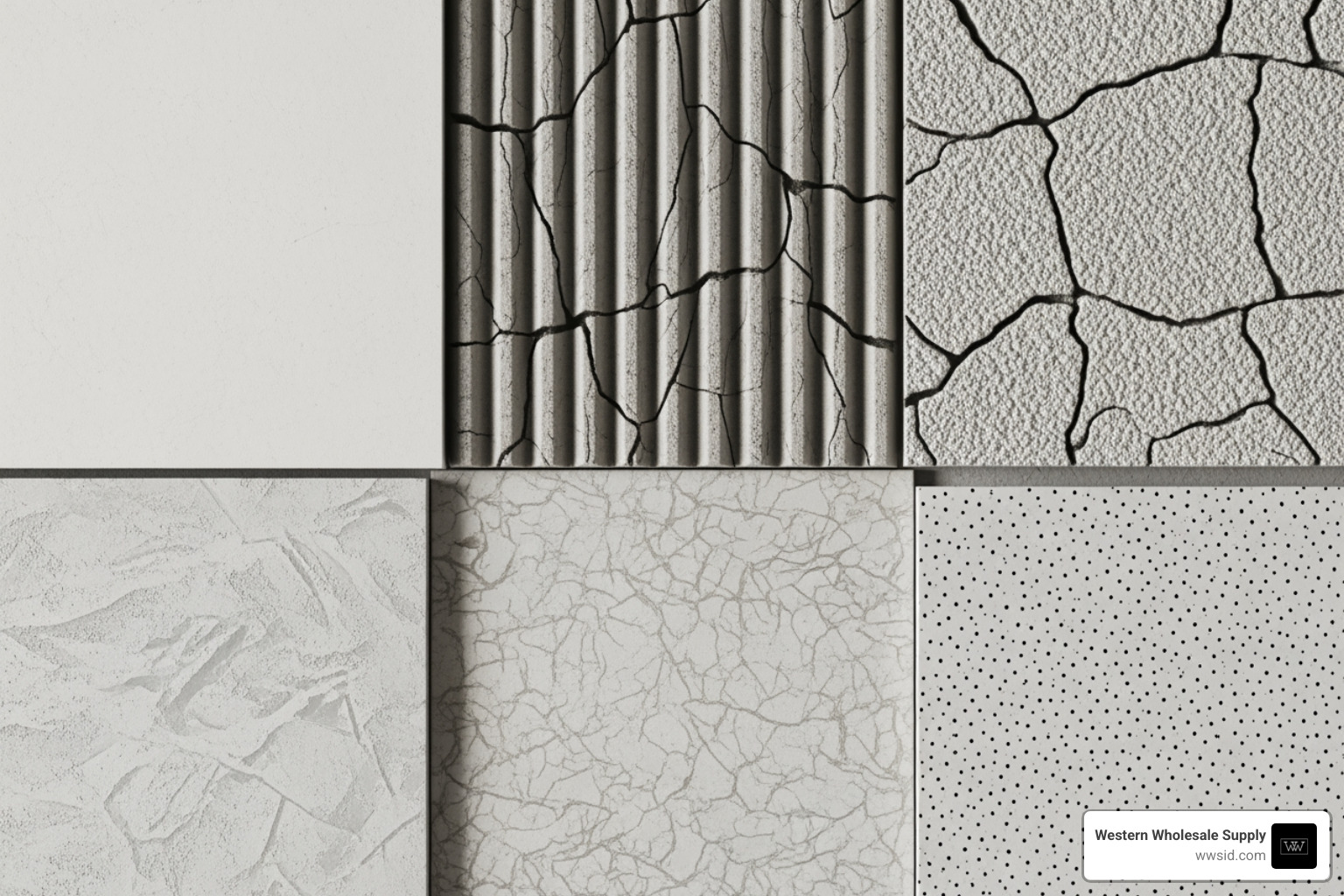
Mineral fiber is the workhorse of the industry. These tiles are made from a mixture of recycled newsprint, perlite, and mineral wool. They are excellent for fire resistance and are generally more cost-effective for large commercial builds. You will often find these in “wet-formed” or “cast” varieties. Cast mineral fiber is particularly durable because the color and texture go all the way through the tile, making it a favorite for high-traffic areas in schools or offices.
Fiberglass
If sound absorption is your primary goal, fiberglass is often the winner. These panels are lightweight and typically have a higher Noise Reduction Coefficient (NRC). They are also naturally resistant to moisture, making them a solid choice for areas with high humidity.
Comparison: Mineral Fiber vs. Fiberglass
| Feature | Mineral Fiber | Fiberglass |
|---|---|---|
| Sound Absorption (NRC) | Moderate to High | Very High |
| Sound Blocking (CAC) | Excellent | Moderate |
| Durability | High (Rigid) | Moderate (Lightweight) |
| Moisture Resistance | Standard (unless treated) | Naturally High |
| Best Use Case | Schools, Offices, Retail | Theaters, Open Offices, Gyms |
For those looking for high-performance options, CertainTeed ceiling products offer a wide range of wet-formed mineral fiber and fiberglass solutions that we often recommend for local projects.
Specialty Ceiling Supply Solutions
Sometimes, a standard white tile just won’t cut it. For high-end lobbies, restaurants, or modern residential basements, specialty solutions add that “wow” factor.
- Metal Ceilings: These are becoming incredibly popular in institutions like universities and hospitals. They offer a sleek, industrial look and are nearly indestructible. They can be used as accents or for entire soffits at entrances.
- Wood Panels: Nothing beats the warmth of real wood. Specialty solutions provide stunning wood-look or real wood panels that can be integrated into standard grid systems.
- Translucent Materials: These allow for backlighting, creating a glowing ceiling effect that is perfect for modern retail or hospitality spaces.
Common Sizes and Dimensions
Standardization is the friend of the contractor. Most ceiling supply inventory revolves around two main sizes:
- 2×2 Tiles: These are the most common for modern office designs. They offer a symmetrical look and are easy to handle.
- 2×4 Panels: Traditionally used in larger commercial spaces, these are faster to install because they cover more ground with fewer grid components.
We also see thickness variations ranging from 5/8″ to 1″, depending on the performance requirements. CertainTeed ceiling systems offer a vast array of these dimensions to fit any grid configuration.
Mastering Sound Control and Acoustics
A ceiling isn’t just there to look pretty; it’s there to manage noise. If you’ve ever been in a restaurant where you couldn’t hear the person across from you, the ceiling probably lacked proper Acoustical Ceilings.
To understand acoustics, you need to know two acronyms:
- NRC (Noise Reduction Coefficient): This measures how much sound a tile absorbs. A rating of 0.70 means the tile absorbs 70% of the sound hitting it.
- CAC (Ceiling Attenuation Class): This measures how much sound travels through the ceiling into the next room. High CAC is vital for private offices and medical exam rooms.
Using Sound-Absorbing Ceilings: The Secret to a Quieter Environment is essential for creating productive workspaces. For those needing deep technical data on vibration and noise mitigation, industry-leading research provides insights into how different materials behave in complex environments.
Suspension Systems and Grid Components
The grid is the skeleton that holds your ceiling together. Without a high-quality suspension system, even the most expensive tiles will sag or look uneven.
A standard ceiling supply order for a grid includes:
- Main Runners: The primary load-bearing components, usually 12 feet long.
- Cross Tees: These snap into the main runners to create the 2×2 or 2×4 openings.
- Wall Mold: The L-shaped trim that goes around the perimeter of the room.
- Hanger Wire: Usually 12-gauge soft galvanized wire used to suspend the main runners from the structure above.
For reliable hardware, we trust Chicago Metallic suspension systems. They offer everything from standard 15/16″ grids to sleek 9/16″ bolt-slot systems for a more designer look. You can find more Acoustical grid details in our comprehensive guides to ensure your layout is structurally sound.
Calculating Your Ceiling Supply Needs
One of the biggest headaches is running out of materials mid-job—or having too much left over. To calculate your needs, you’ll need the total square footage and the total linear footage of your walls.
As a rule of thumb, use 4 pieces of ceiling wire per main runner. Each wire should be long enough to reach from the ceiling to the anchor point, plus an extra 2 feet for tying. For irregularly shaped rooms or hallways, always add a 5-10% waste factor. You can find more tools in our Ceiling Resources section to help plan your next Idaho Falls or Jackson project.
Installation and Maintenance Best Practices
Safety first! In our region, particularly around Teton County and the surrounding areas, seismic ratings are often a concern. Ensure your grid is rated for the local building codes.
- Firecode Safety: Use fire-rated main tees and cross tees (like those from CertainTeed) if the building design requires a fire-rated assembly.
- HVAC Access: One of the best parts of a suspended ceiling is the easy access to mechanicals. Ensure you leave enough clearance above the grid to remove tiles easily.
- Cleaning: Most mineral fiber tiles can be lightly vacuumed or wiped with a damp cloth. For sterile environments, we recommend specialized vinyl-faced tiles that can handle frequent scrubbing.
Our Professional Services team is always available to walk you through specific installation challenges, from matching old tiles to complex grid layouts.
Choosing the Right Ceiling Supply for Your Space
The “best” ceiling depends entirely on where it’s going. A high-tech lab in Rexburg has very different needs than a retail shop in Twin Falls.
- Commercial vs. Residential: Residential projects often prioritize aesthetics and “warmth,” while commercial projects focus on durability and fire ratings.
- Clean Rooms and Sterile Environments: Hospitals and labs often require sealed neoprene ceiling systems. These prevent dust and contaminants from moving between the plenum and the room.
- MRI Compatibility: For medical imaging suites, you must use non-ferrous (non-magnetic) suspension systems.
To see how these choices impact your specific build, check out Elevate Your Projects: Discover Acoustical Ceiling Solutions.
Latest Trends and Innovations
The world of ceiling supply is moving toward “biophilic design”—bringing the outdoors in. This means more wood textures, leaf patterns, and organic shapes.
- Large-Format Panels: We’re seeing a move away from the standard 2×2 toward massive 4×4 or 5×5 panels that create a seamless, high-end look.
- Acoustic Art: Specialty designers are turning ceilings into art pieces with vibrant colors and geometric felt shapes.
Eco-Friendly and Sustainable Options
Sustainability isn’t just a buzzword; it’s a requirement for many new LEED-certified builds. Many of our modern tiles feature high recycled content and low-VOC emissions to improve indoor air quality. For instance, recycled polyester panels are made from recycled plastic bottles, offering an incredibly eco-friendly way to manage acoustics.
Frequently Asked Questions about Ceiling Supplies
What is the difference between NRC and CAC?
Think of NRC as “absorption” (stopping echoes inside the room) and CAC as “blocking” (stopping sound from traveling through the ceiling into the office next door). You usually want a balance of both.
How do I match an existing ceiling tile?
This is the most common question we get! Bring a small piece of the old tile (or a very clear photo of the texture) into one of our locations in Idaho Falls or Pocatello. We carry a wide range of CertainTeed and other major brands to help find a match for older systems.
Can I install acoustical tiles in high-humidity areas?
Yes, but you must choose the right material. Standard mineral fiber can sag if it gets damp. For bathrooms, kitchens, or indoor pools, look for fiberglass panels or specially treated mineral fiber tiles designed for high-humidity resistance.
Conclusion
At Western Wholesale Supply, we’ve been the go-to source for ceiling supply in Eastern Idaho and Western Wyoming since 1963. As a veteran-owned, third-generation family business, we know that our reputation is only as good as our last delivery. Whether you are in Jackson, WY, or Twin Falls, ID, we pride ourselves on getting you the right materials—from CertainTeed tiles to Chicago Metallic grids—exactly when you need them.
With over 60 years of experience, we’ve seen the industry evolve, but our commitment to exceptional customer service hasn’t changed. Ready to start your next project? Contact us for your Acoustical Ceiling needs today, and let’s get to work!
