

Why Choosing the Right Drywall Thickness Matters
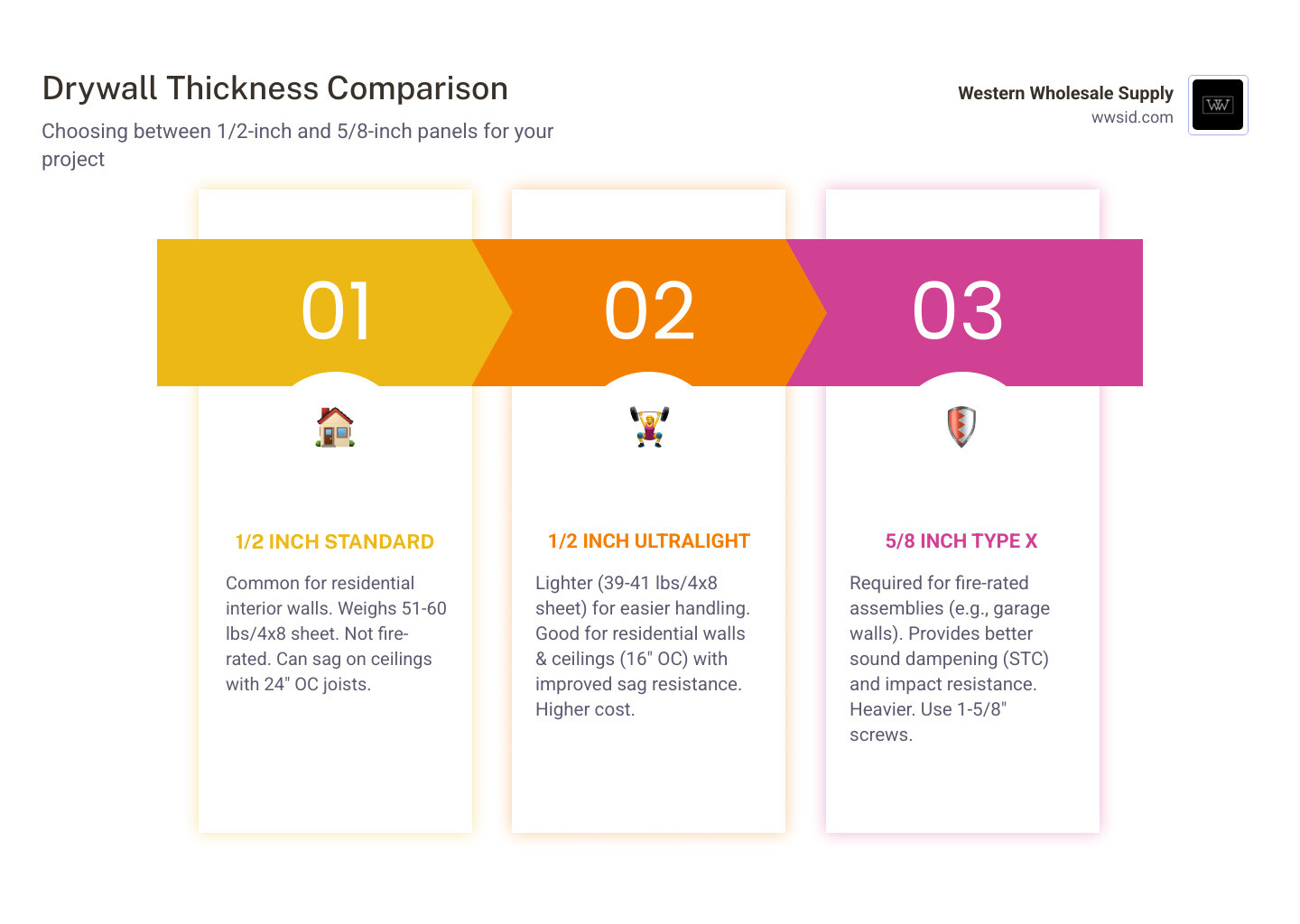
1/2 inch drywall is the most common thickness for residential interior walls and ceilings, but understanding when to use it versus 5/8-inch panels can save you time, money, and code compliance headaches. Here’s what you need to know:
Quick Answer: 1/2 Inch Drywall at a Glance
- Weight: Standard panels weigh 51-60 lbs per 4×8 sheet; ultralight versions weigh just 39-41 lbs
- Primary Use: Interior walls and ceilings in residential construction
- Ceiling Application: Suitable for ceilings with proper joist spacing (typically 16″ on-center); ultralight versions offer superior sag resistance
- Fire Rating: Standard 1/2″ is not fire-rated; use 5/8″ Type X for fire-rated assemblies
- Screw Size: Use 1-1/4″ drywall screws for 1/2″ panels
Walk into any home improvement center and you’ll find stacks of drywall in different thicknesses. For contractors working on residential projects, the choice between 1/2-inch and 5/8-inch panels isn’t just about thickness—it’s about code compliance, performance, and project efficiency.
The building materials industry has evolved significantly over the past decade. Ultralight 1/2 inch drywall now weighs up to 30% less than traditional panels, which means your crew can hang more sheets per day with less fatigue. A stack of 25 ultralight panels weighs nearly 300 pounds less than standard drywall—that’s a meaningful difference when you’re loading trucks and managing job site logistics.
But lighter doesn’t always mean better for every application. Understanding when to spec 1/2-inch versus 5/8-inch panels depends on ceiling joist spacing, fire-rating requirements, soundproofing needs, and local building codes.
At Western Wholesale Supply, we’ve spent decades helping contractors and builders choose between 5/8 inch and 1/2 inch drywall without sacrificing code compliance or real-world performance. Whether you’re hanging board on standard residential walls or finishing out a basement remodel, picking the right panel thickness upfront helps you avoid costly callbacks, reduce rework, and keep the schedule moving.
Understanding 1/2 Inch Drywall: The Industry Standard
When we talk about standard residential construction, 1/2 inch drywall is often the unsung hero. It’s the most common thickness you’ll encounter for interior walls and many ceiling applications. Its widespread use isn’t just a matter of tradition; it’s a balance of cost-effectiveness, ease of handling, and sufficient performance for typical living spaces.
We’ve seen how much the industry has innovated, particularly with the introduction of ultralight versions. These advancements have made working with 1/2 inch drywall even more efficient, reducing the physical strain on our crews and speeding up project timelines. Whether you’re a seasoned professional or taking on a substantial DIY project, understanding the nuances of this material is key to a successful build. For a deeper dive into drywall in general, check out our Drywall guide.
Primary Applications for 1/2 Inch Drywall
So, where does 1/2 inch drywall shine? Primarily, it’s our go-to choice for interior walls in residential homes throughout Eastern Idaho and Western Wyoming. This thickness meets the general building code requirements for most living areas, bedrooms, and hallways. It’s also perfectly suitable for:
- Standard Residential Walls: The default for most vertical surfaces where specific fire ratings or improved soundproofing aren’t mandated. Its relative ease of cutting and installation makes it ideal for quick framing and finishing.
- Single-Layer Application: In typical wall assemblies, a single layer of 1/2 inch drywall provides a smooth, paint-ready surface.
- Repair Projects and Remodeling: Due to its commonality, 1/2 inch drywall is often the perfect match for patching existing walls or integrating new sections during a remodel.
- Non-Structural Partitions: For creating new rooms or dividing larger spaces, 1/2 inch drywall provides the necessary enclosure without adding excessive weight or cost.
- Finishing Basements: As long as moisture control is properly addressed, 1/2 inch drywall is frequently used to finish basement walls, changing raw spaces into comfortable living areas.
If you’re building or renovating a standard residential space, 1/2 inch drywall is likely the thickness you’ll be working with most often.
Standard vs. Ultralight: What’s the Difference?
This is where things get interesting, and frankly, where we’ve seen some of the biggest improvements for our customers. For years, a conventional 4×8 sheet of 1/2 inch drywall weighed in at about 51 to 60 pounds. That’s a lot of lifting, especially when you’re moving stacks of it.
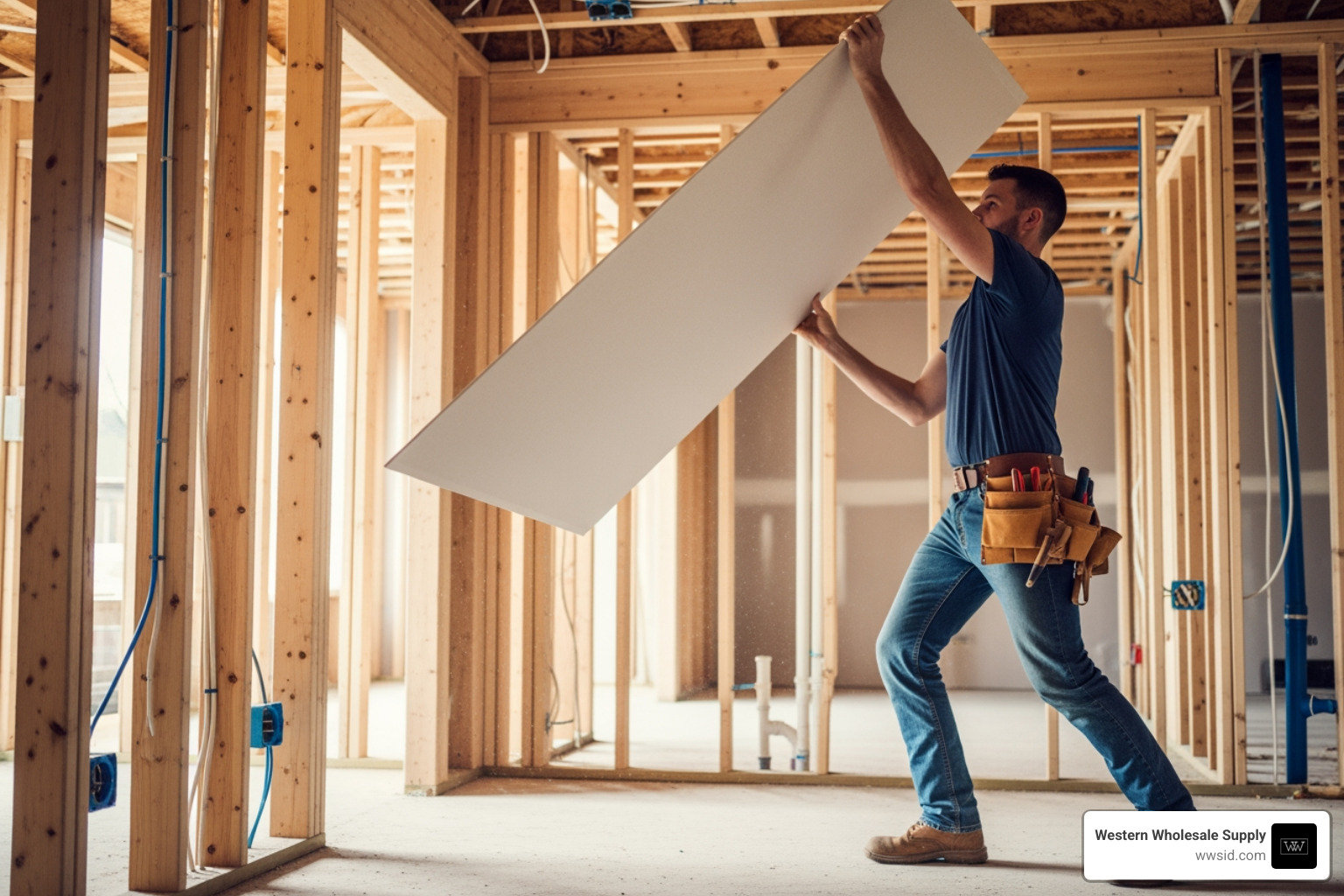
Then came ultralight drywall. This innovative product has revolutionized how we think about handling and installing drywall. A 4×8 sheet of ultralight 1/2 inch drywall typically weighs around 39 to 41 pounds – that’s a significant 12 to 19 pounds less per sheet! Imagine moving an entire stack of 25 sheets; with ultralight, you’re looking at nearly 300 pounds less overall weight. That’s a game-changer for reducing fatigue and potential injuries on the job site.
The secret behind this impressive weight reduction lies in the manufacturing process. Ultralight drywall is composed of gypsum (calcium sulfate dihydrate), cellulose, and continuous filament glass fiber, but manufacturers like USG and Georgia-Pacific use a gaseous foaming agent in the gypsum slurry. This creates more air pockets within the core, effectively making the panel lighter without compromising its integrity.
Despite being lighter, ultralight panels are designed for superior performance. Manufacturers like USG state that their light wallboard boasts “superior sag resistance” and is “stronger pound-for-pound than standard 1/2 inch drywall.” This means that while it feels lighter, it often maintains, or even exceeds, the structural performance of its heavier counterpart, particularly in areas like sag resistance for ceilings. This innovation directly translates to easier transport, improved installation ergonomics, and a smoother workflow for our crews.
Pros and Cons of Ultralight 1/2 Inch Drywall
While we’re big fans of the efficiencies ultralight drywall brings, like any building material, it has its trade-offs. Here’s a balanced look at the pros and cons we’ve observed:
Pros of Ultralight 1/2 Inch Drywall:
- Lighter Weight: This is the most obvious benefit. Weighing up to 30% less than traditional 1/2 inch drywall, it’s much easier to carry, lift, and maneuver, especially in tight spaces or up stairs.
- Easier Installation: Reduced weight means less strain on installers, potentially leading to faster hanging times and increased productivity. Our crews appreciate the difference, especially when working overhead.
- Reduced Fatigue and Injury Risk: Less heavy lifting directly translates to fewer aches, pains, and a lower risk of workplace injuries, which is a significant consideration for any contractor.
- Superior Sag Resistance: Many ultralight products are engineered to have excellent sag resistance, making them suitable for ceiling applications even with 24-inch on-center joist spacing, where traditional 1/2 inch drywall might struggle.
Cons of Ultralight 1/2 Inch Drywall:
- Higher Cost: Typically, ultralight versions come with a slightly higher price tag. While standard 1/2 inch drywall might run about $0.18 per square foot, ultralight can be around $0.20 per square foot. However, the labor savings often outweigh this marginal cost difference.
- Potential Brittleness: Some professionals have reported that ultralight panels can be somewhat more brittle and prone to edge breakage than standard drywall. This requires careful handling during transport and installation.
- Reduced Sound Dampening: Because ultralight drywall contains more air pockets and less mass, some experts suggest it might offer slightly less sound control compared to denser, traditional drywall. If soundproofing is a critical concern, this is a factor to consider.
- Harder Core: While it contributes to strength, the harder core of ultralight drywall can dull utility knife blades faster, requiring more frequent blade changes.
Despite some minor drawbacks, the benefits of ultralight 1/2 inch drywall often make it the preferred choice for many residential projects, especially when considering the well-being and efficiency of the installation crew.
Head-to-Head: 1/2 Inch vs. 5/8 Inch Drywall
Choosing between 1/2 inch drywall and 5/8 inch drywall is one of the most common decisions we help our clients make. While both are essential building materials, their applications and performance characteristics differ significantly. It’s not just about a small fraction of an inch; it’s about strength, fire resistance, and suitability for specific environments. For a comprehensive overview of various drywall dimensions, our Guide to Drywall Thickness, Length, and Width provides excellent context.
Here’s a quick comparison to help you visualize the differences:
| Feature | Standard 1/2″ Drywall | Ultralight 1/2″ Drywall | Standard 5/8″ Drywall |
|---|---|---|---|
| Weight (4×8 sheet) | 51-60 lbs | 39-41 lbs | 70-72 lbs |
| Common Use | Residential walls & ceilings | Residential walls & ceilings | Ceilings (24″ O.C.), Fire-rated walls |
| Fire Rating | Standard (None) | Standard (None) | Type X (1-hour rating) |
| Soundproofing | Good | Slightly less (due to less mass) | Better (due to more mass) |
| Sag Resistance | Good | Superior (often for 24″ O.C. ceilings) | Excellent |
Performance Comparison: Weight, Strength, and Durability
Let’s dig deeper into how these thicknesses stack up in terms of physical performance.
Weight per Sheet:
The most immediate difference we notice is weight. A standard 4×8 sheet of 1/2 inch drywall typically weighs between 51 and 60 pounds. Its ultralight counterpart is a welcome relief at 39 to 41 pounds for the same size. Step up to 5/8 inch drywall, and you’re looking at a substantial 70 to 72 pounds for a 4×8 sheet. This weight difference becomes critical when you’re moving a large volume of material, especially without mechanical assistance.
Sag Resistance:
This is a key differentiator, particularly for ceilings. The general consensus among many builders is that 5/8 inch drywall is needed for ceilings because its increased stiffness helps prevent sagging, especially when joists are spaced 24 inches on-center or when heavy textures or insulation are applied. However, as we discussed, modern ultralight 1/2 inch drywall has made great strides in this area, with manufacturers specifically engineering it for “superior sag resistance,” even for 24-inch on-center ceiling installations. This means that for many standard residential ceiling applications, ultralight 1/2 inch drywall can now be a viable, lighter alternative to 5/8 inch.
Impact Resistance and Stiffness:
When it comes to resisting impacts and overall stiffness, 5/8 inch drywall generally outperforms 1/2 inch drywall. The added thickness provides a more robust surface, which can be beneficial in high-traffic areas or commercial applications where durability is paramount. While ultralight 1/2 inch drywall is “stronger pound-for-pound,” anecdotal evidence from some professionals suggests it might be slightly more prone to edge breakage or cracking under impact compared to traditional, denser drywall.
Load-Bearing Capacity:
Neither 1/2 inch drywall nor 5/8 inch drywall is considered load-bearing in the structural sense. Their primary function is to create interior surfaces. However, the greater stiffness of 5/8 inch drywall does mean it can better support heavier finishes or attachments without flexing as much as 1/2 inch drywall.
Fire Resistance and Soundproofing Capabilities
Beyond sheer strength and weight, fire resistance and soundproofing are critical performance aspects where drywall thickness plays a significant role.
Fire Resistance:
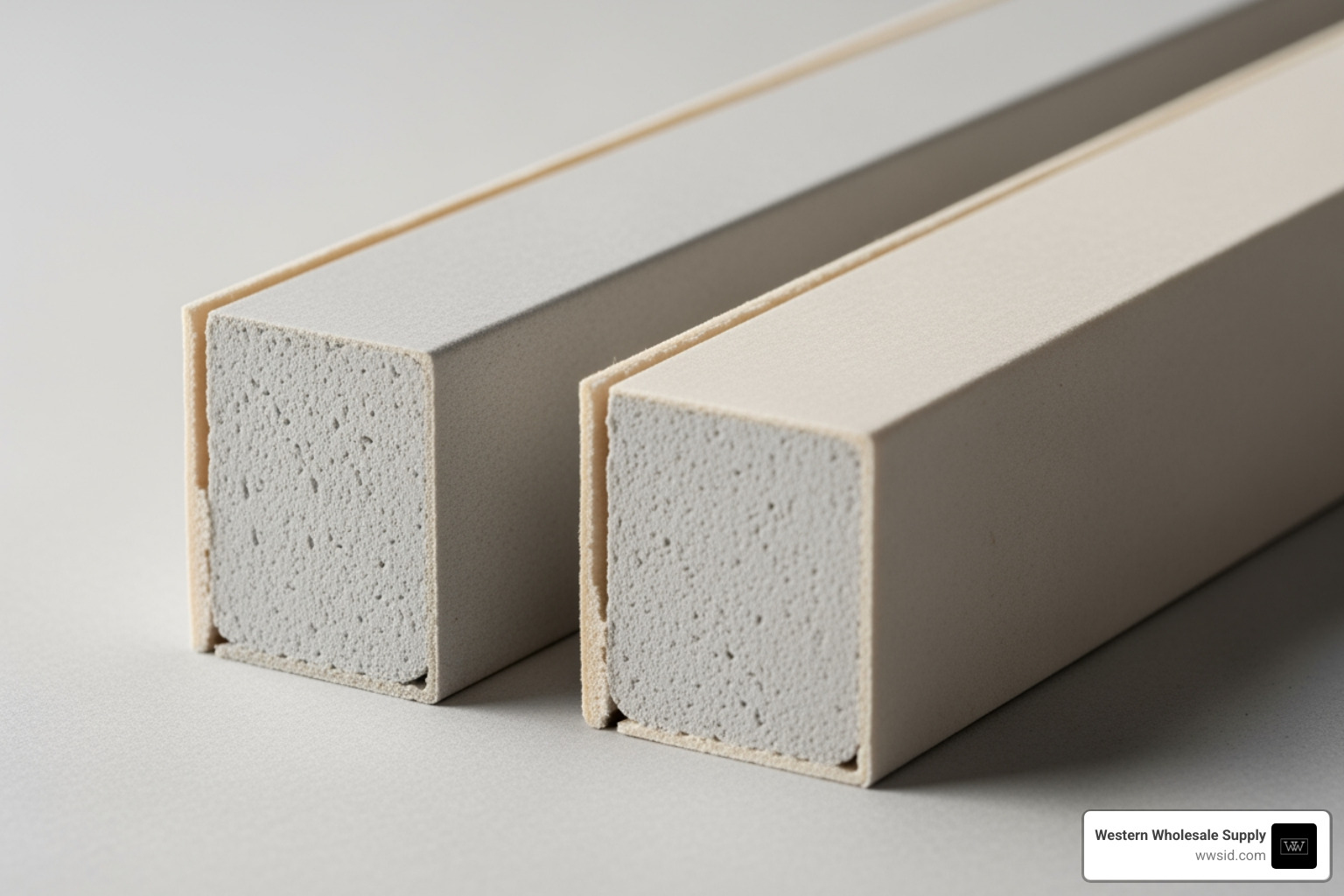
This is perhaps the most crucial distinction, especially when building codes are concerned. Standard 1/2 inch drywall (both conventional and ultralight) does not typically provide a specified fire rating. It’s made of gypsum, which is naturally non-combustible, but it lacks the additives to resist fire for a prolonged period in a fire-rated assembly.
For areas requiring fire-rated construction, such as between living spaces and an attached garage, or in multi-family dwellings, 5/8 inch Type X drywall is almost always the requirement. Type X drywall incorporates special additives, primarily glass fibers, into its gypsum core. These fibers help the panel maintain its integrity longer under high heat, providing a crucial time buffer in the event of a fire. Type C drywall takes this a step further, with more glass fibers and vermiculite to prevent shrinking, offering even greater fire resistance. It’s essential to consult local building codes to determine where fire-rated assemblies are mandatory in your project area in Idaho and Wyoming.
Soundproofing:
The general rule of thumb for soundproofing is that more mass equals better sound attenuation. Therefore, 5/8 inch drywall, being thicker and denser, inherently offers better sound-dampening properties than 1/2 inch drywall. If you’re building shared walls, media rooms, or simply aiming for a quieter home environment, opting for 5/8 inch drywall can make a noticeable difference.
While ultralight 1/2 inch drywall offers many benefits, its reduced mass (due to the foaming agents creating air pockets) can mean slightly less effective sound dampening compared to conventional 1/2 inch drywall, let alone 5/8 inch. For improved soundproofing, combining thicker drywall with other acoustic solutions, or even installing double layers of drywall, is a common and effective strategy. We often recommend this for projects where noise reduction is a priority for our clients.
Installation and Building Code Guidelines
Proper installation is paramount, regardless of the drywall thickness you choose. We always emphasize that even the best materials won’t perform as expected if they’re not installed correctly. This includes using the right drywall screws, understanding tapered edges for seamless finishing, and adhering to framing spacing guidelines. Our Joint Treatments & Trims guide offers more insights into achieving that perfect finish.
Can You Use 1/2-Inch Drywall on Ceilings?
This is a question we hear frequently, and the answer, like many things in construction, is “it depends.” Historically, the consensus has been that 5/8 inch drywall is the preferred choice for ceilings, especially with joists spaced 24 inches on-center. The logic is sound: the added stiffness of 5/8 inch panels helps resist sagging over time, particularly from the weight of insulation, humidity fluctuations, or heavy ceiling textures.
However, modern advancements have changed the landscape. High-strength lightweight 1/2 inch drywall panels are now specifically engineered to combat sag. Manufacturers like USG have developed products that boast “superior sag resistance” and are approved for ceilings with 24-inch on-center joists. This means that for many residential ceiling applications in Idaho and Wyoming, ultralight 1/2 inch drywall can be a perfectly viable option, offering the benefit of easier handling without sacrificing performance.
When considering 1/2 inch drywall for ceilings, here are our key considerations:
- Joist Spacing: For 16-inch on-center joist spacing, standard 1/2 inch drywall is generally acceptable. For 24-inch on-center spacing, ultralight 1/2 inch drywall with improved sag resistance is a strong contender, but traditional 1/2 inch drywall might still be prone to sagging over time.
- Manufacturer Specifications: Always check the manufacturer’s guidelines for the specific product you’re using. If they rate their 1/2 inch drywall for 24-inch on-center ceiling applications, you can proceed with confidence.
- Insulation Weight and Humidity: Be mindful of factors that can exacerbate sagging, such as heavy blown-in insulation in attics or high humidity levels. In these cases, 5/8 inch drywall might still be the more conservative and robust choice.
While 5/8 inch drywall remains the gold standard for sag resistance on ceilings, the innovation in ultralight 1/2 inch drywall has expanded its suitability for many ceiling projects, making it a lighter, easier-to-install option.
Navigating Building Codes and Manufacturer Recommendations
Building codes are not just suggestions; they are legal requirements designed to ensure safety and structural integrity. For our projects across Eastern Idaho and Western Wyoming, we strictly adhere to the International Building Code (IBC) and International Residential Code (IRC), which often dictate drywall thickness based on application.
- Code Requirements: The usual drywall thickness for residential interior walls is 1/2 inch, but codes will specify 5/8 inch for fire-rated assemblies (e.g., garage walls adjoining living spaces) or sometimes for ceilings with wider joist spacing. It’s crucial to consult your local building department in Idaho Falls, Pocatello, or any other region we serve, as local code variations can exist.
- Fire-Rated Assemblies: If your project requires a specific fire-resistance rating, 5/8 inch Type X drywall will almost certainly be mandatory. These applications are critical for safety and compliance.
- ASTM C1396: It’s reassuring to know that modern lightweight panels, including ultralight 1/2 inch drywall, are designed to meet rigorous industry standards. They comply with ASTM C1396 Specification for Gypsum Board, for both 1/2 inch gypsum wallboard and 1/2 inch gypsum ceiling board. This specification ensures that the material meets performance criteria for hardness, flexural strength, and other essential properties. For more details on this standard, see our article What is Standard Gypsum Board? Decoding ASTM C1396.
- Manufacturer Guidelines: Always cross-reference building codes with manufacturer recommendations. Leading manufacturers like USG and Georgia-Pacific provide detailed specifications for their products, including approved applications and installation methods. Following these guidelines ensures optimal performance and can be critical for warranty purposes.
At Western Wholesale Supply, we’re not just material providers; we’re partners in your project’s success. Our team has over 60 years of experience navigating these requirements, and we’re always here to help you ensure your material choices meet all necessary codes and recommendations.
Cost and Project Planning
Beyond performance and code compliance, the practicalities of cost and efficient project planning are always at the forefront for our contractors. Choosing the right drywall thickness and understanding its implications for material costs and labor is essential for accurate bidding and profitability. For general guidance on purchasing drywall, you might find resources like the Drywall Buying Guide helpful.
Common Sheet Sizes and Availability
While 1/2 inch drywall is a standard thickness, the panels themselves come in a variety of lengths and sometimes widths, which can significantly impact your project’s efficiency and finish quality.
- 4×8 Sheets: This is arguably the most common size, familiar to everyone from DIYers to seasoned pros. A 4-foot by 8-foot sheet of 1/2 inch drywall is manageable for one or two people to handle, making it popular for residential projects with standard ceiling heights.
- 4×12 Sheets and Longer: For taller walls or longer runs, we often recommend 4×12, 4×14, or even 4×16-foot sheets. The primary advantage here is reducing the number of butt joints. Butt joints, formed when the untapered ends of two drywall sheets meet, are notoriously harder to finish seamlessly than tapered edge joints. Using longer sheets minimizes these, leading to a smoother finish and less labor for taping and mudding.
- 54-inch Wide Panels: This is a specialized but incredibly useful size, particularly for homes with 9-foot ceilings. Instead of hanging two 4-foot wide sheets and having two horizontal seams, a 54-inch wide panel allows you to cover the 9-foot height with just one horizontal seam, significantly reducing finishing work. While not as common as 48-inch widths, we can help you source these for your projects.
- Handling Large Sheets: While longer sheets reduce finishing time, they are heavier and more cumbersome to transport and install. A 4×12 sheet of 1/2 inch ultralight drywall still weighs about 58.8 pounds, and standard 5/8 inch 4×12 jumps to over 100 pounds. This often requires more crew members or specialized equipment like drywall lifts.
Choosing the right sheet size is a strategic decision that balances material cost, labor efficiency, and the desired finish quality. You can explore more about these dimensions in resources like A Guide to Drywall Sizes.
Estimating Your Project Needs
Accurate material estimation is crucial for staying on budget and avoiding delays. Over-ordering leads to waste, while under-ordering means costly trips back to the supplier and potential project slowdowns.
Here’s how we approach estimating for 1/2 inch drywall and other materials:
- Calculating Square Footage: Measure the total surface area of all walls and ceilings you plan to cover. Don’t forget to measure both sides of any interior partitions.
- Accounting for Waste: It’s always wise to factor in a waste percentage, typically 10-15%, to account for cuts, mistakes, and damaged sheets. While you might try to minimize waste by carefully planning cuts, it’s inevitable.
- Window and Door Cutouts: While some estimators subtract these areas, many pros find it easier and safer to include them in the total square footage, as the off-cuts from windows and doors can often be used elsewhere. This method also inherently builds in a small waste factor.
- Specialized Tools: We understand that precise calculations can be time-consuming. That’s why tools like the USG Sheetrock Wallboard Estimator can be incredibly helpful for general guidance. For more general drywall calculation, you can also use a Drywall Calculator. These are tools for estimation; we always recommend a thorough review by an experienced project estimator for detailed, project-specific calculations. Application rates can vary, and sometimes, even a test mock-up is necessary to verify material coverage and application productivity.
Our team at Western Wholesale Supply is always ready to assist you with material estimates. With our extensive experience serving contractors in Eastern Idaho and Western Wyoming, we can help ensure you have the right amount of 1/2 inch drywall (or any other material) on hand, precisely when you need it.
Conclusion
Navigating drywall, particularly the choice between 1/2 inch drywall and 5/8 inch, can seem daunting, but it doesn’t have to be. We’ve seen that 1/2 inch drywall, especially its ultralight variant, is the workhorse of residential construction, offering a fantastic balance of cost, ease of installation, and performance for most interior walls and many ceiling applications. Its lighter weight directly translates to less physical strain and improved efficiency for your crews.
However, we also understand the critical role of 5/8 inch drywall for areas demanding higher fire resistance, superior soundproofing, or maximum sag resistance on ceilings. The key to project success lies in making informed decisions based on building codes, specific application needs, and the performance characteristics of each material.
At Western Wholesale Supply, we pride ourselves on providing not just quality building materials but also the expertise to help you choose wisely. For over 60 years, we’ve been dedicated to reliable, on-time delivery and exceptional customer service throughout Eastern Idaho and Western Wyoming. We believe that when you have the right materials and the right advice, your projects will always stand strong.
Ready to tackle your next drywall project with confidence? Get expert advice and materials for your next drywall project from Western Wholesale Supply today.
