

Why Gypsum Steel Framing Is Reshaping Modern Construction
A gypsum steel frame is a building system that combines cold-formed steel studs and tracks with gypsum wallboard to create walls, partitions, and ceilings. This lightweight, non-combustible framing method has become the standard in commercial construction and is rapidly gaining ground in residential projects.
Key Components of a Gypsum Steel Frame System:
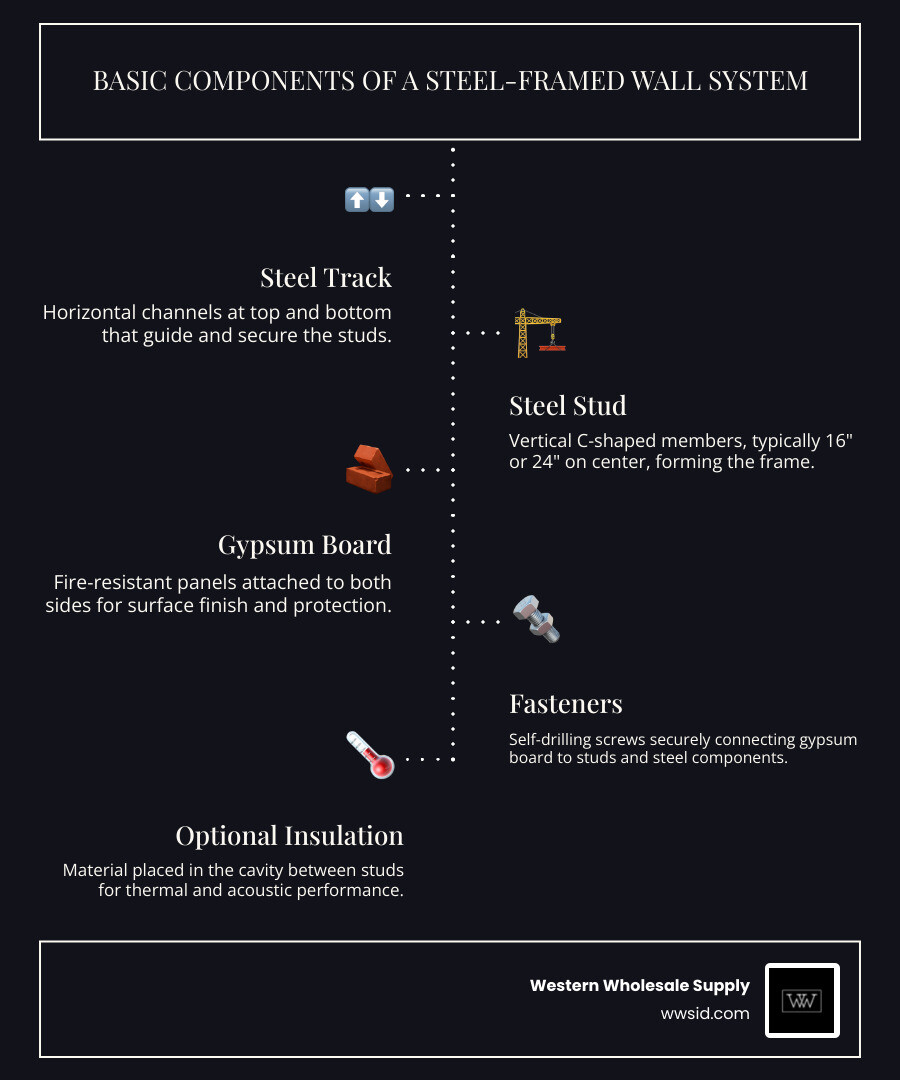
- Steel Studs – Vertical framing members (C-shaped profiles) that support gypsum board
- Steel Tracks – Horizontal top and bottom channels that hold studs in place
- Gypsum Board – Fire-resistant panels (drywall) attached to the steel frame
- Fasteners – Self-drilling screws designed for steel-to-steel and steel-to-gypsum connections
- Accessories – Angles, clips, furring channels, and connectors that complete the system
Why Builders Choose Gypsum Steel Frames:
- Fire Resistance – Achieve 30-120 minute fire ratings through tested assemblies
- Sound Control – Superior acoustic performance (up to Rw 66dB) compared to wood framing
- Dimensional Stability – Steel won’t warp, shrink, or twist like wood
- Sustainability – Made from recycled steel; contributes to LEED certification
- Speed – Faster installation with consistent, pre-engineered components
The system works because steel provides the structural framework while gypsum board delivers fire protection, sound insulation, and a smooth finish surface. Steel studs are manufactured from recycled steel coils using a cold-forming process, creating precise profiles that integrate seamlessly with standard gypsum products. This combination has replaced wood framing in most commercial applications and offers residential builders a superior alternative that eliminates callbacks for nail pops, drywall cracks, and moisture-related failures.
At Western Wholesale Supply, we’ve spent years in the building materials industry helping contractors select the right gypsum steel frame components for projects across Idaho and Wyoming. In this guide, we’ll walk you through what you need to know about these systems, from choosing the right components to understanding key performance specs, so you can frame your projects with confidence.
The Core Components: A Look at Steel Studs, Tracks, and Gypsum Board
At the heart of every robust gypsum steel frame lies a carefully selected set of components, each playing a crucial role in the system’s overall performance. Understanding these elements is the first step toward successful construction. From the vertical strength of steel studs to the horizontal stability of tracks and the essential role of fasteners and accessories, every piece contributes to a strong, reliable structure. We pride ourselves on supplying a comprehensive range of these high-quality steel framing products, ensuring our customers in Eastern Idaho and Western Wyoming have exactly what they need for their projects. You can find more info about steel framing products on our website.
Types of Steel Studs and Their Uses
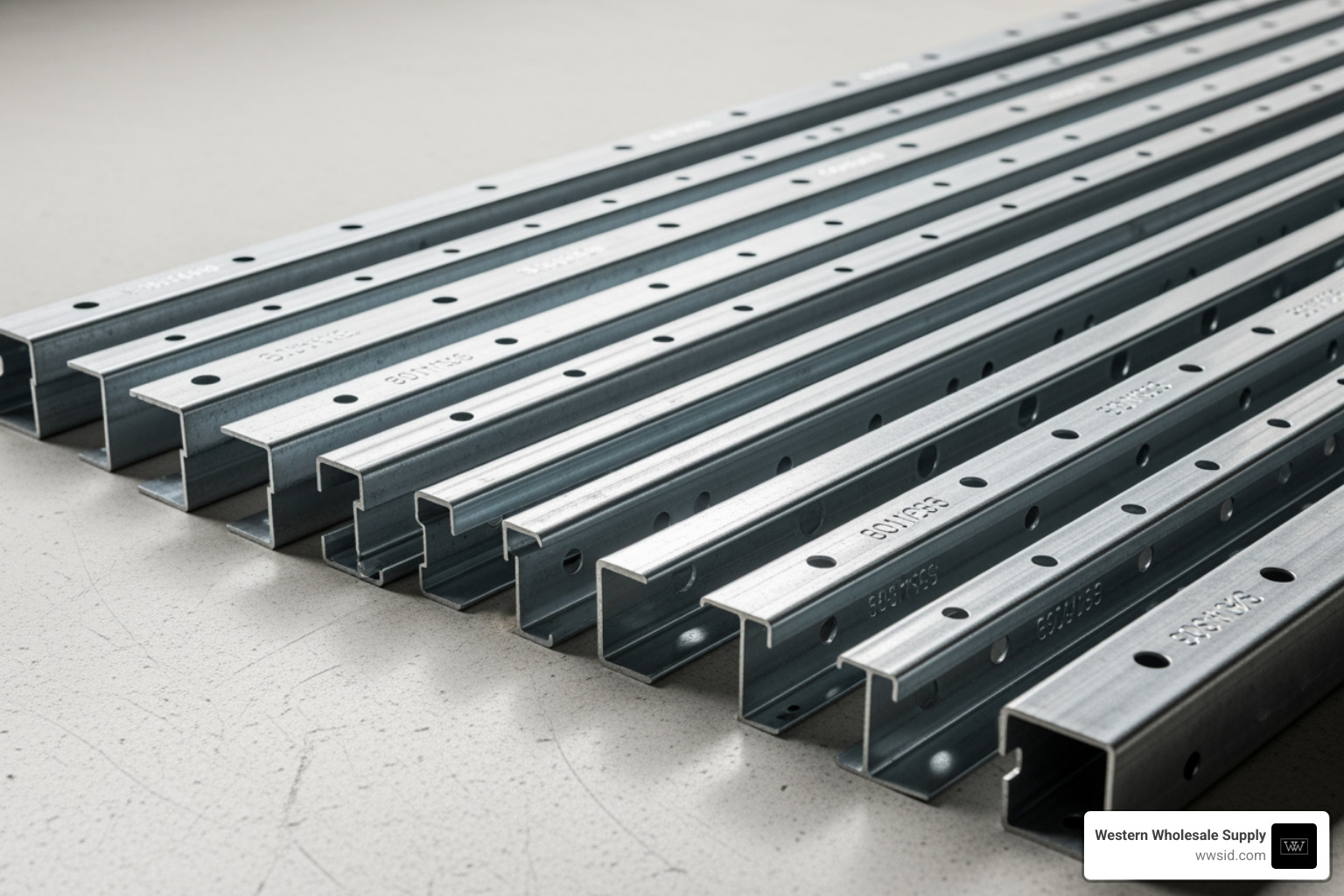
Steel studs come in various shapes and gauges, each designed for specific applications within a gypsum steel frame system. The choice of stud depends on factors like wall height, load requirements, and desired performance characteristics.
-
Wall Studs: These are the most common type, forming the vertical framework of interior and non-load-bearing walls. They typically feature a C-shaped profile. A best practice in manufacturing, seen in some high-quality studs, is the inclusion of a knurled surface. This seemingly small detail significantly improves screw retention and reduces slippage during installation, leading to a more secure and efficient build. Wall studs are often connected to top and bottom tracks via a friction fit, making for quick assembly.
-
CH Studs: These specialized studs are primarily used in shaftwall assemblies, which are critical for fire-rated enclosures around elevator shafts, stairwells, and mechanical chases. Their unique design allows for installation from one side, making them ideal for areas with limited access. CH studs are installed between top and bottom tracks, forming a robust and fire-resistant barrier.
-
E Studs: Also integral to shaftwall assemblies, E studs serve as starter and end studs. They are also crucial for framing door openings and wall intersections within these fire-rated systems. Their specific profile ensures proper connection and sealing, maintaining the integrity of the shaftwall.
These various stud types, along with their specific applications, highlight the versatility and engineered precision inherent in gypsum steel frame construction.
The Role of Tracks and Accessories
While studs provide vertical support, tracks define the perimeter and provide crucial connections.
-
Top and Bottom Tracks: These U-shaped channels run horizontally along the floor and ceiling, securely holding the studs in place. They establish the precise alignment and spacing for the wall or partition.
-
Angles, Clips, Strapping, and Connectors: These smaller, yet indispensable, components are the unsung heroes of a gypsum steel frame.
- Angles are used for bracing, corner reinforcement, and creating specific architectural details.
- Clips provide secure connections between framing members, often used in suspended ceiling systems or for attaching framing to structural elements.
- Strapping (often light-gauge steel) can be used for bracing twin frame wall systems or for added lateral stability.
- Connectors facilitate various junctions and ensure the system’s overall integrity, especially in complex designs.
-
Furring Channels: These hat-shaped channels are essential for creating a level surface over existing walls or ceilings, providing an attachment point for gypsum board, or improving acoustic performance by creating an air gap. They are also vital in many suspended ceiling systems.
The proper selection and installation of these tracks and accessories are paramount to achieving the desired structural, fire, and acoustic performance of any gypsum steel frame system.
The Unbeatable Synergy: Why Pair Steel Framing with Gypsum?
The combination of steel framing and gypsum products creates a construction system that offers significant advantages over traditional methods, particularly wood framing. It’s a synergy that delivers superior performance, durability, and design flexibility, making it a preferred choice for modern builders in Eastern Idaho and Western Wyoming. Learn more about the versatility of drywall on our dedicated page.
Key Benefits of a Gypsum Steel Frame
When we talk about the advantages of a gypsum steel frame, we’re highlighting a system engineered for efficiency and longevity.
- Dimensional Stability: Unlike wood, steel does not absorb moisture, which means it won’t warp, shrink, or twist. This dimensional stability is crucial for preventing common issues like nail pops and drywall cracks, leading to a higher quality finish and fewer callbacks for our customers.
- Non-Combustible: Steel is inherently non-combustible. When paired with gypsum products, which are intrinsically fire safe (generally falling into higher Euroclass classifications like A1 or A2), the system provides exceptional fire resistance, a critical safety feature in any building.
- Pest and Rot Resistance: Steel is impervious to termites, other pests, and rot, eliminating the need for chemical treatments and ensuring the long-term integrity of the structure. This is a significant advantage in terms of maintenance and durability.
- Faster Construction: Steel components are manufactured with precision, leading to faster and more accurate assembly on site. They are lighter than many traditional materials, simplifying handling and installation. This efficiency translates to quicker project completion times.
- Consistent Quality: Steel framing is produced under strict manufacturing standards, ensuring consistent quality and predictable performance. This reliability allows for precise planning and execution, reducing on-site adjustments and material waste.
Environmental Advantages and Sustainability
In today’s construction landscape, sustainability is not just a buzzword; it’s a responsibility. The gypsum steel frame system shines in this regard, offering significant environmental benefits.
- Recycled Steel Content: A major advantage of steel framing is its high recycled content. Many manufacturers, including those we work with, produce light gauge steel framing from recycled, locally-sourced steel coils. This significantly reduces the demand for virgin materials and minimizes the environmental footprint of production. Our commitment to sustainable building with gypsum steel framing reflects this.
- LEED Points: Due to its recycled content and durability, steel framing can contribute valuable LEED (Leadership in Energy and Environmental Design) points for green building certification. This makes a gypsum steel frame an excellent choice for projects aiming for environmental excellence.
- Recyclability: Steel is 100% recyclable, meaning that at the end of a building’s life, the steel components can be melted down and reused without loss of quality. This creates a closed-loop system, further reducing waste. Even gypsum components are often recyclable, with services available to turn plasterboard waste back into new products.
- Reduced Job Site Waste: The precision manufacturing of steel components leads to less cutting and trimming on site, resulting in significantly reduced construction waste compared to traditional materials. This not only benefits the environment but also lowers disposal costs for builders.
| Feature | Light Gauge Steel Framing with Gypsum | Traditional Wood Framing |
|---|---|---|
| Material | Recycled Steel | Harvested Timber |
| Dimensional Stability | Excellent (no warping, shrinking) | Moderate (prone to movement) |
| Fire Resistance | Excellent (non-combustible frame) | Moderate (combustible) |
| Pest/Rot Resistance | Excellent (impervious) | Poor (susceptible) |
| Consistency | High (factory-produced) | Variable (natural material) |
| Weight | Lighter | Heavier |
| Installation Speed | Faster (pre-engineered) | Slower (more on-site work) |
| Waste Generation | Low (precise components) | Moderate (cutting waste) |
| Sustainability (LEED) | High (recycled content, recyclability) | Moderate (renewable, but less recycled content) |
| Long-term Maintenance | Low (fewer callbacks) | Moderate (nail pops, cracks) |
Building for Safety and Serenity: The Performance of a Gypsum Steel Frame System
When designing and constructing buildings, safety and comfort are paramount. A gypsum steel frame system excels in both areas, offering superior fire resistance and exceptional sound insulation. These performance characteristics are not accidental; they are the result of engineered design and the inherent properties of the materials themselves. For builders in Eastern Idaho and Western Wyoming, these features translate into peace of mind and buildings that truly perform.
Achieving Superior Fire Resistance
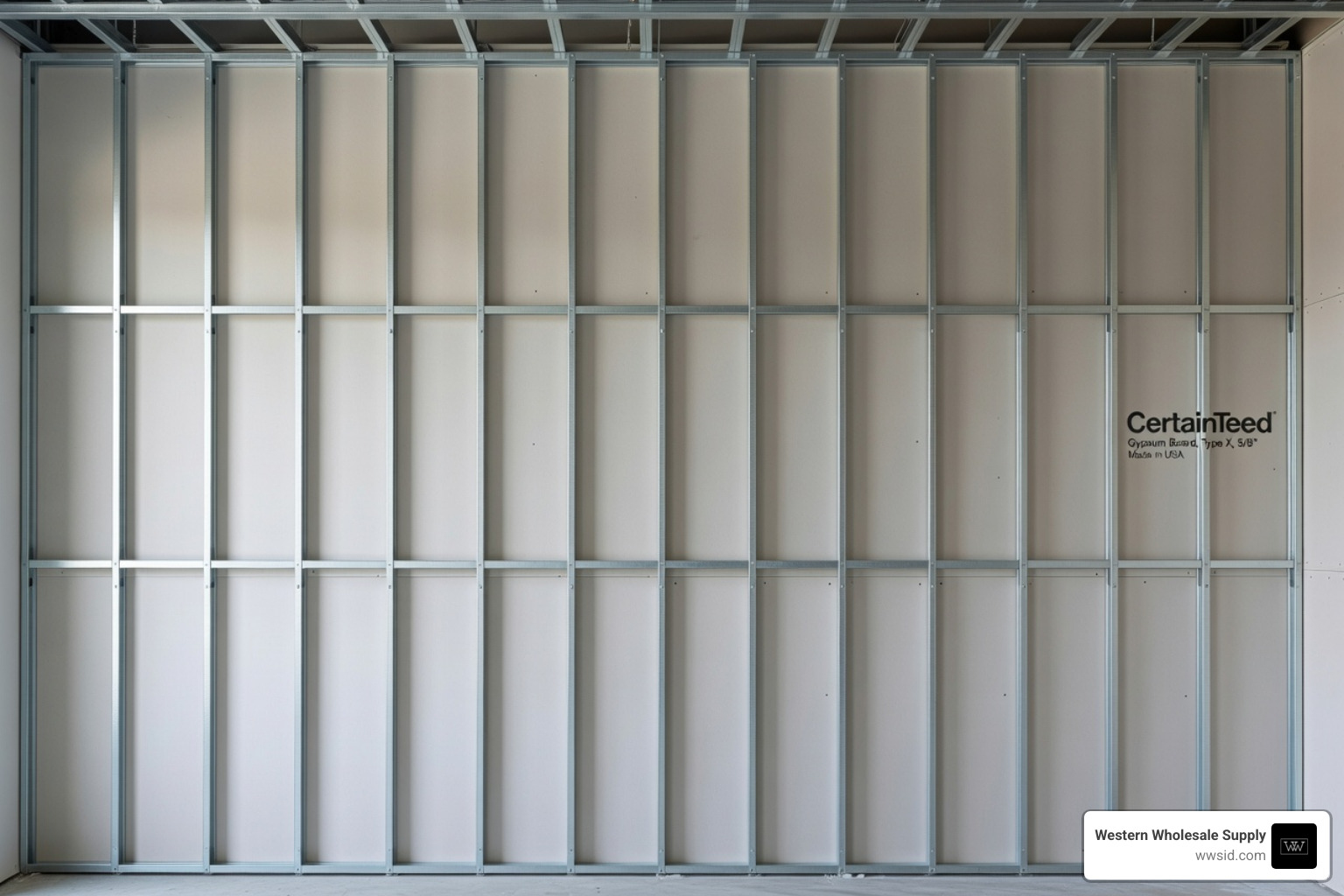
The fire resistance of a gypsum steel frame is one of its most compelling benefits. Gypsum board, the primary facing material, is intrinsically fire safe.
- Gypsum’s Chemical Composition: The secret lies in gypsum’s unique chemical makeup. Gypsum (calcium sulfate dihydrate) contains approximately 21% chemically combined water. This water is not merely absorbed; it’s an integral part of the mineral structure.
- Calcination Process: When exposed to high temperatures during a fire, this chemically combined water begins to convert into steam. This process, known as calcination, is endothermic, meaning it absorbs a significant amount of heat energy. This absorption of heat slows the temperature rise on the unexposed side of the wall or ceiling.
- Heat Absorption: For a crucial period, as the gypsum dehydrates, the temperature of the gypsum board remains relatively constant at around 212°F (100°C)—the boiling point of water. This creates a thermal barrier, protecting the steel frame and adjacent materials from reaching critical temperatures that could lead to structural failure. The calcined gypsum layer adheres to the uncalcined material, further slowing dehydration.
- Fire-Rated Assemblies: The combination of non-combustible steel framing and fire-resistant gypsum board allows for the creation of assemblies that achieve specific fire-resistance ratings. These ratings, often expressed in hours (e.g., 1-hour, 2-hour), are determined through rigorous testing following standards like those from Underwriters Laboratories (UL). For example, a specific configuration of gypsum wallboard and steel studs can achieve a 1-hour fire integrity and 1-hour fire insulation rating. More robust systems, such as a suspended ceiling membrane with multiple layers of fire-rated gypsum board, can achieve a 2-hour fire integrity and 2-hour fire insulation rating. Understanding these ratings and how they are achieved is key to selecting the right materials for your project. We can help you decode ASTM C1396 for standard gypsum board to ensure compliance.
- UL Design Numbers: These numbers are critical for specifiers, as they correspond to tested assemblies that meet specific fire ratings, providing a verifiable performance standard.
Mastering Acoustics and Sound Control
Beyond fire safety, a gypsum steel frame system can deliver exceptional acoustic performance, creating quieter, more comfortable interior spaces.
- Sound Transmission Class (STC): STC is a single-number rating that quantifies a partition’s ability to reduce airborne sound transmission. Higher STC values indicate better sound insulation. While basic steel-framed walls might have moderate STC ratings, advanced assemblies can achieve impressive results, with tested STC ratings ranging from 21 to 57, and even higher with specialized designs.
- Impact Insulation Class (IIC): For floor/ceiling assemblies, IIC measures the system’s ability to resist the transmission of impact sounds, such as footsteps. Systems using steel joists and gypsum board can achieve IIC ratings from 67 to 75, significantly reducing noise transfer between floors.
- Cavity Insulation: Filling the cavity within a gypsum steel frame with batt insulation (such as fiberglass or mineral wool) dramatically improves sound absorption and reduces sound transmission. This simple addition can significantly boost a wall’s STC rating.
- Decoupling Layers and Resilient Channels: For superior acoustic performance, decoupling layers are often employed. This involves separating the gypsum board from the steel studs using resilient channels or staggered stud configurations. This prevents sound vibrations from directly transferring through the frame, breaking the sound path and enhancing insulation.
- Airtightness and Sealing Gaps: The best acoustic design can be undermined by small gaps and leaks. Airtightness is crucial for optimal sound insulation. All penetrations, junctions, and perimeters must be carefully sealed with acoustic sealant to prevent sound flanking—where sound bypasses the main barrier through indirect paths. This attention to detail ensures the system performs as designed, providing the quiet environments our clients expect.
By combining the inherent qualities of steel and gypsum with smart design and installation practices, we can create buildings that are not only safe from fire but also serene and quiet, enhancing the quality of life for occupants.
From Blueprint to Build: Applications and System Integration
The versatility of the gypsum steel frame means it’s not confined to a single type of construction. From residential homes to towering commercial complexes, these systems offer adaptable solutions that integrate seamlessly with various building demands. Understanding how different steel framing systems work with gypsum products is key to open uping their full potential.
Common Applications for a Gypsum Steel Frame
The widespread adoption of gypsum steel frame systems is a testament to their adaptability and performance across diverse building types.
- Residential Construction: While wood framing remains common, light gauge steel framing is increasingly used in residential projects in Eastern Idaho and Western Wyoming. It offers homeowners benefits like superior fire resistance, resistance to pests, and long-term dimensional stability, reducing issues like drywall cracks that can plague wood-framed homes.
- Commercial Buildings: This is where the gypsum steel frame truly dominates. From office buildings and retail spaces to hospitals and schools, the system’s non-combustible nature, high STC ratings for sound control, and speed of erection make it the go-to choice. We’ve seen it used in countless projects, from interior partitions to curtain walls.
- Industrial Facilities: In industrial settings, where durability and fire safety are paramount, steel framing provides the robust structure needed. Gypsum products then contribute to fire compartmentalization and environmental control.
- Interior Partitions: Whether load-bearing or non-load-bearing, steel-framed walls with gypsum board are ideal for dividing interior spaces, offering excellent performance for fire, sound, and impact resistance.
- Load-Bearing Walls: Structural metal stud framing, which uses heavier gauge steel, is capable of supporting significant loads, making it suitable for exterior and interior load-bearing walls, even in multi-story structures.
- Curtain Walls: For exterior non-load-bearing walls, often found in commercial buildings, light gauge steel framing provides the framework for attaching exterior sheathing and finishes, creating efficient and aesthetically pleasing facades.
Specialized Systems and Project Types
Beyond standard wall construction, the gypsum steel frame integrates into several specialized systems, addressing unique architectural and performance requirements.
- Shaft Wall Systems: As mentioned earlier, these systems are critical for fire-rated enclosures around building shafts. They use specialized CH studs and E studs, installed with gypsum board, to provide up to 2-hour fire resistance, crucial for life safety.
- Suspended Ceilings: A popular application, suspended ceilings like the GypCeiling MF concept use a grid of steel channels (e.g., Gypframe MF series) to create a framework from which gypsum board panels are hung. These systems offer flexibility for integrating lighting, HVAC, and sprinklers, while also providing excellent fire resistance and acoustic control, with some configurations achieving 2-hour fire ratings and high sound absorption.
- Fire-Rated Enclosures: Any area requiring specific fire compartmentalization, such as data centers, mechanical rooms, or safe rooms, can benefit from a gypsum steel frame designed to meet stringent fire codes.
From the simplest interior partition to the most complex fire-rated shaft, the gypsum steel frame offers robust, reliable, and adaptable solutions. We invite you to view our full range of products to see how we can support your next project.
Frequently Asked Questions about Gypsum Steel Framing
We often hear common questions from builders and homeowners in Eastern Idaho and Western Wyoming who are considering a gypsum steel frame for their projects. Let’s address some of these to provide clarity and confidence in choosing this modern construction method.
Is steel framing more expensive than wood?
This is perhaps the most common question we encounter, and the answer isn’t as simple as a direct material cost comparison.
- Initial Material Cost: On a per-piece basis, steel studs can sometimes have a slightly higher upfront material cost than traditional wood studs.
- Total Installed Cost: However, it’s crucial to look at the total installed cost, which includes labor, waste, and long-term benefits. Steel framing offers significant advantages that often lead to a comparable or even lower overall project cost.
- Labor Savings: Steel components are dimensionally stable and precisely manufactured, meaning less cutting, straightening, and on-site adjustment. This translates to faster installation times and reduced labor costs.
- Reduced Waste: With precise components, there’s less scrap material on the job site, lowering disposal fees and environmental impact.
- Long-Term Value: A gypsum steel frame won’t warp, shrink, or twist, which means fewer callbacks for nail pops and drywall cracks down the line. It’s also impervious to pests and rot, reducing future maintenance and repair expenses. This durability adds significant long-term value.
- Insurance Benefits: Due to its non-combustible nature and resistance to pests, buildings framed with steel may qualify for lower insurance premiums, offering ongoing savings.
When all these factors are considered, the value proposition of steel framing often outweighs any slight increase in initial material cost, delivering a more durable, reliable, and cost-effective solution over the life of the building.
Can you hang heavy items on steel-framed walls?
Absolutely! Hanging heavy items on a steel-framed wall is just as feasible, if not more secure, than on a wood-framed wall, provided the correct methods and fasteners are used.
- Proper Anchoring: The key is to use anchors specifically designed for steel studs and gypsum board. Standard drywall anchors might not be sufficient for heavy loads.
- Toggles and Anchors: Toggle bolts and specialized metal anchors are excellent choices for securing items to a gypsum steel frame. These expand behind the gypsum board and grip the steel stud or the back of the board securely, distributing the weight effectively.
- Blocking: For very heavy items like large televisions, cabinets, or shelving units, it’s best practice to install blocking during the framing stage. This can be done with additional steel studs, wood blocking, or plywood inserts within the wall cavity, providing a solid attachment point.
- Load Distribution: Always consider the weight distribution. For extremely heavy items, it’s wise to span multiple studs or consult with a structural engineer to ensure the wall assembly can safely support the load.
With the right approach, your steel-framed walls will easily accommodate all your decorative and functional needs.
How does steel framing contribute to LEED certification?
A gypsum steel frame is a champion of green building practices and significantly contributes to achieving LEED (Leadership in Energy and Environmental Design) certification, a globally recognized standard for sustainable construction.
- Recycled Content: This is a major factor. Steel framing boasts a high percentage of recycled content, often made from 100% recycled steel. This reduces the demand for virgin resources and minimizes energy consumption associated with primary steel production. Manufacturers like CEMCO emphasize their use of recycled, locally-sourced steel coils, which further improves the environmental profile of the product.
- Regional Materials: Sourcing steel framing from manufacturers that use locally-sourced steel coils, as is often the case, can contribute to LEED points for regional materials, reducing transportation impacts.
- Construction Waste Management: Steel framing’s precision manufacturing leads to less job site waste. Furthermore, steel is 100% recyclable, meaning scraps and off-cuts can be diverted from landfills and recycled. Even gypsum products are increasingly recyclable, with services available to process plasterboard waste into new materials.
- Durability: The inherent durability of steel framing—its resistance to pests, rot, and fire—means buildings have a longer lifespan, reducing the need for premature repairs or replacements and conserving resources over time.
- Life Cycle: Considering the entire life cycle of materials, from production to disposal, steel framing consistently demonstrates a lower environmental impact compared to many alternatives.
By choosing a gypsum steel frame, builders are not just constructing a building; they’re investing in a more sustainable future for Eastern Idaho and Western Wyoming.
Your Partner in Modern Construction
As we’ve explored, the gypsum steel frame system offers a powerful combination of strength, safety, and sustainability that is reshaping modern construction. From its inherent fire resistance and superior acoustic performance to its dimensional stability and environmental benefits, it presents a compelling alternative to traditional framing methods.
For over 60 years, Western Wholesale Supply has been the trusted independent, veteran-owned, and third-generation family business supplying quality building materials like drywall, steel framing, insulation, and acoustical ceilings to Eastern Idaho and Western Wyoming. Our unique selling proposition has always been our reliable, on-time delivery and exceptional customer service, backed by decades of experience. We understand the specific needs of our local builders and are committed to providing the right products and expertise for your projects.
Whether you’re building a new home, a commercial complex, or renovating an existing structure, choosing a gypsum steel frame means investing in a durable, high-performance, and environmentally responsible solution. We’re here to help you steer the options and supply you with the best components available.
Get started with your steel framing project today and let us help you build a stronger, safer, and more sustainable future.
