

Why Finding the Right Building Supply Partner Matters
Building supply drywall is the foundation of nearly every interior wall and ceiling in modern construction. Whether you’re working on a single-family home, a commercial build, or a renovation project, the right drywall—delivered on time and backed by expert support—can make or break your schedule and budget.
Quick Answer: What You Need to Know About Building Supply Drywall
- Standard Drywall: General walls and ceilings in residential and light commercial projects
- Type X Fire-Rated: Required by code in garages, multi-family units, and fire-rated assemblies
- Mold & Moisture-Resistant: Bathrooms, kitchens, basements (often called “green board” or “blue board”)
- Specialty Options: Sound-dampening, abuse-resistant, flexible, and shaftliner panels for specific applications
- Key Considerations: Panel thickness (1/4″, 1/2″, 5/8″), length, and finishing materials
The U.S. drywall market was valued at $13.5 billion in 2023 and continues to grow as demand increases for both new construction and renovation work. With stricter building codes and rising awareness of fire safety and moisture resistance, choosing the right type of drywall has never been more important.
But finding the right supplier is just as critical as selecting the right product. Delayed deliveries, inconsistent pricing, and poor product availability can stall your entire project. The difference between a job done on time and one that drags on often comes down to your supply partner.
Western Wholesale Supply is a veteran-owned, family-run building materials distributor in Idaho, serving contractors with drywall, steel framing, and insulation for residential and commercial projects. This guide will walk you through the types of drywall available, how to select the right materials for your project, and what to look for in a reliable supply partner.
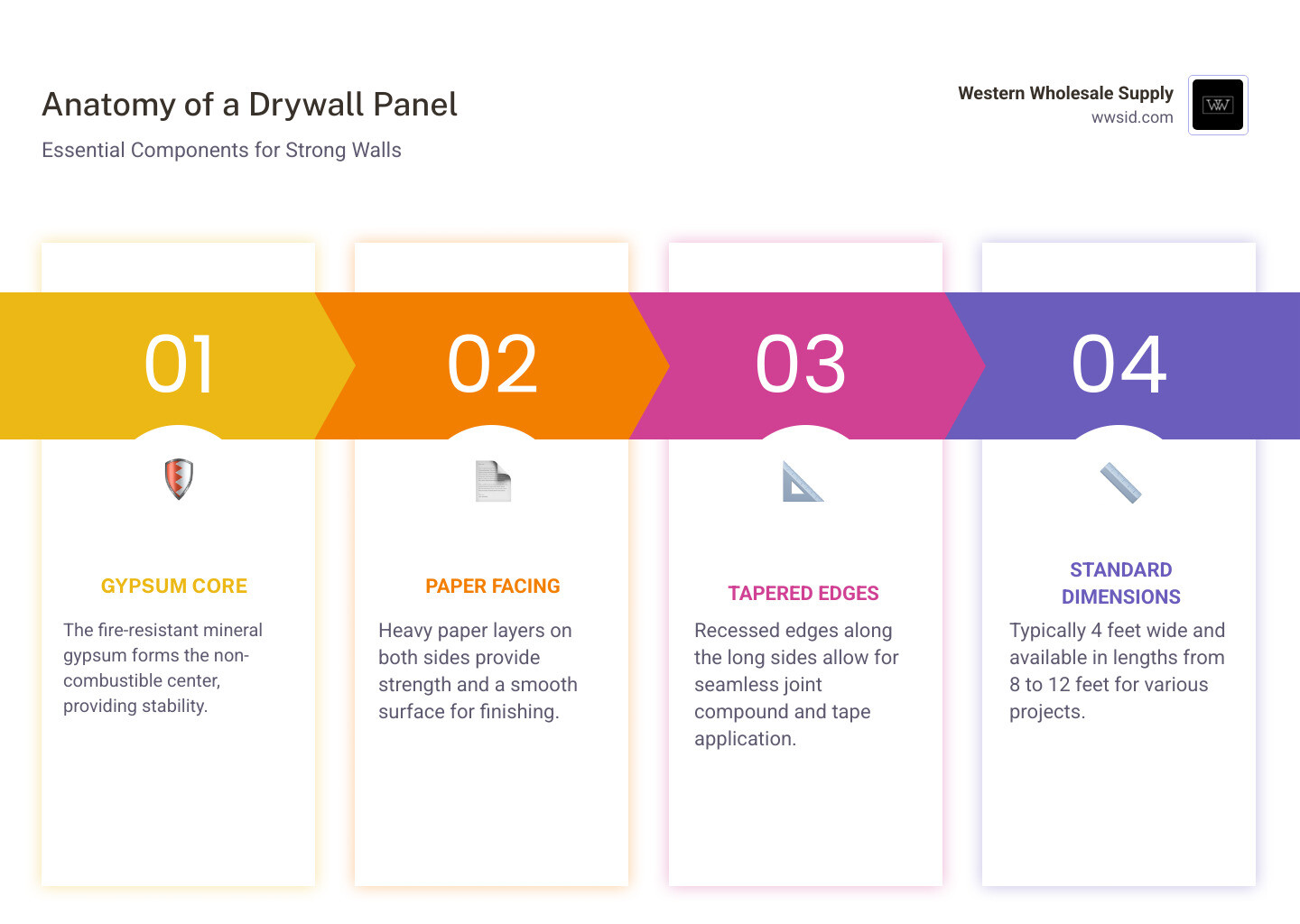
Decoding Drywall: A Guide to Types and Applications
The world of drywall is far more diverse than many imagine. Beyond the standard sheetrock, there’s a spectrum of specialized panels designed to meet specific performance requirements and building codes. Understanding these options is the first step in ensuring your project’s success. We’ll explore the different types of drywall available and their specific applications, helping you choose the right panel for every part of your project.
The Core Three: Standard, Fire-Rated, and Moisture-Resistant
When we talk about drywall, these three types form the backbone of most construction projects. Each serves a distinct purpose, custom to different environments and regulatory demands.
Standard Gypsum Board This is the most common type of drywall, often referred to simply as “sheetrock.” It consists of a gypsum plaster core pressed between two layers of heavy paper. Standard gypsum board is suitable for general use on walls and ceilings in residential and light commercial projects where no special fire, moisture, or impact resistance is required. It’s the workhorse of interior finishing. To learn more about the industry standards for this essential material, you can dig into What is Standard Gypsum Board? Decoding ASTM C1396.
Type X Fire-Rated Drywall Safety first! Type X drywall is engineered with a special non-combustible core that includes glass fibers, which gives it improved fire-resistance properties compared to standard drywall. This denser core allows it to maintain its integrity longer under fire conditions. Building codes often mandate the use of Type X drywall in specific areas, such as garages, multi-family housing units, elevator shafts, and fire-rated assemblies. For instance, fire-rated drywall may be required around wood stoves, fireplace openings, or in homes with garages adjacent to living areas. These products meet stringent UL-rating requirements, providing crucial protection.
Mold & Moisture Resistant Drywall Often recognizable by its distinct color, such as “green board” or “blue board,” moisture/mold-resistant drywall features a paperless or fiberglass mat facing and a specially treated core that inhibits moisture absorption and mold growth. This makes it ideal for high-humidity environments like bathrooms, basements, kitchens, and laundry rooms. While it offers excellent moisture resistance, it is not waterproof and should not be used in direct contact with water, such as inside a shower stall without additional waterproofing.
Here’s a quick comparison of these essential types:
| Feature | Standard Drywall | Type X Fire-Rated Drywall | Moisture/Mold-Resistant Drywall |
|---|---|---|---|
| Core Composition | Gypsum plaster between paper | Gypsum plaster with glass fibers between paper | Treated gypsum core, often with fiberglass mat face |
| Primary Application | General interior walls and ceilings | Fire-rated walls, garages, multi-family housing | Bathrooms, kitchens, basements, high-humidity areas |
| Common Thickness | 1/2″, 5/8″ | 5/8″ (most common for fire rating), sometimes 1/2″ | 1/2″, 5/8″ |
| Identifying Color | Typically white or light gray paper | Often marked with red lettering or special branding | Green, purple, or sometimes blue paper/mat |
Specialty Drywall for Improved Performance
Beyond the core three, a variety of specialty drywall products are available to address unique challenges in construction. These products offer improved performance characteristics that can significantly improve the comfort, safety, and longevity of a building.
Sound-Dampening Drywall Nobody wants to hear their neighbor’s karaoke night or the kids’ band practice. Noise-reducing gypsum board is specifically designed to reduce airborne sound transmission between adjoining spaces. These panels often incorporate a viscoelastic polymer between two gypsum layers or a denser core, effectively absorbing sound waves and improving the Sound Transmission Class (STC) rating of walls and ceilings. It’s an excellent choice for home theaters, offices, bedrooms, and multi-unit dwellings.
Abuse-Resistant Drywall In high-traffic areas, walls take a beating. Abuse-resistant drywall is engineered with a denser, more impact-resistant core and often a fiberglass mesh embedded in the surface, making it far more durable than standard drywall. This type is perfect for commercial spaces, schools, hospitals, and other institutional settings where walls are prone to dents, scuffs, and punctures.
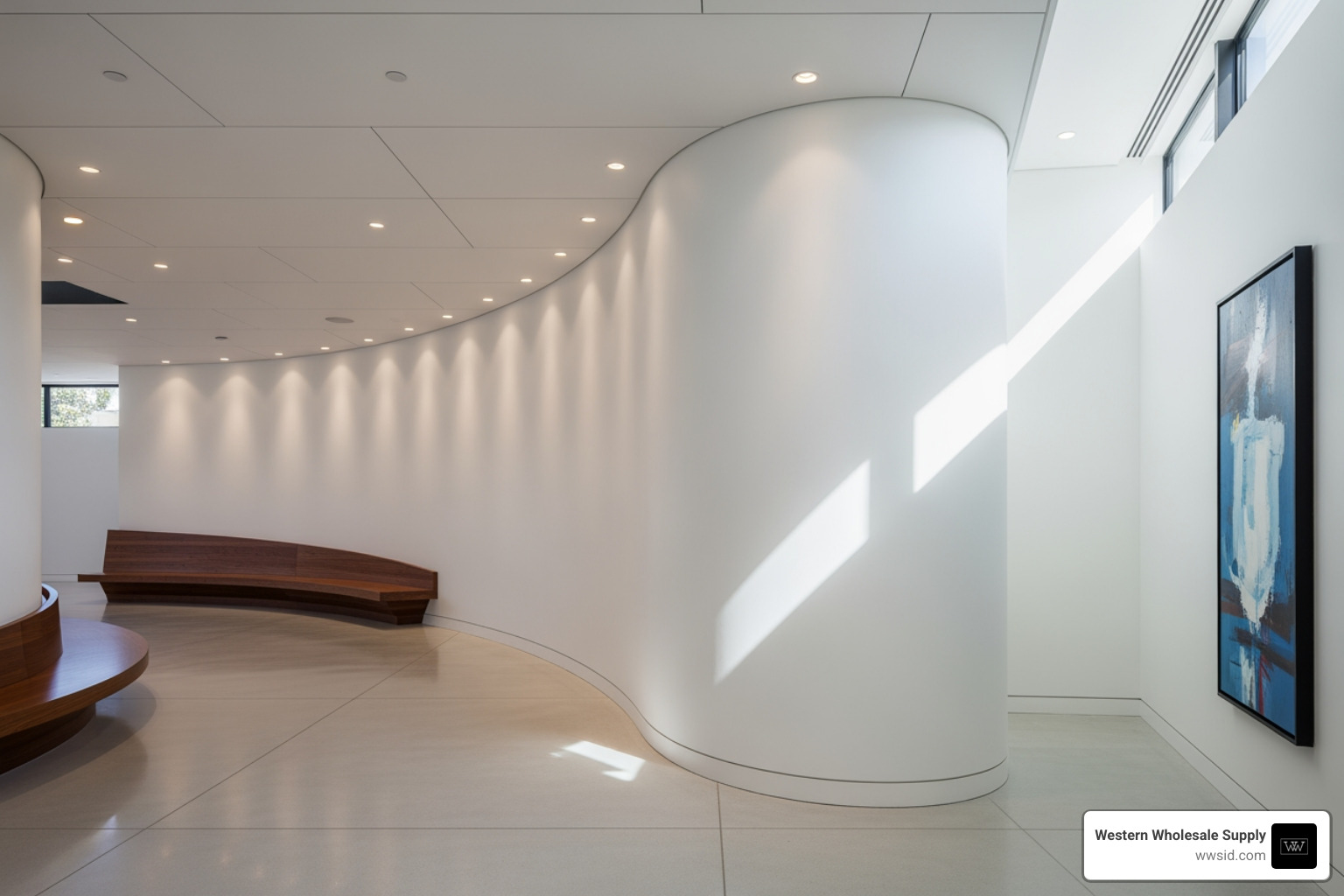
Flexible Drywall Modern architectural designs often call for curves and unique shapes. Flexible drywall, typically thinner and more pliable than standard sheets, can be easily bent to create curved walls, arches, and other design elements. This allows for stunning aesthetic possibilities that would be difficult or impossible with traditional rigid panels.
- Shaftliner Panels Shaftliner panels are a crucial component for fire-rated shaft wall assemblies, such as those found in elevator shafts, stairwells, and area separation firewalls. These are typically one-inch-thick boards with a specially formulated fire-resistive and non-combustible core, enclosed in heavy moisture- and mold-resistant paper. They provide essential fire protection and structural integrity in critical building elements.
From Panel to Perfection: Finishing, Tools, and Code Compliance
A professional drywall job requires more than just the boards themselves. The finishing touches, the right tools, and adherence to building codes are equally vital to achieving a durable, aesthetically pleasing, and safe result.
Essential Drywall Finishing Products
Even the highest quality drywall can look amateurish without proper finishing. These complementary products are crucial for a smooth, seamless surface ready for paint or other finishes.
Joint Compounds Often called “mud,” joint compound is used to fill gaps, embed tape, and smooth out seams between drywall panels. We primarily work with two types:
- Setting-type (“hot mud”): This compound hardens through a chemical reaction, offering faster drying times and higher strength. It’s ideal for initial fills, patching, and repairs, and comes in various setting times (e.g., 5-minute, 20-minute, 90-minute).
- Drying-type (pre-mixed): This compound dries through water evaporation, is easier to sand, and comes pre-mixed in buckets. It’s perfect for final coats and achieving a smooth finish. The benefits of using high-quality joint compounds are immense; they provide a durable, crack-free finish that stands the test of time.
Tapes and Trims These products reinforce joints and protect edges, ensuring a professional and long-lasting finish.
- Paper tape: Used for interior flat joints and corners, paper tape provides excellent strength and helps prevent cracking.
- Mesh tape: Often self-adhesive, mesh tape is convenient for repairs and reinforcing flat joints, though it generally requires setting-type compound for optimal strength.
- Metal and vinyl corner beads: These are applied to outside corners to create sharp, durable edges that can withstand impact. Vinyl beads are flexible and resistant to rust, while metal offers superior rigidity. We offer a comprehensive range of Joint Treatments & Trims to ensure every edge and seam is perfected.
Equipping Yourself for a Professional Job
Just as a chef needs the right knives, a drywall installer needs the right tools. Investing in quality equipment can significantly improve efficiency and the quality of the finish.

Key Hand Tools
- T-square: Essential for making straight, accurate cuts across drywall sheets.
- Utility knife: Used for scoring and snapping drywall, as well as trimming tape.
- Drywall saw: Ideal for cutting irregular shapes, openings for outlets, and curves.
- Taping knives/Trowels: Ranging from 6-inch to 14-inch, these are used for applying and smoothing joint compound.
- Mud pan: Holds joint compound for easy access during application.
- Sanding tools: Pole sanders, hand sanders, and specialized drywall sanders are used for smoothing dried joint compound.
Fasteners The choice of fastener impacts both the strength and finish of your drywall installation.
- Drywall screws: These are the industry standard, offering superior holding power and reducing nail pops compared to nails. They come in various lengths and thread types for wood or metal studs.
- Nails: While less common now, specific drywall nails can still be used, particularly with older installation methods or in certain repair scenarios. The importance of a dedicated screw gun (or a drill with a drywall dimpler bit) cannot be overstated for efficient and consistent screw depth without tearing the paper. We provide a full selection of Tools & Fasteners to ensure your project goes smoothly.
Drywall and Building Code Requirements
Building codes are not just suggestions; they are legal requirements designed to ensure the safety, structural integrity, and livability of buildings. Drywall plays a significant role in meeting many of these codes, particularly concerning fire safety and moisture management.
- Fire-resistance ratings: As discussed, Type X drywall is crucial for achieving specific fire-resistance ratings in walls and ceilings. These “rated assemblies” are designed to compartmentalize fire, slowing its spread and allowing occupants more time to evacuate. Commercial projects, in particular, often have stricter fire codes requiring fire-rated gypsum drywall for most walls and ceilings to meet fire partition and assembly requirements.
- Commercial vs. residential codes: While residential homes also have fire-rated drywall requirements (e.g., near furnaces, utility rooms, or adjacent garages), commercial buildings typically face more stringent regulations due to higher occupancy loads and different structural demands.
- Moisture and vapor barriers: In certain climates and applications, the use of vapor barriers behind drywall is mandated to prevent moisture migration, which can lead to condensation, mold, and structural damage. This often pairs closely with the choice of Insulation.
- Structural considerations for different framing types: The type of framing (wood or steel) dictates the type of fasteners and sometimes the drywall thickness. For commercial projects, Steel Framing is often preferred for its strength, non-combustibility, and resistance to warping, impacting drywall installation methods and performance.
Sourcing Your Building Supply Drywall: A Buyer’s Guide
Finding the right materials in the right quantity from a reliable source is crucial for keeping your project on time and on budget. For projects in Eastern Idaho and Western Wyoming, partnering with a knowledgeable local supplier can make all the difference.
How to Calculate Your Drywall Needs
Accurate material estimation prevents costly delays and waste. It’s not just about covering the walls; it’s about minimizing cuts and maximizing efficiency.
- Measuring project square footage: Start by measuring the length and height of each wall and ceiling area to be covered. Multiply these dimensions to get the square footage for each surface, then sum them up.
- Accounting for windows, doors, and waste: While you might subtract large openings like doors and windows, it’s often simpler and safer to calculate the total square footage and then add a waste factor (typically 10-15%) to account for cuts, mistakes, and damaged sheets. This helps ensure you have enough material without over-ordering.
- Choosing the correct panel thickness (1/4″, 1/2″, 5/8″) and length:
- 1/4″: Often used for curved surfaces or as a skim coat over existing plaster.
- 1/2″: The most common thickness for residential walls and ceilings.
- 5/8″: Provides better sound insulation, increased fire resistance (often Type X), and greater rigidity, making it preferred for ceilings (to prevent sagging) and commercial applications. Drywall is stocked in 8-, 9-, 10-, and 12-foot lengths, with thicknesses ranging from 1/4 to 5/8 of an inch. Selecting longer sheets can reduce the number of joints, leading to a smoother finish and less labor.
- Using online estimator tools for accuracy: Many suppliers offer helpful calculators. We recommend using tools like the USG Sheetrock Wallboard Estimator or the National Gypsum Drywall Materials Calculator to get precise quantities for your project.
What to Look for in a Building Supply Drywall Partner
The choice of your building supply drywall partner can profoundly impact your project’s efficiency, cost-effectiveness, and overall success. Here’s what we believe sets a great supplier apart:
Product Selection and Availability A full-service supplier should offer a comprehensive range of drywall types and related products, from standard and fire-rated panels to specialty boards like mold-resistant, sound-dampening, and flexible options. This breadth of choice ensures you can find exactly what you need for every part of your project, no matter how specialized. Look for a partner who can supply not just drywall but also Joint Treatments & Trims, Tools & Fasteners, Steel Framing, and Insulation—a truly one-stop shop for your interior finishing needs.
Logistical Excellence Time is money in construction. A reliable supplier offers robust, on-time delivery services. This means getting your materials to the job site exactly when you need them, preventing costly downtime. Look for services like:
- Jobsite stocking and scattering: This means the supplier doesn’t just drop materials at the curb; they deliver them directly to where they’ll be installed, often even scattering them to different rooms as needed. This saves your crew valuable time and labor.
- Dedicated fleet and experienced drivers: A supplier with their own fleet and professional drivers understands the intricacies of job site delivery, ensuring materials arrive safely and efficiently.
Expertise and Service Navigating the complexities of building codes, product specifications, and new technologies requires knowledgeable staff. A great supply partner provides:
- Project support and code advice: Their team should be able to advise on the best drywall type for specific applications, help you meet local building codes in Eastern Idaho and Western Wyoming, and even assist with material take-offs.
- Responsive communication: Fast answers to your questions, easy ordering, and clear communication about delivery schedules are hallmarks of excellent service. The demand for lightweight drywall is increasing due to its ease of handling, installation, and reduced transportation costs. Similarly, fire-resistant and mold-resistant drywall products are gaining traction due to stricter building codes and increased awareness of health and safety. A good supplier keeps up with these trends and can guide you. The role of a knowledgeable building supply drywall partner is to be an extension of your team, helping you make informed decisions and ensuring your project stays on track.
Frequently Asked Questions about Drywall Supply
We often hear similar questions from our customers in Eastern Idaho and Western Wyoming. Here are some of the most common ones, with insights that can help you plan your next project.
What are the latest innovations in drywall technology?
The drywall industry is continuously evolving, driven by demands for increased performance, sustainability, and ease of installation. Some key innovations include:
- Lightweight panels for easier installation: Manufacturers are developing lighter gypsum boards that are easier to handle, score, snap, and install. This reduces installer fatigue and transportation costs, directly impacting project efficiency.
- Improved mold and fire resistance: With growing awareness of health and safety, new formulations offer even better protection against mold and moisture, often featuring fiberglass mat facings. Fire-rated products are also becoming more advanced, meeting increasingly stringent building codes. The North American drywall market is a significant contributor to the global market, driven by new construction and renovation activities, highlighting the constant evolution of these materials.
- Improved soundproofing capabilities: Advanced sound-dampening drywall products continue to hit the market, offering higher STC ratings to effectively block noise transmission, catering to the demand for quieter living and working spaces.
- Sustainable and recycled materials: The industry is increasingly focused on green building practices. This includes using recycled content in gypsum cores and developing products with lower environmental footprints. For example, some manufacturers are making efforts to reduce lumber waste, which can be seen in initiatives that track trees saved through efficient framing components. (sbcacomponents.com/fad discusses this broader trend in construction).
What’s the difference between residential and commercial building supply drywall needs?
While both residential and commercial projects use drywall, their specific needs and requirements often differ significantly:
- Stricter fire codes: Commercial buildings typically have more stringent fire-resistance requirements due to higher occupancy and different construction types (e.g., Type I-V construction classifications). This often necessitates more extensive use of Type X fire-rated drywall, shaftliner panels, and specific fire-rated assemblies.
- Durability and abuse resistance: Commercial spaces, like schools, hospitals, offices, and retail environments, experience much higher traffic and potential for impact. Therefore, they more frequently require abuse-resistant or impact-resistant drywall to withstand wear and tear.
- Use of steel framing: While wood framing is common in residential construction, commercial projects more often use steel framing for its strength, non-combustibility, and consistency. This impacts the type of fasteners and installation techniques used for the drywall.
- Project scale and logistics: Commercial projects are generally larger in scale, requiring more significant quantities of material and more complex logistical planning for delivery, storage, and jobsite stocking. This is where a supplier’s ability to provide full stock and scatter service becomes invaluable.
Why is a dedicated supplier often better than a general home improvement retailer?
While big box stores might seem convenient for small DIY projects, for serious construction and renovation, a dedicated building supply drywall partner offers distinct advantages:
- Broader selection of specialty products: Dedicated suppliers like us offer a much wider array of drywall types, including all the specialty options discussed (sound-dampening, abuse-resistant, flexible, shaftliner), which general retailers often don’t stock. This ensures you get the exact right product for your specific needs, rather than having to compromise.
- In-depth expertise: Our staff are specialists in building materials. We can provide expert advice on product selection, code compliance, installation best practices, and troubleshooting, helping you avoid costly mistakes.
- Competitive pricing for large orders: For contractors and larger projects, dedicated suppliers can offer more competitive bulk pricing and contractor discounts that aren’t typically available at general retailers.
- Superior, more reliable delivery services: This is a huge differentiator. We offer reliable, on-time delivery directly to your job site, with the capability to stock and scatter materials where you need them. General retailers often have limited delivery options, less flexible scheduling, and may only drop materials at the curb, leaving your crew to handle the heavy lifting.
- Focus on professional needs: Our entire business is geared towards supporting contractors and builders. This means our inventory, services, and operational structure are designed to meet the demands of professional construction projects, not just weekend warriors.
Conclusion: Build with Confidence from the Walls In
Choosing the right drywall and finishing materials is the first step to a successful project, but partnering with a reliable supplier is what ensures it gets done right. A great partner provides not just materials, but expertise, logistical support, and peace of mind. For over 60 years, Western Wholesale Supply, a veteran-owned family business, has provided on-time delivery and expert service for contractors in Eastern Idaho and Western Wyoming. Our locations in Idaho Falls, Pocatello, Jackson, Driggs, Victor, Rexburg, Rigby, Shelley, Blackfoot, Chubbuck, Burley, Kimberly, Twin Falls, and the wider Eastern Idaho and Western Wyoming regions are ready to support your next build. We are committed to being your trusted partner, delivering quality products and unparalleled service. Explore our extensive building material resources and get started today.
