

Understanding the Role of 1-1/4″ Sheetrock Screws
1-1/4″ sheetrock screws are the standard fastener for attaching single-layer 1/2-inch or 5/8-inch drywall to wood or light-gauge steel studs. Here is a quick reference to match the right screw to your application:
| Application | Thread Type | Point Type | Stud Material |
|---|---|---|---|
| 1/2″ drywall to wood studs | Coarse (#6) | Sharp | Wood |
| 1/2″ drywall to metal studs | Fine (#6) | Sharp or Self-Drilling | 20-25 gauge steel |
| 1/2″ drywall to heavy metal | Hi-Lo (#6) | Self-Drilling | 20-12 gauge steel |
| General all-purpose use | Coarse (#6) | Sharp | Wood or light steel |
The 1-1/4″ length gives enough penetration into the framing without punching through the back side – making it the go-to choice for most single-layer drywall jobs. According to the Gypsum Association, proper fastener length is essential for maintaining the fire-resistance ratings of assembly systems.
Picking the wrong screw is one of the most common causes of stripped heads, torn paper, and callbacks. Thread type, coating, gauge, and point style all affect how well your panels stay put. This guide breaks down exactly what to look for so you can order with confidence and install without headaches.
At Western Wholesale Supply, we are a third-generation building materials professional team, and we’ve sourced and supplied 1-1/4″ sheetrock screws to contractors across Eastern Idaho and Western Wyoming for years. In that time, we’ve seen how the right fastener choice makes or breaks a smooth installation, whether you are using standard American Gypsum or specialized panels like Quietrock EZ Snap.
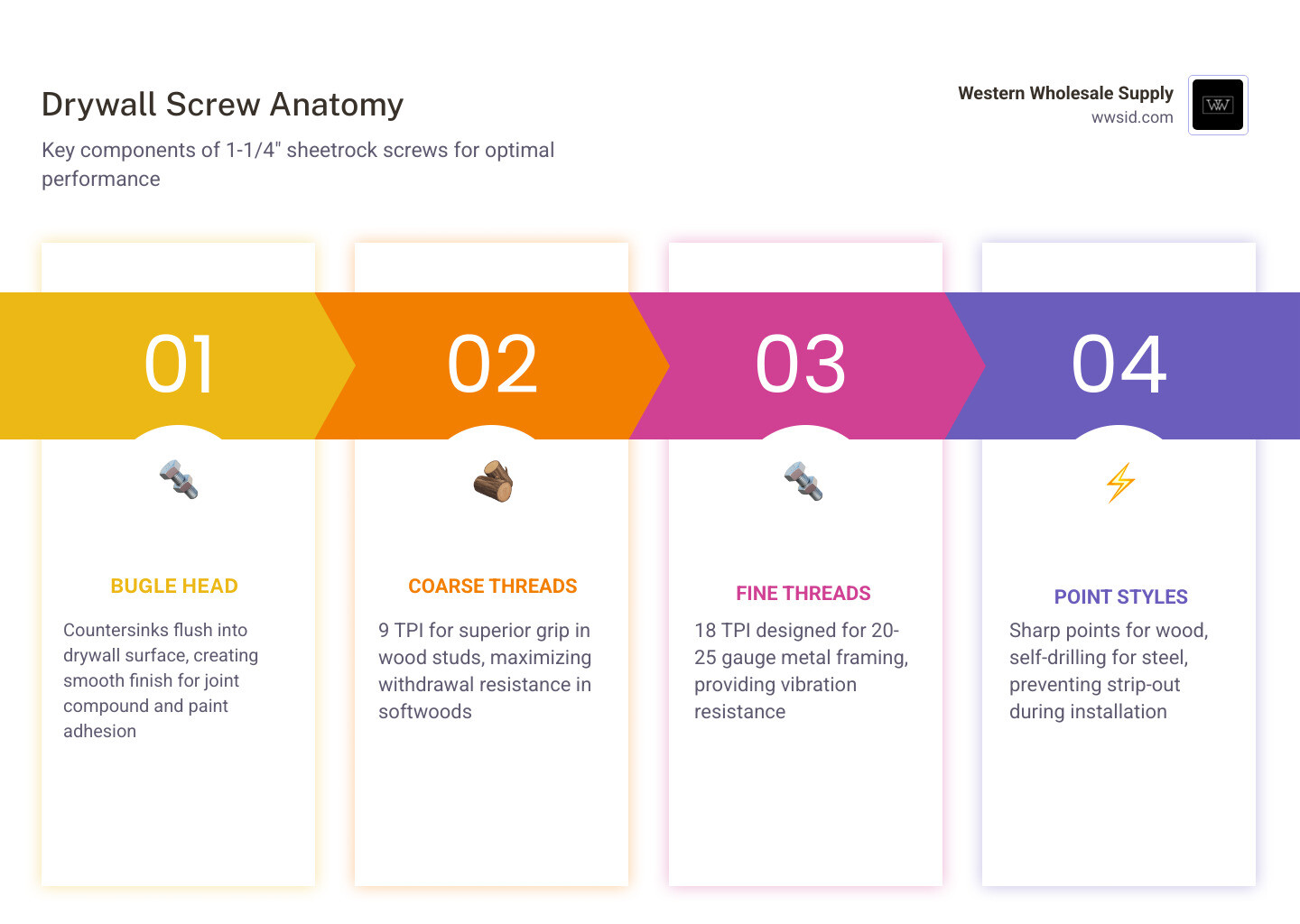
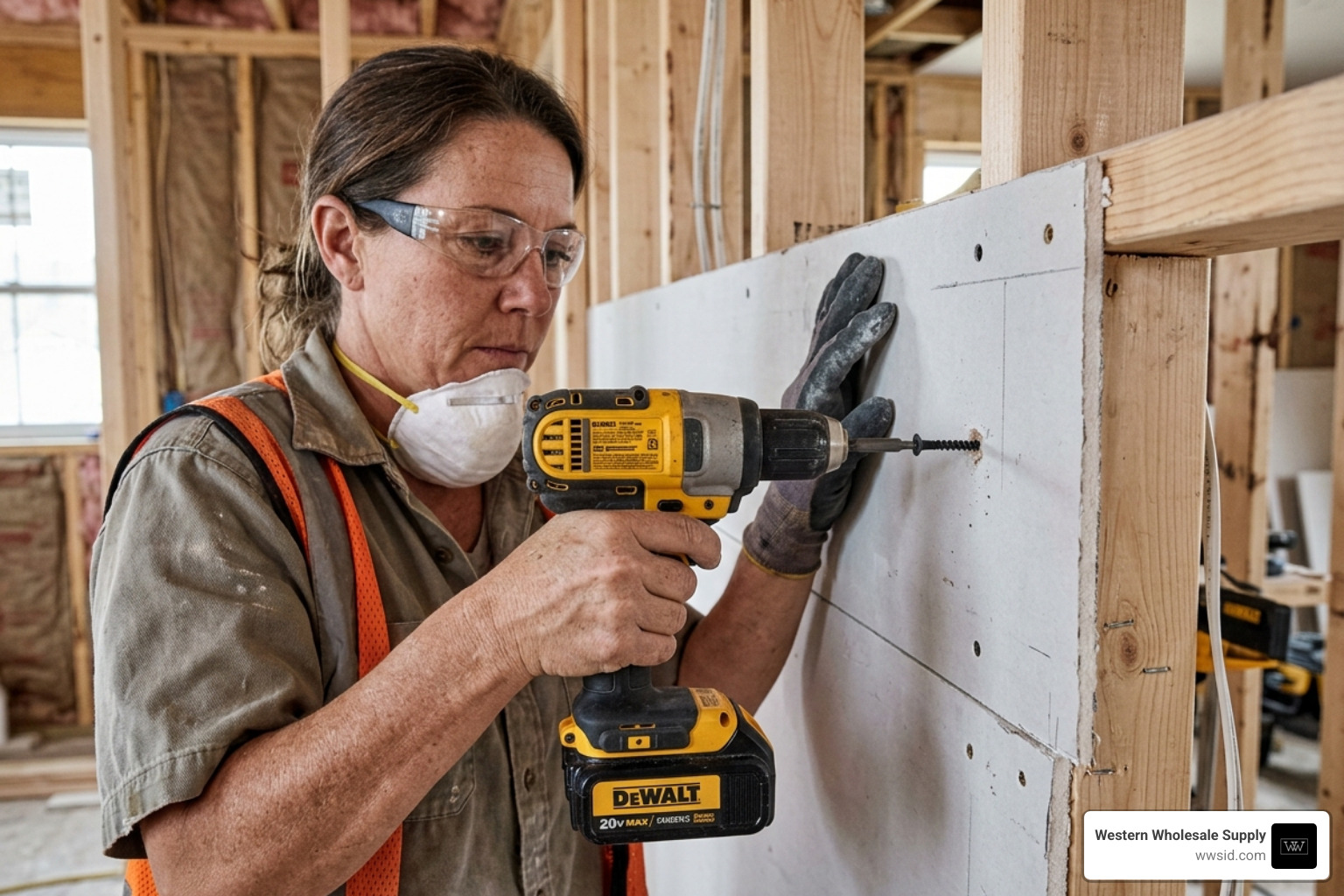
When we talk about 1-1/4″ sheetrock screws, we are looking at the “Goldilocks” of the fastener world. At 1-1/4 inches, these screws provide the perfect amount of penetration. For a standard 1/2-inch sheet of gypsum board, this length allows for approximately 3/4 of an inch of “bite” into the wooden stud or metal track.
This depth is critical. If a screw is too short, it won’t have the withdrawal resistance to hold the weight of the board, leading to “nail pops” or sagging ceilings. If it’s too long, you risk hitting electrical wires or plumbing tucked inside the wall cavity. Whether you are working on a residential basement in Idaho Falls or a commercial build in Jackson, WY, the 1-1/4″ screw is likely the most common item in your tool belt.
Choosing the Right Gauge
In 1-1/4″ sheetrock screws, gauge refers to the thickness of the screw’s shank. Most projects will utilize a #6 gauge screw. This is the industry standard because it offers a slim profile that minimizes displacement of the gypsum core while providing enough shear strength to hold the panel securely.
Occasionally, you might see #8 gauge screws. These are thicker and are typically reserved for heavier-duty applications or when extra “grip” is needed in older, softer wood framing. For 99% of the drywall hung in Southeast Idaho, the #6 gauge is your best friend.
Single vs. Double Layer Applications
The 1-1/4″ length is specifically designed for single-layer applications of 1/2-inch or 5/8-inch drywall. If you are working on a fire-rated assembly that requires two layers of 5/8-inch Type X gypsum board, 1-1/4″ screws will only be used for the base layer. The face layer would require a longer fastener, such as a 1-5/8″ or 2″ screw, to reach the framing.
Ensuring you have the right length for the specific thickness of your board is a hallmark of Drywall Done Right Choosing The Best Supplier For Your Project.
Selecting the Correct Thread and Point Type
The “business end” of the screw—the threads and the point—determines how easily the fastener enters the material and how well it stays there. Using a wood screw on a metal stud is a recipe for frustration, just as using a fine-thread screw on a spruce stud will result in a weak hold.
| Thread Type | Best For | Characteristics |
|---|---|---|
| Coarse | Wood Studs | 9 TPI, deep threads for maximum grip in wood fibers. |
| Fine | Light-gauge Steel | 18 TPI, prevents vibrating loose in metal. |
| Hi-Lo | Versatile / Heavy Metal | Alternating heights to increase pull-out strength. |
When selecting your Steel Framing components, always match your screw’s thread to the gauge of the metal.
Coarse Thread 1 1 4 Sheetrock Screws for Wood Studs
Coarse thread screws usually feature about 9 threads per inch (TPI). These deep, wide threads are designed to “bite” into the soft fibers of wood studs, such as the pine or fir commonly used in framing throughout our region. This design provides excellent withdrawal resistance, ensuring that once the screw is in, it stays in. Professional-grade manufacturers have perfected this design, ensuring the sharp pierce point starts quickly without the need for pre-drilling.
Fine Thread 1 1 4 Sheetrock Screws for Metal Framing
If you are framing with metal, you need fine thread screws. These typically have 18 TPI. Because metal is much denser than wood, the threads need to be closer together to create a secure mechanical bond. Fine threads also offer better vibration resistance, which is vital in commercial environments where building movement or HVAC systems could cause a coarser screw to back out over time. For more on this, check out our guide on Studs Tracks And Drywall Hacks Building Your Metal Frame.
Specialized Hi-Lo and Self-Drilling Options
For those “in-between” jobs, Hi-Lo threads feature two sets of threads at different heights. This design is excellent for attaching gypsum board to light-gauge steel (25-20 gauge) or wood, as it increases holding power and significantly reduces the chance of “strip-out”—that annoying moment when the screw spins freely without tightening.
If you are dealing with heavy-duty 20-12 gauge structural steel, you’ll want a self-drilling point. These screws look like they have a tiny drill bit on the end, allowing them to pierce through thick metal that a standard sharp-point screw couldn’t touch.
Technical Specifications: Heads, Drives, and Coatings
The anatomy of a drywall screw is surprisingly scientific. The most recognizable feature is the bugle head. This curved shape allows the screw to sink slightly into the drywall surface without tearing the protective paper face. The goal is to create a small “dimple” that can be easily filled with joint compound.
Almost all 1-1/4″ sheetrock screws use a #2 Phillips drive. While other industries have moved toward Torx or Square drives, the Phillips head remains the king of drywall because it is designed to “cam out” (slip) once a certain torque is reached, helping to prevent the user from over-driving the screw through the board.
Corrosion Resistance and Coatings
Drywall screws aren’t meant for outdoor use, but they still need protection from the moisture found in joint compound.
- Black Phosphate: The most common coating. It provides a good surface for mud adhesion and basic corrosion resistance.
- Gray Phosphate: Similar to black but often used for fine-thread screws.
- Zinc Plating: Offers a bit more protection and is often found on self-drilling screws.
Most professional-grade screws, like the No. 6 wire X 1-1/4 in. L Phillips Fine Drywall Screws, meet ASTM C1002 standards, ensuring they have the hardness and corrosion resistance required for residential and commercial interiors.
Textured Heads for Superior Finishing
Some high-end screws feature a textured or “nibs” head. This creates a rougher surface that helps joint compound (mud) and paint bond more effectively to the screw head. This is a small detail that makes a huge difference for finishers who want to avoid “flashing”—where the screw heads are visible through the paint.
Installation Best Practices and Bulk Packaging
Efficiency is the name of the game in drywall. On a standard 4×8 sheet of drywall, you should expect to use about 32 screws, spaced roughly 12 inches apart on the studs. For ceilings, that spacing often tightens to every 7 or 8 inches to fight gravity.
Estimating Your Project Needs
We know that running out of screws in the middle of a job in Driggs or Burley is a major pain. That’s why we offer a variety of packaging options:
- 1 lb Box: Perfect for small repairs or patches. (Approx. 238 screws).
- 5 lb Box: Great for a single room or small remodel. (Approx. 1,000+ screws).
- 25 lb Bucket: The pro’s choice for whole-house projects. (Approx. 5,000+ screws).
- 8,000 Count Carton: Bulk packaging for large commercial jobs.
When calculating your needs, always include a 15% buffer for dropped screws or “oops” moments. Our Tools Fasteners section can help you find the right quantity for your square footage.
Avoiding Common Installation Errors
To get the best results with 1 1 4 sheetrock screws, keep these tips in mind:
- Use a Drywall Screw Gun: Unlike a standard drill, a dedicated screw gun has a nose cone that sets the depth perfectly every time.
- Check for “Proud” Heads: Run your taping knife over the screws. If it clicks, the screw is “proud” (sticking out) and needs another quarter turn.
- Replace Worn Bits: A worn #2 Phillips bit is the leading cause of stripped screws. If the bit starts to slip, swap it out immediately.
Frequently Asked Questions about Drywall Fasteners
Can I use 1-1/4″ screws for 5/8″ drywall?
Yes, for single-layer applications on wood studs, 1-1/4″ is acceptable, providing 5/8″ of penetration. However, many contractors prefer a 1-5/8″ screw for 5/8″ board to get a deeper bite, especially on ceilings.
What is the difference between black and gray phosphate?
Functionally, very little. Both are designed to prevent the screw from rusting when it comes into contact with wet joint compound and to provide a “toothy” surface for the mud to stick to. Gray phosphate is sometimes preferred because it is slightly easier to hide under thin layers of paint.
Why are my screws stripping the Phillips drive?
This usually happens for three reasons: using a worn-out bit, not applying enough pressure, or trying to drive a sharp-point screw into heavy-gauge metal without a pilot hole. If you’re working with thick metal, switch to a self-drilling screw.
Conclusion
At Western Wholesale Supply, we’ve spent over 60 years ensuring that contractors from Rexburg to Twin Falls have the right materials to get the job done right. As a veteran-owned, third-generation family business, we understand that even something as small as 1 1 4 sheetrock screws can make a massive difference in your project’s timeline and quality.
Whether you need a single 5 lb box or a pallet of 25 lb buckets, we are here to provide reliable, on-time delivery and the expertise you expect from a local partner. From drywall to steel framing and insulation—where we emphasize thermal benefits for warehouse environments—we’ve got your back. Stop by one of our locations in Idaho Falls, Pocatello, or Jackson today, and let’s get to work.
