

Understanding the Role of the 12 Inch Taping Knife in Drywall Finishing
A 12 inch taping knife is a wide, flat-bladed hand tool used in the final stages of drywall finishing to spread and smooth joint compound over seams, fasteners, and patches. Here is a quick overview of what you need to know:
| Question | Quick Answer |
|---|---|
| What is it used for? | Applying and feathering joint compound on the final coat |
| Best blade material | Stainless steel for durability; blue steel for budget builds |
| Who uses it? | Both professional finishers and DIYers |
| Key size advantage | Covers more surface area than 6″ or 10″ knives for faster finishing |
| Handle types | Soft-grip or traditional plastic/wood |
If you work drywall at any volume, the 12-inch size is the one you reach for on finish coats. It covers large wall and ceiling areas fast, reduces lap marks, and gives you the wide, feathered edge that smaller knives simply cannot match. According to industry data, it accounts for over 40% of professional drywall tool sales in the U.S. — and that is not by accident.
At Western Wholesale Supply, we are a third-generation building materials supplier serving contractors across residential and commercial projects — and the 12 inch taping knife is one of the most consistently requested finishing tools we stock. In the sections ahead, we will break down everything you need to pick the right one for your projects.
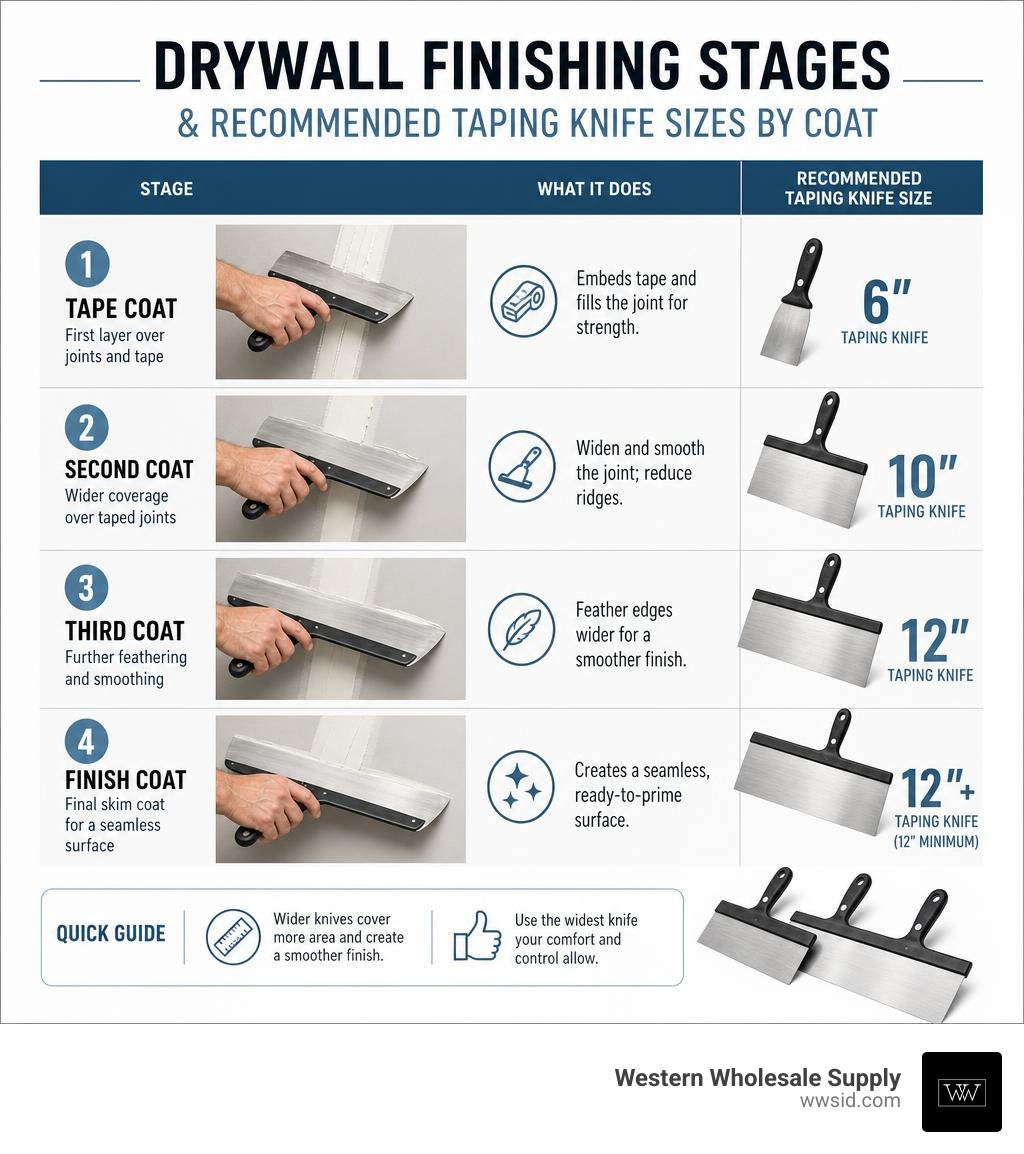
Quick look at 12 inch taping knife:
Drywall finishing is an art form. It is the crucial bridge between hanging raw gypsum board and applying a flawless coat of paint. To get those perfectly flat, seamless walls, you must apply joint compound (commonly called mud) in several successive coats, each wider than the last. This is where the 12 inch taping knife becomes the star of the show.
When you first hang sheets of drywall—perhaps after following our guide on How to Cut Drywall in 6 Simple Steps—you are left with tapered edges and butt joints. The initial steps involve filling these gaps and embedding joint tape. However, as you progress to the final coats, your main objective shifts from filling space to “feathering” the edges of the mud so thin that they blend imperceptibly into the paper face of the drywall.
A high-quality 12 inch taping knife allows you to span the entire width of the joint, smoothing out any ridges left behind by smaller knives. By using a wider blade, you distribute the joint compound over a broader surface area, minimizing the hump created by the tape. If you want to dive deeper into the complete arsenal of finishing gear, check out our comprehensive guide on Drywall Tools 101.
Why the 12 inch taping knife is Essential for the Final Coat
The final coat, often called the finish coat or skim coat, requires a delicate touch and a wide reach. Using a small knife for this stage is a recipe for a bumpy, uneven wall that will look terrible once a semi-gloss or satin paint is applied.
The 12 inch taping knife excels here because its wide blade bridges the minor valleys on either side of a drywall seam. When you pull a 12-inch blade across a joint, it rides on the high points of the surrounding drywall, leaving just the right amount of mud in the low spots to create a perfectly flat plane.
Furthermore, this wide coverage saves an immense amount of time. Instead of making multiple passes with an 8-inch or 10-inch tool—which increases the likelihood of leaving lap marks—a single, smooth pass with a 12-inch blade can complete the feathering process. For professionals working tight schedules in Idaho Falls or Jackson, maximizing efficiency with the right Professional 12 in. Taping Knives is the secret to staying profitable.
Comparing 12-Inch Knives to Smaller Drywall Knives
To understand why the 12-inch knife is saved for the final stages, let’s look at how the different sizes function throughout a project:
- 6-Inch Knife: This is your workhorse for the first stage. It is stiff, narrow, and perfect for scooping mud out of the pan, packing joint compound into the seams, and firmly embedding paper or mesh tape. Its small size allows you to apply concentrated pressure directly over the joint.
- 8-Inch and 10-Inch Knives: These are used for the second coat (the fill coat). They are slightly wider and more flexible than the 6-inch knife, allowing you to spread mud over the tape to conceal its profile.
- 12-Inch Knife: This is the ultimate finishing tool. It is wider, highly flexible, and designed to apply a very light, feathered coat of mud over the entire joint area.
Trying to use a 12-inch knife to bed tape is incredibly difficult because the wide blade distributes your hand pressure over too large an area, preventing you from squeezing out excess mud from behind the tape. Conversely, trying to finish a joint with a 6-inch knife will result in a narrow, thick buildup of mud that will require hours of dusty sanding to fix.
How to Choose the Best 12 Inch Taping Knife for Your Projects
Selecting the right 12 inch taping knife comes down to understanding your specific working style, your budget, and how much maintenance you are willing to perform. A quality tool is an investment that, with proper care, can last for years.

When shopping for a professional-grade knife, there are three primary factors to consider: the blade material, the handle design, and the overall construction of the backing plate.
Stainless Steel vs. Blue Steel Blades
The debate between stainless steel and blue steel is as old as drywall itself. Both materials have loyal followings among professional finishers, and each has distinct advantages:
- Stainless Steel: Stainless steel blades are highly prized for their exceptional rust resistance. In humid environments, or if you occasionally leave your tools in a wet mud pan overnight, stainless steel will not rust. These blades are typically double hollow-ground to provide a precise, consistent flex. Furthermore, stainless steel maintains “blade memory,” meaning it will spring back to its original flat shape even after being flexed repeatedly. Professional finishers report that stainless steel blades provide up to 3x longer lifespan compared to carbon steel blades.
- Blue Steel: Blue steel is a high-carbon steel that has been heat-treated to create a characteristic blue-tempered finish. Finishers love blue steel because it is slightly thinner, lighter, and more flexible than stainless steel. This extreme flexibility allows for an incredibly delicate touch when feathering mud. However, blue steel is highly susceptible to rust. It must be meticulously cleaned, dried, and oiled after every single use to prevent corrosion.
If you want a low-maintenance tool that can handle the daily abuse of residential job sites, look for premium Stainless Steel Taping Knives. If you prefer maximum flexibility and don’t mind the extra cleaning routine, blue steel is an excellent alternative.
Ergonomic Handles: Soft-Grip vs. Traditional Wood and Plastic
The handle of your taping knife is your direct connection to the tool. Because drywall finishing involves repetitive, high-pressure hand movements, handle ergonomics play a massive role in your comfort and long-term joint health.
- Soft-Grip Handles: Modern soft-grip handles, like those found on premium ergonomic tools, are designed to fit the natural contours of your hand. They feature textured elastomeric surfaces that provide a secure grip even when your hands are wet or covered in slick joint compound. Professional drywall finishers report a 25% reduction in hand fatigue when using ergonomic soft-grip handles during extended use. Many of these handles also feature an alloy metal hammer end, which allows you to quickly tap in protruding drywall nails or screws without having to put your knife down.
- Traditional Wood and Plastic Handles: Traditionalists often prefer the classic feel of a hardwood handle. Wood handles are lightweight and absorb hand sweat well, but they can crack or rot over time if exposed to moisture. Hard plastic handles are incredibly durable and easy to clean, but they offer very little cushioning and can become slippery when wet.
For most modern projects, we highly recommend choosing Blue Steel Drywall Taping Knives or stainless steel models equipped with double-riveted, soft-grip handles to protect your wrists and hands from fatigue.
The Importance of Blade Flex and Backing Plates
A 12-inch blade is wide, which means it requires structural support to prevent it from wobbling or bending unevenly. This support comes from the backing plate (often called the bridge).
High-quality taping knives utilize a heavy-gauge extruded aluminum backing plate. This plate is riveted to the blade to provide structural rigidity near the handle while allowing the outer edges of the blade to remain highly flexible. This design gives you the best of both worlds: a rigid spine that transfers your hand pressure evenly across the tool, and a flexible edge that glides smoothly over the drywall surface.
When evaluating a knife, look for a double-riveted handle core or advanced rivet-free construction. This ensures the blade will not loosen or develop play over time, maintaining the precise flex needed for high-end skimming. For a tool that perfectly balances weight, strength, and flex, consider upgrading to Premium Taping Knives with Ergonomic Handles.
Comparing Leading 12-Inch Taping Knife Models and Price Ranges
To help you make an informed purchase, let’s look at how some of the industry’s most popular 12-inch taping knives compare in terms of materials, handle types, and standout features:
| Brand & Model | Blade Material | Handle Type | Backing Plate | Key Feature |
|---|---|---|---|---|
| LEVEL5 Premium | Stainless Steel | Soft-Grip | Extruded Aluminum | Double-riveted, Lifetime Warranty |
| Hyde Pro Stainless | Stainless Steel | Soft-Grip | Rivet-Free Aluminum | 23% lighter than conventional knives |
| Kraft Tool ProForm | Stainless Steel | Textured ProForm | Lightweight Aluminum | Tapered blade for corner access |
| Warner ProGrip | Stainless Steel | Soft-Grip | Aluminum Backing | Flared blade edges for corner reach |
| Wal-Board Tools | Blue Steel | Textured Plastic | Extruded Aluminum | Budget-friendly classic design |
| ProDec 06RTK12 | SK7 Carbon Steel | Heavy-Duty Plastic | Riveted Aluminum | Laser-straight edge, lacquered blade |
Features of Premium 12-Inch Stainless Steel Knives
Premium stainless steel knives represent the pinnacle of drywall hand tools. Brands like LEVEL5, Kraft Tool, and Warner have spent decades refining their designs based on feedback from professional mud-slingers.
For example, the Kraft Tool Co- 12″ x 3″ Stainless Steel Standard Taping Knife with ProForm® Handle features a rounded, textured grip that provides exceptional control in wet conditions. Its bright orange handle makes it easy to spot on a chaotic job site, and the lightweight aluminum backing plate ensures the blade remains perfectly stable.
Similarly, the Warner (10922) 12″ ProGrip Stainless Steel Drywall Taping Knife, Soft — Contractor Tool Supply, a Vera Tools company showcases a flared blade design. The blade flares out slightly at the edges, which allows you to get deep into tight corners without gouging the adjacent wall. If you are looking for long-term durability and professional-grade performance, we suggest exploring Pro-Grip Stainless Steel Drywall Taping Knives.
Affordable Blue Steel and Carbon Steel Alternatives
If you are a DIYer tackling a basement remodel, or a pro looking for a highly flexible blade on a budget, blue steel and carbon steel alternatives are fantastic options.
A classic example is the Warner 12″ Blue Steel Drywall Taping Knife with Plastic Handle — Contractor Tool Supply, a Vera Tools company . It features a hollow poly handle molded directly to the extruded aluminum backing plate, ensuring it will never come loose. This tool offers the extreme flexibility that blue steel is famous for at a highly accessible price point.
For international projects or specialized imports, the 06RTK12 | PRODEC 12″ TAPING KNIFE – S10 Supplies utilizes a heat-treated SK7 high carbon steel blade. It features a laser-straight edge designed to produce the lowest possible profile when smoothing joint tape. To find the right balance of cost and performance for your crew, check out our selection of Affordable Carbon Steel Taping Knives.
Maintenance and Care Tips for Your Drywall Finishing Tools
Drywall joint compound is highly alkaline and abrasive. If left on your tools, it will quickly eat away at the metal, dull the edges, and ruin the handle. Proper maintenance is the difference between a tool that lasts one project and one that lasts a career.

How to clean and store your 12 inch taping knife
To ensure your 12 inch taping knife remains in pristine condition, establish a strict cleanup routine at the end of every workday:
- Wash Immediately: Never let joint compound dry on your blade. Use warm water, a stiff nylon brush, and a non-abrasive sponge to scrub away all traces of mud from the blade, backing plate, and handle.
- Dry Thoroughly: This is the most crucial step, especially for blue steel. Use a clean rag to dry the entire tool. Pay close attention to the seam where the blade meets the aluminum backing plate, as trapped moisture here will cause rapid rusting.
- Apply a Protective Coating: If you are using a blue steel or carbon steel knife, apply a light coat of multi-purpose oil (like WD-40 or mineral oil) to the blade before storing it. This creates a barrier against airborne moisture.
- Store Safely: Hang your knife by the integrated hanging hole on a pegboard, or store it flat in a dry tool chest. Never store your knives loose in a bucket where the delicate blade edges can get nicked or bent by other tools.
By taking these simple steps, you will keep your Durable Stainless Steel Drywall Taping Knives performing like new for years to come.
Frequently Asked Questions About Drywall Taping Knives
What is the difference between a taping knife and a joint knife?
While the terms are often used interchangeably, they refer to slightly different tools. A joint knife (or putty knife) typically ranges from 2 to 6 inches in width, features a thicker, stiffer blade, and is used for scraping, applying detail mud, and packing joints. A taping knife ranges from 8 to 14 inches (with the 12-inch being the most popular), features a much thinner, highly flexible blade, and is designed specifically for feathering large areas of joint compound.
Should I buy a stainless steel or blue steel taping knife?
For most users, we highly recommend stainless steel. The extreme rust resistance and “blade memory” make it a much more forgiving tool for daily use. However, if you are an experienced professional who prioritizes maximum blade flexibility and a lightweight feel—and you don’t mind meticulously drying and oiling your tools—blue steel is a fantastic choice.
Can a 12-inch knife be used for popcorn ceiling removal?
Yes! Because of its wide, straight blade, a 12-inch taping knife is one of the best hand tools for scraping away old acoustic popcorn ceiling texture. To do this, lightly mist the ceiling with water to soften the texture, then glide the wide blade flat against the drywall to scrape the popcorn away without gouging the underlying drywall paper.
Conclusion
Whether you are skimming a high-visibility ceiling in a custom home in Jackson, Wyoming, or finishing a commercial warehouse wall in Idaho Falls, Idaho, having a high-quality 12 inch taping knife in your toolbox is non-negotiable. It is the only tool that can deliver the seamless, flat finish required for modern professional paint jobs.
At Western Wholesale Supply, we have been helping contractors and homeowners get their drywall projects done right since 1963. As a veteran-owned, third-generation family business, we understand the value of reliable, on-time delivery and exceptional customer service. We stock a complete range of professional building materials—including Quietrock EZ Snap drywall, CertainTeed ceiling tiles, Durock backer board, and premium Grabber fasteners—across our locations in Eastern Idaho and Western Wyoming.
Ready to elevate your drywall finishing game? Read our guide on Drywall Done Right: Choosing the Best Supplier for Your Project, or stop by one of our local branches to Explore our professional tools and fasteners today!
