

The Right Tool for the Job: What Every Contractor Should Know About the 6″ Taping Knife
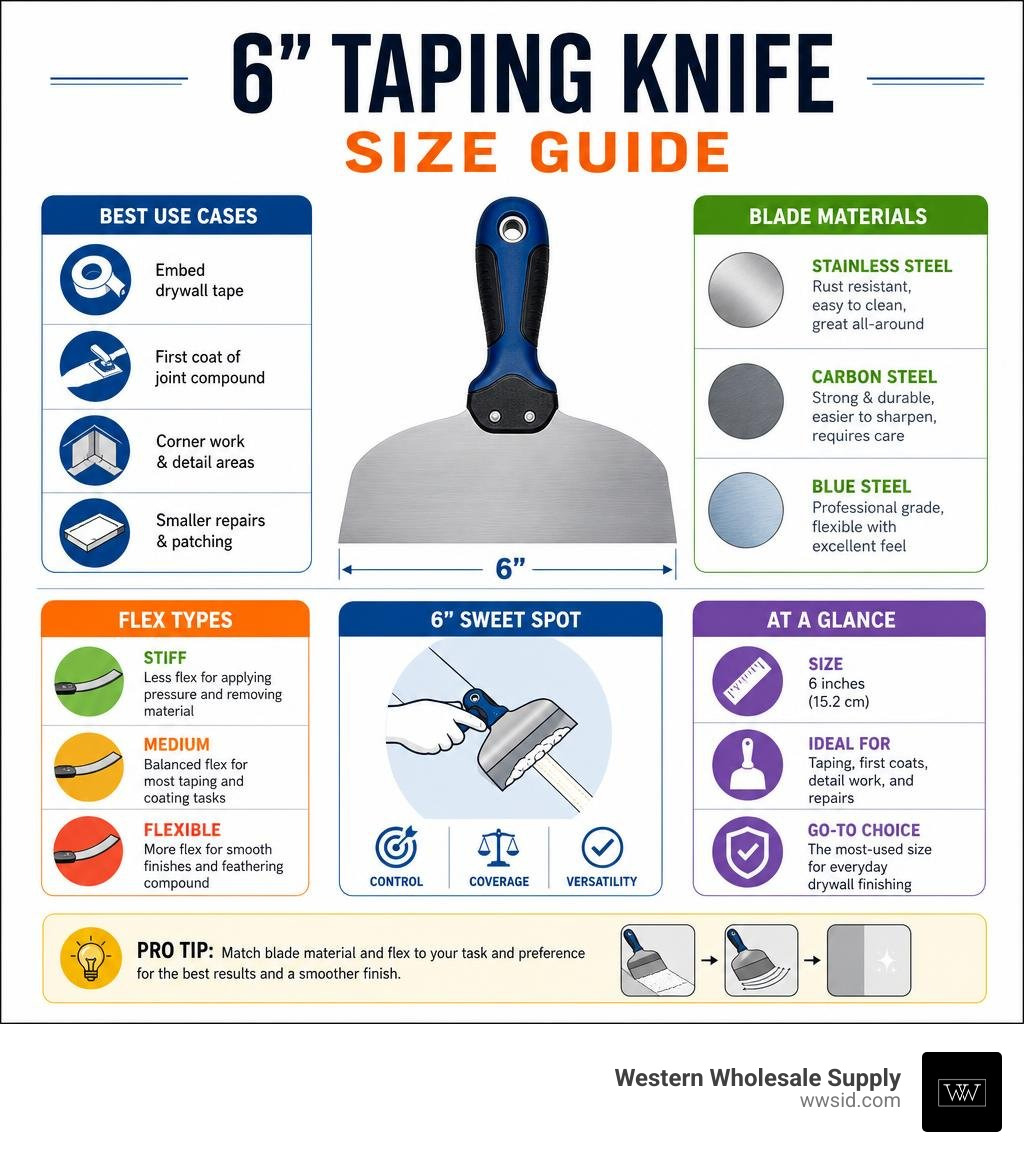
A 6″ taping knife is one of the most-used tools in drywall finishing — and for good reason. It hits the sweet spot between control and coverage, making it the go-to size for applying first coats of joint compound, embedding tape, and working tight corners.
Quick answer — when to use a 6-inch taping knife:
| Task | 6-Inch Knife the Right Choice? |
|---|---|
| Embedding drywall tape | Yes |
| First coat of joint compound | Yes |
| Corner work and detail areas | Yes |
| Wide flat coat finishing | No — use 10″–14″ |
| Skim coating large surfaces | No — use 12″+ |
The 6-inch size gives you enough blade width to move compound efficiently while keeping the precision you need for seams and repairs. It’s the knife most contractors reach for first — and the one they use most throughout a job.
Blade material, flex, and handle design all affect how the tool performs and how long it lasts. This guide breaks all of that down so you can pick the right knife for your work.
We at Western Wholesale Supply have supplied drywall tools — including the 6″ taping knife — to contractors across Idaho and beyond through Western Wholesale Supply. In the sections ahead, we’ll walk you through everything you need to make a smart buying decision.
What is a 6″ Taping Knife and When Do You Need It?
A 6″ taping knife is a specialized hand tool featuring a flat, 6-inch-wide metal blade attached to an ergonomic handle. In professional drywall installation and finishing, this specific size is the undisputed workhorse of the early stages of the mudding process.
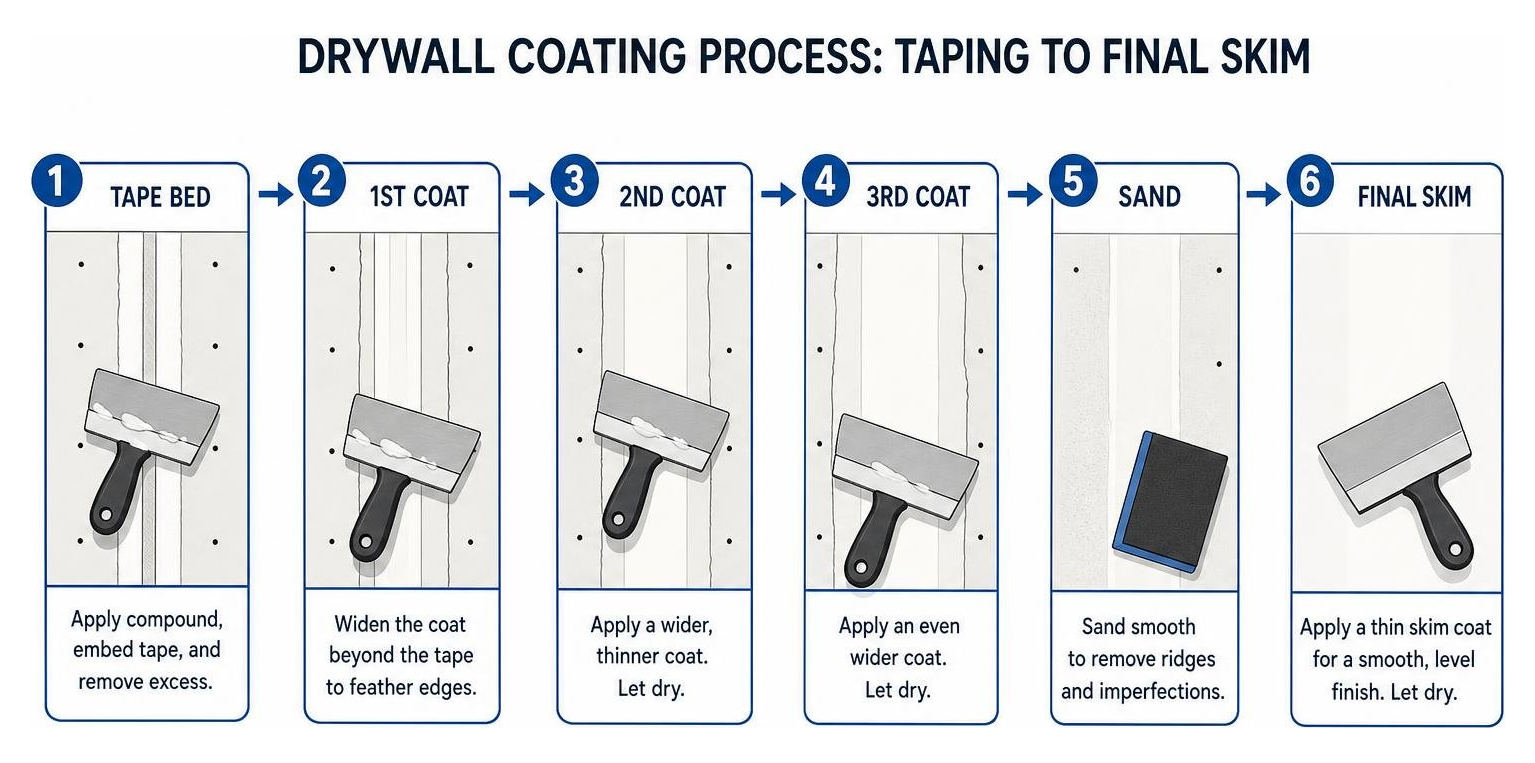
Its primary purpose is to apply and smooth joint compound over drywall seams, fasteners, and corner beads. When you are first learning Drywall Tools 101, you quickly discover that drywall finishing is a multi-step process. The 6-inch knife is your primary tool for “bedding” — the very first coat of mud.
During this initial phase, you use the knife to press joint compound into the tapered joints between drywall sheets, press the paper or fiberglass tape firmly into the wet mud, and wipe away the excess. The 6-inch width is perfect here because it is wide enough to cover the tape completely but narrow enough to concentrate your hand pressure exactly where the tape needs to seat.
Beyond embedding tape, the 6″ taping knife is indispensable for:
- Detail work and tight spaces: When working around electrical boxes, door frames, or short closet walls, larger knives simply will not fit.
- Internal corner finishing: It fits perfectly into inside corners, allowing you to smooth one side of the angle without gouging the adjacent wall.
- Spot-patching and repairs: For filling small dents, nail holes, or screw heads, a 6-inch blade provides the ideal balance of coverage and control.
While larger knives (10-inch, 12-inch, and beyond) are designed to “feather” or “float” subsequent coats of mud to create a seamless wall, they are too clumsy for the heavy lifting of the first coat. Trying to embed tape with a massive knife often results in dry pockets under the tape or uneven pressure, leading to bubbles and blisters later on.
Blade Materials: Stainless Steel vs. Blue Steel vs. Carbon Steel
When choosing a 6″ taping knife, the material of the blade is your most important decision. It dictates how the tool feels in your hand, how it distributes joint compound, and how much effort you will spend keeping it from rusting.
Stainless Steel
Stainless steel is highly favored by modern drywall professionals, and for good reason. Its standout feature is superior rust resistance. If you work in humid climates or occasionally leave your tools wet in a bucket overnight (we’ve all been there), stainless steel won’t punish you with rust spots.
Professional-grade stainless steel blades are incredibly durable. They maintain their flat edge over years of scraping against rough drywall and fasteners. However, stainless steel is slightly stiffer than blue steel and can be more prone to showing permanent nicks or bends if dropped directly on a concrete floor.
Blue Steel
Blue steel (often called blue spring steel) is the traditional choice of seasoned drywallers. It is prized for its exceptional flexibility and “spring.” This metal can bend significantly under pressure and snap back perfectly flat, allowing you to glide over imperfections and feather out joint compound with unmatched precision.
The downside? Blue steel is highly susceptible to rust. If you do not dry it thoroughly and apply a light coat of oil after every single use, it will begin to corrode overnight. It is also slightly softer than stainless steel, meaning it will wear down and self-sharpen to your specific hand angle over time—a feature many pros love, but one that limits the tool’s absolute lifespan.
Carbon Steel
Carbon steel blades offer a middle ground in terms of price and rigidity. They are typically stiffer than blue steel and tougher than stainless steel, making them excellent for heavy-duty applications, scraping dried mud, or setting stubborn nails. However, like blue steel, carbon steel will rust quickly if exposed to moisture without proper maintenance.
Here is a quick look at how these materials stack up against each other:
| Feature | Stainless Steel | Blue Steel | Carbon Steel |
|---|---|---|---|
| Rust Resistance | Exceptional | Low (Requires oiling) | Low |
| Flexibility | Moderate | High (Excellent spring) | Stiff to Moderate |
| Durability | High | Moderate (Wears over time) | High |
| Ease of Cleaning | Very Easy | Moderate | Moderate |
| Best For | Wet environments, longevity | Soft feathering, final coats | Heavy scraping, first coats |
Blade Flexibility and Handle Designs
Choosing the right 6″ taping knife involves more than just picking a metal; you also need to consider how much that metal bends and how the tool connects to your hand.
Stiff vs. Flexible Blades
Blade flexibility determines how much control you have over the thickness of the joint compound:
- Stiff Blades: Excellent for scraping away dried ridges of mud, setting popped drywall nails, and applying the initial heavy layer of compound. A stiff blade allows you to apply strong, direct pressure.
- Flexible Blades: These are often marketed as “superflex” or “limber” knives. They are designed to bend slightly under your hand pressure, allowing you to “feather” the edges of your mud application so that the transition from compound to bare drywall is virtually invisible.
Handle Materials and Ergonomics
Because finishing drywall requires hours of repetitive hand motion, handle comfort is not a luxury—it is a necessity.
- Ergonomic Soft-Grip Handles: These handles feature a rubberized overmold (often Santoprene or similar materials) that cushions your hand, absorbs vibration, and prevents slipping even when wet with drywall mud. They drastically reduce hand fatigue over long workdays.
- Traditional Wooden Handles: Favored by classic craftsmen, hardwood handles offer a balanced weight and a premium feel. They can be sanded down to fit your grip perfectly but can crack or rot if left soaking in water.
- Plastic/Poly Handles: Highly durable and solvent-resistant, these handles are virtually indestructible. However, they lack the cushioning of soft-grip alternatives and can become slippery when coated in wet compound.
One-Piece vs. Traditional Handle Designs
When shopping for a 6″ taping knife, you will encounter two main structural designs:
- Traditional Designs: These feature a metal blade attached to an aluminum backing plate, which is then secured to a wood or plastic handle with rivets. This design allows for a very precise blade flex because the aluminum backing controls the bend. However, mud can easily get trapped in the seams between the blade, backing, and handle, making cleaning a chore.
- One-Piece Designs: In these models, the handle is molded directly onto the blade, or the entire tool is cast from a single piece of composite material. These are incredibly easy to clean because there are no cracks or rivets to trap dried joint compound. They are also highly durable, though they tend to be stiffer and offer less “spring” than traditional backed knives.
To learn more about selecting the right finishing gear for your project, take a look at The Definitive Guide to Drywall Finishing Supplies.
Top Brands and Models for Drywall Professionals
When you are on the jobsite in Eastern Idaho or Western Wyoming, you need tools that will not fail you halfway through a mudding run. Western Wholesale Supply carries trusted drywall finishing brands in our showrooms, including Hyde, USG Sheetrock Tools, Columbia Taping Tools, and Marshalltown. Instead of sending you to third-party purchase links, our local team can help you compare the right 6″ taping knife in person and choose the best fit for your work.
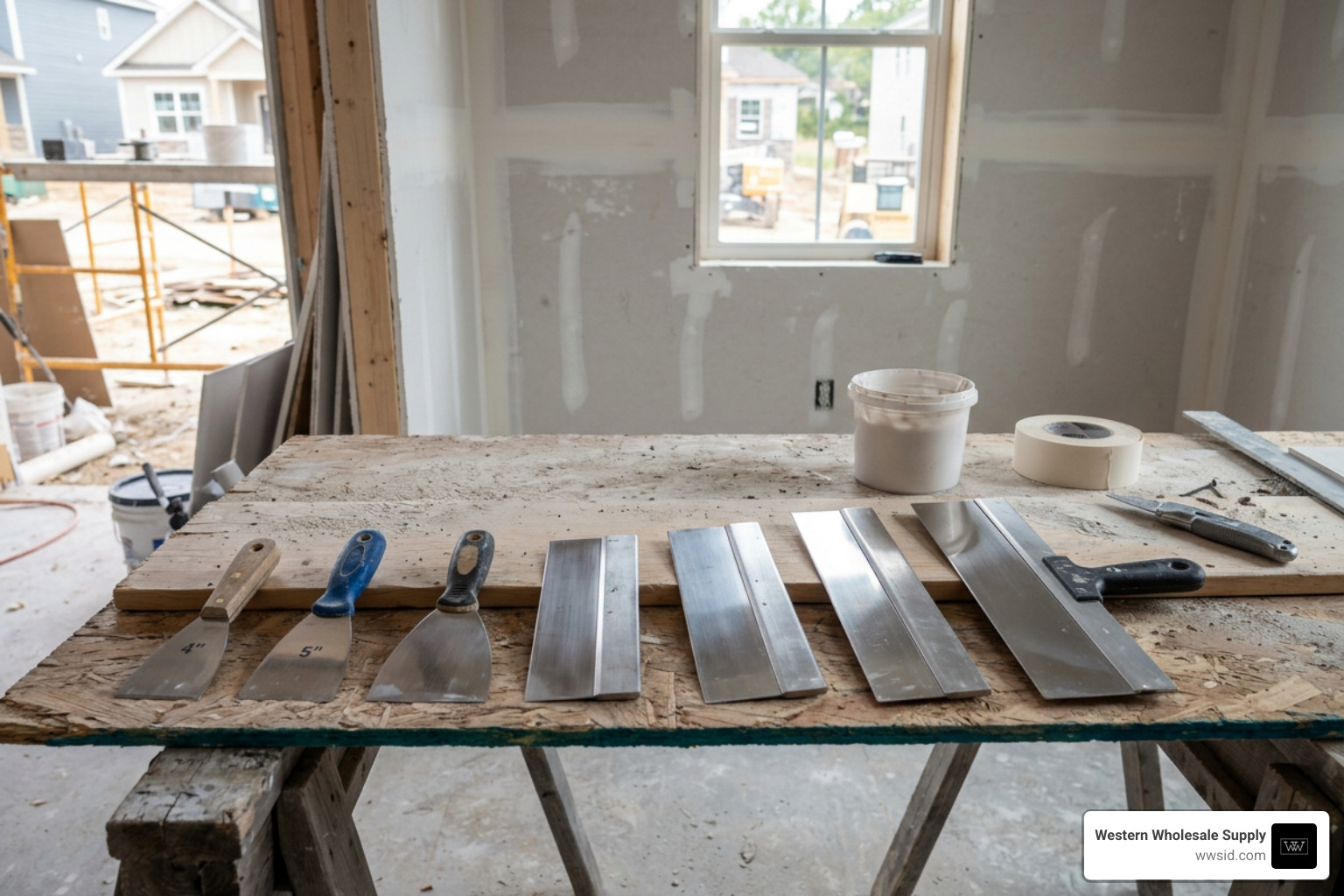
6″ Taping Knife Brands Available Through Western Wholesale Supply
For contractors who want dependable tools without guessing online, these are the brands to ask about at Western Wholesale Supply:
- Hyde 6″ taping knives: Hyde offers practical drywall knives for taping, patching, and general compound work. They are a strong option when you want a reliable everyday knife for bedding tape, coating fasteners, and working in tight spots.
- USG Sheetrock Tools 6″ taping knives: USG Sheetrock Tools are built around the needs of drywall finishers, with options suited for smooth compound application, controlled pressure, and professional jobsite use.
- Columbia Taping Tools: Columbia is known for drywall finishing tools used by professionals who want consistent results and durable construction. Ask our showroom team which Columbia options pair best with your finishing workflow.
- Marshalltown 6″ taping knives: Marshalltown remains a favorite for many drywall professionals because of its comfortable handle designs, dependable blades, and jobsite-ready build quality.
Choosing the Right Brand in the Showroom
The best 6″ taping knife is not always the most expensive one — it is the one that feels right in your hand and matches the type of finishing work you do most. When you visit one of our showrooms, compare:
- Blade flex: Choose a stiffer blade for bedding tape, scraping ridges, and applying heavier first coats; choose more flex for smoother feathering and detail work.
- Handle comfort: Look for a grip that feels secure when your hands are wet with joint compound and comfortable enough for repeated use throughout the day.
- Blade material: Stainless steel is easier to maintain, while blue steel or carbon steel may offer more traditional flex but requires more careful drying and storage.
- Job type: A contractor finishing full rooms may want a different feel than a DIYer handling a repair, patch, or basement remodel.
Stop by a Western Wholesale Supply showroom in Idaho Falls, Pocatello, Jackson, Driggs, Victor, Rexburg, Rigby, or Shelley to compare Hyde, USG Sheetrock Tools, Columbia Taping Tools, and Marshalltown drywall tools in person.
Maintenance and Care Tips for Drywall Knives
A high-quality 6 taping knife can last for years—even a lifetime—if you treat it right. Drywall joint compound is highly alkaline and abrasive, meaning it will eat away at your tools if they are not cleaned promptly.
To keep your knives in pristine condition:
- Clean as you go: Do not let joint compound dry on your blade. Keep a bucket of clean water and a stiff nylon brush nearby. Scrub the blade and handle clean every time you take a break or finish a pan of mud.
- Dry completely: This is critical, especially for blue steel and carbon steel. After washing your knife, wipe it down thoroughly with a dry towel. Never leave your knives to air-dry in a wet pile.
- Oil your steel: If you use blue steel or carbon steel knives, apply a light coat of WD-40, mineral oil, or even cooking spray to the blade before storing it. This creates a barrier that prevents moisture in the air from causing rust.
- Protect the edge: The edge of your taping knife must remain perfectly straight and nick-free to avoid leaving lines in your mud. Avoid using your knife to pry open paint cans, scrape concrete, or chop at hardened compound. Store your knives hanging up by their handle eyelets rather than throwing them loose into a toolbox.
For a deeper dive into managing your finishing gear and transitioning to larger blades as your project progresses, check out The Complete Guide to 12-Inch Taping Knives.
Frequently Asked Questions about Drywall Taping Knives
When should I choose a 6-inch knife over a 12-inch knife?
You should reach for your 6 taping knife during the first stage of drywall finishing (embedding tape and filling the joint gap) and for detail work like coating screw heads or finishing inside corners.
A 12-inch knife is designed for the final “skimming” and “feathering” stages. Its wide blade spans across the joint to blend the mudded area into the surrounding drywall. Trying to use a 12-inch knife for the first coat will result in poor tape adhesion, while trying to use a 6-inch knife for the final coat will leave visible ridges and an uneven wall. For a detailed breakdown of how to use larger knives, read The Complete Guide to 12-Inch Taping Knives.
How do I prevent my blue steel blade from rusting?
The secret to protecting blue steel is immediate drying and oiling. Wash the blade with clean water, dry it thoroughly with a clean rag, and spray it with a light rust-inhibitor like WD-40 or wipe it down with a drop of mineral oil before putting it away.
What is the difference between a joint knife and a taping knife?
While the terms are often used interchangeably, there is a subtle difference:
- Joint Knives (often 4-inch to 6-inch): These typically have a thicker, stiffer blade and a heavier handle, often with a metal hammer end for setting proud drywall screws. They are designed for localized mud application and scraping.
- Taping Knives (often 8-inch to 14-inch, though 6-inch versions exist): These feature a wider, thinner, and more flexible blade backed by an aluminum plate. They are designed for spreading and feathering compound over large areas.
Conclusion
Whether you are a seasoned drywall contractor or a DIYer tackling a basement remodel, the 6″ taping knife is an absolute necessity in your tool pouch. By choosing the right blade material, flexibility, and handle design for your specific project, you will ensure a smoother application, less sanding, and a professional-grade finish.
At Western Wholesale Supply, we have been helping builders and drywalers across Eastern Idaho and Western Wyoming get the job done right since 1963. From our locations in Idaho Falls, Pocatello, Jackson, and beyond, we supply everything from high-quality drywall and CertainTeed acoustical ceilings to the professional-grade hand tools and Grabber fasteners you need to finish the job.
Ready to upgrade your drywall toolkit? Explore our selection of professional gear at Western Wholesale Supply Tools and Fasteners or stop by one of our local branches today to speak with our experienced team.
