

Understanding FRP: Features, Durability, and Applications
If you are buying fiberglass reinforced plastic panels, general retail stores are practical for small repairs or a single utility room, while commercial wholesale distribution is usually the better fit for multi-room facilities, tenant improvements, restaurants, warehouses, and contractor projects. Before ordering, confirm the sheet size, thickness, fire rating, surface texture, adhesive compatibility, trim accessories, delivery needs, and whether you need matched production lots for consistent color across a larger job.
Fiberglass reinforced plastic (FRP) panels combine strong polyester resin with chopped or woven glass fibers. This fusion creates an exceptionally tough, flexible sheet that stands up to heavy everyday punishment. Because the cured surface is completely non-porous, moisture, grease, and biological growth cannot penetrate the core of the board.
For high-humidity areas, this construction offers outstanding resistance to rot, mildew, and persistent water exposure. We frequently see builders and homeowners turn to these sheets for residential wash bays, damp basements, busy laundry rooms, and dog-wash stations. In commercial environments like restaurants, commercial kitchens, food processing plants, and veterinary clinics, FRP serves as an industry-standard sanitary shield. If you are just starting out with this material, take a look at our All About FRP Panels A Beginners Guide to Basics to understand core material characteristics.
Beyond traditional land-based buildings, the rugged makeup of FRP makes it a smart choice for marine lockers, bilge surrounds, and recreational vehicle utility compartments where water intrusion quickly destroys ordinary wood panels.
FRP vs. Traditional Wall Coverings: Formica, Plywood, and Vinyl
When planning a utility wall covering, builders often weigh FRP against common alternatives like exterior-grade plywood, decorative Formica laminates, and thin vinyl paneling. While plywood provides structural backing, it remains susceptible to moisture absorption, swelling, and rot. Formica offers attractive surfaces but chips easily on heavy impact and requires time-consuming lamination over a separate wood substrate. Vinyl paneling handles water well, yet it tends to become brittle in cold climates and easily cracks under blunt force.
| Feature | Fiberglass Reinforced Plastic (FRP) | APA Grade Plywood | Formica Laminate | Vinyl Paneling |
|---|---|---|---|---|
| Water Resistance | Completely non-porous & waterproof | Poor (swells and rots over time) | Good surface, vulnerable wood core | High water resistance |
| Impact Resistance | High (bounces back without denting) | Moderate (can splinter or gouge) | Low to moderate (prone to chipping) | Low (cracks easily under stress) |
| Sanitary Cleanability | Resists harsh chemicals & pressure wash | Hard to sanitize; traps bacteria | Easily wiped, but joints trap grime | Wipes clean; weak to solvents |
| Installation Ease | Direct glue over solid backing | Screwed/nailed directly to studs | Requires contact cement & substrate | Interlocking click or nail flanges |
| Long-Term Durability | Decades without peeling or rotting | Requires paint; degrades if damp | Edges can delaminate over time | Can warp or turn brittle |
Sourcing Fiberglass Reinforced Plastic Panels: Retail vs. Commercial Wholesale
Deciding where to buy your wall cladding comes down to project scope, delivery requirements, and total volume. When browsing general retail stores for fiberglass reinforced plastic panels, standard items work well for single-room DIY fixes. However, when managing multi-room facilities, commercial tenant improvements, or full warehouse retrofits, shopping retail piece-by-piece can lead to lot mismatches, stock shortages, and transport headaches.
Working with an established regional supplier like Western Wholesale Supply ensures you receive matched production runs, coordinated accessory inventories, and direct jobsite staging. For high-volume projects, reviewing a dedicated Buyers Guide Best FRP Panel Distributors for 2026 helps you organize procurement schedules and secure full-pallet quantities without unnecessary retail markups.
Key Product Specs for Fiberglass Reinforced Plastic Panels
Standard retail and commercial lines, such as Glasliner, share several vital specifications that make planning simple:
- Thickness: The standard gauge is 0.090 inches, offering the optimal balance between flexibility and structural rigidity.
- Dimensions: Standard sheet sizes measure 4 ft. x 8 ft., with extended 4 ft. x 9 ft. and 4 ft. x 10 ft. options available for tall commercial ceilings.
- Surface Texture: A pebbled or “cracked ice” embossed finish is most common. This texture diffuses light, hides surface scratches, resists scuff marks, and wipes clean without hassle. Smooth finish panels are also produced for cleanroom applications.
- Safety & Code Ratings: Panels come in Class A or Class C fire ratings to meet regional interior building codes. Many varieties are USDA approved for food-safe sanitary wall construction.
- Bulk Packaging: High-volume installations often utilize pre-stacked 25-pack bundles covering 800 sq. ft. or 50-pack full pallets covering 1,600 sq. ft.
Cost and Packaging Options for Fiberglass Reinforced Plastic Panels
Planning material packages requires factoring in coverage per square foot alongside accessories like division bars, fasteners, and buckets of adhesive. While a single panel covers 32 square feet, packaging options range from loose individual sheets for minor repairs up to full-pallet truckloads for extensive square footage.

Purchasing full pallets helps ensure uniform color tone across thousands of square feet while minimizing individual packaging waste. For commercial spaces or high-traffic garage conversions, pairing bulk panels with heavy-duty substrate materials like moisture-resistant drywall or Durock cement board establishes a rock-solid, impact-resistant wall assembly.
Step-by-Step Guide: How to Install FRP Paneling
Installing FRP is an intermediate-level DIY or light contractor project that typically takes 2 to 4 hours per room once the substrate is fully prepped.
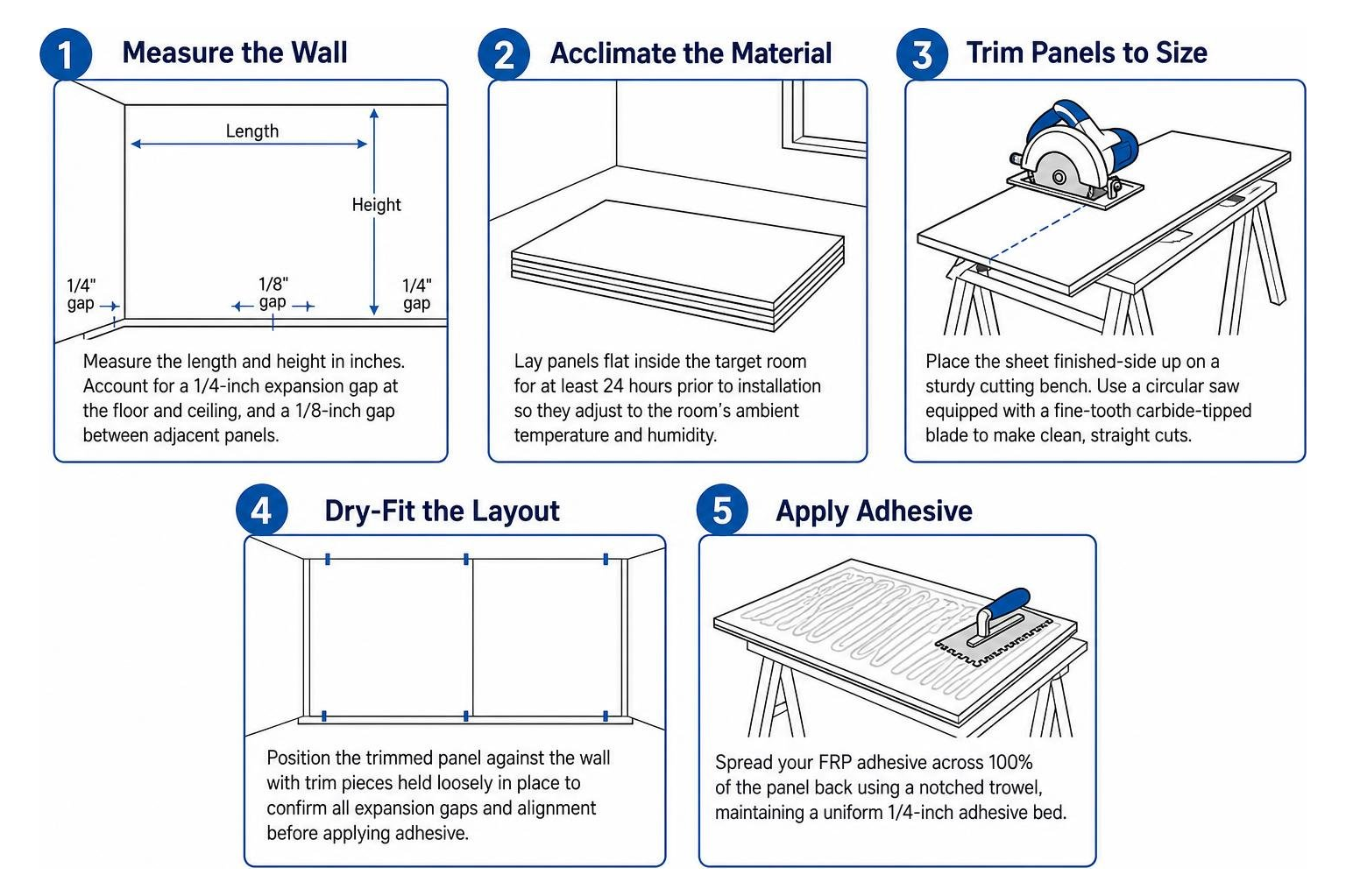
- Measure the Wall: Measure the length and height of the wall in inches. Account for a 1/4-inch expansion gap at the floor and ceiling, and a 1/8-inch expansion gap between adjacent panels.
- Acclimate the Material: Lay panels flat inside the target room for at least 24 hours prior to installation so they adjust to the room’s ambient temperature and humidity.
- Trim Panels to Size: Place the sheet finished-side up on a sturdy cutting bench. Use a circular saw equipped with a fine-tooth carbide-tipped blade to make clean, straight cuts without chipping the edges.
- Dry-Fit the Layout: Position the trimmed panel against the wall with trim pieces held loosely in place to confirm all expansion gaps and alignment before applying adhesive.
- Apply Adhesive: Spread your FRP adhesive across 100% of the panel back using a notched trowel, maintaining a uniform 1/4-inch adhesive bed.
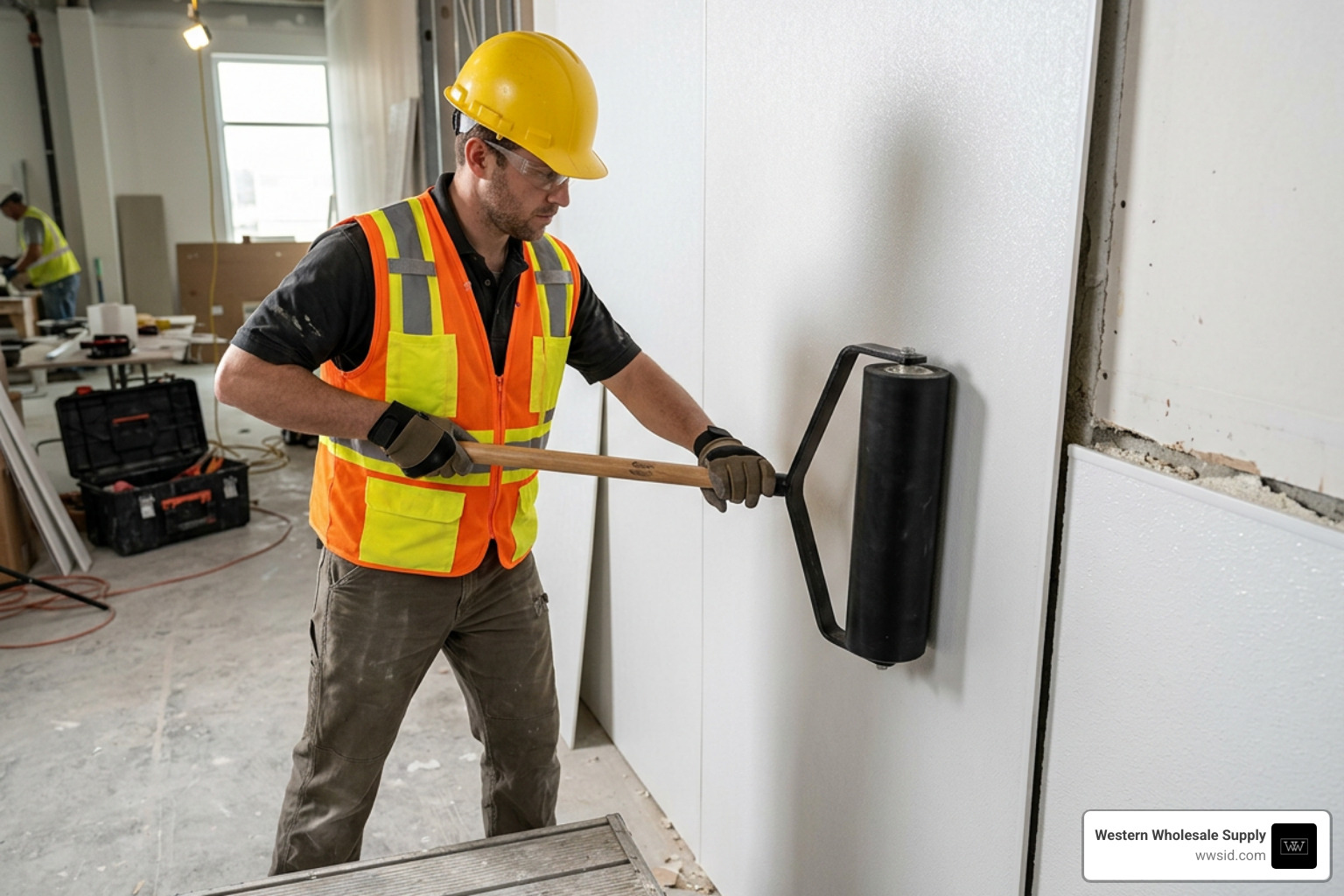
- Set and Roll the Panel: Press the sheet firmly into place against the wall substrate. Use a heavy laminate floor roller, working from the center outward to the edges, to remove trapped air pockets and achieve full bond contact.
Choosing the Right Adhesives and Trims
Selecting the correct bonding agent is critical. High-performance non-flammable formulations like Henry 444 FRP adhesive provide high initial grab and durable bonding over porous substrates such as unpainted drywall, APA grade plywood, and cured masonry. To understand which adhesive best matches your wall conditions, review The Ultimate Guide to FRP Adhesives for a Bond That Lasts.
To create a clean, watertight envelope, always install matching PVC or aluminum mouldings:
- Inside Corner Mouldings: Seal and secure intersections where two walls meet. Run a bead of silicone caulk inside the moulding channel before seating the panel edge.
- Division Bars (H-Moulds): Connect two adjacent panels along a flat wall while concealing the required 1/8-inch thermal expansion gap.
- End Caps (J-Moulds): Finish exposed panel edges around doorways, wall terminations, or wainscot tops.
Cutting Openings and Marine Application Considerations
When wrapping walls around light switches, outlet boxes, or plumbing pipes, measure your wall points carefully and transfer the coordinates to the panel face.
- Fixture Cutouts: Drill a pilot hole at the center or corners of your marked rectangle using a standard high-speed drill bit. Insert a swivel-head sheet-metal shear or jigsaw blade to cut out the opening smoothly without cracking the surrounding sheet. Always leave a 1/8-inch perimeter gap around pipes and electrical boxes to allow for seasonal expansion.
- Marine & Boat Applications: In marine settings like boat cabins, headliners, and locker linings, direct structural gluing can be problematic due to hull flexing and condensation. Install treated furring strips mechanically fastened with Grabber or Brighton Best fasteners, and secure the FRP panels with marine-grade flexible silicone or mechanical rivets. This provides crucial ventilation behind the panel to prevent trapped moisture.
Long-Term Maintenance and Cleaning Best Practices
FRP wall systems are popular because they require minimal maintenance to stay bright and clean. To preserve the panel’s factory finish over decades of use, follow these straightforward care recommendations:
- Daily & Weekly Cleaning: Wash surfaces with warm water and a mild non-abrasive household detergent. Use soft microfiber cloths, sponge mops, or non-scratch pads.
- Stain Removal: For stubborn grease, scuffs, or hard-water deposits, apply a diluted citrus-based cleaner or standard commercial degreaser. Avoid harsh scouring powders, steel wool, or abrasive wire brushes that could score the protective resin finish.
- High-Pressure Washing: In agricultural barns, commercial bays, or auto garages, FRP easily handles pressure washing. Keep spray nozzles at least 12 inches away from seams and trim joints to avoid forcing water behind the mouldings. If you are updating a home shop or storage space, exploring why FRP panels for garage walls might be your best bet can help you plan an easy-to-wash interior.
Frequently Asked Questions About Fiberglass Panels
Can FRP panels be installed directly over drywall or concrete?
Yes, FRP panels can be installed over clean, flat, unpainted drywall, moisture-resistant green board, APA grade plywood, and poured concrete or concrete block. The substrate must be dry, flat, and free of dirt or flaking material. When adhering panels over porous drywall or masonry, use a solvent-free FRP adhesive like Henry 444. If bonding over non-porous surfaces like glazed tile or painted drywall, scuff the surface thoroughly with coarse sandpaper or use an advanced polyurethane adhesive designed for non-porous applications.
How do you achieve a seamless edge finish on FRP installations?
To achieve a professional, finished appearance, use color-matched one-piece or two-piece PVC mouldings, including division bars, inside corners, outside corners, and J-channel edge caps. Leave a 1/8-inch space inside each trim channel to permit expansion and contraction as temperatures change. Apply a clean bead of color-matched 100% silicone sealant inside all moulding channels in wet areas to create a water-impermeable barrier.
Are retail FRP panels suitable for marine and boat interiors?
Yes, standard 0.090-inch FRP panels are widely used by boat owners to line galley storage lockers, engine rooms, and head compartments because they resist rot, mildew, and engine fumes. For boat ceilings and open cabin headliners, keep in mind that semi-gloss or bright white finishes reflect significant light. Fastening panels over furring strips ensures proper rear airflow and simplifies panel removal for future wiring or hull inspections.
Conclusion
Whether you are updating a damp basement, building out a commercial restaurant kitchen, or outfitting a marine utility locker, fiberglass reinforced plastic panels provide unmatched durability, easy cleaning, and reliable moisture protection. While general retail stores provide quick access for single-sheet replacements, larger commercial installations and full-facility builds benefit significantly from bulk ordering, matched production lots, and dedicated material handling.
At Western Wholesale Supply, we are an independent, veteran-owned, third-generation family business supplying quality commercial building materials across Eastern Idaho, Western Wyoming, and neighboring communities. Backed by over 60 years of regional experience since 1963, our team delivers reliable, on-time jobsite support and expert guidance for all your FRP panels, drywall, framing, and interior finishing needs across Idaho Falls, Pocatello, Jackson, Rexburg, Twin Falls, and beyond. Contact our sales team today to configure the right panels, adhesives, and accessories for your next build.
