

What Are FRP Panels? A Quick Answer for Contractors and Builders
FRP panels are rigid, lightweight wall and ceiling sheets made from fiberglass strands embedded in a plastic resin matrix. Here’s what you need to know at a glance:
| Feature | Details |
|---|---|
| Full Name | Fiberglass Reinforced Plastic (or Polymer) |
| Common Sizes | 4’x8′ and 4’x10′ sheets |
| Thickness | 0.075″ to 0.090″ (nominal 3/32″) |
| Fire Ratings | Class A and Class C |
| Finishes | Smooth and pebbled/embossed |
| Key Benefits | Moisture resistant, mold resistant, chemical resistant, easy to clean |
| Common Uses | Commercial kitchens, restrooms, healthcare, food processing, cleanrooms |
| Compliance | USDA, FDA, and CFIA approved for food-safe environments |
| Installation | Adhesive, mechanical fasteners, or concealed clip systems |
If you work in commercial construction, you’ve almost certainly encountered spaces where ordinary drywall simply won’t cut it. High heat, constant moisture, chemical washdowns, health code requirements — these are everyday realities in commercial kitchens, food processing plants, and healthcare facilities. That’s exactly where FRP panels earn their place. They’re durable, sanitary, and built to handle punishment that would destroy a standard painted wall in months.
At Western Wholesale Supply, we are building materials professionals with hands-on experience supplying FRP panels and related products to contractors across Eastern Idaho and Western Wyoming. In the sections below, we’ll walk you through everything you need to know to choose and install the right panels for your next project.
What Are FRP Panels and How Are They Made?
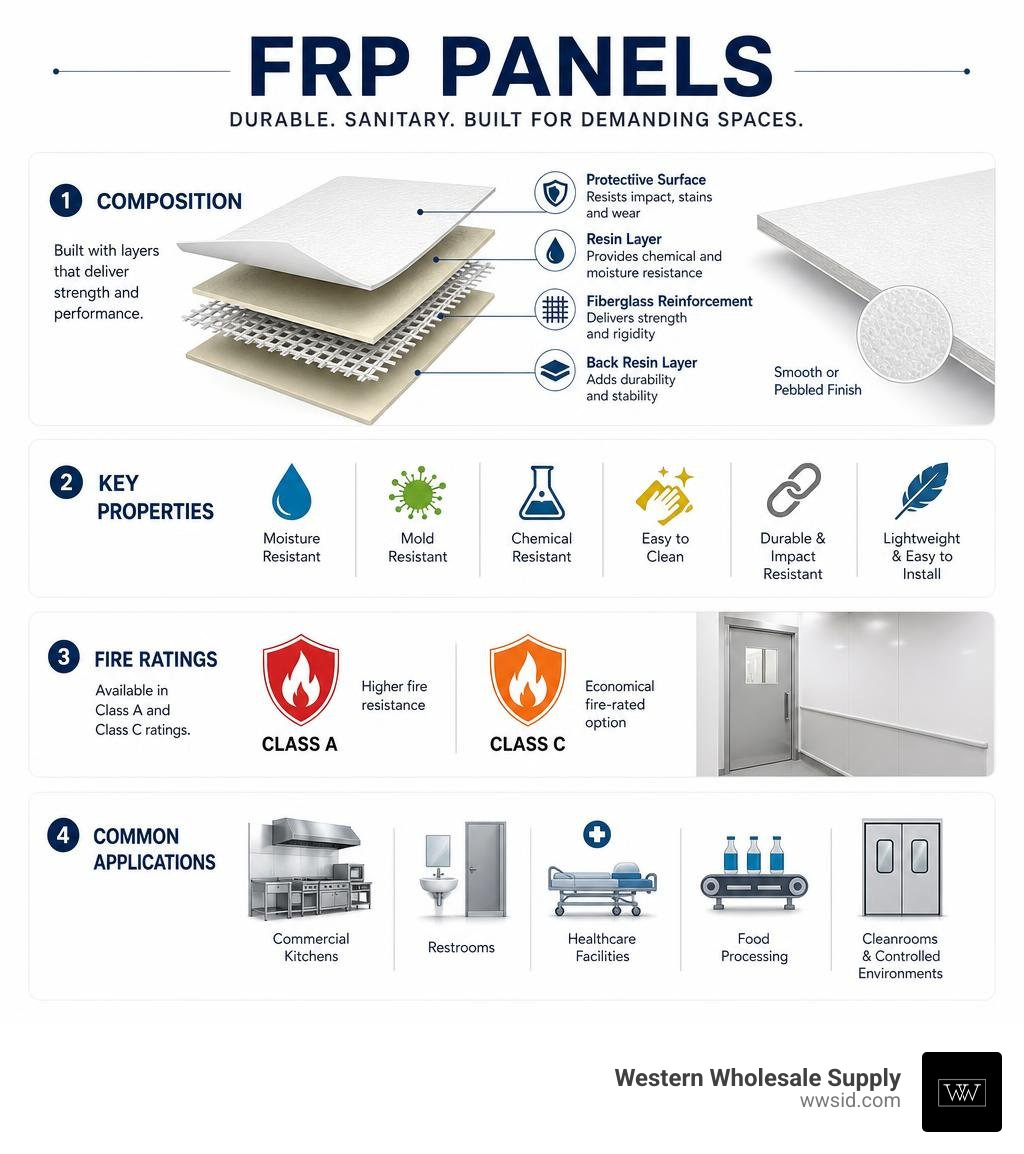
To understand why these panels perform so well, we have to look at what they are made of. FRP panels—short for Fiber-Reinforced Plastic (or Glass-Reinforced Plastic, GRP)—are high-strength composite materials. They are manufactured by combining strong fiberglass strands with a synthetic polyester resin matrix.
During the manufacturing process, the glass fibers provide the structural backbone, while the liquid plastic resin binds them together, sealing the fibers and curing under high heat into a thin, incredibly dense sheet. This composite structure gives FRP its legendary strength-to-weight ratio. It remains lightweight and easy to handle on the jobsite, yet resists cracking, denting, and scratching even in high-impact environments.
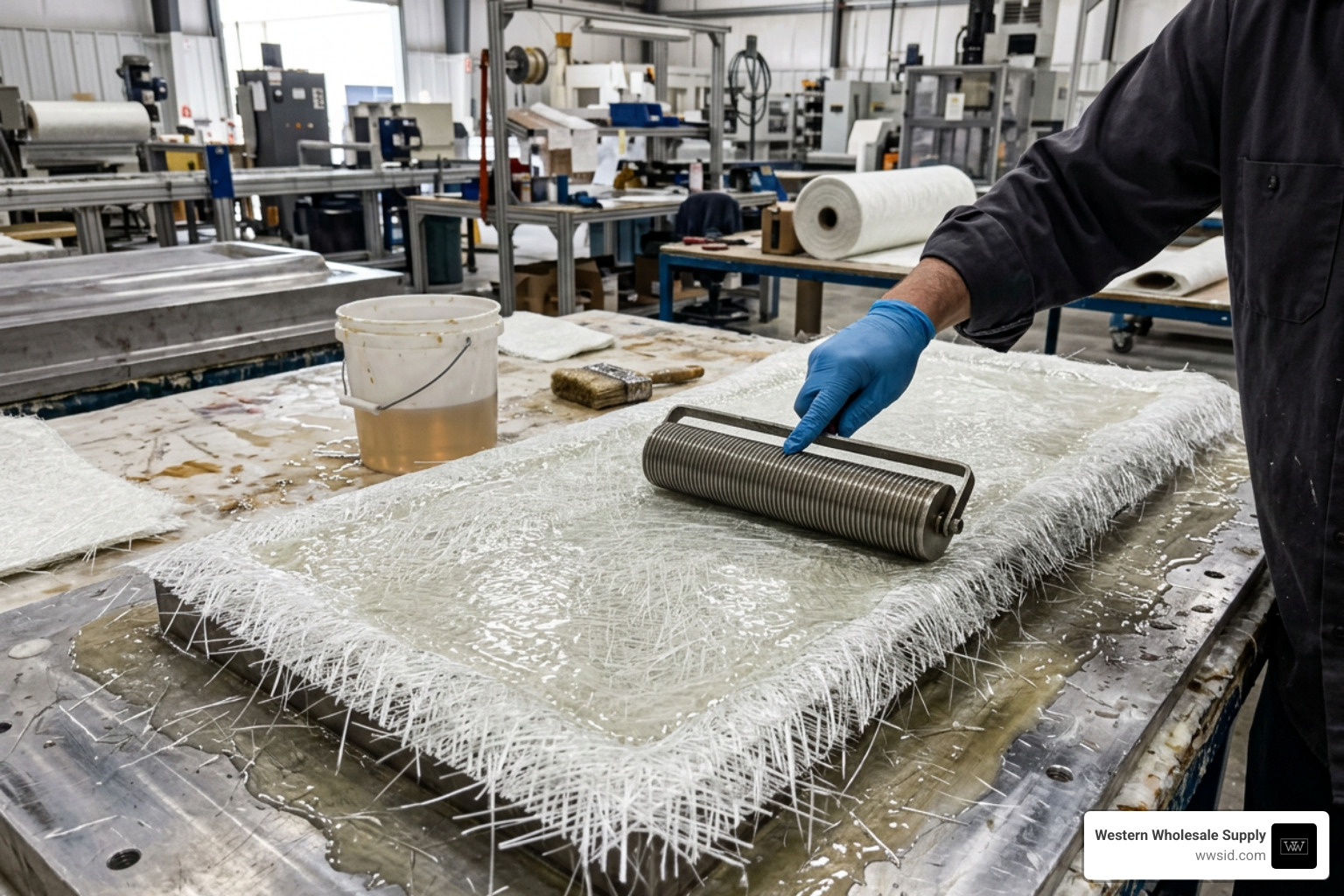
While many commercial projects utilize standard pre-cut 4’x8′ or 4’x10′ sheets, manufacturers also produce continuous rolls. For instance, Flat Fiberglass FRP GRP Sheets in Roll are highly valued in industrial manufacturing, such as lining dry vans, refrigerated trucks, and recreational vehicles (RVs).
For standard commercial walls and ceilings, these sheets are typically sold in nominal thicknesses of 3/32” (0.090 inches) or 0.075 inches. To learn more about the physical composition and standard dimensions available, check out our resource on Everything You Need to Know About FRP Panel Boards and Liners.
Key Properties of FRP Panels
What makes FRP panels the go-to choice for challenging environments? It comes down to several unique physical properties:
- Moisture and Corrosion Resistance: Unlike drywall or wood, FRP is completely non-porous. It does not rot, rust, or corrode when exposed to water, steam, or high humidity.
- Chemical Resistance: These panels are unaffected by harsh sanitizing chemicals, acids, grease, and industrial cleaning agents.
- Non-Conductive and Insulating: FRP is non-conductive, providing excellent electrical insulation. It also offers thermal insulation benefits. When building out commercial warehouses or agricultural structures, combining FRP walls with proper insulation ensures stable temperatures. We recommend keeping warehouse ceilings insulated to R-30+ and walls to R-13+ to maximize thermal performance.
- Sanitation and Mold Resistance: Because they do not absorb moisture, FRP panels are highly resistant to mold, mildew, and bacteria growth. They meet strict USDA, FDA, and CFIA requirements for food-safe, sanitary environments.
- High Strength-to-Weight Ratio: They are easy to install on ceilings or high walls without adding excessive structural weight, yet they resist impacts from carts, tools, and heavy equipment.
These same properties make them an exceptional choice for residential utility spaces too. If you are looking to upgrade a high-use home workshop or vehicle storage space, read more about Why FRP Panels for Garage Walls Might Be Your Best Bet.
Common Applications and Material Types
Because they are highly sanitary and incredibly durable, you will find FRP panels installed in a wide variety of commercial and industrial settings across Eastern Idaho and Western Wyoming.
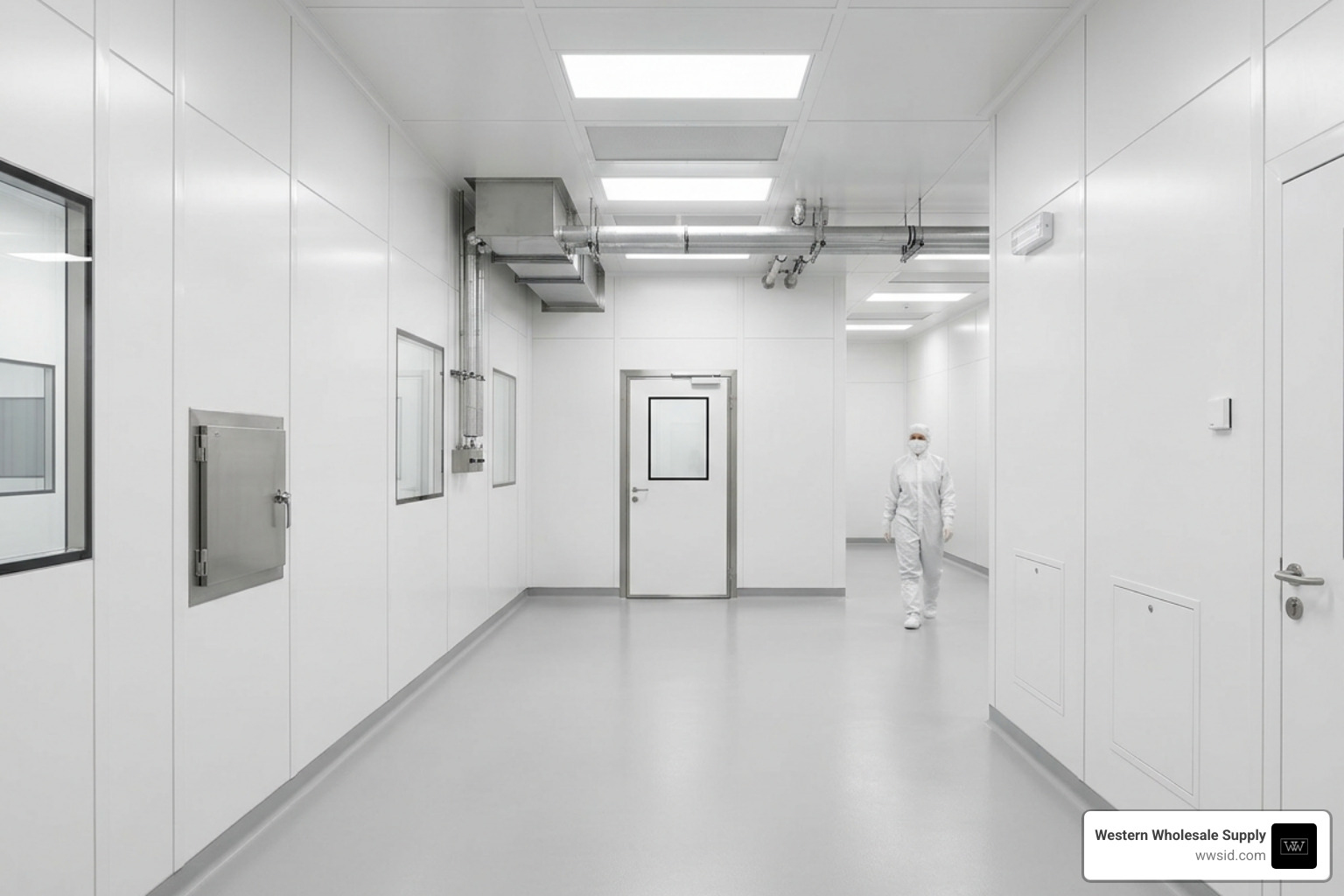
Typical applications include:
- Commercial Kitchens and Restaurants: Where grease, steam, and frequent chemical washdowns are daily occurrences.
- Food Processing and Packaging Plants: Where strict USDA and FDA sanitation codes must be met.
- Healthcare Facilities and Laboratories: Where sterile, non-porous walls prevent the harbor of bacteria.
- Car Washes and Public Restrooms: Where constant water exposure would destroy standard paint and drywall.
- Agricultural Barns and Animal Confinement: Where high-pressure washing and heavy animal impacts require ultimate durability.
Whether you are sourcing materials for a project in Idaho Falls, Pocatello, or Jackson, working with a reputable supplier ensures your project complies with regional building safety standards. For a closer look at commercial use cases, you can read our In-Depth Guide to FRP Panels Commercial. If you are looking for local supply options, check out FRP Wall Panel & Sheet Supplier Canada for cross-border specification comparisons.
Smooth vs. Pebbled Finishes
FRP is commonly available in two primary surface textures: pebbled (embossed) and smooth.
- Pebbled Finishes: This is the classic, textured look most people associate with commercial restrooms and corridors. The pebbled texture is highly scratch-resistant and excellent at hiding scuffs, fingerprints, and minor surface wear. Many premium pebbled panels feature a specialized protective coating (such as Surfaseal) that prevents soil and bacteria from getting trapped in the textured valleys.
- Smooth Finishes: Smooth FRP panels are ideal for cleanrooms, sterile processing areas, and laboratories. Because they lack texture, they are incredibly easy to wipe down and sanitize, leaving no crevice where dust or microbes can settle. However, they do show scratches and imperfections more easily than pebbled versions.
Class A vs. Class C Fire Ratings
Building safety codes dictate which fire-rated materials must be used depending on the room’s occupancy type and risk level. FRP panels are manufactured to meet these specific standards:
- Class I/A Fire Rating: These panels offer the highest level of flame-spread and smoke-development resistance. They are mandated by building codes in commercial kitchens, public corridors, schools, and high-occupancy spaces. Class A panels are typically more expensive due to the advanced fire-retardant additives integrated into the resin.
- Class III/C Fire Rating: These are standard-grade panels suitable for general applications where strict Class A ratings are not legally required by local building codes, such as agricultural barns, residential garages, or utility sheds. They offer reliable durability at a more cost-effective price point.
Installation Methods and Best Practices
Installing FRP panels correctly is just as important as choosing the right panel type. Because fiberglass naturally expands and contracts with changes in temperature and humidity, standard rigid mounting can lead to buckling if proper steps are not followed.
How to Install FRP Panels Using Traditional Methods
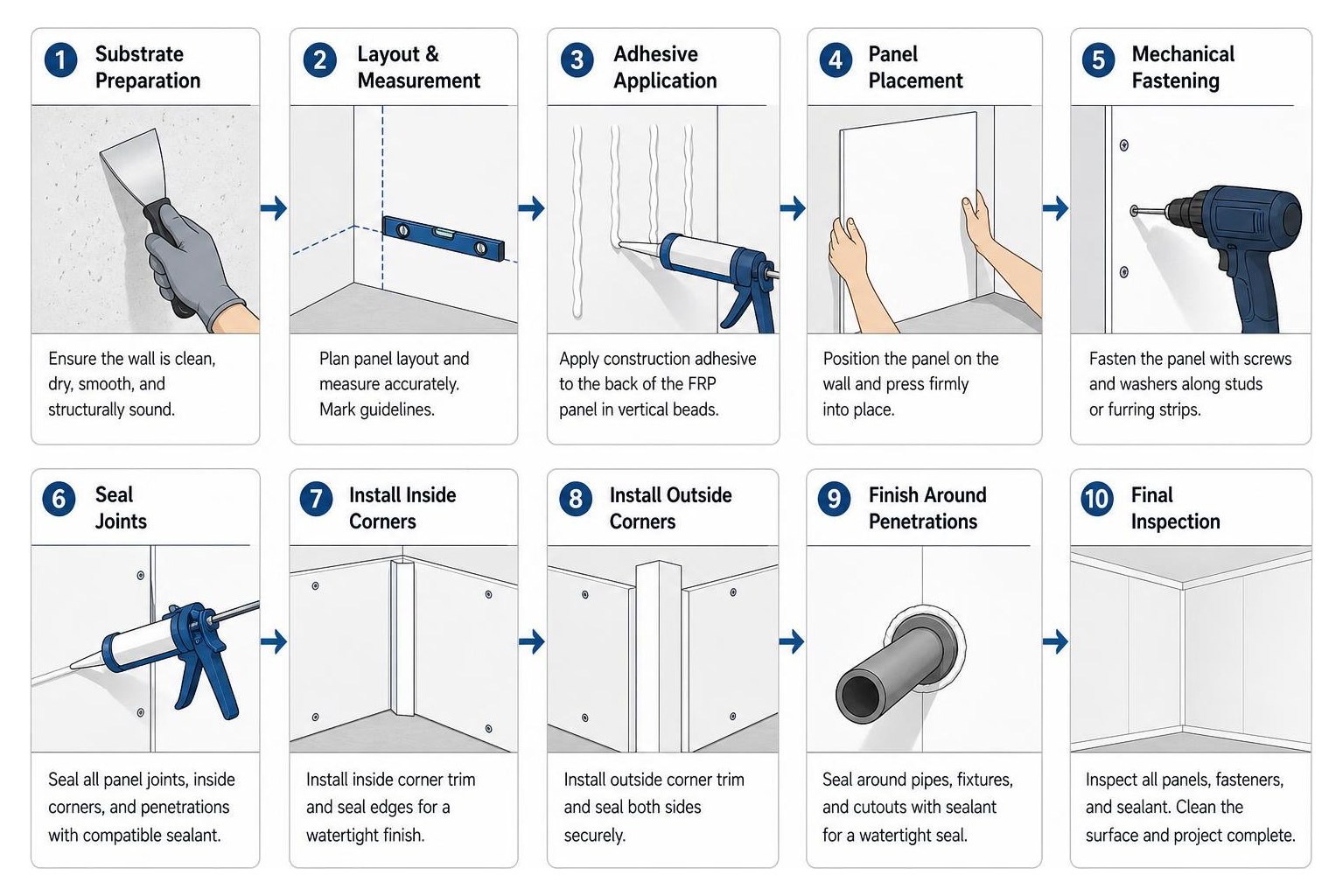
The traditional method of installing FRP panels relies on a combination of high-quality construction adhesive and mechanical fasteners. Here is a step-by-step overview of how to do it right:
- Substrate Preparation: Ensure the wall backing (whether drywall, plywood, or concrete) is clean, completely dry, and structurally sound. Use a Hyde scraper to remove any old paint flakes, adhesive residue, or drywall mud bumps.
- Measuring and Cutting: Measure twice and cut once. Keep the panel face up when cutting with a circular saw or jigsaw equipped with a fine-tooth blade to prevent chipping the gel coat. Always wear safety goggles, gloves, and a dust mask to protect against fiberglass dust.
- Applying Adhesive: Lay the panel face down on a clean work table. Spread a high-quality moisture-resistant adhesive evenly across the entire back of the panel. Use a Marshalltown trowel or a specialized notched trowel to ensure a consistent, ridged adhesive pattern. For details on selecting the right glue, see The Ultimate Guide to FRP Adhesives for a Bond That Lasts.
- Positioning and Expansion Gaps: Press the panel firmly against the wall. Crucial Step: You must leave a 1/4-inch expansion gap around the entire perimeter of the panel and between adjacent sheets to allow for thermal expansion.
- Rolling Out Air Bubbles: Use a heavy laminate roller, starting from the center of the panel and rolling outward toward the edges, to eliminate air bubbles and guarantee a flat, secure bond.
- Mechanical Fasteners: For added security, install plastic rivets or Grabber fasteners. Drill holes slightly larger than the fastener shank to accommodate panel movement, and insert the fasteners around the perimeter.
- Sealing the Joints: Install matching PVC or aluminum trim accessories—such as division bars (H-molds), end caps, and inside/outside corner angles. Seal all joints and trim pieces with a high-quality, food-safe silicone sealant to prevent moisture from seeping behind the panels.
Concealed Mounting Systems and Laminated Substrates
For high-end architectural applications where exposed plastic rivets and visible division bars are undesirable, modern concealed mounting systems offer an elegant alternative.
Systems like Fastmount utilize hidden, engineering-grade plastic clips. The female clips are recessed into the wall substrate, while the male clips are mounted to the back of the FRP panel. This allows the panels to be snapped firmly into place with a completely seamless, fastener-free face. Even better, these panels can be easily removed for maintenance or access to utility lines behind the walls and snapped back into place without damage.
Another highly efficient option is using pre-laminated panels. Products like FRP-Laminated Impact & Moisture Resistant Wall and Ceiling Panels feature a fiberglass sheet factory-laminated to a structural substrate such as plywood, OSB, or Durock cement board. Because of their inherent rigidity, these panels can be fastened directly to open wood or steel studs, ceiling joists, or furring strips. This eliminates the need to install a separate drywall backing first, saving significant labor time on the jobsite.
Comparing FRP to Alternative Wall Materials
When designing a commercial space, you will likely weigh several wall paneling options. Here is how standard FRP panels stack up against common alternatives like PVC interlocking boards, ceramic tile, and specialized drywall:
| Material | Durability & Impact Resistance | Moisture & Mold Resistance | Installation Complexity | Maintenance & Cleaning | Service Life |
|---|---|---|---|---|---|
| FRP Panels | High (Resists heavy impacts and scratches) | Excellent (100% waterproof and non-porous) | Moderate (Requires adhesive, trim, and expansion gaps) | Easy (Wipeable, chemical resistant) | Up to 100 Years (Extremely long-lasting) |
| PVC Panels | Moderate to High (Rigid plastic, can crack under heavy impact) | Excellent (Waterproof, interlocking seams) | Easy (Interlocking tongue-and-groove, no glue) | Easy (Smooth surface, no grout lines) | Up to 100 Years (Highly recyclable) |
| Ceramic Tile | Moderate (Tiles can chip, grout can crack) | Moderate (Waterproof tiles, but porous grout) | High (Requires mortar, grout, and skilled labor) | Harder (Grout lines trap grease and require scrubbing) | Long (But requires periodic regrouting) |
| Drywall (Painted) | Low (Dents easily, paint chips) | Poor (Absorbs moisture, prone to mold) | Easy (Standard hanging and taping) | Difficult (Cannot handle frequent washdowns) | Short (In high-moisture commercial areas) |
While painted drywall is the standard for offices, high-performance areas require more robust solutions. For areas needing acoustic control combined with standard drywall finishes, we recommend high-impact gypsum boards like Quietrock EZ Snap.
On ceilings, pairing your wall panels with moisture-resistant CertainTeed ceiling tiles in a fiberglass grid system creates a completely sanitary envelope. While PVC interlocking panels offer fast installation, traditional FRP remains the industry favorite for ultimate impact defense and long-term value in heavy-duty commercial environments.
Frequently Asked Questions About Wall Paneling
What is the lifespan of FRP?
FRP panels are engineered for extreme durability and possess a service life of up to 100 years. Because they are immune to rot, rust, mold, and corrosion, they do not degrade over time. In highly demanding commercial kitchens or washdown bays, they easily outlast painted drywall and wood paneling by decades, making them an incredibly cost-effective long-term investment.
Can FRP be installed over tile?
Yes. FRP can be installed directly over existing ceramic tile, drywall, plywood, OSB, or concrete blocks. The key requirement is that the backing surface must be flat, clean, dry, and structurally sound. When installing over slick surfaces like ceramic tile, you must scuff the tile surface and use an advanced polymer adhesive to ensure a permanent bond.
Are FRP sheets food-safe?
Absolutely. High-quality FRP panels are manufactured to meet USDA, FDA, and CFIA (Canadian Food Inspection Agency) sanitation requirements. Their non-porous, easy-to-clean surfaces do not harbor bacteria, mold, or mildew, making them legally compliant and highly recommended for commercial food preparation, cleanrooms, and medical facilities.
Conclusion
Whether you are remodeling a commercial kitchen in Jackson, WY, building a medical facility in Idaho Falls, or upgrading an agricultural barn in Pocatello, choosing the right wall protection is critical to the longevity and sanitation of your building. FRP panels offer an unbeatable combination of moisture resistance, durability, and ease of maintenance.
At Western Wholesale Supply, we are an independent, veteran-owned, third-generation family business. We have been supplying top-tier building materials—including drywall, steel framing, insulation, and acoustical ceilings—to contractors across Eastern Idaho, Western Wyoming, and Western Montana since 1963. Backed by over 60 years of experience, our promise is simple: reliable, on-time delivery and exceptional customer service.
Ready to source the perfect wall paneling for your next commercial or residential project? Explore our full inventory of high-performance FRP Panels or contact our expert team today to get a quote and schedule your delivery.
