

Choose a 6-Inch Drywall Hole Saw That Fits the Job
For recessed lights, start with the fixture’s required cutout size. If it calls for a 6-inch opening, choose a sharp bi-metal hole saw for standard drywall and wood, or a carbide saw for abrasive plaster. A dust bowl catches debris during overhead cuts, while a pilot bit helps keep the hole centered. Check that the arbor fits your drill before you buy.
On mixed-material jobs, check the saw’s rating before cutting Quietrock EZ Snap drywall, Durock cement board, or CertainTeed ceiling tiles. Watch for hidden Grabber fasteners and other metal in the cut path.
At Western Wholesale Supply, our team of building materials professionals serves drywall contractors and builders daily. That experience shapes how we assess a 6 inch hole saw for drywall: fit, cut quality, and cleanup time.
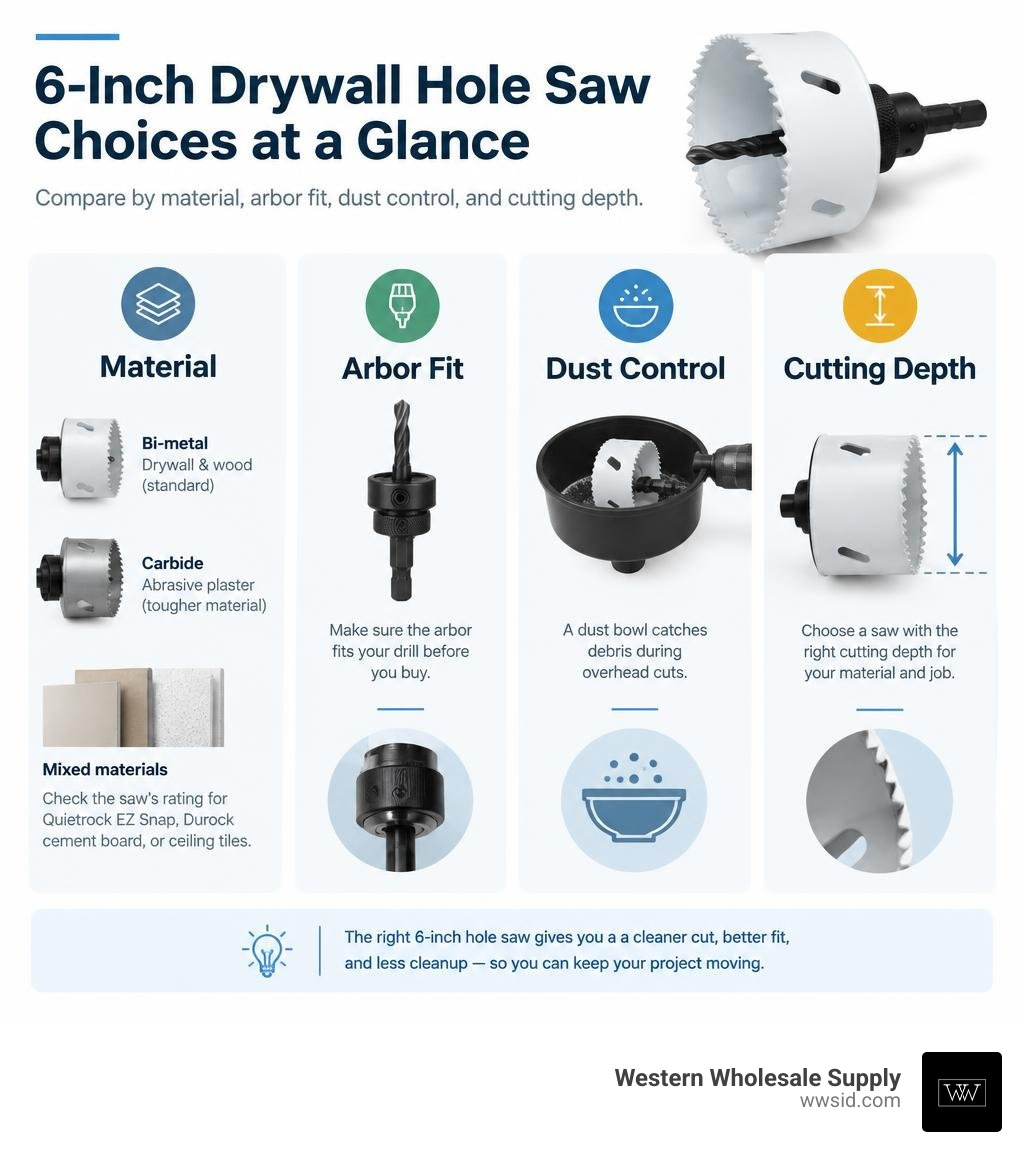
6 inch hole saw for drywall terms simplified:
Key Features to Look for in a 6 Inch Hole Saw for Drywall
Selecting the right cutting tool for ceiling penetrations comes down to stability, power transfer, and ease of maintenance. When boring a large 152mm opening overhead, any wobble in the drill assembly magnifies quickly. Having the proper setup—part of the essential drywall gear you need before hanging your first sheet—guarantees that every cut stays true, plumb, and clean without gouging the surrounding gypsum.
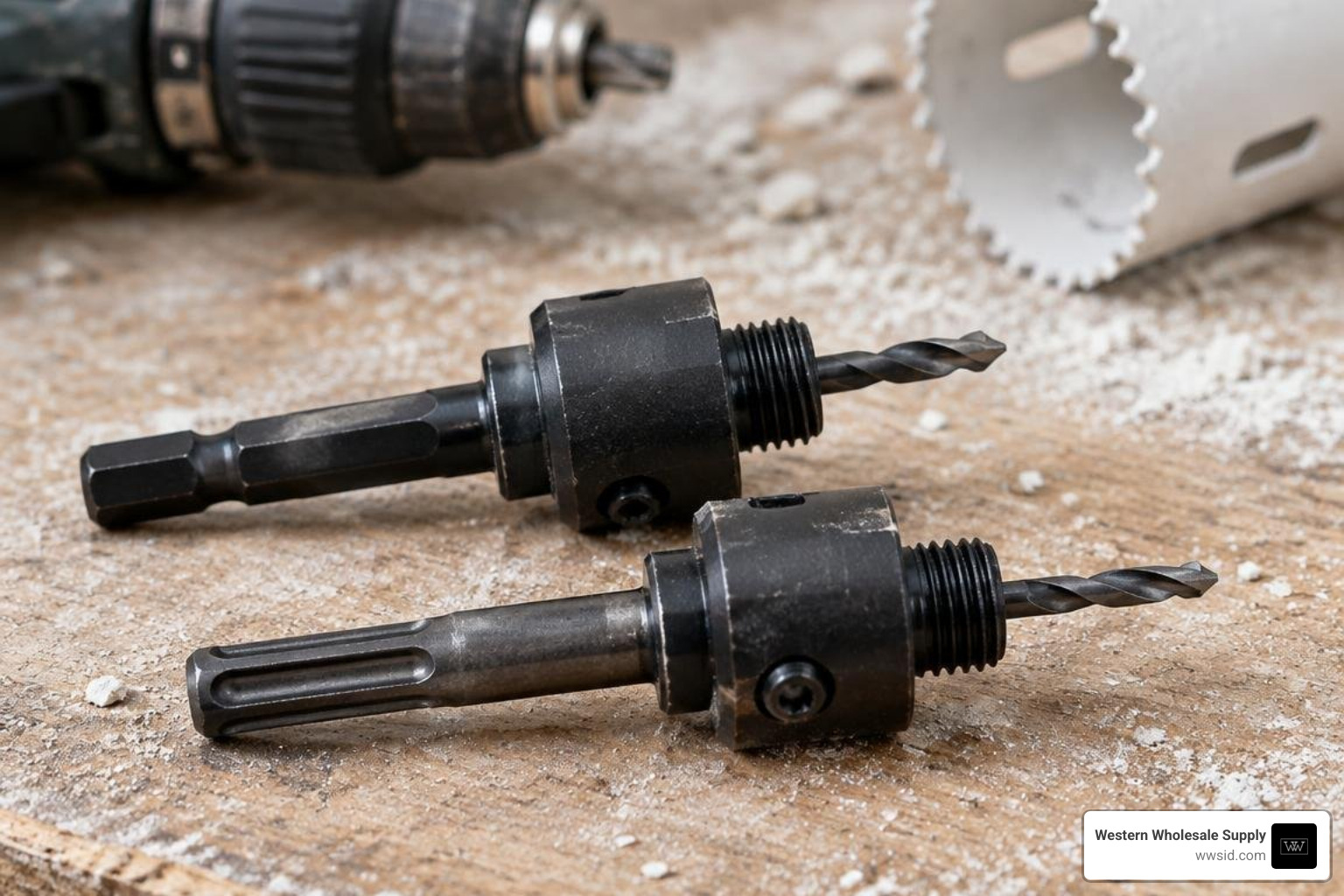
Arbor Compatibility and Shank Types for a 6 Inch Hole Saw for Drywall
A 6-inch hole saw exerts significant torque on your drill motor. Using the right arbor ensures your tool won’t slip, bind, or damage the drill chuck during high-resistance cuts:
- 3/8-inch Hex Shank: The standard choice for heavy-duty cordless drills. The three machined flat sides prevent chuck spinout under heavy rotational resistance.
- 1/2-inch Drill Chuck Systems: Standard for high-torque corded and commercial-grade drills, providing the ultimate grip and mechanical rigidity needed for wide-diameter cup saws.
- SDS Plus Adapters: Found in specialized kits that allow rapid tool-free bit changes on rotary hammers operating in standard rotary mode only (never hammer mode).
- Drill Support Handle: When swinging a 6-inch blade, always lock your drill’s auxiliary side handle in place to counter sudden rotational binding and protect your wrists.
Cutting Depth and Core Plug Ejection Systems
Cutting depths generally range from a shallow 1-1/8 inches (ideal for single-layer gypsum wallboard) up to 2-3/8 inches for thick assemblies, double-layered acoustic drywall, or multi-layer fire-rated ceiling assemblies.
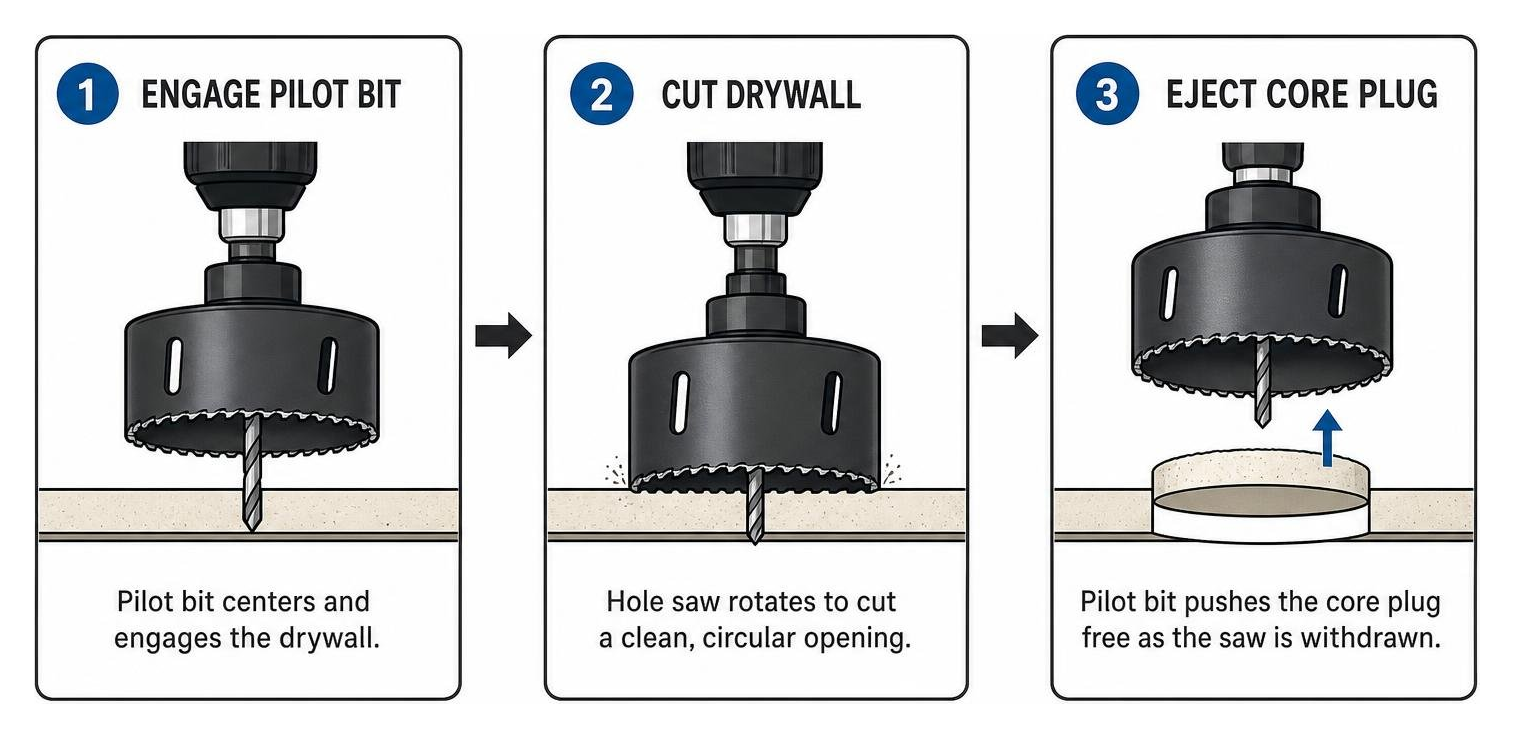
To prevent frustrating downtime trying to pry out stuck drywall cores between cuts:
- Look for large open-back side slots that readily accept a standard flathead screwdriver for manual pry leverage.
- Premium options feature quick plug-ejection mechanisms that push the dense gypsum waste core out with the press of an arbor sleeve button.
- Spring-loaded pilot bit assemblies automatically push the cut slug free as soon as the cut penetrates through the backside paper.
Carbide Grit vs. Bi-Metal: Comparing Hole Saw Blade Materials
The right cutting edge depends entirely on the composition of your ceiling or wall assembly.
| Feature | Bi-Metal Hole Saw (M42 HSS) | Tungsten Carbide / TCT Hole Saw |
|---|---|---|
| Primary Materials | Standard Drywall, Wood Joists, Plywood, Thin Sheet Metal | Drywall, Old Lath & Plaster, Durock, Stucco, Acoustic Tile |
| Cutting Mechanism | High-Speed Steel Variable Teeth | Tungsten Carbide Grit or Brazed Carbide Teeth |
| Wear Life in Plaster | Low (Teeth dull rapidly on gritty aggregate) | Extreme (Resists abrasive masonry and lime plaster) |
| Deep-Cut Capability | Up to 2-3/8 in single pass | 1-1/8 in to 2-3/8 in depending on arbor design |
| Best Application | New construction drywall and wooden framing | Remodels, historic restoration, and mixed masonry |
Understanding how to cut drywall in 6 simple steps helps you choose the right tool edge for each specific substrate.
Standard Bi-Metal Blades for Drywall and Wood
Bi-metal hole saws combine flexible alloy backing steel with hardened M42 high-speed steel teeth.
These blades excel when cutting through gypsum wallboard that might have wood backing, ceiling joists, or thin metal ducting behind it. Their variable tooth pitch reduces vibration and chatter, providing a clean perimeter without tearing the drywall face paper.
Tungsten Carbide Grit and TCT Saws for Plaster and Masonry
For older homes or commercial builds featuring abrasive substrates, bi-metal teeth can wear down in seconds. A continuous grit edge or carbide-tipped design is engineered to grind through dense materials.
These carbide cutters easily handle:
- Dense lime-and-sand plaster over wood or metal lath
- Durock cement backer boards
- Stucco wall penetrations
- CertainTeed commercial acoustic ceiling tiles
Dust Containment and Clean Overhead Cutting Solutions
Cutting drywall overhead creates fine airborne gypsum dust that settles across trim, flooring, and air ducts. Using an integrated dust containment system keeps the job clean, protects indoor air quality, and sharply curtails post-job site cleanup requirements.
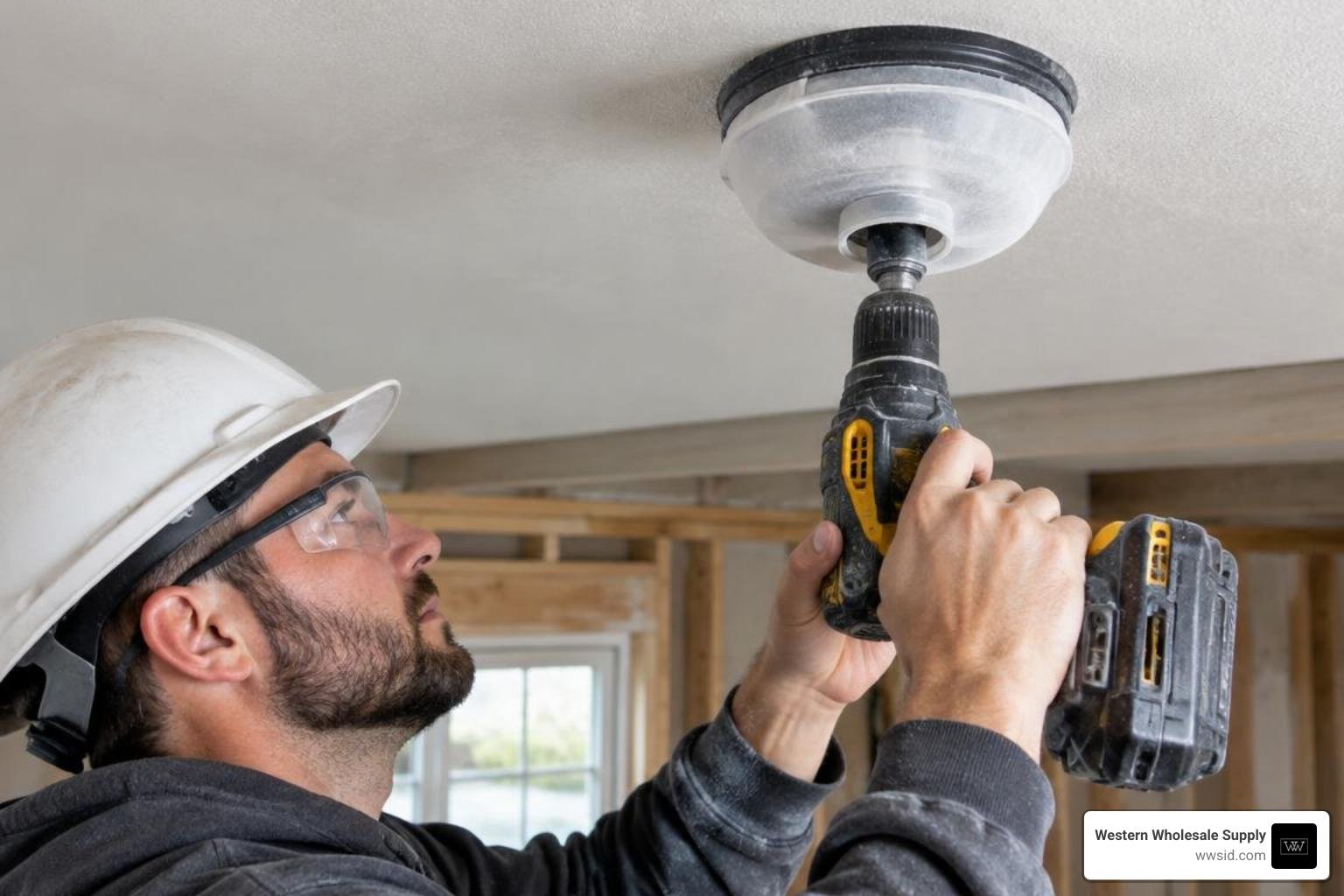
Why Dust Bowls Are Essential When Operating a 6 Inch Hole Saw for Drywall
An integrated dust bowl traps particulate directly at the cutting surface before it enters the ambient room atmosphere:
- 70% Airborne Particulate Reduction: Captures heavy gypsum cores and micro-dust before it migrates across finished living spaces.
- Dramatically Faster Cleanup: Eliminates the need for extensive plastic masking and post-cut vacuuming on occupied remodel jobs.
- Smooth Friction Collar: Quality bowls use a sealed dual-bearing collar that allows the hole saw arbor to spin freely inside while the silicone or flexible plastic bowl stays stationary and flush against the ceiling sheet.
Safe Overhead Drilling Techniques for Recessed Can Lights
Working overhead requires disciplined safety practices to avoid injury and prevent damaged ceiling framing or hidden utilities:
- Scan Ahead: Use a multi-sensor stud finder to locate ceiling joists, HVAC runs, plumbing, and electrical conduits. Ensure Grabber or Brighton Best ceiling fasteners are cleared from the planned cut path.
- Personal Protective Equipment: Always wear sealed safety goggles and a properly fitted N95 dust mask, even when using a dust bowl attachment.
- Firm Footing: Set up a stable drywall bench or ladder directly beneath the cut to avoid overreaching or losing balance while applying upward drill pressure.
- Controlled RPM: Start your drill at low speed to let the pilot bit pierce the drywall, then bring it up to a steady, medium rotational speed without pushing hard. Let the blade do the cutting smoothly.
Cost vs. Value: What Justifies the Price Gap in Can Light Saws?
When outfitting your tool kit, you will encounter basic homeowner hole saws alongside professional kits that include multi-arbor commercial packages, rugged carry cases, and drywall files for fine-tuning cutouts.
- Entry-Level Models ($20–$35): Often feature thin stamped bi-metal construction, fixed arbors, and standard teeth. These are great for cutting a handful of holes in straightforward gypsum board on small residential updates.
- Commercial-Grade Outfits ($75–$120+): Feature solid welded bodies, tungsten carbide cutting edges, heavy-duty dust bowls, multi-shank quick-change mandrels, and rasps for fine-tuning cutouts. They are engineered to minimize arbor runout and withstand hundreds of ceiling cuts across abrasive plasterboard, Durock, and wood framing without losing their sharp cutting edge.
For a full breakdown of essential job site gear, explore our comprehensive guide on drywall tools, or review manufacturer specifications from the Occupational Safety and Health Administration on safe power tool use for additional guidance.
Frequently Asked Questions About Drywall Hole Saws
Can a 6-inch drywall hole saw cut through lath and plaster or stucco?
A standard bi-metal hole saw will dull quickly against abrasive plaster and wire lath. For plaster and stucco, use a tungsten carbide grit or tungsten carbide-tipped (TCT) hole saw. The carbide edge grinds through dense plaster without stripping sharp teeth.
What size drill chuck is required for a 6-inch recessed light hole saw?
Most 6-inch hole saws utilize a 3/8-inch hex arbor shank or an SDS Plus adapter, both of which fit securely into standard 1/2-inch drill chucks. Always use a drill motor equipped with a side support handle for stability.
How do I prevent drywall paper from tearing when cutting can light openings?
To get a crisp edge on standard 1/2-inch and 5/8-inch drywall panels, start the drill in reverse at low speed with light pressure. This scores the surface paper cleanly. Once scored, switch back to forward rotation to complete the cut.
Conclusion
Whether you are completing a residential retrofit or outfitting a large commercial build, choosing the right 6-inch hole saw saves hours of labor and cleanup. Match your blade type to your substrate—bi-metal for standard drywall and carbide for plaster or Durock—and always use a dust containment bowl when drilling overhead.
At Western Wholesale Supply, we provide professional drywall contractors and builders throughout Eastern Idaho, Western Wyoming, and surrounding regions with high-performance building supplies. From Quietrock EZ Snap panels and CertainTeed acoustic ceiling systems to premium finishing equipment from Hyde, USG Sheetrock Tools, Columbia Taping Tools, and Marshalltown, we have the stock you need.
Equip your crew for clean, precise cuts by visiting our showroom or ordering your commercial drywall tools and fasteners today.
