

Choose Flexible Compound Based on the Type of Movement
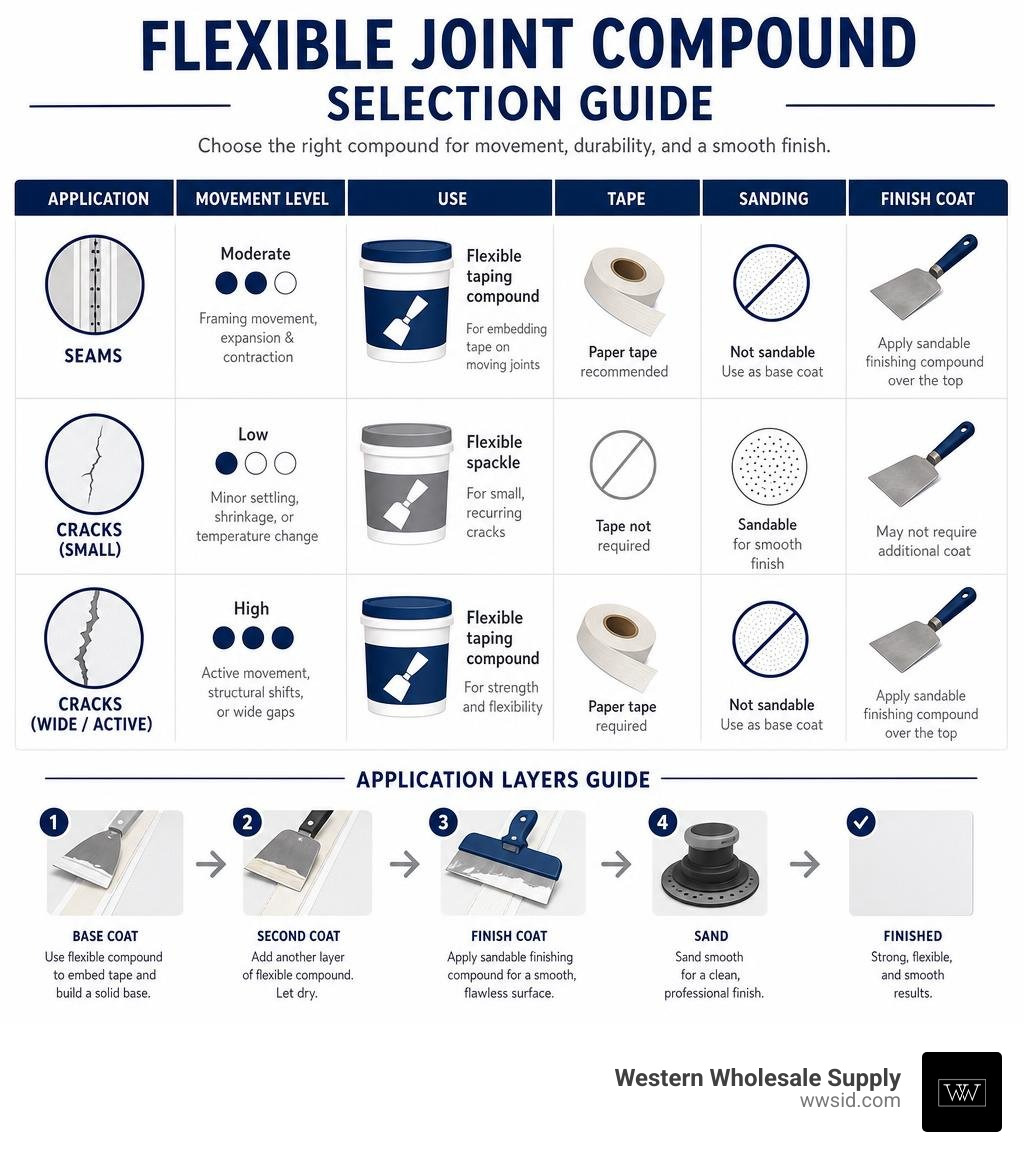
The best flexible joint compound depends on the repair. Choose an elastomeric taping compound such as Magnum Flex-Joint for drywall seams that move with wood framing. Choose a sandable flexible spackle such as DAP Alex Flex for small recurring wall or ceiling cracks. For wider cracks or joints with real movement, paper tape embedded in a suitable joint compound is still essential; no mud alone can solve an active structural problem.
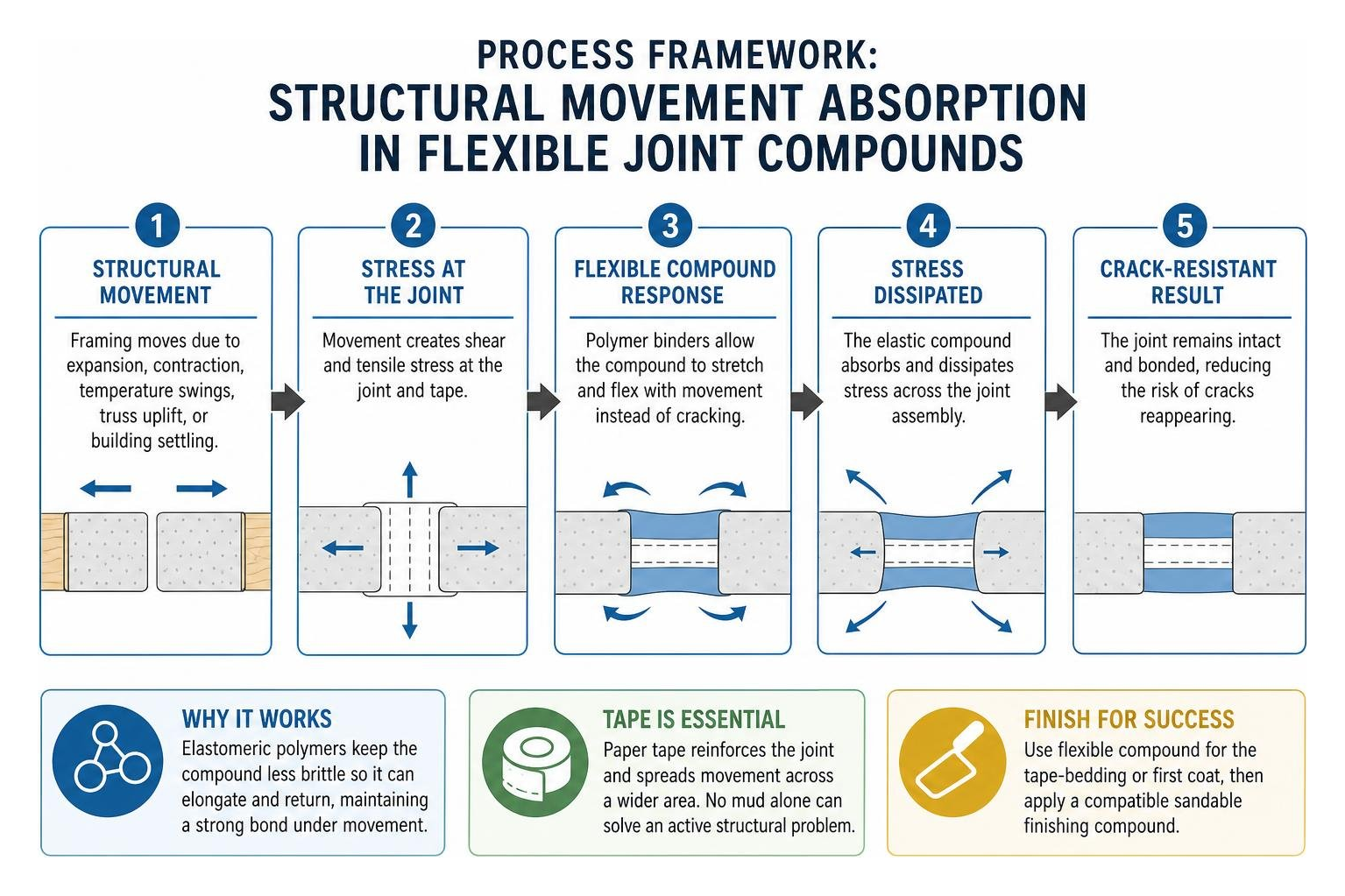
Flexible joint compounds use polymer binders that remain less brittle than standard drywall mud after drying. They are made to reduce cracks tied to framing expansion and contraction, temperature swings, truss uplift, or minor building movement. Standard all-purpose and lightweight compounds are excellent for routine finishing, skim coating, and texture work, but they are not truly elastomeric.
The tradeoff is finish quality. Highly flexible products can be difficult or impossible to sand, so use them as a tape-bedding coat, prefill, or first coat, then apply a compatible sandable finishing compound over the repair. If a crack is caused by major foundation movement, moisture issues, or a failing wall assembly, fix that cause before treating the drywall surface.
At Western Wholesale Supply, our team of building materials professionals brings decades of hands-on experience helping contractors select drywall, framing, and finishing materials for residential and commercial work. In this roundup, we break down the best flexible joint compound options by movement level, tape compatibility, and finish needs.
Understanding Flexible Mud vs. Traditional Joint Compounds
Every building moves. Whether it is seasonal thermal expansion in Eastern Idaho, humidity swings across Western Wyoming, or natural settling over expansive soil, interior assemblies experience continuous dynamic stress. Standard drywall joint compounds—primarily formulated with gypsum, limestone, mica, and clay—harden by drying or chemical crystal formation into rigid matrixes. While these standard muds provide exceptional workability and effortless sanding for Level 4 and Level 5 architectural finishes, they possess virtually zero tensile elongation. When a framing member twists or a truss shifts, a brittle gypsum joint absorbs that shear stress and cracks.
Flexible joint compounds incorporate elastomeric polymers and specialized vinyl binders. These additives allow the cured compound to absorb minor structural movement without fracturing. When evaluating options, knowing how to choose the right drywall compound comes down to balancing flexibility against finishability.
Standard drying-type compounds comply with ASTM C475 standards for gypsum board finishing, but they rely heavily on embedded joint reinforcement to bridge gaps. When untaped drywall joints or stress points experience dynamic movement, traditional mud fractures quickly. Polymer-modified flexible compounds, by contrast, bridge small gaps and maintain an elastic bond that flexes along with timber shrinkage and structural shifts.
Comparing the Top Contenders for the Best Flexible Joint Compound
Finding the right balance between flexibility, shrink resistance, dry time, and sanding performance requires looking closely at how each formula behaves on the wall:
| Product | Primary Chemistry | Elasticity & Movement | Sandability | Recommended Role |
|---|---|---|---|---|
| Magnum Flex-Joint | Vinyl-based elastomeric ready-mix | High (resists wood framing expansion) | Non-sandable (rubbery finish) | Bedding tape, pre-filling, first coats over fasteners |
| DAP Alex Flex | Polymer-modified flexible spackling | Moderate (surface & hairline crack defense) | Sandable (dual-grit method) | Patching hairline ceiling & wall cracks, minor repairs |
| Easy Sand 90 | Setting-type (chemically hardening) | Low elasticity, high tensile & bond strength | Sandable (after complete set) | High-stress seams, heavy pre-fills, humid areas |
| Flex Paste | Thick rubberized sealant paste | Maximum (waterproof elastomeric barrier) | Non-sandable (requires knife-smoothing) | Exterior gaps, sub-grade sealing, non-drywall transitions |
Magnum Flex-Joint: The Best Flexible Joint Compound for Framing Movement
For commercial and residential drywall assemblies exposed to framing movement, Magnum Flex-Joint stands out as a dedicated elastomeric taping mud. Formulated as a flexible, vinyl-based premixed compound, it minimizes joint cracking caused by structural deflection and lumber expansion. According to the Magnum Flex-Joint Technical Data, the material cures to a rubber-like consistency with low air content and excellent adhesive grip.
Because it is truly elastomeric, Magnum Flex-Joint cannot be sanded. Trying to run a sanding block over cured Flex-Joint produces rolled rubber burrs rather than a feathered edge. Professional drywallers use it strategically: run it through automatic taping tools or bed paper tape by hand, apply the first coat over fasteners, and let it cure. Once set, apply standard sandable midweight or all-purpose compounds for your second and third finish coats.
That Magnum Flex-Joint requires storage temperatures above 55°F and a recommended 90-day stock rotation to ensure optimal binder stability and workability.
DAP Alex Flex Spackling for Dynamic Stress and Surface Cracks
When addressing localized surface cracks above door headers or across ceiling spans, DAP Alex Flex Technical Overview highlights a sandable, paintable alternative designed to stop cracks from telegraphing back through paint films. Unlike heavy-duty taping compounds, this flexible spackle is engineered specifically for patching and small repair work.
It applies smoothly with a flexible putty knife and dries to an adaptable finish that moves with minor building shifts. For the cleanest finish on interior drywall or exterior trim repairs, overfill the crack slightly, smooth the wet paste with a water-dipped knife, and finish with a dual-grit sanding method (medium 60–100 grit followed by fine 120–220 grit) once fully cured.
High-Tensile Setting Compounds vs. Rubberized Sealants
Setting-type powders like those detailed in the USG Sheetrock Brand Easy Sand 90 Technical Guide approach movement from a structural strength angle rather than pure elasticity. You can speed up your drywall game with quick set compounds because they harden through a chemical crystalline reaction rather than water evaporation.
Setting compounds provide exceptional check-crack resistance in heavy fills and offer superior humidity resistance. While they do not stretch like rubber, their high tensile bond resists movement cracking across butt joints and factory seams far better than drying-type mud.
By comparison, heavy rubberized sealants like Flex Paste provide extreme elasticity and hydrophobic performance, but they cannot be feathered or sanded into a seamless drywall surface. Use rubberized pastes for exterior envelopes, basements, or penetrations, and rely on setting-type or elastomeric drywall muds for interior walls.
Best Application Practices for Moving and Dynamic Joints
To ensure long-lasting, crack-free drywall seams across dynamic framing, proper installation technique is just as critical as product selection:
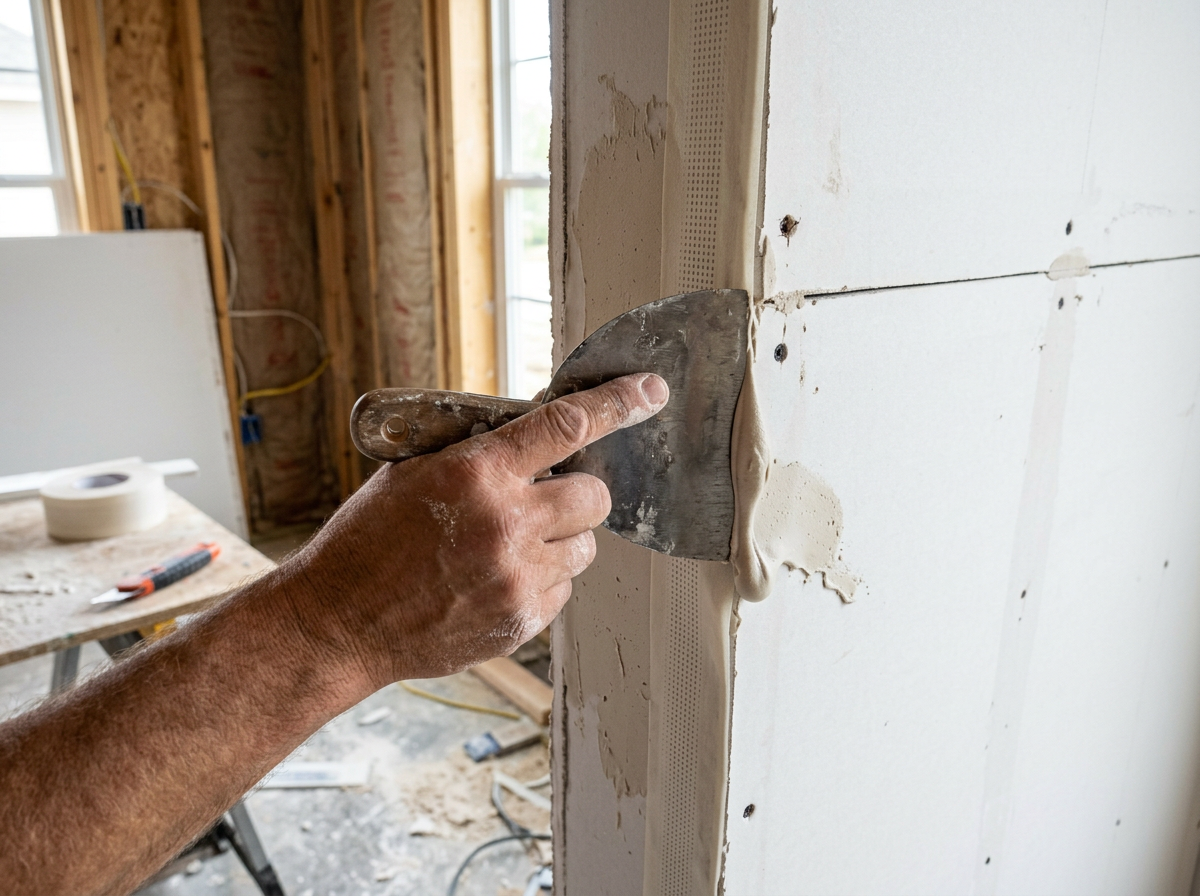
- V-Groove Pre-Widen and Debris Clearing: For repair work, use a utility blade to widen hairline fractures into a shallow V-notch. Remove loose gypsum core, dust, and peeling paper to ensure the compound bonds directly to solid substrate.
- Pre-Fill Deep Voids: Pack setting compound or elastomeric mud firmly into gaps wider than 1/8 inch before applying your primary taping coat.
- Embed Reinforcement Firmly: Center high-tensile tape directly over the joint line. Use professional taping tools from trusted manufacturers such as Hyde, USG Sheetrock Tools, Columbia Taping Tools, or Marshalltown to firmly bed the tape, wiping away excess compound without starving the joint.
- Feather Progressively with Broad Blades: After the bedding coat cures, step up knife sizes. Reviewing our complete guide to taping knives will help you choose the right 10-inch or 12-inch blade to feather sandable topcoats outward 8 to 12 inches on both sides.
- Prime with High-Solids Primer: Seal the completed, sanded repair with a high-solids drywall primer to equalize surface porosity before applying your topcoat.
Selecting the Best Flexible Joint Compound for High-Stress Seams
High-stress junctions require distinct strategies based on the framing geometry:
- Door and Window Headers: Framing headers flex under upper-floor loads. Never place a vertical drywall butt joint directly on a door or window jamb line. Stagger seams at least 8 inches away from openings, and bed high-tensile paper tape in an elastomeric compound or setting-type mud.
- Ceiling Truss Uplift: In cold climates, roof truss bottom chords expand and lift upward away from interior partition walls during winter. Fasten drywall panels 12 inches away from interior wall intersections on ceilings, and install specialized corner clips or expansion trims rather than hard-screwing panels tight to the top plate.
- Structural Transitions and Expansive Soils: Where large drywall planes meet structural steel or span across distinct foundation sections, install dedicated joint treatments and trims such as expansion control joints to isolate dynamic movement cleanly.
Paper Tape vs. Fiberglass Mesh on Shifting Substrates
A common question among installers is whether fiberglass mesh or paper tape offers better defense against movement cracks.
Standard self-adhesive fiberglass mesh tape stretches under tension. When framing shifts, standard mesh allows the brittle drying-type joint compound beneath it to micro-fracture before the fiberglass strands engage. Unless paired with a high-tensile, setting-type chemical compound, self-adhesive mesh tape is significantly more prone to hairline cracking on moving joints.
Cross-directional high-tensile paper tape provides superior tensile strength. When embedded firmly into an elastomeric compound like Magnum Flex-Joint or a strong ready-mix bed, paper tape creates a composite bridge that distributes shear stresses evenly across the joint.
Frequently Asked Questions About Flexible Joint Compound
Can flexible joint compound be sanded smoothly?
Truly elastomeric joint compounds, such as Magnum Flex-Joint, cannot be sanded. Their rubberized vinyl binders tear and peel under sandpaper friction. To achieve a smooth, paint-ready surface, apply flexible mud strictly as a tape-bedding and pre-fill layer, then coat and feather the outer layers with standard sandable joint compounds. Flexible spackling products like DAP Alex Flex, however, are specifically formulated with micro-fillers that allow dual-grit sanding once dry.
Is flexible compound suitable for skim coating entire walls?
Flexible joint compounds are not recommended for full-wall skim coating or Level 5 finishes. Their high binder content creates substantial trowel drag, and the inability to sand elastomeric formulas makes full-wall smoothing impractical. For skim coating and texture work, use lightweight or midweight ready-mixed compounds, which apply easily and sand evenly across large surface areas.
How does flexible mud compare to elastomeric caulk for recurring cracks?
While elastomeric caulk offers exceptional elongation and movement accommodation, it cannot be feathered to a razor-thin edge on a flat drywall plane. Caulk lines remain visible on smooth walls and tend to create shiny flashing marks under paint. Flexible joint compounds and spackles bridge cracks while maintaining a flat, level plane that blends invisibly into surrounding gypsum boards.
Conclusion
Preventing drywall cracks on dynamic, moving framing requires matching your finishing materials to the specific demands of the structure. For framing joints subject to seasonal expansion, an elastomeric vinyl compound like Magnum Flex-Joint provides an elastic bedding coat that absorbs movement. For isolated surface cracks, flexible spackling delivers a sandable patch that resists reappearing. When combined with high-tensile paper tape and professional application tools from Hyde, Columbia, Marshalltown, or USG Sheetrock Tools, your assemblies will maintain clean, durable surfaces year after year.
Once your flexible bedding coats are in place, choosing the right finishing mud matters just as much. Our breakdown of lightweight and quick-set compound options for pros covers the sandable topping products that pair best with elastomeric base layers.
Western Wholesale Supply has served residential and commercial contractors across Eastern Idaho and Western Wyoming since 1963. Whether you are stocking a jobsite in Idaho Falls, Pocatello, Jackson, Driggs, Rexburg, or Twin Falls, our team provides reliable, on-time delivery on top-tier drywall panels, Quietrock EZ Snap acoustical drywall, CertainTeed ceiling tiles and acoustical ceiling systems, steel framing, Durock cement board, and Grabber fasteners. Stop by one of our regional showrooms to explore professional joint compounds and get expert recommendations for your next build.
