

What Are Molly Fasteners? The Fast Answer for Contractors
Molly fasteners are expandable hollow-wall anchors designed to secure objects to drywall or plaster where no stud is present. Here is a quick reference to help you choose the right one:
| Anchor Size | Wall Thickness | Typical Pull-Out Load | Common Use |
|---|---|---|---|
| M4 | 3/8″ – 1/2″ | ~30 kg | Light shelving, hooks |
| M5 | 1/2″ – 5/8″ | ~45 kg | Mirrors, light fixtures |
| M6 | 1/2″ – 5/8″ | ~53 kg | TV mounts, cabinets |
| M8 | 5/8″+ | ~65 kg | Radiators, heavy shelving |
A molly bolt works by inserting an expandable metal sleeve into a drilled hole. Tightening the machine screw causes the sleeve to fold outward behind the wall, creating a wide, stable flange that distributes the load. First patented by George Frederick Croessant in 1934, the design remains one of the most reliable hollow-wall anchoring solutions available today.
At Western Wholesale Supply, we are third-generation building materials professionals who have sourced and supplied molly fasteners — including trusted brands like Brighton Best and Grabber — to contractors across residential and commercial projects throughout the region. In the sections below, we will walk through every detail you need to select, install, and safely load molly fasteners on your next job.
Understanding Molly Fasteners and How They Work
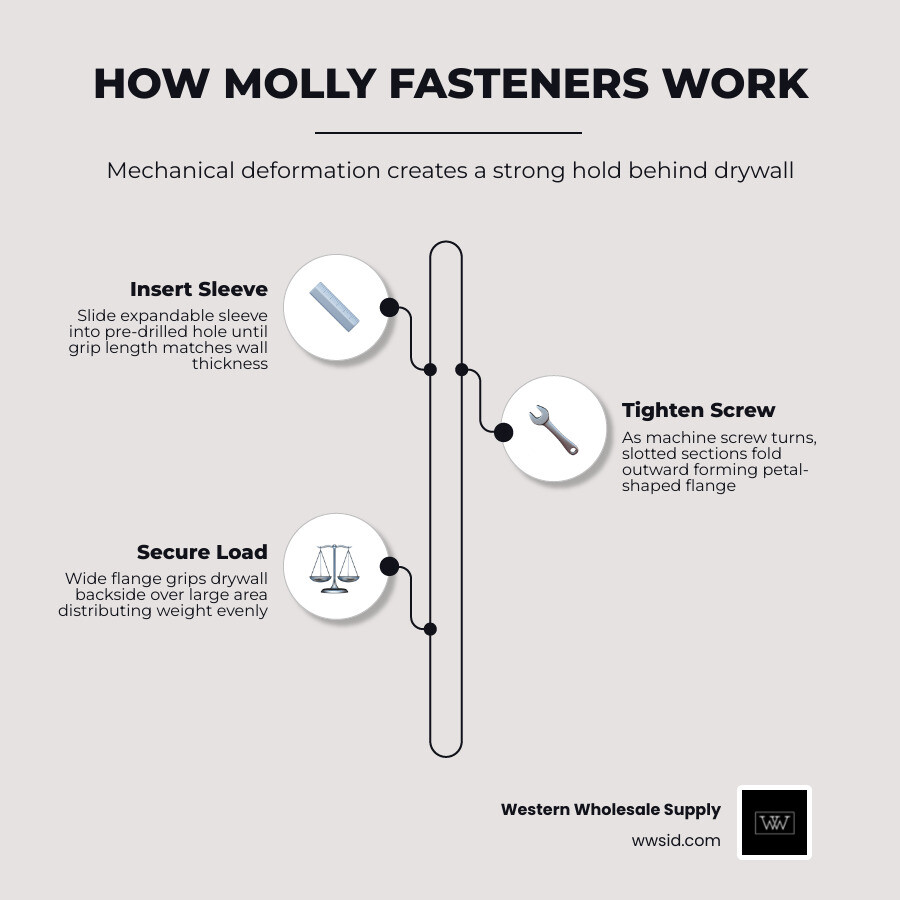
At its core, a molly fastener—often generically referred to as a “molly bolt”—is a mechanical expansion anchor. Unlike plastic plugs that rely on friction against the sides of a hole, a molly bolt creates a permanent, physical stop on the back side of the drywall. This process is known as mechanical deformation.
When you slide the expandable sleeve into a pre-drilled hole, the “grip length” (the uncollapsible portion of the sleeve) should match the thickness of your wall material. As the machine screw is tightened, the slotted sections of the sleeve fold outward, forming a petal-shaped flange. This flange grips the backside of the gypsum board over a wide area, which prevents the fastener from pulling through the relatively soft core of the drywall.
One of the greatest advantages of molly fasteners is that the sleeve remains permanently lodged in the wall once expanded. This allows you to remove and re-engage the machine screw as many times as needed—perfect for seasonal decorations or equipment that requires periodic maintenance. Because they are also effective in thin materials like hollow-core doors, they are sometimes called hollow-door anchors. For a deeper dive into how these fit into a broader project plan, check out The Pros Checklist for Commercial Construction Fasteners and Supplies.
Types and Sizes of Molly Bolts for Every Project
Choosing the right material and size is critical for both the longevity of the installation and the safety of the occupants. Most molly fasteners are manufactured from carbon steel for high tensile strength. To prevent corrosion—especially in the variable humidity of Eastern Idaho and Western Wyoming—these are typically finished with yellow zinc or clear zinc plating.
For those sourcing China OEM molly bolt With Carbon and Stainless Steel options, it is important to verify the grade. Most standard mollies are Grade 4.8 or 6.8 steel. At Western Wholesale Supply, we prioritize high-quality brands like Brighton Best and Grabber to ensure our contractors aren’t dealing with snapped heads or stripped threads mid-install.
| Size | Sleeve Length | Screw Length | Pull-Out Load (Approx.) |
|---|---|---|---|
| M4 (Small) | 20mm – 60mm | 28mm – 67mm | 30 kg (66 lbs) |
| M5 (Medium) | 37mm – 80mm | 45mm – 89mm | 45 kg (99 lbs) |
| M6 (Large) | 37mm – 80mm | 45mm – 88mm | 53 kg (116 lbs) |
| M8 (Heavy Duty) | 37mm – 80mm | 45mm – 90mm | 65 kg (143 lbs) |
Data based on High Quality Yellow Zinc Molly Bolts Drywall Hollow Wall Anchor specifications.
Selecting the Right Molly Fasteners for Drywall Thickness
The most common mistake we see is choosing a molly with the wrong “grip range.” If the sleeve is too long, the flange won’t pull tight against the back of the wall, leaving the fixture wobbly. If it’s too short, it won’t reach the back of the wall to expand.
- 3/8″ Thickness: Common in older residential repairs or specific ceiling applications. Use “short” mollies.
- 1/2″ Thickness: The industry standard for most interior walls in Idaho Falls and Pocatello.
- 5/8″ Thickness: Typically found in commercial builds or fire-rated assemblies. Requires “long” grip mollies.
For more information on matching fasteners to specific regional building standards, refer to our Idaho Fastener Handbook from Roofing Nails to Masonry Anchors.
Heavy-Duty Molly Fasteners for Commercial Use
In commercial settings—such as mounting heavy signage or handrails in a Rexburg medical facility—standard mollies might not cut it. Heavy-duty versions often utilize a zinc alloy or stainless steel construction for superior shear strength. These are designed to handle higher “pull-out” loads, which is the force required to rip the anchor straight through the wall.

Step-by-Step Installation and Removal Guide
Installing molly fasteners is a straightforward process, but it requires precision. Unlike self-drilling anchors, you must pre-drill the hole.
- Drill the Hole: Use a drill bit that matches the diameter of the molly sleeve exactly. Do not “wiggle” the bit; a hole that is too large will allow the anchor to spin when you try to tighten it.
- Insert the Anchor: Tap the anchor into the hole with a hammer until the teeth on the underside of the head (the flange) bite into the drywall. These teeth prevent the sleeve from spinning.
- Expand the Sleeve:
- The Screw Method: Tighten the machine screw with a screwdriver. You will feel resistance as the wings begin to fold. Keep turning until the screw is tight.
- The Setting Tool Method: For large jobs, use a professional molly setting tool. This tool grips the screw head and pulls it forward, expanding the sleeve instantly without the wrist fatigue of manual turning.
- Mount the Fixture: Back the screw out entirely. The sleeve stays in the wall. Place your bracket or fixture over the hole and re-insert the screw.
If you ever need to remove one, don’t just pull it out—you’ll take a chunk of drywall with it. Instead, back the screw out slightly, hit the head with a hammer to push the expanded “petals” back into a straighter position, and then use pliers to pull the sleeve out. Or, simply tap the flange into the wall and patch over it with joint compound. For more tips on finishing touches like this, see The Little Things That Hold It All Together Hangers Clips and Tape for Your Grid Ceiling.
Load Ratings and Safety Considerations
Safety is paramount when hanging anything over people’s heads. While an M8 molly might be rated for a 65kg (143lb) pull-out load, that is a “static load” rating in perfect conditions. In the real world, we always recommend a safety factor. If you are hanging a 50-pound TV, don’t rely on a single anchor rated for 50 pounds. Use multiple molly fasteners to distribute the stress.
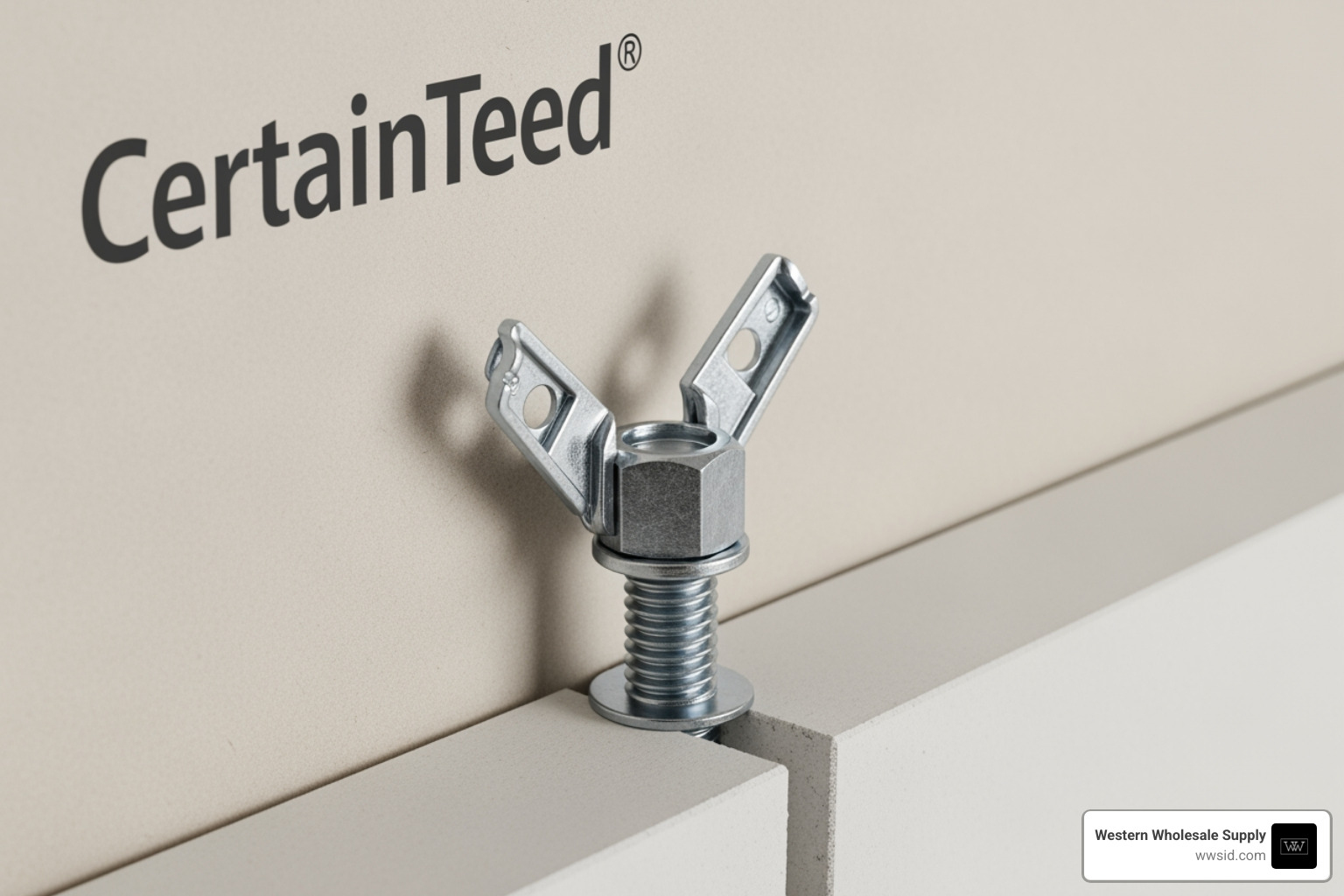
The way a molly distributes weight is its “superpower.” Because the expanded wings create a large surface area behind the wall, they are far less likely to fail than plastic expansion anchors, which can easily slide out of drywall.
Comparing Molly Fasteners to Toggle Bolts
We often get asked: “Mollies or Toggles?” Here is the breakdown:
- Stress Distribution: Both are excellent for hollow walls. However, molly fasteners offer slightly more even stress distribution because of the multi-petal sleeve.
- Reusability: This is where the molly wins. If you remove the bolt from a toggle bolt, the “wings” fall into the wall cavity, and you have to buy a new one. With a molly, the sleeve stays put.
- Installation: Toggle bolts require a much larger hole to be drilled to accommodate the folded wings. Mollies keep the hole size to a minimum.
For a deeper comparison, you can look at Molly Bolts vs Toggle Bolts – Which Should I Use?
Frequently Asked Questions about Molly Bolts
How much weight can a molly bolt hold in 1/2″ drywall?
Generally, a standard medium-sized molly bolt (M5) can safely hold about 50 pounds of vertical (shear) weight in 1/2″ drywall. However, for items that pull away from the wall (tension), that rating drops. Always check the specific packaging for the Grabber or Brighton Best fasteners you are using.
Can you reuse a molly fastener after removing the screw?
Yes! The metal sleeve remains expanded behind the drywall even after the screw is removed. This makes them ideal for mounting things that might need to be moved or replaced, like shelving units or bathroom hardware.
What is the best way to remove a molly bolt without damaging the wall?
The cleanest method is to use a drill bit slightly larger than the center hole to drill off the head of the flange. Once the head is gone, the rest of the sleeve can be pushed into the wall cavity, leaving a small, clean hole that is easy to patch.
Conclusion
Whether you are a DIY enthusiast in Jackson, WY, or a commercial contractor in Twin Falls, understanding the nuances of molly fasteners ensures your fixtures stay exactly where you put them. These anchors provide a permanent, reusable, and high-strength solution for the unique challenges of hollow-wall construction.
At Western Wholesale Supply, we’ve spent over 60 years providing the best materials to South East Idaho and Western Wyoming. As a veteran-owned, third-generation family business, we pride ourselves on reliable delivery and expert advice. If you need to stock up on high-quality fasteners for your next project, Find the right molly fasteners for your next project at one of our local branches. From Idaho Falls to Burley, we have the supplies and the expertise to help you get the job done right.
