

The Small Hardware That Keeps Every Suspended Ceiling Standing
Ceiling grid hangers are the fasteners, clips, wires, and hooks that suspend a drop ceiling grid from the structural ceiling above. Here’s a quick overview of the most common types and what they do:
| Hanger Type | Best For | Typical Load Capacity |
|---|---|---|
| Hanger wire (12-ga.) | Suspending main tees from structure | Carries ~16 sq ft of ceiling weight |
| Twist-lock clips | Attaching signs or displays to 1″ grid | Up to 10 lbs |
| Snap-on clips | Quick-attach signage on grid tees | Up to 10 lbs |
| Magnetic hooks | Lightweight hanging on metal grids | 9-18 lbs |
| J-hooks (aluminum or plastic) | General hanging on standard 1″ grids | Light to medium duty |
| Purlin/beam hangers | Open beam or solid structure attachment | Varies by gauge and model |
Most contractors don’t think twice about these parts until something goes wrong. A ceiling that sags, a sign that falls, or a grid that shifts under load — those problems almost always trace back to the wrong hanger for the job.
Drop ceilings look simple from below, but the support system above the tiles involves specific hardware matched to ceiling weight, grid type, and load requirements. Getting that match right matters whether you’re installing acoustical tiles for a commercial office or hanging HVAC components in a warehouse.
Western Wholesale Supply is a team of building materials professionals with hands-on experience supplying contractors and builders with ceiling grid hangers and the full range of suspended ceiling components. In the sections below, we’ll walk you through everything you need to choose, install, and maintain the right hangers for your project.
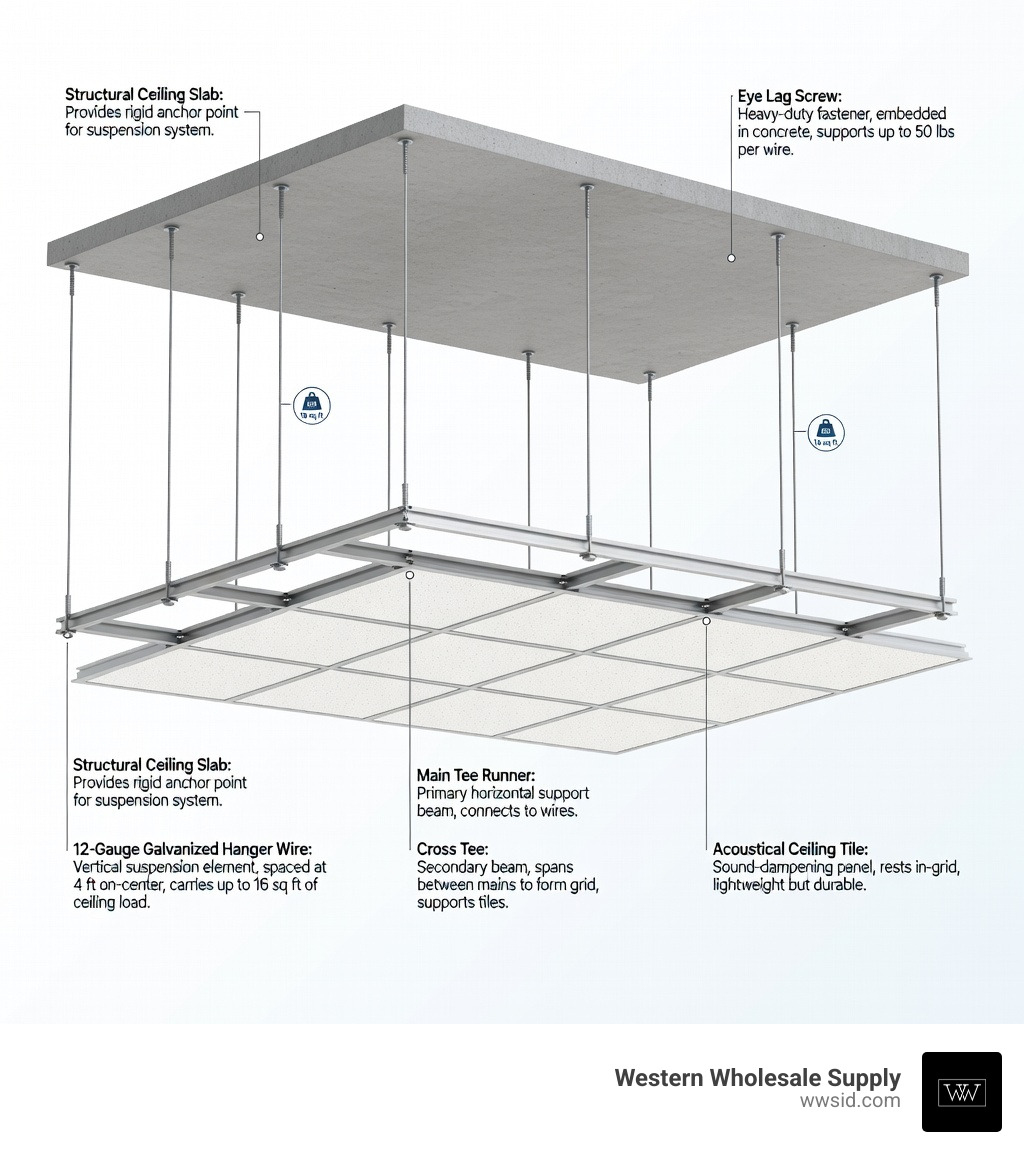
Ceiling grid hangers terms to know:
Understanding the Different Types of Ceiling Grid Hangers
When we talk about Ceiling grid hangers, we are usually referring to two distinct groups: the heavy-duty hardware that holds the grid to the building structure, and the lighter-duty accessories used to hang things from that grid once it is installed. At Western Wholesale Supply, we’ve seen everything from simple retail signs to complex HVAC ductwork suspended using these components.
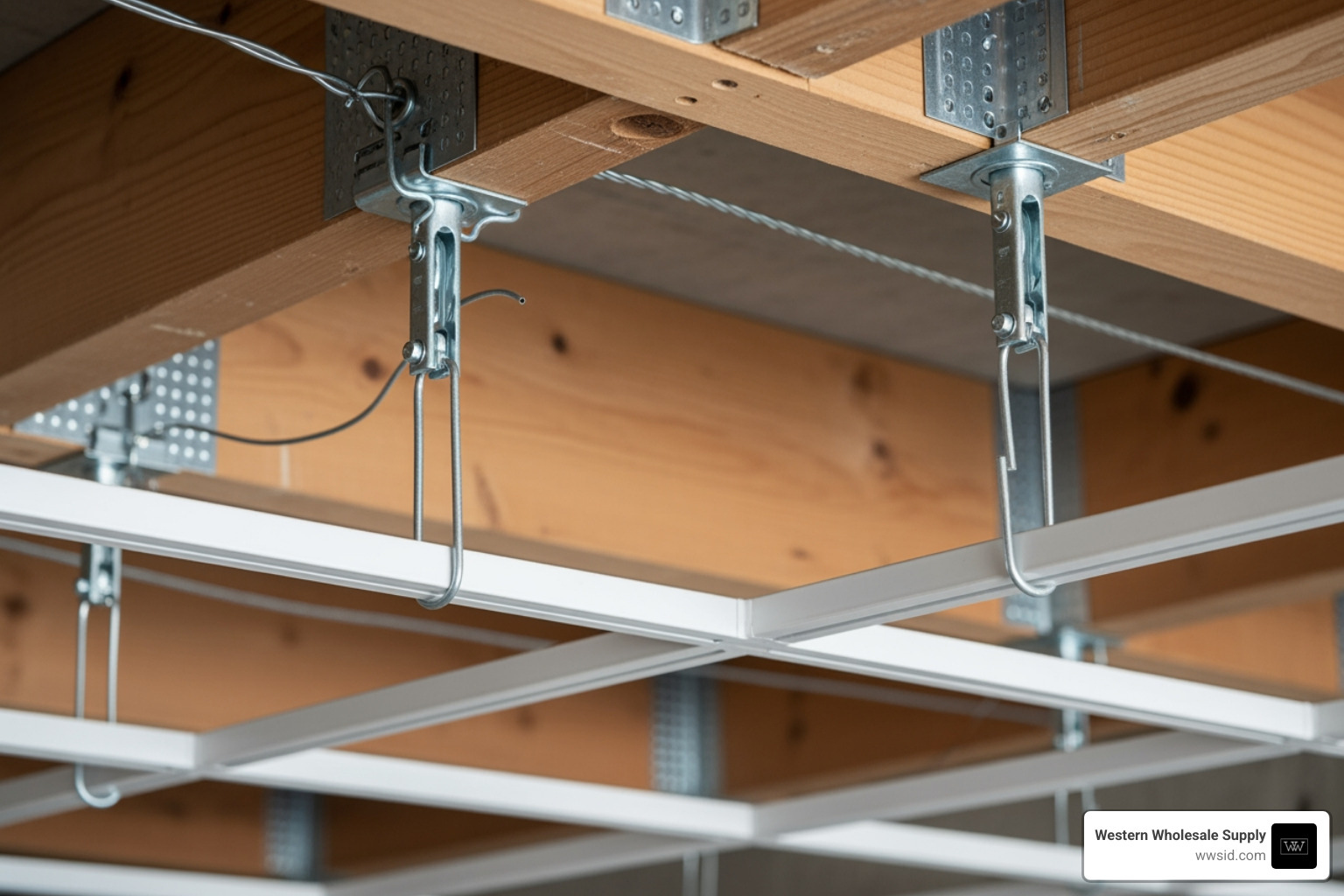
The variety can be overwhelming, but most hangers fall into these categories:
- Twist-Lock Clips: These are the bread and butter of the retail and office world. They are designed to sit across a standard 1-inch ceiling grid. You simply place them over the tee and twist. The physical lock ensures they won’t vibrate off.
- Snap-On Clips: These are even faster to install. They “snap” onto the flange of the grid. While incredibly convenient, they generally have a strictly defined weight limit (often around 10 lbs).
- J-Hooks: Available in aluminum or plastic, these are shaped like the letter “J” and are perfect for looping cords or chains through.
- Magnetic Hooks: These are a lifesaver for temporary displays. Since most ceiling grids are made of steel, these hooks provide a strong vertical pull force without needing any mechanical attachment.
- Cable Grippers and Adjusters: Products like the UrbanTrapeze allow for fine-tuning the height of a suspended object without needing to tie knots or use crimping tools. They automatically grip the wire, making them ideal for leveling heavy signs or lighting fixtures.
For a deeper look at the hardware used to anchor the entire system to the building, check out this guide on Ceiling Brackets & Hangers For Suspended Ceilings.
Selecting Ceiling Grid Hangers Based on Load Capacity
Choosing a hanger is a bit like choosing a truck; you wouldn’t use a half-ton pickup to haul a skyscraper’s worth of steel. Load capacity is the most critical safety factor in any installation.
In our experience serving contractors from Idaho Falls to Jackson, we always emphasize checking the “vertical pull force.” For example:
- Standard Magnetic Hooks: A small magnetic hook might offer 9 lbs of pull force, while a heavy-duty version can handle up to 18 lbs.
- Snap-On Grid Clips: These are typically rated for a maximum of 10 lbs. Exceeding this can cause the clip to fail or, worse, deform the grid itself.
- Hanger Wire: The 12-gauge wire we supply is the “heavy lifter,” designed to carry the weight of the entire ceiling system, which can range from 2 to 13 pounds per square foot (PSF).
If you are planning a project that involves heavy acoustical treatments, you can find more info about acoustical solutions to ensure your support system is up to the task.
Specialized Hangers for Open Beams and Solid Structures
Not every ceiling is a standard drop grid. In many warehouses in the Intermountain West, we deal with open-web joists or solid wood beams.
- Purlin Clips: These attach to the thin metal flanges of Z-purlins or C-purlins common in metal buildings.
- Beam Hangers: These “bite” onto the edge of a structural I-beam.
- Split Beam Hooks: These are designed to wrap around or bridge across beams to provide a centered hanging point.
- Self-Locking Cable Adjusters: These are perfect for “high-bay” environments where you need to suspend items 20 feet or more. They eliminate the need for manual wire tying at heights.
Material Selection and Structural Requirements
The materials used in Ceiling grid hangers must be durable enough to withstand the test of time and environmental factors like humidity. Most high-quality hangers are made from galvanized steel, which provides excellent corrosion resistance—a must-have for the varying climates we see in Eastern Idaho and Western Wyoming.
When you are installing a system using CertainTeed tiles, you have to account for the weight of the tiles themselves plus the weight of the grid. A typical acoustical ceiling weighs between 2 and 4 PSF. However, if you’re installing a gypsum board ceiling, that weight can jump to 10 PSF or more.
For technical specifications on how these weights impact your hardware choices, refer to the Design Data for Suspended Ceilings.
The Importance of Wire Gauge and Spacing
In suspended ceilings, the #12 gauge galvanized hanger wire is the industry standard. Why? Because it strikes the perfect balance between flexibility (so you can tie it off) and tensile strength.
Standard practice dictates that hanger wires should be installed 4 feet on center. This means each wire is responsible for supporting approximately 16 square feet of the ceiling’s total weight. If you’re working with heavier materials, like double-layered gypsum, you might need to decrease that spacing or move to a heavier #8 or #9 gauge wire.
To help plan your next job, we recommend using the USG Ceiling Material Estimator to get your quantities exactly right.
Installation Guide: Tools and Techniques
Installing Ceiling grid hangers doesn’t have to be a headache if you have the right tools. In fact, for many signage applications, you don’t even need a ladder.
Essential tools for the job include:
- Telescoping Poles: These can extend up to 18 feet, allowing you to install twist-lock or magnetic clips from the safety of the floor.
- Swaging Tools: If you’re using aircraft cable for heavy loads, a swaging or crimping tool is necessary to secure the metal ferrules.
- Eye Lag Screws: These are the anchors that go into your wood or steel joists to give the hanger wire something to hold onto.
For a broader look at the process, see our guide on Acoustic Ceiling Installation: A DIYer’s Dream Come True.
Step-by-Step Installation of Ceiling Grid Hangers
Whether you’re a seasoned pro or a first-time DIYer, following these steps ensures a secure fit:
- Identify the Grid Type: Most commercial grids are 1-inch wide. Ensure your clip or hook is designed for this specific dimension.
- Attach the Anchor: For the main grid, install eye lag screws into the structural members above.
- Drop the Wire: Thread your 12-gauge wire through the eye lag and wrap it around itself at least three times. This is called “pre-tying” and is a major time-saver.
- Level the Grid: Use a laser level to ensure all your main tees are at the same height before final wire tying.
- Add Accessories: Once the grid is up and the CertainTeed tiles are in, you can add your hanging accessories.
- For Twist-On clips: Align the clip with the grid, push up, and rotate 90 degrees.
- For Snap-On clips: Simply line it up with the bottom flange and press until you hear the “click.”
For more details on the tiles that go into these grids, check out more info about grid ceiling tiles.
Maintenance and Damage-Free Removal
One of the best things about modern Ceiling grid hangers is that many are designed to be reusable. If you’re changing a retail display or moving an office partition, you don’t want to leave the grid looking like a pincushion.
- Avoid Pliers: Whenever possible, use your hands or specialized removal tools. Pliers can scratch the paint off the grid, leading to rust over time.
- Check for Fatigue: If a metal clip has been bent and unbent multiple times, discard it. Metal fatigue can lead to sudden failure.
- Clean the Grid: Before attaching magnetic hooks, wipe the grid with a dry cloth. Dust and oils can reduce the “grip” of the magnet.
Maintaining a clean, functional grid also helps with sound performance. You can find more info about sound absorbing ceilings here.
Beyond Signage: Commercial and Industrial Applications
While we often see Ceiling grid hangers used for signs, their utility goes much further. In commercial builds across the Rexburg and Twin Falls areas, we see these components used for:
- Lighting Fixtures: Specialized T-grid box hangers allow electricians to secure heavy light boxes directly to the grid.
- HVAC Ductwork: Using heavy-duty cable grippers, HVAC contractors can suspend ducting with precision leveling.
- Warehouse Insulation: In large metal buildings, hanger wires and pins are used to hold high-R-value insulation blankets against the roof.
In environments where noise is a concern, we often recommend pairing these systems with Quietrock EZ Snap for superior sound dampening. To learn more about keeping your building safe, read about Building Safety from the Top Down: Fire Rated Ceiling Solutions.
Seismic and Code Compliance in Commercial Settings
In our region, particularly near the Teton range, seismic considerations are a big deal. Building codes often require “seismic splay clips” and “compression posts” to ensure the ceiling doesn’t collapse during an earthquake.
- Seismic Splay Clips: These allow hanger wires to be installed at an angle, providing lateral stability.
- Independent Support: Code often requires that certain items (like heavy light fixtures) have their own dedicated hanger wires that go straight to the structure, rather than relying solely on the grid.
Staying compliant isn’t just about safety; it’s about passing inspection. You can find more info about commercial interior trends to see how modern designs incorporate these safety features.
Frequently Asked Questions about Ceiling Grid Accessories
How much weight can a standard ceiling grid clip hold?
Most standard snap-on or twist-lock clips are rated for 10 lbs. If you need to hang something heavier, like a 20-lb decorative light, you should use a heavy-duty magnetic hook (rated up to 18 lbs) or, better yet, a dedicated hanger wire tied directly to the building’s structure.
Do I need a ladder to install sign hangers on a drop ceiling?
No! For most lightweight applications, you can use a telescoping installation pole. These poles have specialized heads that hold the clip or hook, allowing you to reach up and twist or snap it into place while standing firmly on the ground.
What is the difference between 12-gauge and 18-gauge hanger wire?
The gauge number refers to the thickness; the smaller the number, the thicker the wire. 12-gauge wire is the standard for suspending the actual ceiling grid because it can handle the heavy load of tiles and grid. 18-gauge wire is much thinner and is typically used for very light-duty tasks or for tying off small accessories.
Conclusion
At Western Wholesale Supply, we know that a project is only as strong as its smallest components. Whether you’re looking for a handful of magnetic hooks for a shop in Jackson or a truckload of 12-gauge hanger wire for a hospital in Idaho Falls, we have the expertise to get you the right gear.
Since 1963, our family-owned business has been the go-to source for quality building materials across Eastern Idaho and Western Wyoming. We pride ourselves on reliable, on-time delivery and the kind of customer service you only get from people who truly know the trade.
Ready to start your next project? Discover our full range of Acoustical Ceilings and let us help you hold it all together.
