

Choose a 24 Inch Drywall Skimming Blade for Fast, Smooth Finishing
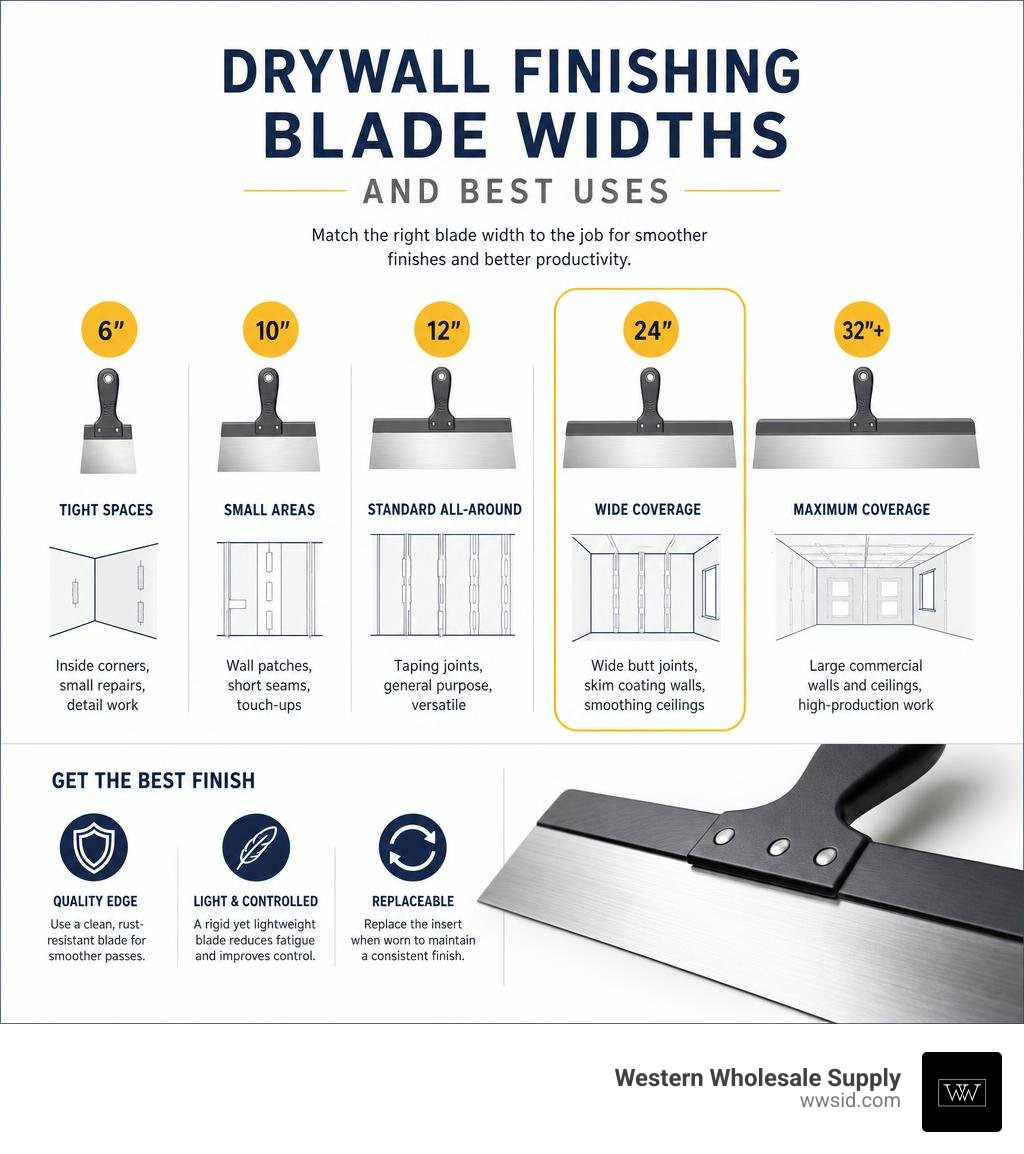
A 24 inch drywall skimming blade is the practical middle ground for finishing wide butt joints, skim coating walls, and smoothing ceiling seams. It covers far more surface than a standard drywall knife while remaining easier to control than extra-wide 32- or 48-inch blades. Choose one with a rust-resistant stainless steel insert, a rigid but lightweight housing, and a pole-ready handle system if ceilings are part of the job.
Unlike a traditional drywall knife or trowel, a skimming blade uses a long, slightly flexible edge to spread joint compound in broad, even passes. That helps feather edges, reduce lap marks, and cut down on sanding. For most residential remodels and medium wall sections, 24 inches is large enough to improve production without becoming awkward in tight spaces.
The best option depends on how you work. Aluminum housings generally offer more rigidity, while composite bodies can reduce weight. Replaceable inserts also matter: when an edge is nicked or worn, you can restore finish quality without replacing the whole tool.
At Western Wholesale Supply, our building-materials professionals work with contractors and builders across Idaho and Wyoming on their drywall supply needs. Our experience with the 24 inch drywall skimming blade comes from helping crews select dependable finishing tools that support efficient, consistent work on residential and commercial jobs.
Related content about 24 inch drywall skimming blade:
Why the 24 Inch Drywall Skimming Blade Is the Ultimate Sweet Spot
Drywall finishing is an art of managing transitions. Every time you lift a taping knife off the wall, you risk leaving a ridge, a chatter mark, or a high spot that demands extra elbow grease with a sanding sponge later. When you step up to a 24-inch profile, the entire dynamic of mudding changes.
While smaller blades excel at detail work—as detailed in The Complete Guide to 12 Inch Taping Knives—a 24-inch blade spans the entire width of standard drywall butt joint crowns in a single, continuous sweep. By bridging the tapered and non-tapered edges simultaneously, the blade eliminates the repetitive center-lap ridges common to multi-pass knife work. You get broad wall coverage, reduced wrist torque, and a flat, consistent plane across your sheetrock.
Traditional Drywall Knives vs. Wide Skimming Blades
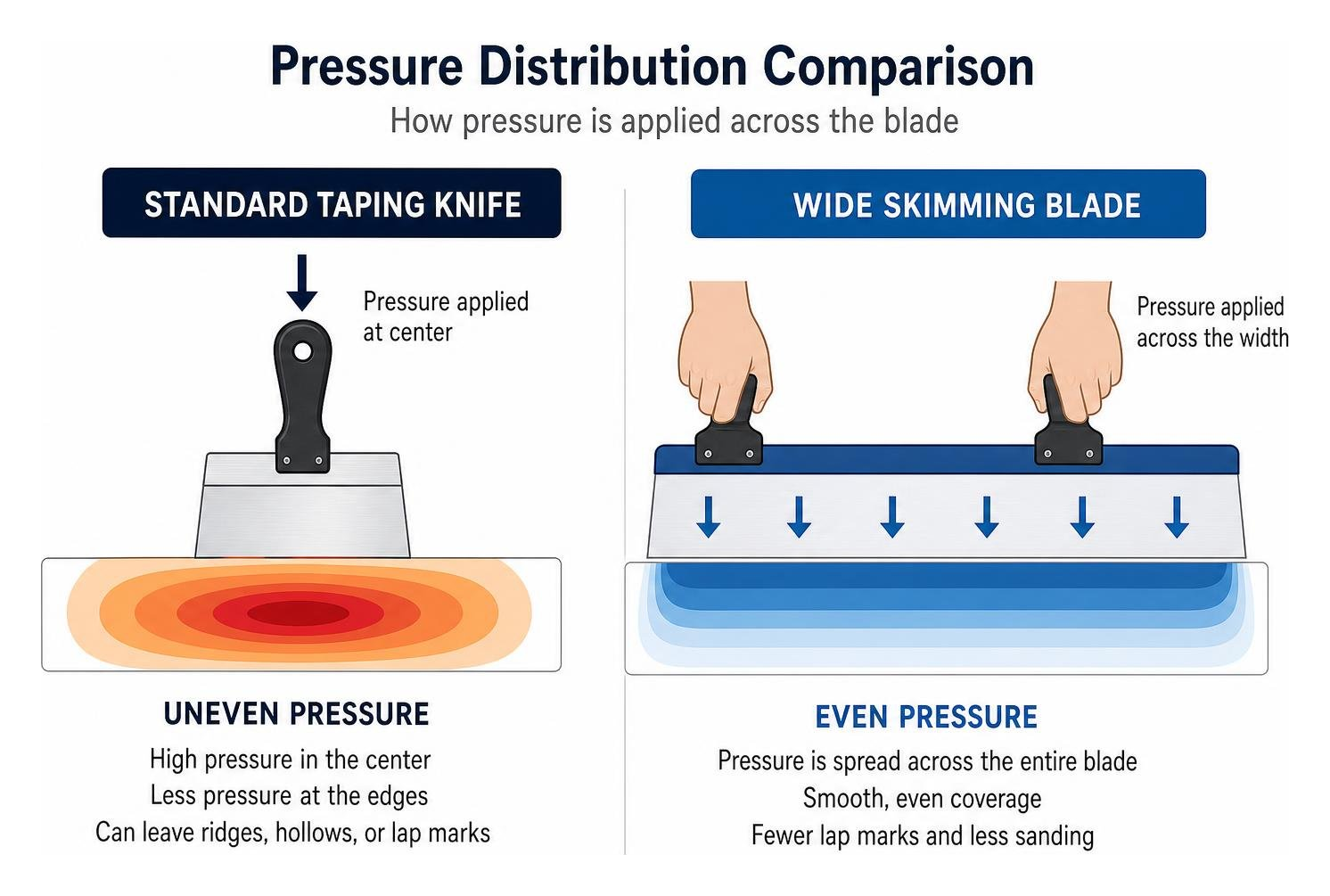
Traditional drywall knives feature stiff steel blades mounted to centered wooden or composite handles. Because all the force comes from a single hand pressing down at the center of a 10- or 12-inch blade, pressure tends to concentrate unevenly. Finishers often end up with hollow centers or thick edges that require intense feathering. Drywall trowels offer similar rigidity, but manipulating a flat metal rectangle over hundreds of square feet of ceiling lid can cause serious forearm and shoulder fatigue.
In contrast, wide skimming blades rely on a broad grip chassis. Your hands distribute pressure evenly across the entire back of the housing. The blade itself is thinner and more flexible, floating lightly over wet mud rather than plowing through it. Reviewing standard Drywall Tools 101 highlights that skimming tools do not replace setting or bedding knives; instead, they refine the final finishing and skim-coat phases.
Ideal Project Sizes and Wall Coverage

A 24-inch blade hits the functional midpoint across a variety of drywall tasks:
- Level 5 Skim Coats: When applying a full skim coat over fresh gypsum board to eliminate surface texture differences between paper and joint compound, a 24-inch pass provides rapid progress without feeling unmanageable.
- Butt Joints: Standard butt seams require feathering out 18 to 24 inches to hide the board buildup. This tool covers the entire span in one pull.
- Ceiling Lids: Smoothing wide overhead seams from the floor becomes practical when you pair a 24-inch blade with an extension handle, eliminating the need to move scaffolds continuously.
- Texture Knockdowns and Flattening: Renovating rough skip-trowel walls or orange peel textures is substantially faster because the wide profile shaves down ridges consistently.
Key Features and Specifications to Compare Before Buying
Before selecting a blade, evaluating housing rigidity, steel thickness, and ease of maintenance will ensure you get maximum value and longevity. Reviewing The Definitive Guide to Drywall Finishing Supplies can help you plan your complete kit alongside your compound choices.
| Feature / Spec | Aluminum Housing | Composite Body Housing | 0.3mm Blade Insert | 0.5mm Blade Insert |
|---|---|---|---|---|
| Material Construction | Extruded Aircraft-Grade Aluminum | High-Density Molded Polymer | Precision European / German Stainless | Heavy-Duty European Stainless |
| Primary Strength | Superior rigidity across wide spans | Ultralight; reduced user fatigue | Exceptional flex sensitivity | Enhanced stiffness for thick mud |
| Best Application | Flat joints, ceilings, heavy daily use | Long hours overhead, DIY remodels | Final skim coats, Level 5 finishes | Knockdown textures, heavy fills |
| Maintenance | Washable metal spine; durable track | Rust-proof body; snap-fit end caps | Swap insert when nicked | Swap insert when nicked |
Anatomy of a 24 Inch Drywall Skimming Blade: Composite vs. Aluminum Housing
The backbone of the tool holds the blade true. An extruded aircraft-grade aluminum housing delivers maximum structural rigidity, ensuring that even if you apply pressure near one side of the handle, the opposite end remains flat against the wall. This structural firmness prevents flex marks across large spans.
Composite bodies, on the other hand, focus on weight reduction. Molded polymer spines absorb impact and flex slightly more than aluminum, making them gentle on tired wrists during full-room residential renovations. Both designs feature removable end caps—often molded from glass-filled nylon—that protect the blade corners from snagging and hold the replaceable inserts securely in place.
Blade Thickness and Material: 0.3mm vs. 0.5mm Stainless Steel
Blade thickness dictates flex response and touch sensitivity:
- 0.3mm Stainless Steel: Often fabricated from German or high-grade European stainless steel, these ultra-thin inserts offer superior flex sensitivity. They conform lightly to the mud layer, leaving virtually no trail lines and significantly cutting down on final sanding. They are ideal for high-end Level 5 finishes where a paper-thin wipe is required.
- 0.5mm Stainless Steel: A slightly heavier gauge that provides extra stiffness. If you are wiping down heavy, thick-bodied all-purpose mud, pulling knockdown textures, or floating deep patches, a 0.5mm blade resists deflection and gives you firmer control.
Both options use rust-resistant stainless alloys that maintain a clean wiping edge when rinsed and dried after each shift.
Replaceable Blade Inserts and Modular Maintenance
Jobsite realities mean blades occasionally get dropped or catch on exposed fasteners. With traditional finishing knives, a dinged edge means retiring the tool or spending hours filing it down. Modern skimming tools use a modular track system. By popping off the composite end cap, you can slide out the damaged insert and slide in a fresh 0.3mm or 0.5mm replacement blade in seconds. This modular design extends the tool’s lifespan and protects your initial investment.
Essential Accessories and Application Techniques
Pairing your skimming blade with the right setup improves speed and consistency. Matching your tool to the proper mud viscosity—as discussed in How to Choose the Right Drywall Compound Without Getting Stuck in the Mud—is critical to achieving a smooth, effortless glide.
How to Use a 24 Inch Drywall Skimming Blade for Level 5 Finishes
Achieving an unblemished, paint-ready Level 5 surface—the highest drywall finish standard defined by the Gypsum Association—involves a straightforward workflow:
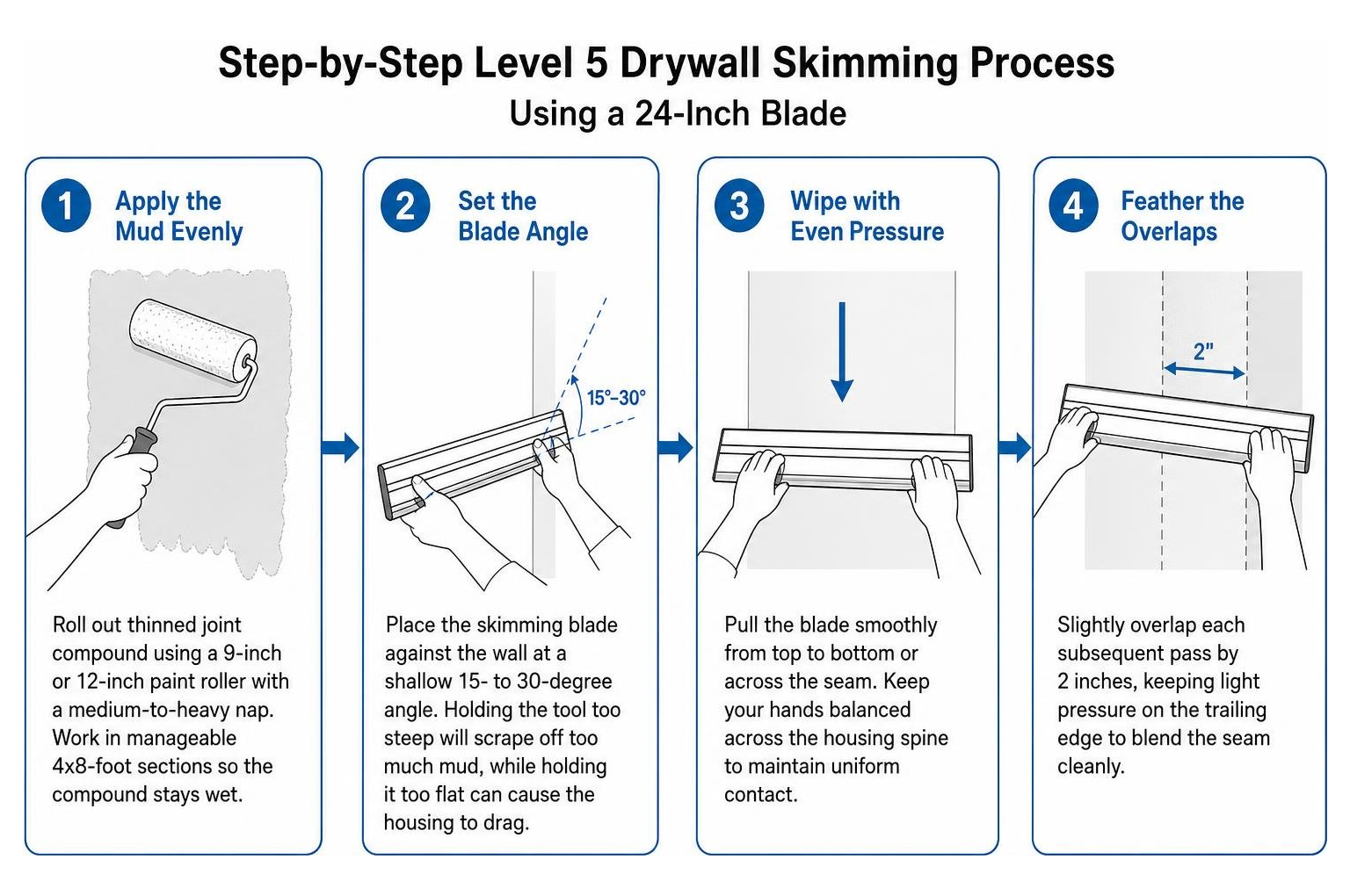
- Apply the Mud Evenly: Roll out thinned joint compound using a 9-inch or 12-inch paint roller with a medium-to-heavy nap. Work in manageable 4×8-foot sections so the compound stays wet.
- Set the Blade Angle: Place the skimming blade against the wall at a shallow 15- to 30-degree angle. Holding the tool too steep will scrape off too much mud, while holding it too flat can cause the housing to drag.
- Wipe with Even Pressure: Pull the blade smoothly from top to bottom or across the seam. Keep your hands balanced across the housing spine to maintain uniform contact.
- Feather the Overlaps: Slightly overlap each subsequent pass by 2 inches, keeping light pressure on the trailing edge to blend the seam cleanly.
Extension Poles and Handle Adapters for Ceilings
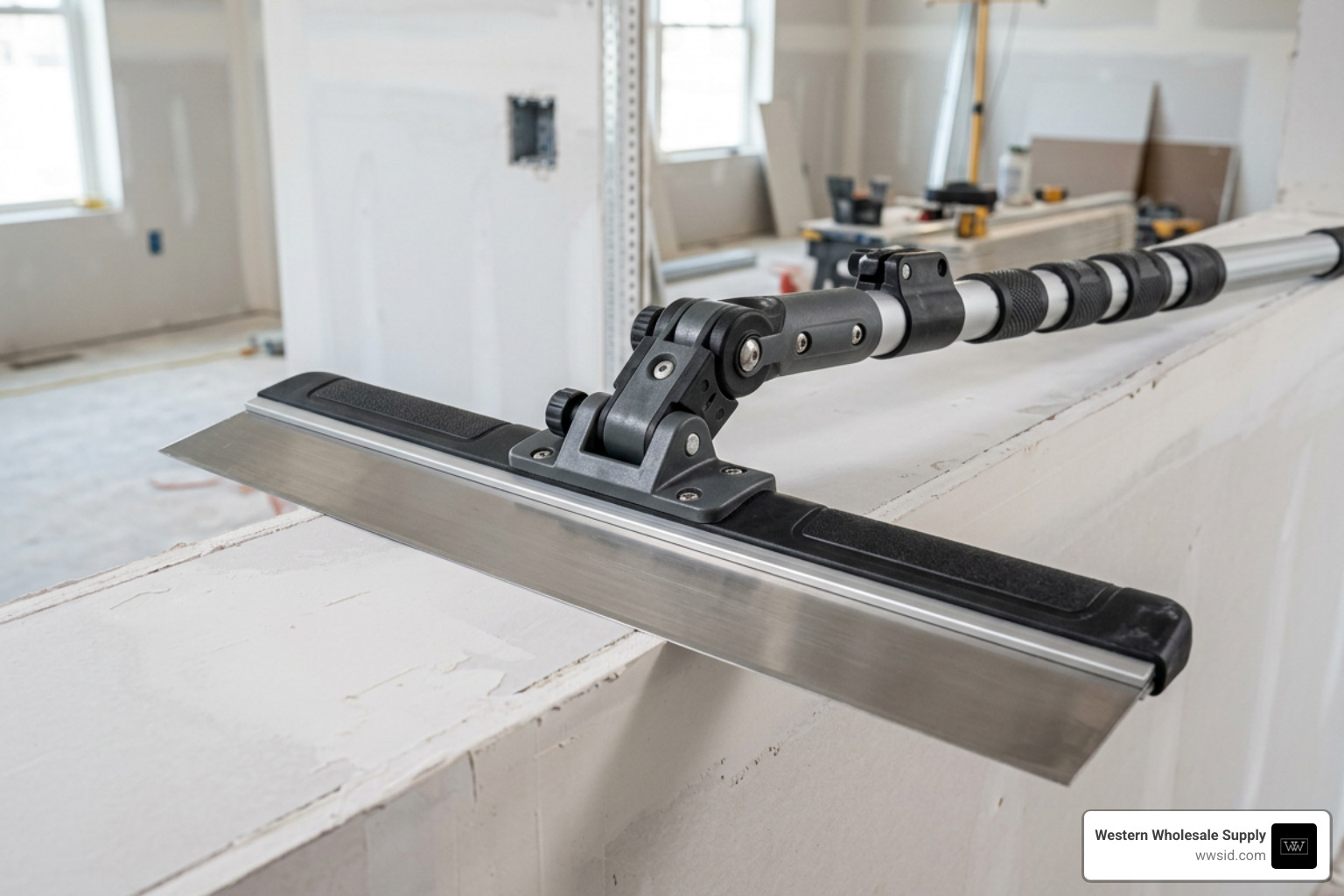
Working overhead on ceiling lids can quickly fatigue your back and arms. Skimming blade handle adapters clamp or snap directly onto the spine of the housing, allowing you to attach standard threaded or quick-release telescopic extension poles.
These adapters feature adjustable angle locks, enabling you to dial in the exact pitch needed to wipe ceilings clean while standing securely on the floor. This setup reduces the time spent climbing ladders, helps keep your shoulders relaxed, and makes long commercial spans much easier to finish.
Frequently Asked Questions About Drywall Skimming Blades
Is a 24-inch skimming blade suitable for DIY beginners?
Yes. Many homeowners and DIY builders find a 24-inch skimming blade more forgiving than a traditional 10- or 12-inch hand knife. Because the wide spine spreads hand pressure over a broader area, it naturally reduces the gouging and edge-tracking marks common with standard knives. It creates flat transitions across butt joints with far less wrist manipulation.
How do you replace worn blade inserts on a skimming tool?
To swap an insert:
- Clean any dried mud from the tool’s edges.
- Gently pry or slide off one of the protective end caps.
- Slide the old stainless steel blade out along the integrated channel.
- Slide the new precision insert into the track, ensuring it seats evenly.
- Snap the end cap back into position to lock the assembly.
Can you use a 24-inch skimming blade on ceiling joints?
Yes. When paired with an angle-adjustable handle adapter and a telescopic pole, a 24-inch blade is one of the most efficient tools for finishing ceiling joints. It spans wide butt joints and factory recesses in continuous strokes, allowing you to smooth overhead drywall without moving scaffolding or step ladders after every pass.
Conclusion
Upgrading your drywall finishing workflow with a 24-inch skimming tool delivers smoother surfaces, faster coverage, and less time spent sanding. Whether you are wiping down expansive butt joints on standard wallboard, skimming full walls to a Level 5 spec, or working overhead with an extension pole, the 24-inch profile provides the right mix of span and control.
At Western Wholesale Supply, we support contractors, drywall professionals, and home builders with the dependable tools, drywall supplies, and commercial building materials needed to get the job done right. Explore our comprehensive inventory of high-grade drywall tools and accessories or stop by our showrooms across Eastern Idaho and Western Wyoming to get expert guidance on your next project.
