

Why Black Ceiling Tiles Are Transforming Modern Interior Design
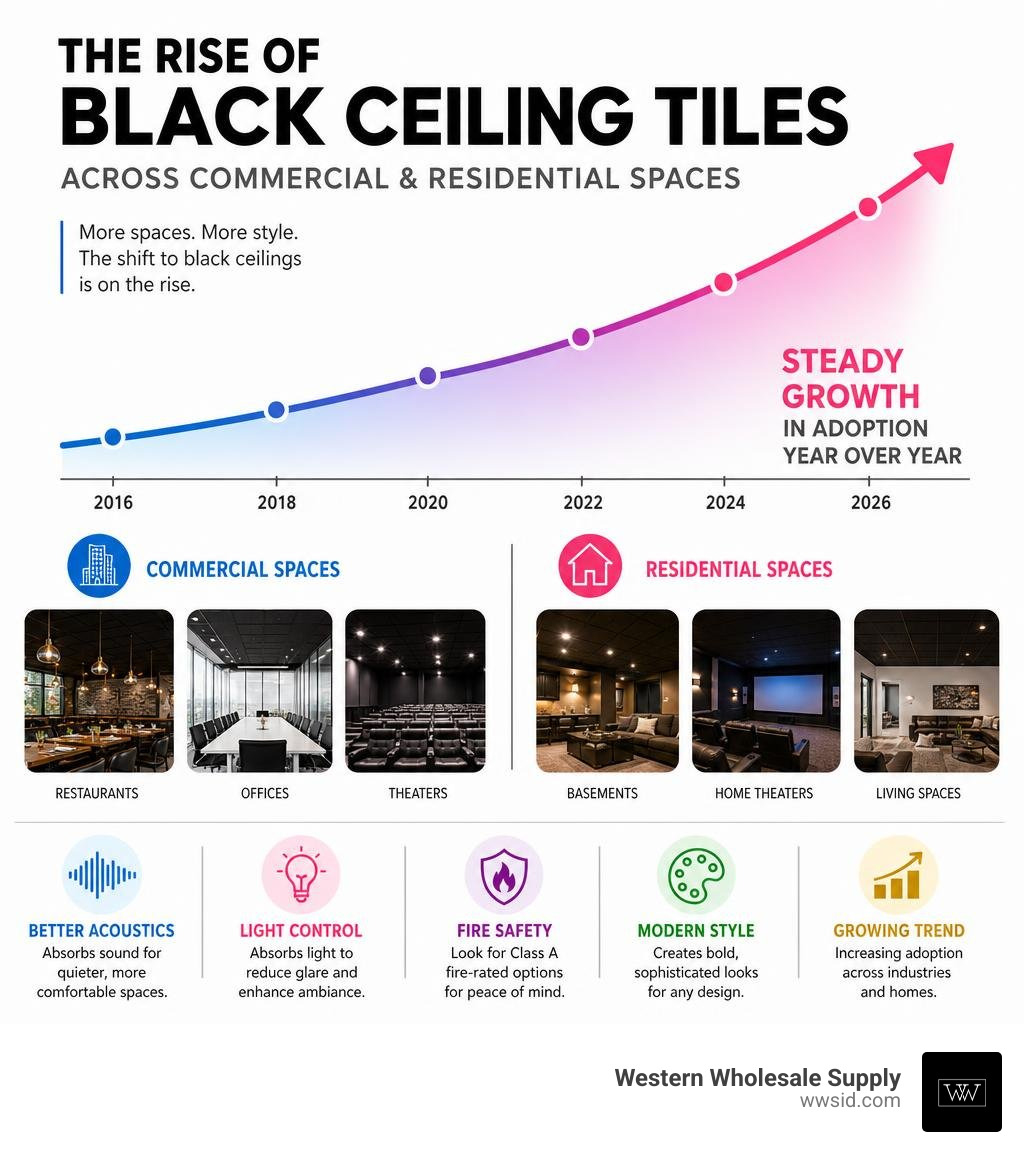
Black ceiling tiles are one of the fastest-growing ceiling choices for both commercial and residential spaces right now. Here’s a quick look at what you need to know:
| Feature | Details |
|---|---|
| Common materials | Mineral fiber, PVC, polyester (PET) |
| Best uses | Restaurants, bars, theaters, offices, basements, home theaters |
| Acoustic benefit | Sound absorption NRC ratings up to 0.95 |
| Fire safety | Look for Class A fire rating |
| Light behavior | Absorbs light rather than reflects it |
| Top styles | Smooth, fissured, textured, faux tin |
Black ceiling tiles work by absorbing light and sound instead of bouncing them around the room. That creates a darker, more intimate atmosphere — which is exactly what restaurants, theaters, and entertainment venues are after. In residential settings like basements and home theaters, they deliver the same effect at a smaller scale.
The trend is real. The desire to create industrial and modern aesthetics has driven steady demand for black ceiling tiles across commercial, hospitality, and educational spaces. With over 57 black ceiling products available from major manufacturers and 65% of buyers gravitating toward just a handful of top-selling styles, this is a category with clear, proven demand.
At Western Wholesale Supply, we have hands-on experience helping contractors and builders source the right ceiling solutions — including black ceiling tiles — for projects across residential and commercial applications. In the sections below, we’ll walk you through everything you need to choose, install, and maintain them with confidence.
What Are Black Ceiling Tiles and Their Materials?
When we talk about black ceiling tiles, we are looking at specialized ceiling panels designed to sit within a suspended T-grid system or be directly applied to a ceiling substrate. While traditional white mineral board has been the default for decades, the design landscape in July 2026 has shifted heavily toward darker, moodier palettes.
These tiles are manufactured using several distinct material types, each bringing its own set of structural and aesthetic advantages:
- Mineral Fiber: The industry standard for high-performance commercial spaces. Mineral fiber tiles offer exceptional acoustic control, sound-blocking capabilities, and robust fire ratings. Brands like CertainTeed manufacture top-quality mineral fiber panels that deliver a beautiful, uniform black finish without sacrificing structural integrity.
- PVC Panels: Polyvinyl chloride (PVC) options are incredibly lightweight, highly durable, and completely waterproof. If you are looking for a sleek, modern, or even a classic faux-tin look that will never sag or rot, PVC is an excellent choice. You can find beautiful examples of these through resources like Black Ceiling Tiles – Ceilume .
- Polyester PET: Made from recycled plastics, polyester acoustic tiles are highly sustainable, low-emission, and offer targeted sound absorption. They are excellent for spaces prioritizing green building standards and modern, minimalist aesthetics.
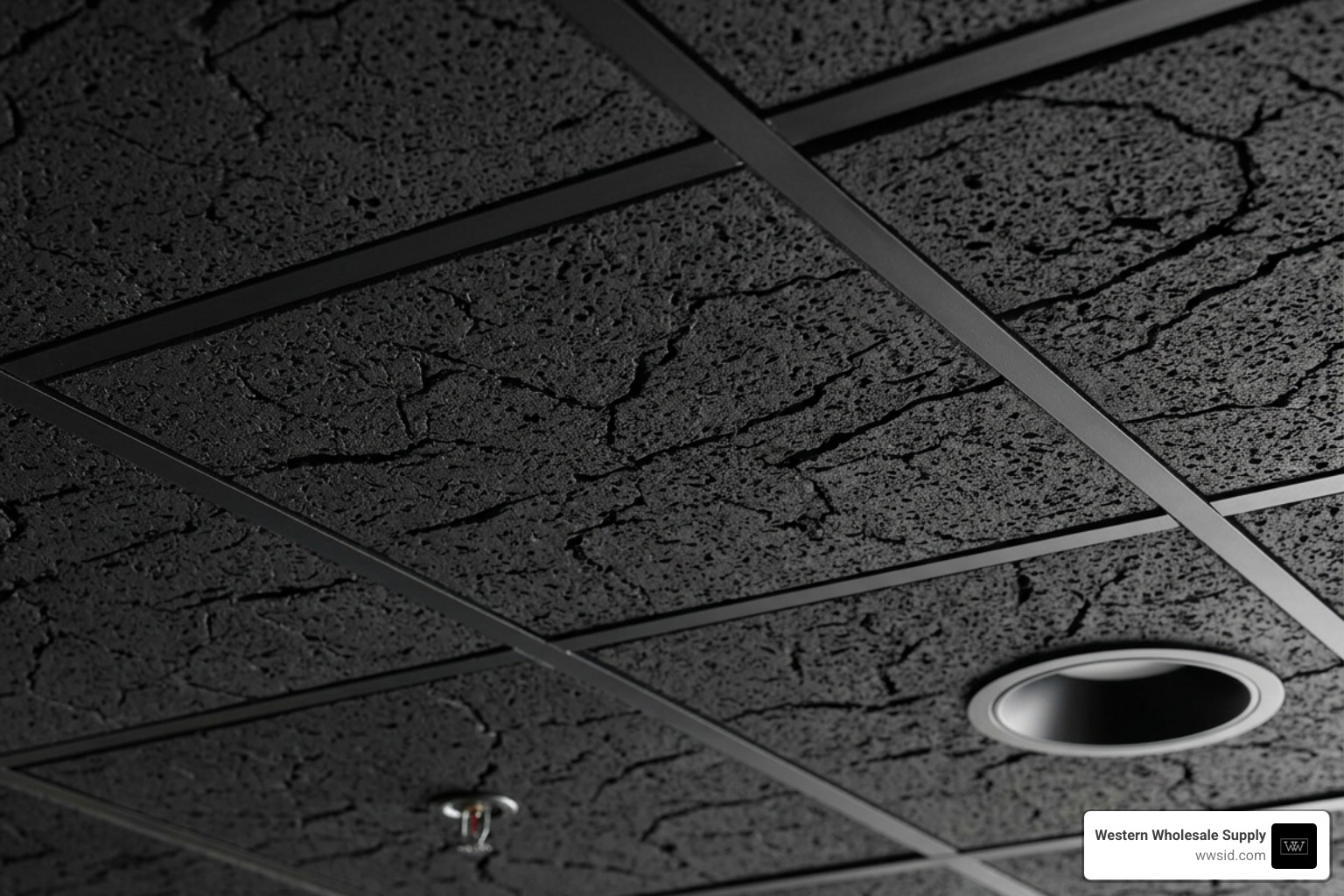
Selecting the right material depends heavily on the specific demands of your space. For instance, a commercial kitchen or a humid basement will require entirely different material properties than a high-end corporate boardroom or a home recording studio.
Understanding Mineral Fiber vs. Vinyl Options
Choosing between mineral fiber and vinyl (PVC) black ceiling tiles comes down to balancing acoustic needs, moisture exposure, and overall durability.
Mineral fiber is the heavyweight champion of sound control. It is dense, porous, and designed to trap sound waves, making it the premier choice for offices, classrooms, and theaters. However, mineral fiber can be sensitive to extreme humidity. If installed in an area with active moisture issues, standard mineral boards can sag over time.
On the other hand, vinyl options offer absolute moisture resistance. They do not absorb water, they are fully washable, and they will never rot, rust, or support mold growth. This makes vinyl the ultimate choice for bathrooms, food prep areas, and damp basements. While vinyl does not naturally absorb sound as efficiently as thick mineral fiber, its durability and ease of cleaning make it a favorite for high-traffic, high-humidity environments.
Key Benefits of Installing Black Ceiling Tiles
The visual impact of a dark ceiling is undeniable, but the benefits of black ceiling tiles extend far beyond simple aesthetics.
First and foremost is light absorption. In spaces like home theaters, commercial cinemas, and auditorium stages, control over light reflection is critical. White ceilings reflect light from screens and projectors back down into the eyes of the audience, washing out the picture. Black tiles absorb up to 96% of light, keeping the focus entirely on the screen or stage and creating a true theater ambiance.
Additionally, we cannot overlook the thermal and energy-efficiency benefits of a well-insulated ceiling system. For large-scale commercial projects, warehouses, and industrial spaces, combining dark aesthetics with proper insulation is key to managing climate control costs. When designing these large areas, we highly recommend pairing your ceiling tile choices with robust insulation. Achieving an R-value of Ceilings R-30+ and Walls R-13+ ensures excellent thermal performance, keeping spaces warm in our cold Eastern Idaho winters and cool during the summer.
To learn more about how different ceiling materials impact the overall comfort of your building, take a look at Quiet Comfort: A Comprehensive Guide to Acoustic Ceiling Solutions.
To help you visualize the physical differences between traditional white tiles and modern black options, we have put together this comparison table:
| Performance Metric | Traditional White Tiles | Black Ceiling Tiles |
|---|---|---|
| Light Reflectance (LR) | High (typically 0.80 – 0.90) | Low (typically 0.04 – 0.10) |
| Acoustic Absorption (NRC) | Varies (0.50 – 0.90) | Varies (0.50 – 0.95) |
| Visual Ambiance | Bright, open, clinical | Cozy, intimate, dramatic |
| Maintenance Visibility | Shows water stains easily | Shows dust and scuffs easily |
| Primary Applications | Offices, schools, retail | Theaters, restaurants, basements |
Designing with Black Ceiling Tiles in Commercial Spaces
In commercial design, the ceiling is often referred to as the “fifth wall.” Designers use black ceiling tiles to make bold statements, define specific zones within open-concept layouts, and mask unsightly overhead utilities.
In modern restaurants and bars, a black ceiling creates an intimate, upscale atmosphere. It allows overhead spot lighting to pop, drawing attention to tables, bar displays, and architectural features while letting the ceiling itself recede into the background. In open-office environments, black suspended ceilings offer a sleek, industrial-chic style that pairs beautifully with exposed brick, steel beams, and natural wood accents.
For a deeper dive into how suspended ceilings can elevate your workspace design, read our article on Why Acoustical Lay-In Ceiling Tiles Are the Unsung Heroes of Your Office.
Acoustic Performance and Sound Control
Aesthetics mean very little if a room is so echoey that you cannot hold a conversation. That is where acoustic performance metrics like the Noise Reduction Coefficient (NRC) and Ceiling Attenuation Class (CAC) come into play.
- NRC (Noise Reduction Coefficient): This rating measures how much sound a ceiling tile absorbs. A rating of 0.70 means the tile absorbs 70% of the sound energy that hits it, reflecting only 30% back into the room. High-NRC black tiles are essential for reducing echo and chatter in busy restaurants and offices.
- CAC (Ceiling Attenuation Class): This rating measures a tile’s ability to block sound from traveling through the ceiling plenum into adjacent rooms. A higher CAC rating (such as 35 or higher) ensures that private conversations in a boardroom stay inside that room.
By selecting a high-performance black acoustic tile, you can achieve a striking visual design while establishing a peaceful, productive soundscape. For more tips on managing sound, explore Sound-Absorbing Ceilings: The Secret to a Quieter Environment.
How to Install and Maintain Suspended Ceilings
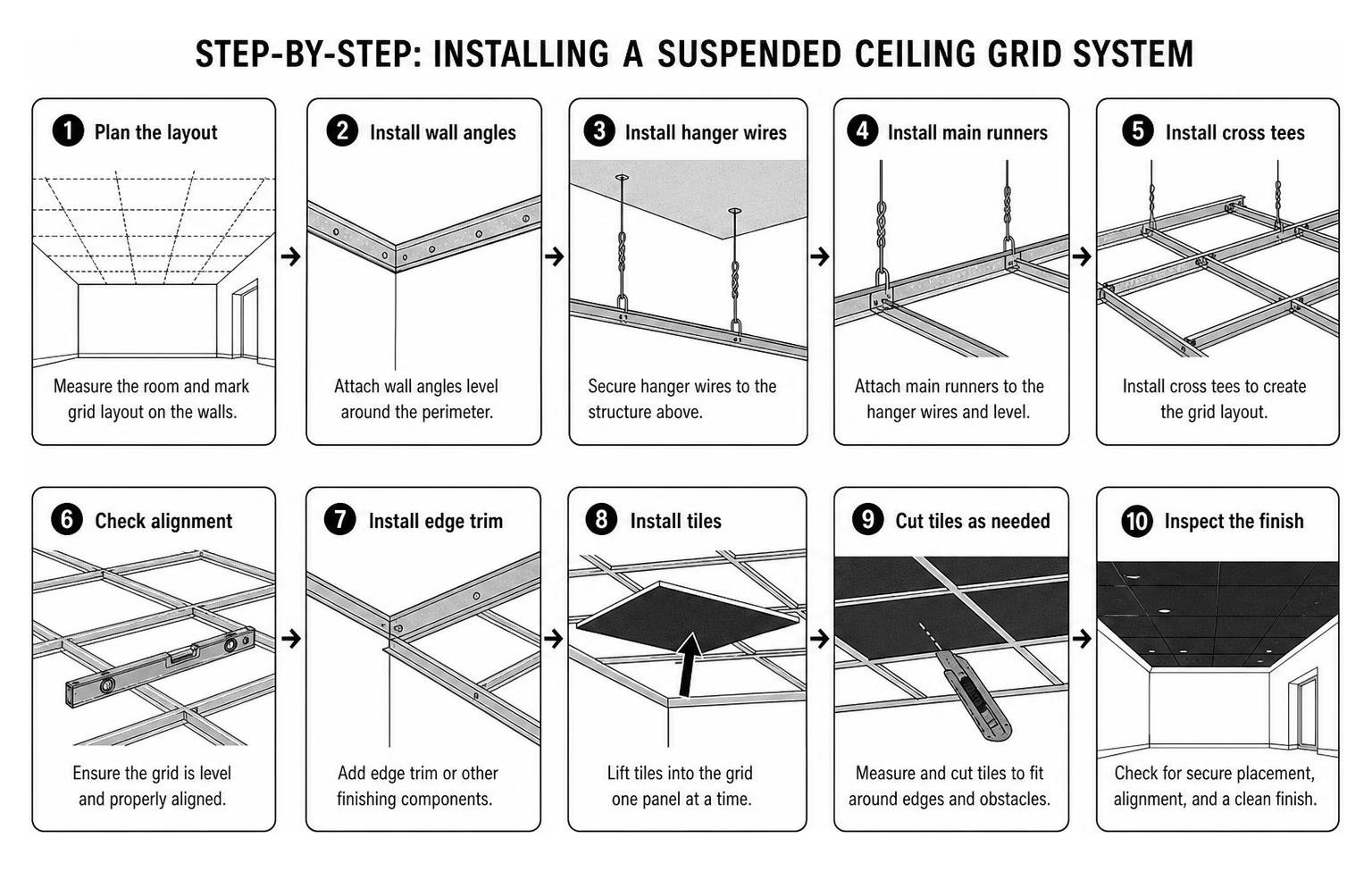
Installing black ceiling tiles follows the same basic principles as installing a standard white suspended ceiling, but with a few critical aesthetic considerations.
First, you must install a suspended T-grid system. To maintain a seamless, monolithic appearance, it is highly recommended to use a matching black grid system. If you install black tiles into a standard white grid, the white lines will create a high-contrast grid pattern that can distract from the overall design.
During the installation process, securing your wall angles and hanger wires to the structure above requires high-quality fasteners. We recommend using Grabber fasteners to ensure a secure, long-lasting hold that meets all local building codes.
For a comprehensive walkthrough on planning your layout and estimating your grid materials, check out Grid Ceiling Tiles: Your Blueprint for Better Acoustics. If your project requires professional expertise, you can also Find Acoustic Ceilings Contractors in Idaho Falls, ID to get the job done right.

To help you visualize the installation workflow, here is the sequence of steps required to install a professional suspended ceiling system:
How to Clean and Maintain Black Ceiling Tiles
While black tiles are incredible at hiding water stains and soot that would immediately ruin a white ceiling, they do have one minor drawback: they show dust and light-colored scuffs more easily. Fortunately, keeping them clean is a straightforward process.
For routine cleaning, we recommend vacuuming the tiles using a soft brush attachment. Always vacuum in a single direction to avoid swirling dust into the textured surface of mineral fiber tiles. If you are dealing with vinyl or PVC tiles, you can easily wipe them down with a damp cloth and a mild soap solution.
Avoid using harsh chemical cleaners or abrasive scrubbing pads, as these can strip the matte black finish or damage the acoustic fleece face of specialized tiles.
Frequently Asked Questions
Are black ceiling tiles good for acoustics?
Yes, many black ceiling tiles are specifically engineered for superior acoustic performance. Mineral fiber and polyester PET black tiles often feature high NRC ratings (up to 0.95), making them highly effective at absorbing sound, reducing flutter echoes, and improving speech intelligibility.
If you are designing a space where sound control is paramount—such as a home theater, recording studio, or commercial venue—be sure to review our A Comprehensive Guide to Ceiling Sound Treatment to select the right acoustic ratings for your needs.
What certifications should I look for in black tiles?
When purchasing ceiling tiles for commercial or residential use, look for the following certifications:
- Class A Fire Rating: This is non-negotiable for commercial spaces. It ensures the tiles have low flame-spread and smoke-development indexes under fire conditions.
- Moisture and Sag Resistance: Essential for installations in basements, kitchens, or geographic regions with high humidity.
- Low VOC Emissions: Look for green certifications to ensure your tiles do not off-gas harmful chemicals, protecting your indoor air quality.
Can I paint existing ceiling tiles black?
While it is technically possible to paint white ceiling tiles black using a flat latex paint, we generally advise against it. Painting acoustic mineral fiber tiles clogs their microscopic pores, which can severely degrade their sound-absorbing capabilities.
Additionally, painted tiles can warp, sag, lose their fire rating, and stick to the grid, making future maintenance incredibly difficult. In almost every scenario, replacing old tiles with factory-finished black panels is a safer, better-performing, and more cost-effective solution in the long run.
Conclusion
Whether you are building out a sleek new restaurant in downtown Idaho Falls, updating an office in Pocatello, or designing a cozy home theater in Jackson, black ceiling tiles offer a perfect balance of bold design and high-performance acoustics.
At Western Wholesale Supply, we have been serving contractors, builders, and homeowners across Eastern Idaho and Western Wyoming since 1963. As an independent, veteran-owned, third-generation family business, we pride ourselves on providing the highest-quality building materials—including premium CertainTeed ceiling systems—with the reliable, on-time delivery you need to keep your project on track.
Ready to elevate your space with premium ceiling solutions? Explore our Acoustical Ceilings solutions, or contact our team today to get started on your next project!
Written by Western Wholesale Supply
