

What Are Heat Insulating Materials? A Quick-Reference Guide
Heat insulating materials are products designed to slow the transfer of thermal energy between spaces, keeping heat in or out depending on your application.
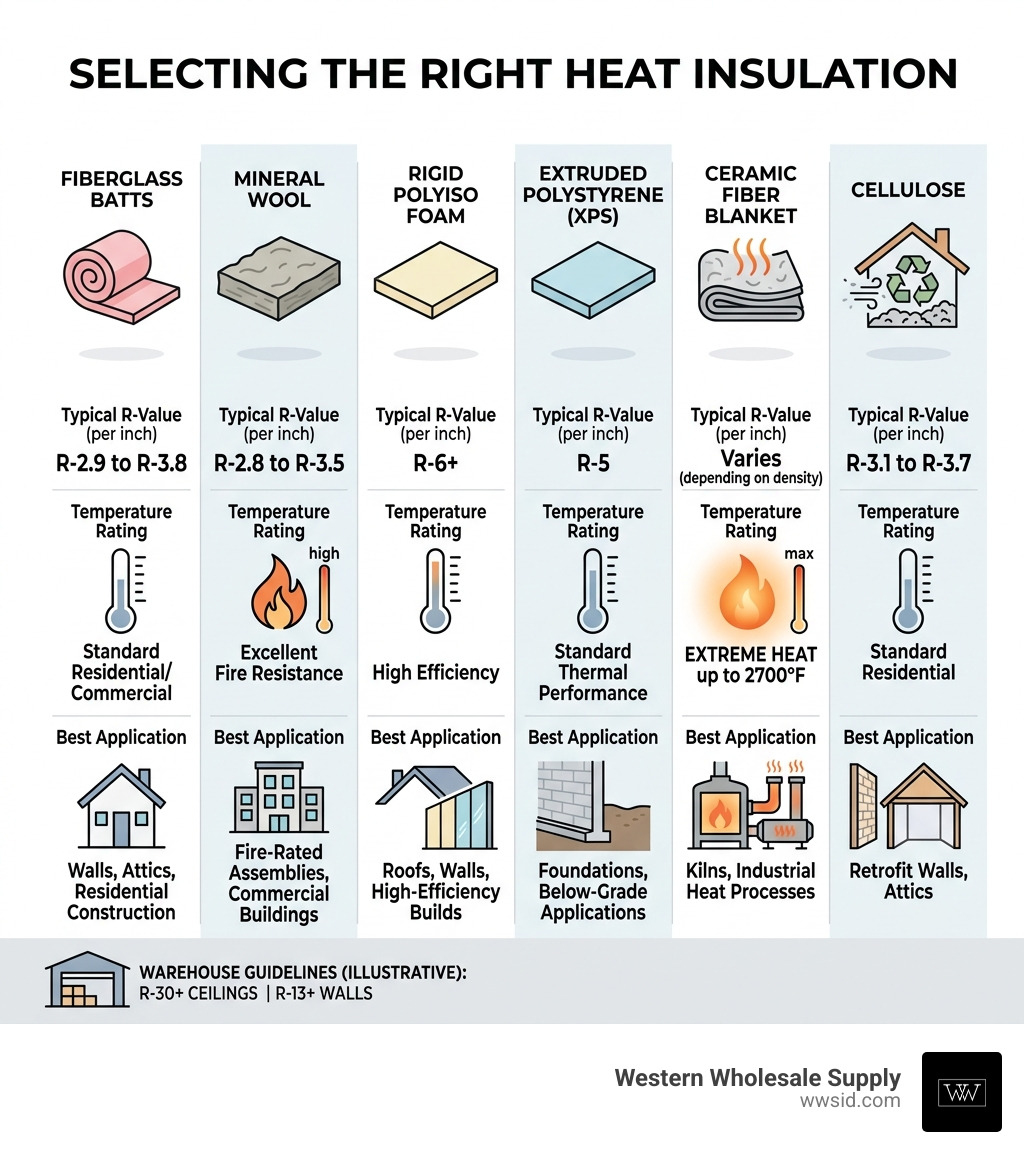
Here are the most common types and what they’re best for:
| Material | Typical R-Value (per inch) | Best Use |
|---|---|---|
| Fiberglass batts | R-2.9 to R-3.8 | Walls, attics, residential |
| Mineral wool | R-2.8 to R-3.5 | Fire-rated assemblies, commercial |
| Rigid polyiso foam | R-6+ | Roofs, walls, high-efficiency builds |
| Extruded polystyrene (XPS) | R-5 | Foundations, below-grade |
| Ceramic fiber blanket | Varies | Extreme heat up to 2700°F |
| Cellulose | R-3.1 to R-3.7 | Retrofit walls, attics |
For warehouse applications, aim for R-30 or higher in ceilings and R-13 or higher in walls to hit meaningful energy performance targets.
Choosing the wrong material is a costly mistake — one that can mean failed inspections, energy loss, or materials that simply can’t handle the job site conditions you’re working in. Whether you’re insulating a commercial warehouse in Eastern Idaho, lining an industrial kiln, or wrapping pipes in a boiler room, the material you choose has to match the thermal demands of the space.
The good news: once you understand the core types and what they do well, the decision gets a lot simpler.
I’m Jake Bean, a third-generation building materials professional and co-owner of a regional supply business — and sourcing the right heat insulating materials for contractors across Idaho and Wyoming is something I deal with every day. Let’s walk through what’s available and how to match the right product to your project.
Quick heat insulating materials definitions:
Top High-Temperature Solutions for Industrial Use
When we talk about heat insulating materials in an industrial context, we aren’t just talking about keeping a room cozy. We are talking about materials that can withstand the kind of heat that would melt a standard fiberglass batt into a puddle of glass. In places like Blackfoot or Twin Falls, where we support a variety of industrial and agricultural processing plants, high-temperature insulation is a safety requirement, not a luxury.
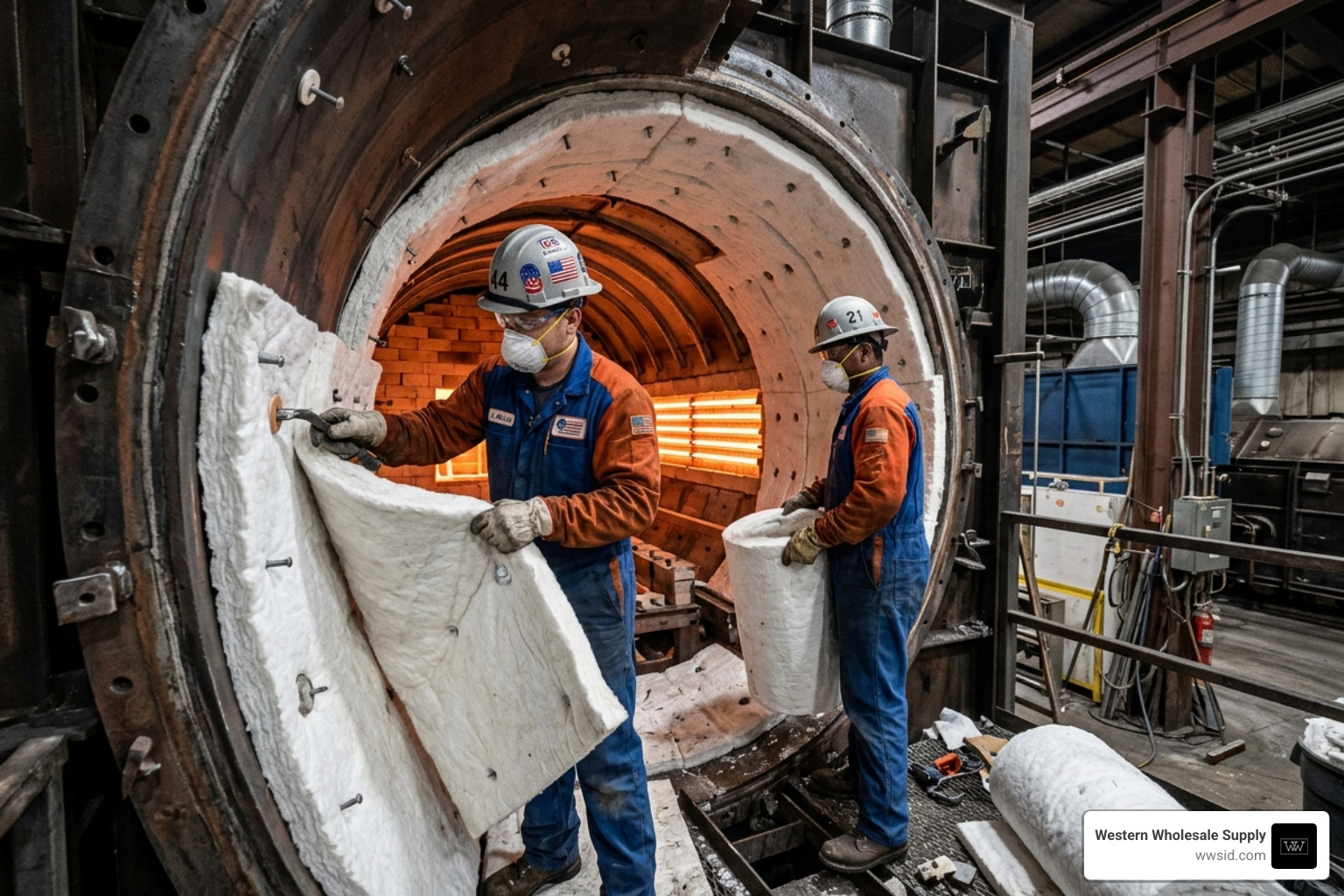
High-heat applications—think forges, kilns, wood stoves, and pizza ovens—require materials with exceptional fireproofing capabilities and high density. These materials are engineered to perform at temperatures ranging from 1000°F to 2700°F. If you are sourcing for a commercial project, understanding the difference between a standard thermal barrier and a high-heat shield is critical. For a deeper dive into the logistics of these materials, check out our guide on Everything You Need To Know About Sourcing Commercial Insulation.
Ceramic Fiber Blankets: The Gold Standard for heat insulating materials
If you are dealing with extreme heat, ceramic fiber blankets are the undisputed heavyweights. Made from high-purity aluminosilicate minerals, these blankets are designed to handle temperatures that would incinerate almost anything else.
Most ceramic fiber products offer a rating of 2400°F, but premium versions can withstand up to 2700°F. One of the biggest advantages of ceramic fiber is its resistance to thermal shock. In an industrial furnace or a forge, temperatures can spike and drop rapidly. While other materials might crack or degrade under that stress, ceramic fiber holds its shape and its insulating properties.
We often see these used as wood stove baffles or in pizza oven construction throughout Eastern Idaho. Because they have a low heat storage capacity, they allow equipment to cool down faster, which is a huge plus for maintenance teams who need to get inside a kiln or boiler without waiting three days for it to reach a safe temperature.
Mineral Wool and Fire Safety
While ceramic fiber handles the “extreme” end of the spectrum, mineral wool is the workhorse of commercial fire safety. Often referred to as stone wool or slag wool, this material is produced by melting basalt rock or steel mill slag at temperatures exceeding 1,400°C and spinning it into dense fibers.
The result is a material that is naturally non-combustible. In fact, mineral wool is tested under ASTM E136 standards to confirm it won’t contribute to the spread of fire. For commercial structures in cities like Pocatello or Rexburg, mineral wool is frequently specified for fire-rated assemblies. It doesn’t just slow down heat; it acts as a literal firewall.
Beyond fire resistance, mineral wool is much denser than fiberglass. This density makes it a fantastic acoustic insulator, which is why you’ll often find it in the interior partitions of hospitals or hotels in Jackson, WY. If you’re looking for more info about insulation services and how mineral wool fits into your build, we’ve got the resources to help you choose.
Maximizing Efficiency with Commercial heat insulating materials
Efficiency in a warehouse or commercial building is a game of R-values and thermal bridges. In our region, where the wind howls across the Snake River Plain and temperatures can drop well below zero, the “standard” isn’t always enough. We recommend aiming for R-30 or higher in ceilings and at least R-13 in walls for any warehouse project.
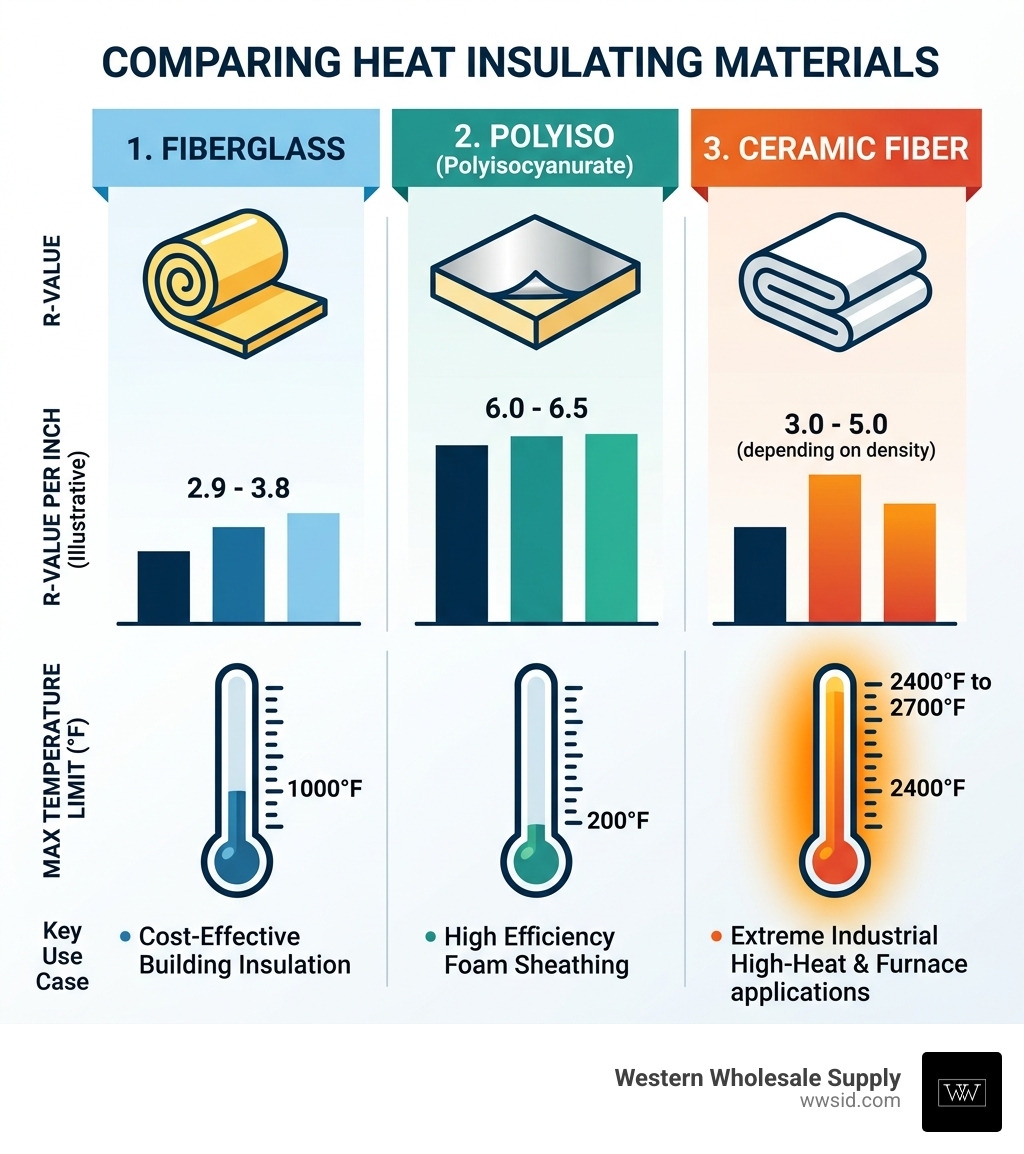
The table below breaks down how these common heat insulating materials stack up:
| Material | Max Temp Rating | R-Value per Inch | Primary Benefit |
|---|---|---|---|
| Fiberglass | ~1000°F | 2.9 – 3.8 | Cost-effective, easy to install |
| Mineral Wool | ~2150°F | 2.8 – 3.5 | Fire resistance, sound dampening |
| Polyiso (Rigid) | ~250°F | 6.0 – 6.5 | Highest R-value, moisture resistant |
| Ceramic Fiber | ~2700°F | Varies | Extreme heat, thermal shock resistance |
For those looking to go Beyond Batts A Comprehensive Look At Building Insulation Materials, it’s important to look at how these materials behave over the long term.
Rigid Foam and Polyiso Performance
When it comes to flat roof systems or exterior sheathing, rigid foam boards—specifically Polyisocyanurate (Polyiso)—are the high-performers. Polyiso often comes with reflective aluminum facers, which help block radiant heat. This is a massive benefit for large warehouses in sunny areas like Burley or Twin Falls, where the summer sun can turn a metal building into an oven.
However, you need to be aware of “thermal drift.” This is a scientific way of saying that the R-value of foam insulation can slightly decrease over the first few years as the gases trapped in the cells settle. Even with thermal drift, Polyiso remains one of the most efficient heat insulating materials on the market, providing 30% to 40% better insulation than expanded polystyrene (EPS) for the same thickness.
Key Factors When Selecting heat insulating materials
Choosing the right insulation isn’t just about the temperature rating. You have to consider how the material will be handled and what it will be stuck to.
- Compressive Strength: If you’re insulating a cold storage floor or a flat roof that will see foot traffic, you need a material like FOAMULAR XPS that can handle the weight without crushing.
- Adhesive Backing: For automotive or HVAC applications, some heat shields come with a pressure-sensitive adhesive. This makes installation a breeze, but you have to ensure the adhesive itself is rated for the temperatures it will face.
- Density: Higher density usually means better fire resistance and soundproofing, but it also means the material is heavier and potentially harder to cut.
- Thickness: As the Department of Energy points out, the effectiveness of your insulation is directly tied to its thickness. Compressing a 6-inch fiberglass batt into a 4-inch cavity actually lowers your R-value because you’re squeezing out the trapped air that does the actual insulating.
Regional Performance: Insulation for the Intermountain West
Living and building in Eastern Idaho and Western Wyoming presents a unique set of challenges. We aren’t just dealing with cold; we’re dealing with high altitudes, extreme temperature swings, and intense UV radiation. When you’re working on a project in Driggs or Victor, you need heat insulating materials that can stand up to the local climate.

At Western Wholesale Supply, we’ve spent over 60 years refining our inventory to match these needs. We know that a delivery to a job site in Jackson, WY, requires a different level of logistical planning than a drop-off in Idaho Falls. Our reliable, on-time delivery is backed by three generations of experience in this specific landscape. You can learn more about our local approach on our Insulation Solutions page.
Moisture Management and Durability
One of the most overlooked aspects of insulation is moisture. In our region, snowmelt and spring rains can wreak havoc on building envelopes. Fiberglass, while great for many things, loses almost all its insulating power if it gets wet.
This is where materials with hydrophobic resins—like certain types of mineral wool—really shine. Mineral wool can retain about 90% of its R-value even when damp. For areas prone to moisture, we also recommend using Durock cement boards as a substrate. They provide a durable, moisture-resistant backing for your thermal layers, ensuring that your “hot” stays hot and your “dry” stays dry. For more on this, read about Choosing The Right Water Resistant Insulation.
Specialized Building Components
A high-performance thermal envelope is only as good as the components holding it together. We don’t just sell the “stuffing” for the walls; we sell the entire system.
- Ceiling Systems: We carry CertainTeed ceiling tiles, which offer excellent thermal and acoustic properties for commercial interiors. In a warehouse setting, keeping that heat from escaping through the roof is your number one priority for energy savings.
- Sound & Heat: For projects that require both thermal protection and serious noise reduction, Quietrock EZ Snap is our go-to recommendation. It’s a high-performance drywall that saves time on installation without sacrificing results.
- Fasteners: Don’t trust your high-end insulation to cheap screws. We stock Grabber and Brighton Best fasteners to ensure that your materials stay exactly where you put them, even as the building shifts and settles in the Idaho wind.
Frequently Asked Questions about Heat Insulation
What material is best for extreme heat up to 2700°F?
For temperatures reaching 2700°F, ceramic fiber blankets are the best choice. They are made from aluminosilicate minerals and are specifically designed for industrial kilns, forges, and furnaces. They offer excellent resistance to thermal shock and have low heat storage, allowing for faster equipment cooldowns.
How do R-values differ between warehouse walls and ceilings?
In a warehouse environment, heat loss through the roof is usually much more significant than through the walls. Therefore, we recommend a minimum of R-30 for ceilings and R-13 for walls. This balance helps maintain a stable internal temperature while managing energy costs effectively in the cold climates of Eastern Idaho and Western Wyoming.
Is mineral wool better than fiberglass for fireproofing?
Yes. While fiberglass is non-combustible, it will melt at much lower temperatures (around 1000°F). Mineral wool can withstand temperatures over 2000°F and is specifically tested under ASTM E136 to ensure it does not contribute to the spread of fire. This makes it the superior choice for fire-rated assemblies in commercial buildings.
Conclusion
Choosing the right heat insulating materials is about more than just looking at a price tag. It’s about understanding the science of heat transfer and the specific demands of your job site. Whether you’re trying to keep a warehouse in Shelley warm through a January blizzard or lining a high-heat forge in Rigby, the materials you select today will determine the safety and efficiency of your building for decades to come.
At Western Wholesale Supply, we’ve been the trusted partner for contractors across the Intermountain West since 1963. As a veteran-owned, third-generation family business, we take pride in our deep roots in communities like Idaho Falls, Pocatello, and Jackson. We don’t just deliver materials; we deliver over 60 years of expertise and a commitment to exceptional customer service.
Don’t leave your project’s thermal performance to chance. If you have questions about which insulation is right for your next build, or if you’re ready to schedule a reliable, on-time delivery, reach out to us today.
