

What Are Mineral Wool Ceiling Tiles? (Quick Answer for Contractors)
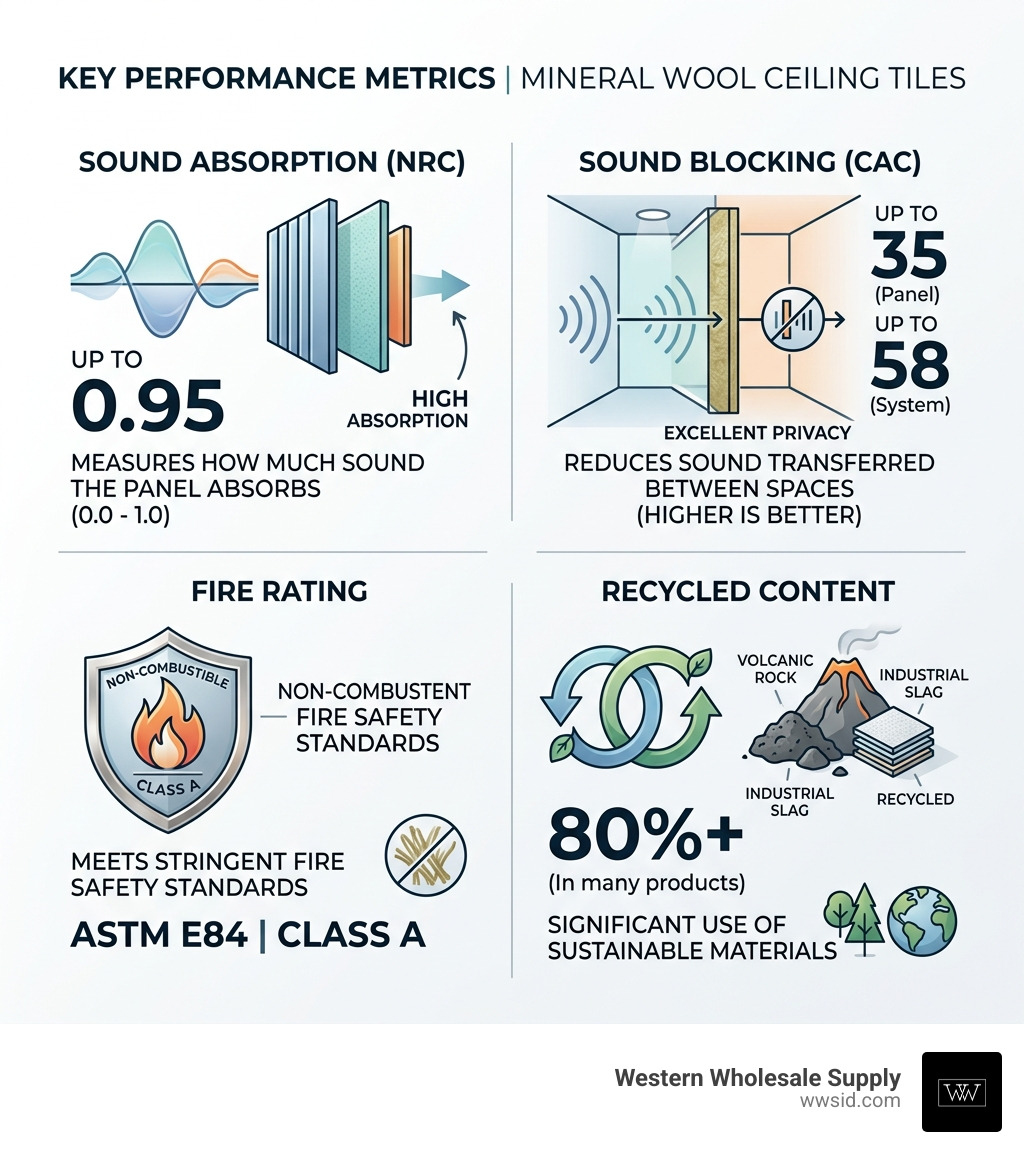
Mineral wool ceiling tiles are acoustical ceiling panels made from natural volcanic rock (like basalt) or industrial slag, spun into dense fibers and formed into rigid, self-supporting panels. They are one of the most trusted ceiling materials in commercial construction for sound control, fire resistance, and durability.
Here’s how they stack up at a glance:
| Feature | Mineral Wool Ceiling Tiles |
|---|---|
| Sound Absorption (NRC) | Up to 0.95 |
| Sound Blocking (CAC) | Panel up to 35, System up to 58 |
| Fire Rating | Class A (ASTM E84), non-combustible |
| Humidity Resistance | Up to 100% RH (product dependent) |
| Recycled Content | 80%+ in many products |
| Common Sizes | 600x600mm, 1200x600mm (24″x24″, 24″x48″) |
| Best Applications | Offices, schools, hospitals, warehouses |
Mineral wool tiles are often grouped under the broader label of “mineral fiber” ceiling tiles, but there are real differences in how they’re made and how they perform — and those differences matter when you’re spec’ing a job.
Whether you’re fitting out a healthcare facility in Rexburg, insulating a commercial warehouse in eastern Idaho, or finishing a school renovation, choosing the right acoustical ceiling material is one of those decisions that affects every person who works or learns in that building for decades. The ceiling is easy to overlook — right up until it’s the reason a project fails inspection, a tenant complains about noise, or an HVAC call turns into a full tile replacement.
At Western Wholesale Supply, we work with contractors across eastern Idaho every day who are weighing these exact trade-offs. CertainTeed mineral fiber ceiling tiles are one of the solutions we carry and recommend regularly — and in April 2026, demand for high-performance, sustainable ceiling options continues to grow across the region.
As third-generation building materials professionals and owners of a regional supply business, we’ve sourced and distributed mineral wool ceiling tiles across residential and commercial projects for years. We’ll walk you through everything you need to know to make a confident, informed choice.
Understanding Mineral Wool Ceiling Tiles vs. Mineral Fiber
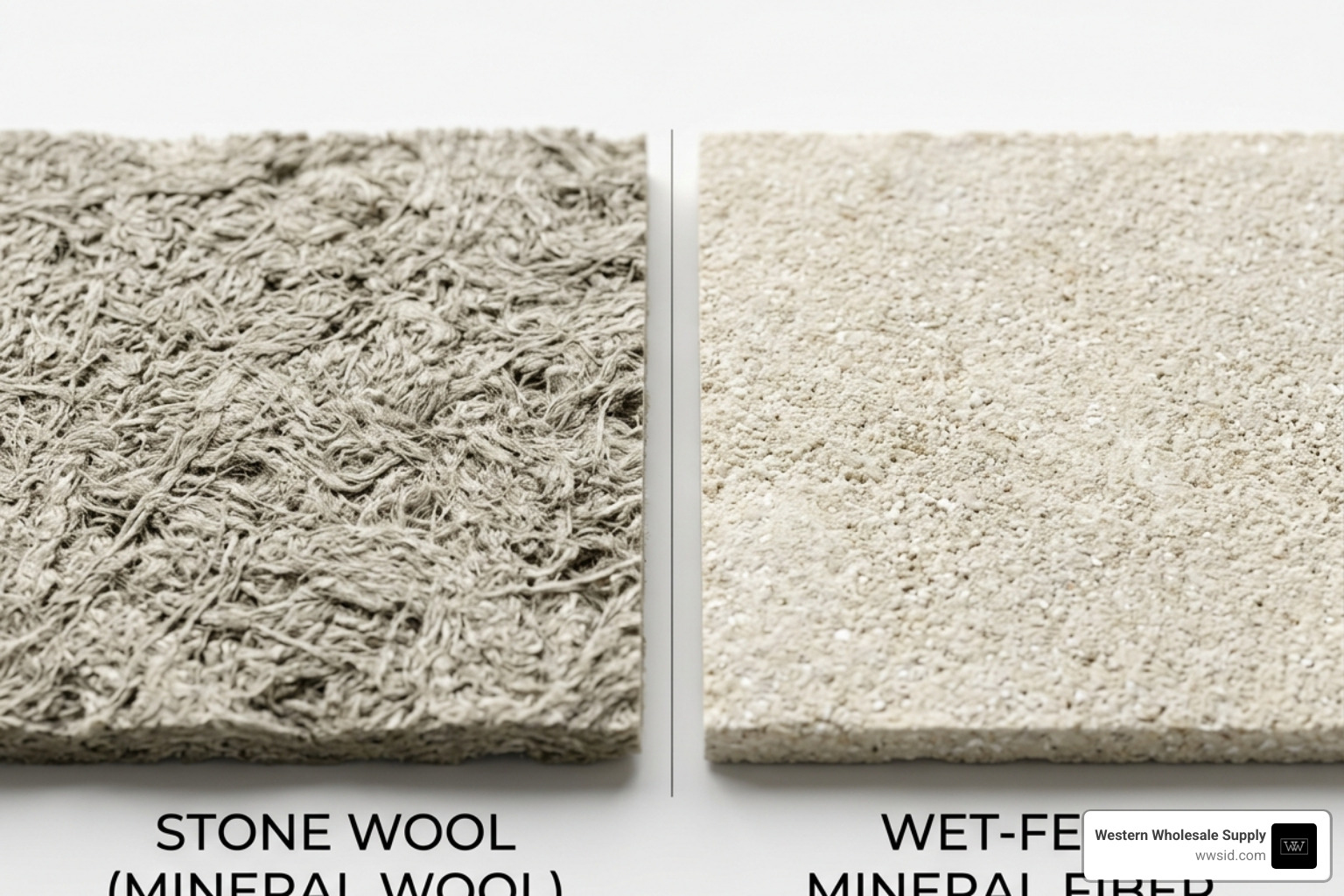
In acoustical ceilings, the terms “mineral wool” and “mineral fiber” are often used interchangeably, but there is a distinction worth noting. While all mineral wool is a fiber, not all mineral fiber tiles are made exclusively from stone wool.
Standard mineral fiber tiles are often “wet-felted” composites. They use a mixture of mineral wool, perlite, starch, and recycled paper. True mineral wool ceiling tiles—often referred to as stone wool—are primarily composed of volcanic rock like basalt. This difference in raw materials leads to a difference in texture and performance. Stone wool tends to be more naturally resistant to water and fire because, well, it’s basically spun rock.
When you look at CertainTeed Mineral Fiber Panels, you’ll see they offer a balance of these materials to provide specific performance metrics, such as high sound blocking or superior cutability for the installer.
The Composition of Mineral Wool Ceiling Tiles
The core of these tiles is a marvel of industrial engineering. We take industrial slag (a byproduct of steel making) or natural stone, melt it down at temperatures exceeding 2,000 degrees Fahrenheit, and spin it into fibers. These fibers are then bound together using natural fillers like clay, perlite, and starch. The result is a non-combustible core that doesn’t just sit there—it actively works to keep your building safer and quieter.
Key Differences in Manufacturing
Most mineral wool ceiling tiles are manufactured using a wet felt process. This involves creating a slurry of fibers and binders that is vacuum-formed and heat-dried. This process allows for high-density panels, often reaching 375 kg/cu.m. This high density is exactly what gives the tiles their rigid, self-supporting nature. Unlike cheaper, softer alternatives, a high-density mineral wool tile is less likely to sag or crumble at the edges during installation or maintenance.
Performance Benefits: Acoustics, Fire, and Thermal
When we talk to contractors in Rexburg or Idaho Falls, we focus on the “Big Three”: sound, safety, and savings. Mineral wool ceiling tiles excel in all three categories, making them a staple for professional fit-outs.

Sound Absorption and Blocking
Acoustics are measured in two ways: how much sound a tile “soaks up” (NRC) and how much sound it stops from traveling to the next room (CAC).
- NRC (Noise Reduction Coefficient): Mineral wool is a top-tier absorber. Products like the Minerval A can achieve an NRC of 0.90 or higher, meaning they absorb 90% of the sound that hits them. This is vital in education spaces and healthcare wards where focus and recovery depend on quiet.
- CAC (Ceiling Attenuation Class): If you’ve ever been in a private meeting and could hear the person in the next office clearly, you have a CAC problem. High-density mineral wool helps block that sound bleed.
For a deeper dive into these metrics, check out our guide on Quiet Comfort A Comprehensive Guide To Acoustic Ceiling Solutions.
Fire Resistance
Safety is never an afterthought. Because mineral wool is made from stone and slag, it is inherently non-combustible. Most of these tiles carry a Class A fire rating (per ASTM E84), which is the highest standard for flame spread and smoke development. This makes them the go-to choice for Building Safety From The Top Down Fire Rated Ceiling Solutions.
Thermal Insulation for Rexburg Warehouses
In Eastern Idaho, our winters aren’t just cold—they’re expensive. While ceiling tiles are primarily for acoustics, the thermal properties of mineral wool shouldn’t be ignored. In large commercial warehouses or utility buildings, maintaining a consistent temperature is key to energy efficiency.
We often recommend combining high-performance ceilings with proper insulation. For warehouses, aiming for R-30+ in the ceilings and R-13+ in the walls is a standard practice to keep those heating bills manageable. You can find more about local insulation standards through professionals like Insulation Contractors in Driggs, Idaho – TruTeam.
Comparing Mineral Wool Ceiling Tiles to Alternatives
How does mineral wool stack up against fiberglass or foam? It’s all about the application.
Mineral Wool vs. Fiberglass
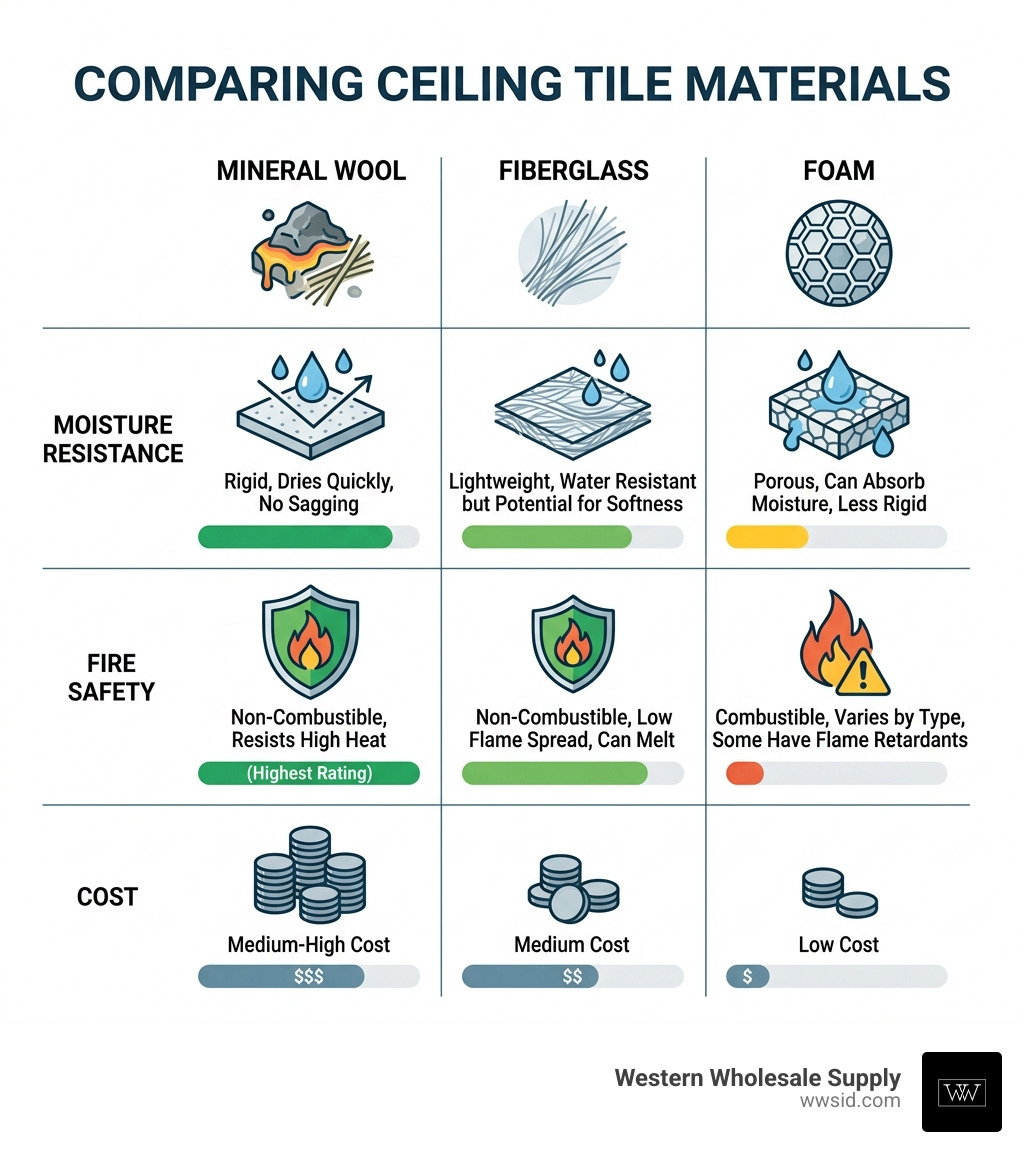
Fiberglass tiles are incredibly lightweight and offer fantastic NRC ratings (sometimes up to 1.00). However, mineral wool is generally denser, providing better sound blocking (CAC). Mineral wool also tends to hold its shape better in high-humidity environments. While some fiberglass tiles are great for moisture, mineral wool’s rigidity makes it less prone to the “pillow” effect where tiles sag over time.
If you are trying to decide which is right for your specific layout, our resource on Grid Ceiling Tiles Your Blueprint For Better Acoustics can help.
Mineral Wool vs. Foam
Foam is often used for DIY soundproofing, but in a commercial setting, it rarely meets the strict fire safety codes (ASTM E84) that mineral wool ceiling tiles pass with ease. Mineral wool is also much more durable. You can’t exactly wipe down a foam panel, but many mineral wool tiles feature factory-applied latex paint that allows for light cleaning and mold resistance.
Installation and Maintenance in Eastern Idaho
Installing a ceiling in Rexburg or Pocatello requires a system that can handle our climate and the rigors of commercial use.
Handling and Maintenance
Let’s be honest: mineral wool can be itchy. It’s made of stone fibers, after all. We always recommend our contractors use proper PPE, including long sleeves, gloves, and respirators, to avoid skin and lung irritation.
Once installed, maintenance is straightforward. Because many of these tiles are mold-resistant and have 95% to 100% relative humidity (RH) resistance, they won’t sag just because it’s a damp spring in the Teton Basin. If you’re looking for local supplies for your next project, Yellowstone Lumber – Home Center in Rigby, Idaho is a great community resource.
Best Practices for Suspended Systems
For a professional look, mineral wool ceiling tiles are usually installed in a 15/16″ or 9/16″ metal tee bar grid.
- Grid Compatibility: Ensure your tile edge (Square, Tegular, or Fine Tegular) matches your grid width.
- Fasteners: We supply Brighton Best or Grabber fasteners to ensure the grid is secured tightly to the structure.
- Integration: In many commercial builds, we see these ceilings integrated with Durock brand cement boards in high-moisture transition areas.
For a step-by-step on the process, read Acoustic Ceiling Installation A Diyers Dream Come True or learn how to calculate your needs with Mastering The Grid How To Estimate Ceiling Materials Like A Pro.
Sustainability and Safety Standards
In 2026, building “green” isn’t just a trend; it’s often a requirement. Mineral wool ceiling tiles are among the most eco-friendly options on the market.
Asbestos and Older Installations
One question we get frequently at our Rexburg and Idaho Falls yards is: “Does this stuff have asbestos?” If you are working on a modern installation, the answer is a firm no. Mineral wool tiles are made from stone and slag. However, if you are doing a renovation on a building from the pre-1980s, you might encounter older composite panels. These should always be tested by a professional before you disturb them. Modern mineral wool is biosoluble and safe to handle with standard PPE.
Green Building Contributions
Many of the CertainTeed products we carry feature 80% or more recycled content. They are also low-VOC (Volatile Organic Compound) emitters, which helps projects earn LEED certification and GREENGUARD Gold status. This ensures that the indoor air quality in your office or school remains healthy for the people inside. You can find more about construction standards at the Idaho Falls, ID, Construction Yard – GTS Interior Supply.
For more on sustainable solutions, see how we Elevate Your Projects Discover Western Wholesale Supplys Acoustical Ceiling Solutions.
Frequently Asked Questions
Do mineral wool ceiling tiles contain asbestos?
No, modern mineral wool ceiling tiles do not contain asbestos. They are made from mineral wool, perlite, and clay. If you are renovating a building built before 1980, you should test the existing tiles as a precaution, as older composite materials occasionally used asbestos as a binder.
Are these tiles resistant to rodents and pests?
Yes! One of the unsung benefits of mineral wool is that it is incredibly dense and made of inorganic stone fibers. Rodents generally find it difficult to nest in and, unlike organic materials, they can’t eat it. This makes it a great choice for warehouses and basements in eastern Idaho.
How much do mineral wool ceiling tiles cost per square foot?
While we don’t list specific prices due to market fluctuations, mineral wool is generally considered a mid-to-high-range option. It is more expensive than basic fiberglass but offers better durability and sound blocking. The total cost is influenced by the NRC rating, edge detail (tegular costs more than square), and the volume of the order.
Conclusion
Choosing mineral wool ceiling tiles is an investment in the longevity and comfort of your building. Whether you’re prioritizing the high-NRC sound absorption needed for a school or the Class A fire rating required for a commercial kitchen, these tiles deliver performance that cheaper alternatives simply can’t match.
At Western Wholesale Supply, we’ve been serving the Rexburg, Idaho Falls, and Jackson areas since 1963. As a veteran-owned, third-generation family business, we take pride in getting the right materials to your job site on time, every time. From CertainTeed ceiling tiles to Grabber fasteners, we have the inventory and the expertise to help your project succeed.
Ready to start your next project? Explore Our Acoustical Ceiling Products or stop by one of our locations today. We’re here to help you build better, from the ceiling down.
