

Why Drywall Noise Insulation Matters More Than You Think
Drywall noise insulation is the use of specialized or layered gypsum board systems to reduce how much sound travels between rooms or units. Here’s a quick overview of how it works and what to expect:
| Method | What It Does | Typical STC Range |
|---|---|---|
| Standard single-layer drywall | Basic barrier only | 33-35 |
| Double-layer standard drywall | Adds mass | 38-43 |
| Soundproof drywall (e.g., QuietRock EZ Snap) | Damping + mass | 42-52+ |
| Full system (damping + decoupling + insulation) | Best performance | 50-60+ |
Key fact: A 10-point increase in STC rating cuts perceived loudness in half.
Anyone who has lived next to a noisy neighbor — or tried to work from home while kids watch TV in the next room — knows the problem firsthand. Standard drywall walls let far more sound through than most people realize. The good news is that the right materials and techniques can make a dramatic difference, without necessarily tearing your walls apart.
This guide covers everything contractors and builders need to know: how soundproof drywall actually works, which products perform best, how to install them correctly, and where to use them for maximum impact.
At Western Wholesale Supply, we are a third-generation building materials provider and a veteran-owned family business. Our hands-on experience sourcing and supplying drywall and insulation systems across residential and commercial projects gives us a practical, ground-level perspective on drywall noise insulation that goes beyond spec sheets. Let’s get into it.
Understanding Drywall Noise Insulation and How It Works
To understand how to block noise, we first have to understand what we are fighting. Sound is essentially vibration. When your neighbor speaks or turns up the music, those sound waves hit your wall, causing the drywall to vibrate. That vibration then travels through the studs and out the other side, recreating the sound in your room.
Standard gypsum board is relatively light and rigid, making it a great “drumhead” for these vibrations. Effective drywall noise insulation disrupts this process using several key principles:
- Mass: Heavier materials are harder to move. Adding a second layer of drywall or using high-density panels makes it more difficult for sound waves to vibrate the structure.
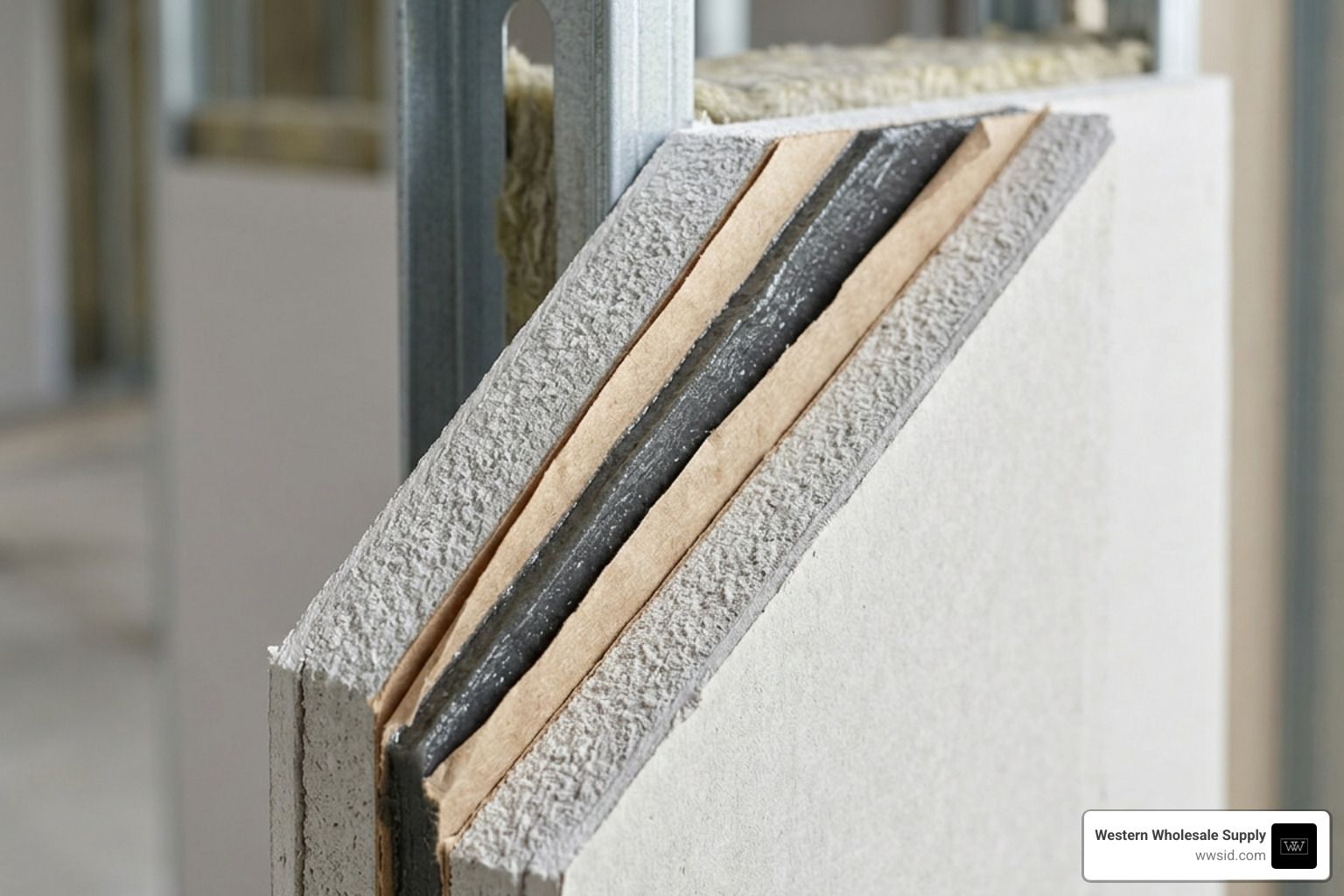
- Damping: This is where specialized products like QuietRock EZ Snap shine. They use “constrained layer damping,” where a thin layer of viscoelastic polymer is sandwiched between gypsum layers.
- Decoupling: This involves breaking the physical connection between the two sides of a wall so vibrations can’t travel through the framing.
- Absorption: Filling the air space inside the wall with insulation to “soak up” sound energy.
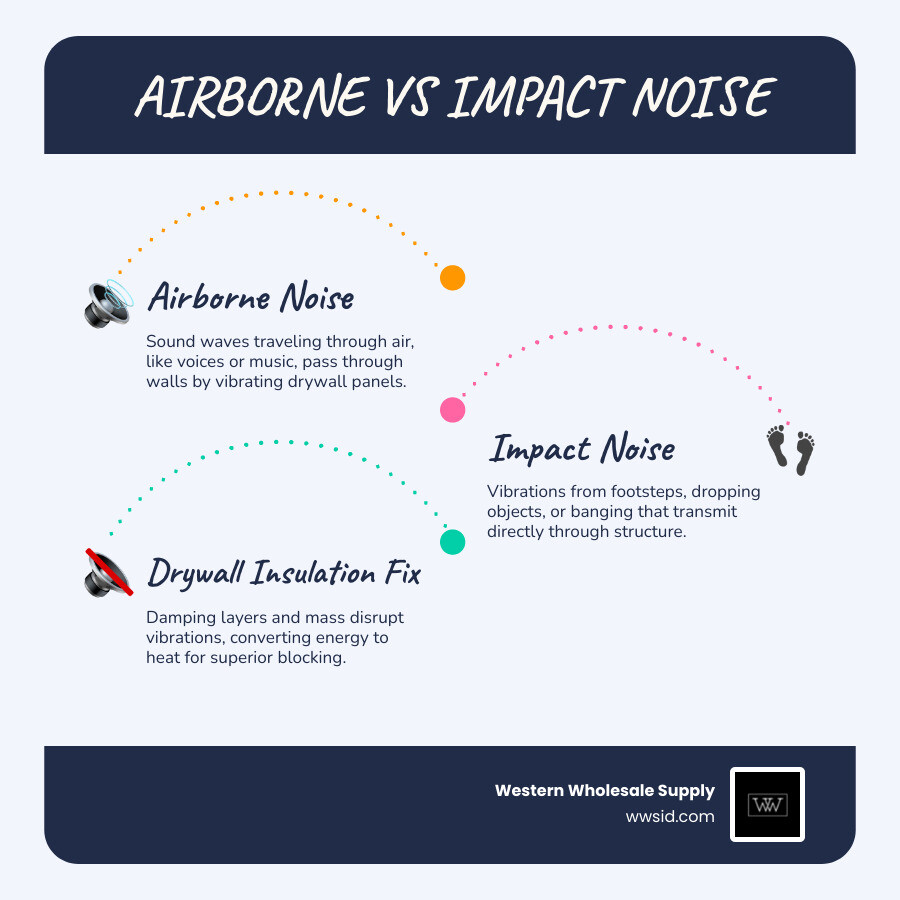
When we talk about noise, we generally categorize it into two types: Airborne noise (voices, TV, dogs barking) and Impact noise (footsteps, dropped objects, vibrating machinery). While drywall is your primary defense against airborne noise, a comprehensive approach is needed to tackle both. For a deeper dive into these materials, check out our Beyond The Buzz A Guide To Sound Dampening Drywall.
The Science of Sound Transmission Class (STC)
In our industry, we measure a wall’s ability to stop sound using the Sound Transmission Class (STC) rating. The higher the number, the better the soundproofing.
A standard wall with 1/2-inch drywall on both sides typically hits an STC of about 34. At this level, you can hear loud speech clearly. If you bump that up to an STC of 50, loud speech becomes a faint murmur. Our goal with drywall noise insulation is usually to push residential walls into the 50-60 range.
How Damping Compounds Dissipate Energy
If you’ve ever touched a car hood on a hot day, you know that energy can change forms. Damping compounds work on a similar principle. When sound waves hit a wall treated with a viscoelastic damping compound (like the core of QuietRock or a liquid compound applied between layers), the polymer layers flex and shear.
This microscopic movement converts the mechanical energy of the sound vibration into a tiny amount of heat. Instead of the wall acting like a bell and ringing, it acts like a sponge, “deadening” the sound instantly.
Comparing Soundproof Drywall to Standard Gypsum Boards
When you walk into our warehouse in Idaho Falls or Twin Falls, you’ll see stacks of standard 1/2-inch gypsum. It’s the bread and butter of construction—affordable and easy to hang. However, for noise control, standard drywall has its limits.
Doubling the mass of a wall (adding a second layer of standard drywall) only improves the STC by about 5 points. To get high-level performance with standard materials, you’d need walls so thick you’d lose significant square footage in your room.
Specialized soundproof drywall, on the other hand, is engineered to provide the performance of eight layers of standard drywall in a single 5/8-inch sheet.
STC Ratings for Drywall Noise Insulation
The data is clear: drywall noise insulation is a game-changer. A single layer of QuietRock on a standard wood stud frame can achieve an STC of 52. To put that in perspective, that is a massive improvement over the STC 34 of a standard wall. Since every 10-point increase halves the perceived loudness, an STC 52 wall sounds about four times quieter than a standard wall.
For those looking to quiet their ceilings as well, we offer various Quiet Comfort A Comprehensive Guide To Acoustic Ceiling Solutions to complement your wall upgrades.
Leading Solutions: QuietRock EZ Snap
We carry the top names in the business because we know they work in our rugged Intermountain West climate.
- QuietRock EZ Snap: This is a favorite for many of our contractors in Jackson and Driggs. It’s a high-performance, sound-damping gypsum panel that—as the name suggests—scores and snaps just like regular drywall. No special saws required.
- QuietRock 510: A cost-effective 1/2-inch option perfect for residential remodels where you want to add a layer over existing walls.
- QuietRock 530: A high-performance panel designed for maximum sound attenuation in both residential and commercial projects.
For those looking to integrate acoustic control into their ceilings, we also supply CertainTeed ceiling products, which are known for their superior sound absorption. Many of these products also offer mold resistance, which is a great “plus” for basement home theaters or laundry rooms. You can find more about these systems in our section on Acoustical Ceilings.
Best Installation Techniques for Maximum Performance
You can buy the most expensive soundproof drywall in the world, but if you install it poorly, you’re throwing money away. Sound is like water; it will find the smallest hole and “leak” through.
One of the most important techniques is staggering seams. If you are doing a double-layer installation, never line up the joints of the second layer with the first. This prevents a direct path for sound to travel through the cracks.
Another critical step is using acoustic sealant. This is a non-hardening caulk used to seal the perimeter of the drywall where it meets the floor, ceiling, and corners. Because it stays flexible, it doesn’t crack when the house settles, maintaining an airtight (and sound-tight) seal. Don’t forget putty pads for your electrical boxes—outlets are essentially “holes” in your sound barrier.
Advanced Drywall Noise Insulation with Damping Compounds
For those who prefer a “build-your-own” approach, using a damping compound between two layers of standard 5/8-inch Type X drywall is a proven method.
We recommend applying the compound in a random, “spaghetti-like” pattern across the back of the second sheet. You’ll typically use about two tubes for every 4×8 sheet. Once you screw the second layer into the studs (using longer screws to reach through both layers), the compound begins to cure. It usually takes about 7 to 10 days to reach full acoustic performance.
The Role of Wall Cavity Insulation
While the drywall blocks the sound, the insulation inside the wall absorbs it. We always recommend filling the wall cavity 100% with mineral wool or fiberglass batts.
In the cold climates of Rexburg or Rigby, insulation serves a double purpose. In warehouse or commercial environments, high-quality insulation is a critical investment; it provides essential thermal benefits that significantly reduce heating and cooling costs while simultaneously cutting down the “echo” inside wall cavities. Mineral wool is particularly effective for drywall noise insulation because it is denser than standard fiberglass, providing better sound absorption at lower frequencies.
Practical Applications and Retrofitting Existing Walls
Where should you focus your soundproofing efforts? In our experience serving homeowners from Pocatello to Jackson, the most common areas are:
- Home Offices: With more people working remotely, privacy for calls is a top priority.
- Bedrooms and Nurseries: Blocking out the sound of the kitchen or living room for better sleep.
- Home Theaters: Keeping the “boom” of the bass from shaking the rest of the house.
- Multi-family Housing: Vital for shared walls between apartments or townhomes.
The best part? You don’t always have to tear down your existing walls. A “no-demolition” retrofit involves adding a layer of QuietRock 510 or a second layer of standard drywall with damping compound directly over your current wall. It’s a fast, clean way to upgrade your acoustic comfort. For ceiling-specific noise, consider how Grid Ceiling Tiles Your Blueprint For Better Acoustics can help.
Drywall Noise Insulation for Home Theaters and Offices
Home theaters present a unique challenge: low-frequency bass. These long sound waves are incredibly hard to stop because they carry so much energy. To truly isolate a theater, you need the “triple threat”: mass (double drywall), damping (QuietRock or damping compounds), and decoupling.
In an office setting, “flanking paths” are your biggest enemy. Sound can travel over the top of a wall through a shared ceiling plenum. In these cases, combining your wall insulation with A Comprehensive Guide To Acoustical Ceilings is the only way to ensure total privacy.
Frequently Asked Questions about Drywall Soundproofing
Is soundproof drywall worth the higher cost?
While a specialized panel might cost significantly more than a standard sheet, you have to look at the total project cost. To get the same STC rating as one sheet of QuietRock EZ Snap, you might need three or four layers of standard drywall, plus the extra labor, longer screws, and extra joint compound. In many cases, the “expensive” sheet is actually the cheaper, faster solution when labor is factored in.
Can I install soundproof drywall over existing walls?
Yes! This is one of the most popular ways to use these products. Just make sure you locate the studs so your new, heavier drywall is securely fastened to the framing, not just the old drywall. You’ll also need to extend your electrical boxes so the outlets sit flush with the new, thicker wall.
What are the most common installation mistakes?
The “big three” mistakes we see are:
- Rigid Connections: Using too many screws can sometimes create “bridges” for sound.
- Unsealed Gaps: Forgetting the acoustic sealant at the floor and ceiling.
- Ignoring Flanking: Soundproofing a wall but leaving a hollow-core door or unsealed HVAC duct in the room.
Conclusion
At Western Wholesale Supply, we’ve spent over 60 years helping our neighbors across Eastern Idaho and Western Wyoming build better, quieter spaces. As a veteran-owned, third-generation family business, we take pride in knowing the technical details that make a project successful—whether you’re in Idaho Falls, Blackfoot, or Victor.
Achieving effective drywall noise insulation isn’t magic; it’s physics. By combining the right products like QuietRock EZ Snap with proven installation techniques, you can transform a noisy, frustrating room into a sanctuary of quiet.
If you’re ready to start your next project or need expert advice on which materials are right for your specific build, we’re here to help. Our team provides reliable, on-time delivery to job sites across the region, ensuring you have the high-quality building materials you need right when you need them.
Contact Western Wholesale Supply for Expert Acoustic Solutions
