

Understanding 18 Gauge Steel Studs and Structural Performance
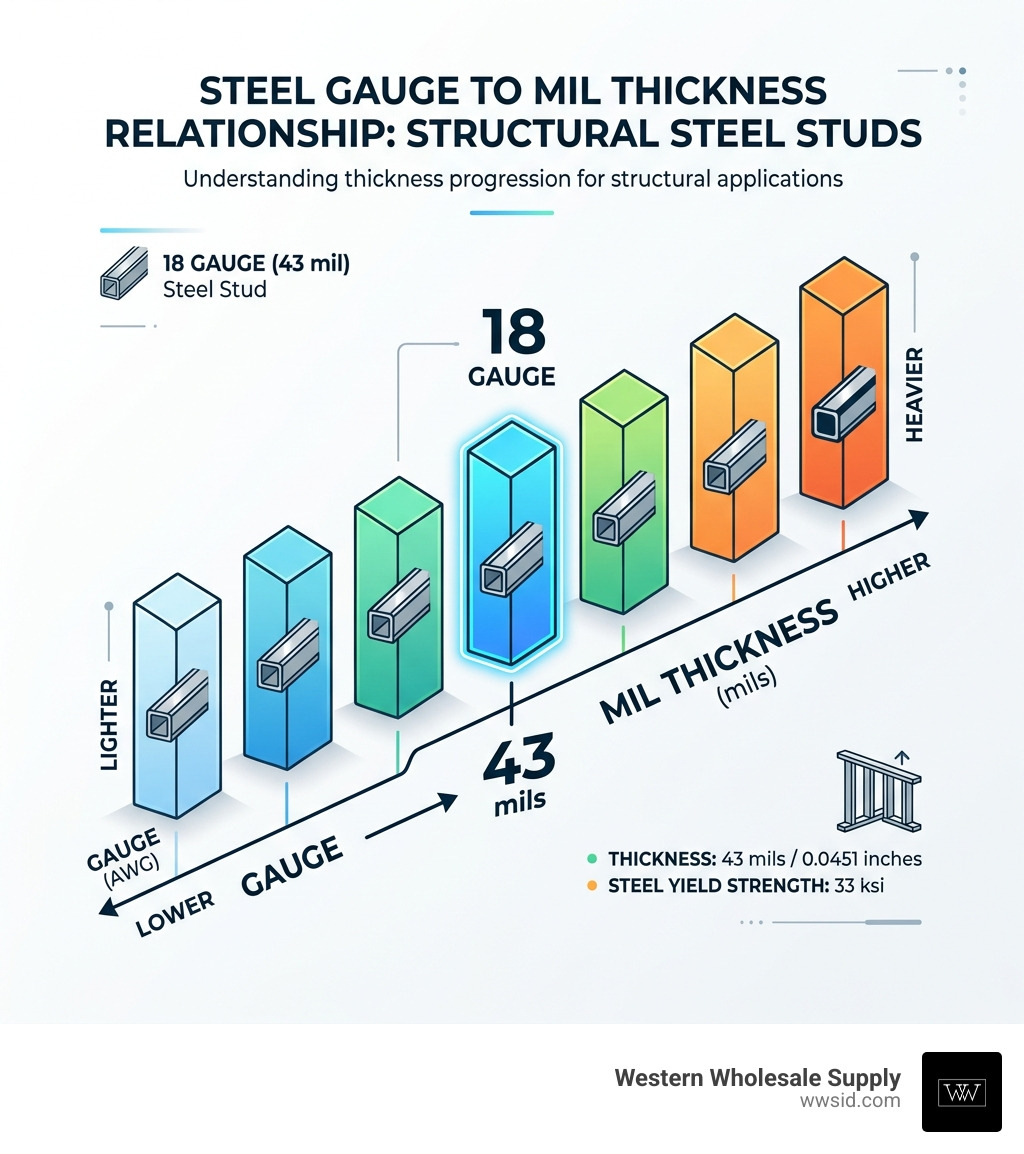
18 gauge steel studs are the go-to choice for structural framing when standard light-gauge studs just won’t cut it. Here’s a quick breakdown of what makes them different:
| Feature | 18 Gauge (43 mil) Steel Stud |
|---|---|
| Thickness | 43 mils (0.0451 inches) |
| Steel Yield Strength | 33 ksi |
| Common Web Widths | 1-5/8″, 3-5/8″, 6″, 8″, 10″ |
| Typical Flange Size | 1-5/8″ to 3″ |
| Key Applications | Load-bearing walls, curtain walls, tall partitions |
| Standard Lengths | Up to 20 ft (custom up to 24 ft+) |
| Code Compliance | AISI S240, ASTM C955 |
| Galvanized Coating | G60 standard (G90 available) |
These studs sit in the middle of the structural gauge range – heavier than the 20- or 25-gauge studs used for non-load-bearing interior walls, but lighter than 16- or 14-gauge options for the most demanding structural applications. If you’re framing a commercial exterior wall, a tall interior partition, or anything that has to carry real load, 18 gauge is often the minimum you should be looking at.
Western Wholesale Supply is a third-generation building materials professional team and veteran-owned business, and we’ve helped countless contractors across Idaho and Wyoming spec the right 18 gauge steel studs for projects ranging from medical clinics to multi-family builds. In the sections below, we’ll walk you through everything you need to know to pick the right stud for your job.
Must-know 18 gauge steel studs terms:
When we talk about 18 gauge steel studs in April 2026, we are moving out of the realm of simple “drywall studs” and into structural engineering. These members are cold-formed from mill-certified galvanized steel, ensuring that every piece of metal leaving our yard meets strict performance criteria.

Structural performance is defined by the steel’s yield strength. For 18 gauge steel studs (which are 43 mils thick), the industry standard is a 33ksi yield strength. This provides the necessary rigidity for Steel Framing/ projects that face axial loads (weight from above) or lateral loads (wind pressure against an exterior wall).
To ensure safety and consistency, these studs must comply with building codes like AISI S240 (the North American Standard for Cold-Formed Steel Structural Framing) and ASTM C955. At Western Wholesale Supply, we prioritize products that hold certifications such as ICC-ES ESR-1166P, giving you peace of mind that your structure is Ironclad. Whether you are building a storefront in Idaho Falls or a medical clinic in Jackson, understanding these specs is the first step toward a successful build. You can learn more in our guide on Everything You Need To Know About Steel Framing/.
Key Specifications for 2×6 (6-Inch) Structural Framing
In Steel Framing/, a “2×6” is technically a 600S162-43. Let’s break that code down: the “600” means it has a 6-inch web depth (the “width” of your wall), the “S” stands for Stud, the “162” means it has a 1-5/8 inch flange, and the “43” is our mil thickness (18 gauge).
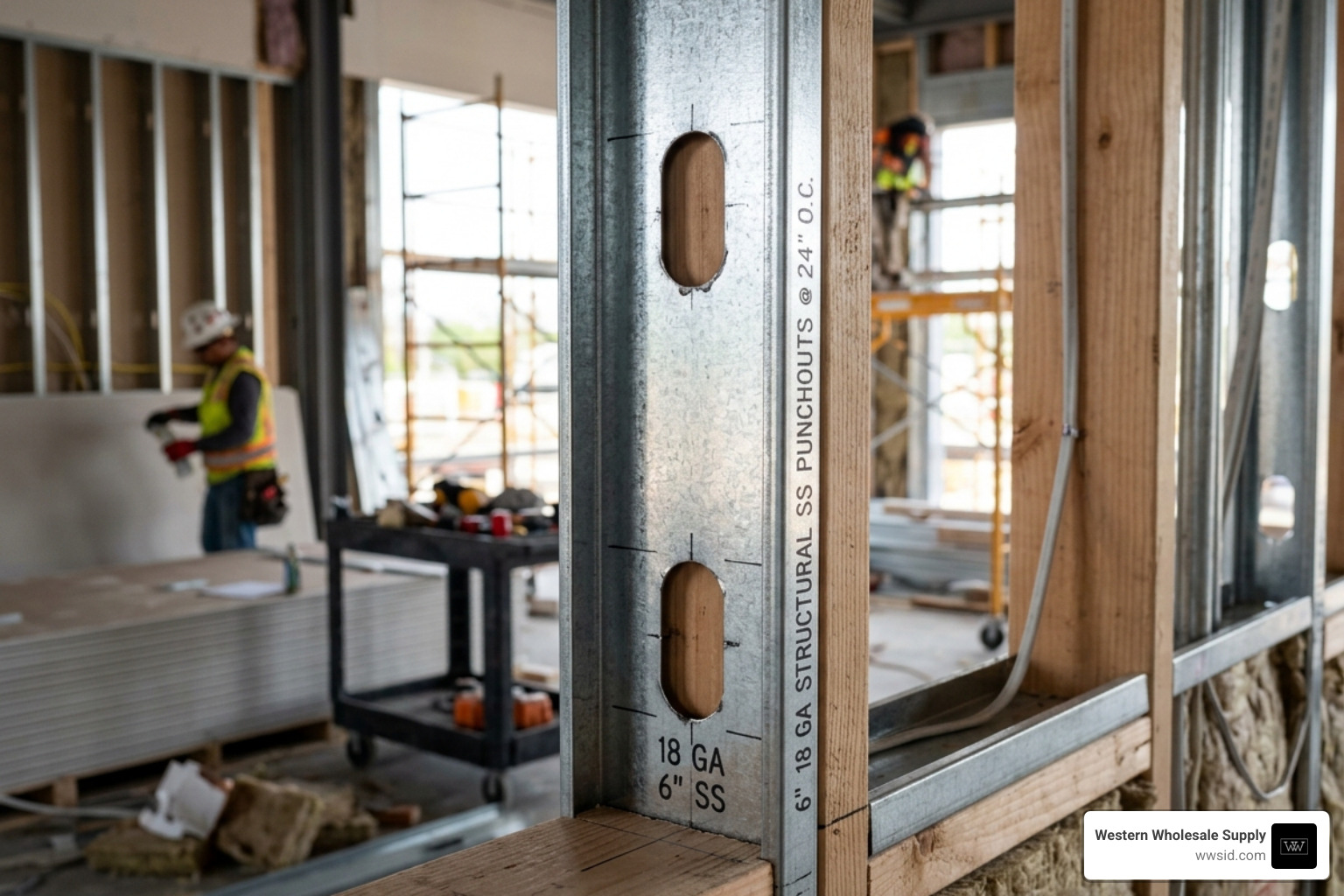
These 6-inch 18 gauge steel studs are the workhorses of commercial exterior walls. They provide enough depth for high-performance insulation while maintaining the structural integrity needed for tall heights. Standard features include:
- Flange Size: Typically 1-5/8″, but available up to 3″ for heavy-duty connections.
- Punchouts: Factory-prepped holes for wiring and plumbing. On the East Coast, these are often 12″ from the end, then every 24″ on center. Out here in the West, we typically see them 24″ from the lead end and then 24″ on center.
- Coatings: These studs are galvanized to prevent rust. CP60 (G60) is the standard, but for high-moisture areas, we can source G90.
You can find a full range of these Structural Steel Products at Western Wholesale Supply. We stock various lengths, with 20-foot pieces being common, though we can facilitate orders up to 24 feet or even custom lengths for larger projects.
Installation Best Practices and Essential Accessories
Installing 18 gauge steel studs requires more than just a standard drill and a handful of screws. Because the steel is thicker (43 mils), you need high-quality fasteners. We always recommend Grabber or Brighton Best fasteners for these applications. Self-drilling screws are a must to penetrate the structural steel without stripping the heads.
When building a structural wall, the “Track” is just as important as the stud. For an 18-gauge system, you should be using an 18-gauge structural track (like the 362T125-43) to ensure the entire assembly is rated for the load.
Best Practices for 18 Gauge Installation:
- Bridging: Horizontal bridging should be installed (typically every 4 feet on center) to prevent the studs from twisting under load.
- Deflection Clips: If you are building a curtain wall, you must use deflection clips at the top track. This allows the building’s main structure to move up and down without crushing the steel studs.
- Alignment: Ensure all punchouts are aligned. This makes the plumber and electrician’s lives much easier and keeps the bridging straight.
- Fastening: Use the correct screw pattern as specified by the engineer. Structural work isn’t the place for “that looks about right.”
For more tips on getting your frame straight and sturdy, visit Studs Tracks And Drywall Hacks Building Your Metal Frame/.
Thermal Considerations for Steel Structures
One of the biggest questions we get at our Idaho Falls and Blackfoot locations is how to keep a steel building warm. Steel is a great conductor of heat, which means it can create “thermal bridges” that suck the heat out of a building.
To combat this, especially in warehouses and commercial spaces, we emphasize high-performance insulation. For optimal thermal performance in our climate, we recommend aiming for R-30+ in ceilings and R-13+ in walls. Using 6-inch 18 gauge steel studs gives you plenty of cavity space to achieve these R-values. When combined with exterior rigid insulation, you create a thermal break that keeps the interior comfortable even when the Wyoming wind is howling. Learn more about the benefits of prefabricated framing and thermal efficiency on our blog.
Where to Buy 18 Gauge Steel Studs in Idaho and Wyoming
Western Wholesale Supply has been a fixture in Eastern Idaho and Western Wyoming since 1963. As a veteran-owned, third-generation family business, we know that “reliable” isn’t just a word—it’s a requirement. If your crew is standing around waiting for a truck, you’re losing money.
We carry a deep inventory of 18 gauge steel studs and associated tracks at our locations. Whether you are in the heart of Idaho Falls, the growing community of Blackfoot, or the rugged terrain of Jackson, WY, we have the logistics to get materials to your job site on time.
We proudly serve:
- Eastern Idaho: Idaho Falls, Pocatello, Rexburg, Rigby, Shelley, Blackfoot, Chubbuck.
- Southern Idaho: Twin Falls, Kimberly, Burley.
- Western Wyoming: Jackson, Driggs (ID side), Victor (ID side).
- Western Montana: For select large-scale projects.
Our USP is simple: 60+ years of experience and exceptional customer service. We aren’t just order-takers; we are partners in your build. For the best local sources, check out our guide on The Best Local Sources For Steel Framing And Studs/ or visit us if you are building in Blackfoot.
Frequently Asked Questions about 18 Gauge Framing
What is the actual thickness of an 18 gauge steel stud?
The design thickness for a standard 18 gauge steel stud is 43 mils, which translates to approximately 0.0451 inches. It is important to note that “18 gauge” can sometimes be used loosely in the industry, but for structural applications, you must verify the 43 mil minimum thickness to meet building codes.
Can 18 gauge studs be used for load-bearing walls?
Yes, absolutely. 18 gauge steel studs are specifically designed for axial load-bearing applications. They are often the minimum required gauge for carrying the weight of a structure. However, the exact spacing (12″, 16″, or 24″ on center) and the required web depth (3-5/8″, 6″, etc.) must be determined by a structural engineer based on the specific loads of your project.
How much do 18 gauge 6-inch studs cost in 2026?
As of April 2026, pricing for steel fluctuates based on global market trends and mill availability. Generally, 18 gauge steel studs are priced per linear foot. While they are more expensive than 20-gauge drywall studs due to the increased steel content, they offer a significant value proposition compared to 16-gauge studs when 18-gauge meets the structural requirements. At Western Wholesale Supply, we offer bulk discounts for commercial projects and can provide instant quotes to help you stay on budget.
Conclusion
Choosing the right 18 gauge steel studs is about more than just finding the lowest price—it’s about ensuring the structural integrity and longevity of your building. From their 43 mil thickness and 33ksi yield strength to their essential role in curtain walls and load-bearing assemblies, these studs are a vital component of modern construction.
At Western Wholesale Supply, we provide more than just metal. We provide the expertise of a third-generation family business and a curated selection of the best brands in the industry, including Grabber fasteners, CertainTeed ceiling solutions, and Durock products.
If you’re ready to start your next project in Eastern Idaho or Western Wyoming, trust the team that has been delivering quality since 1963. Steel Yourself for success and contact us today for more info about steel framing solutions.
