

How to Choose Drywall Inserts for Screws
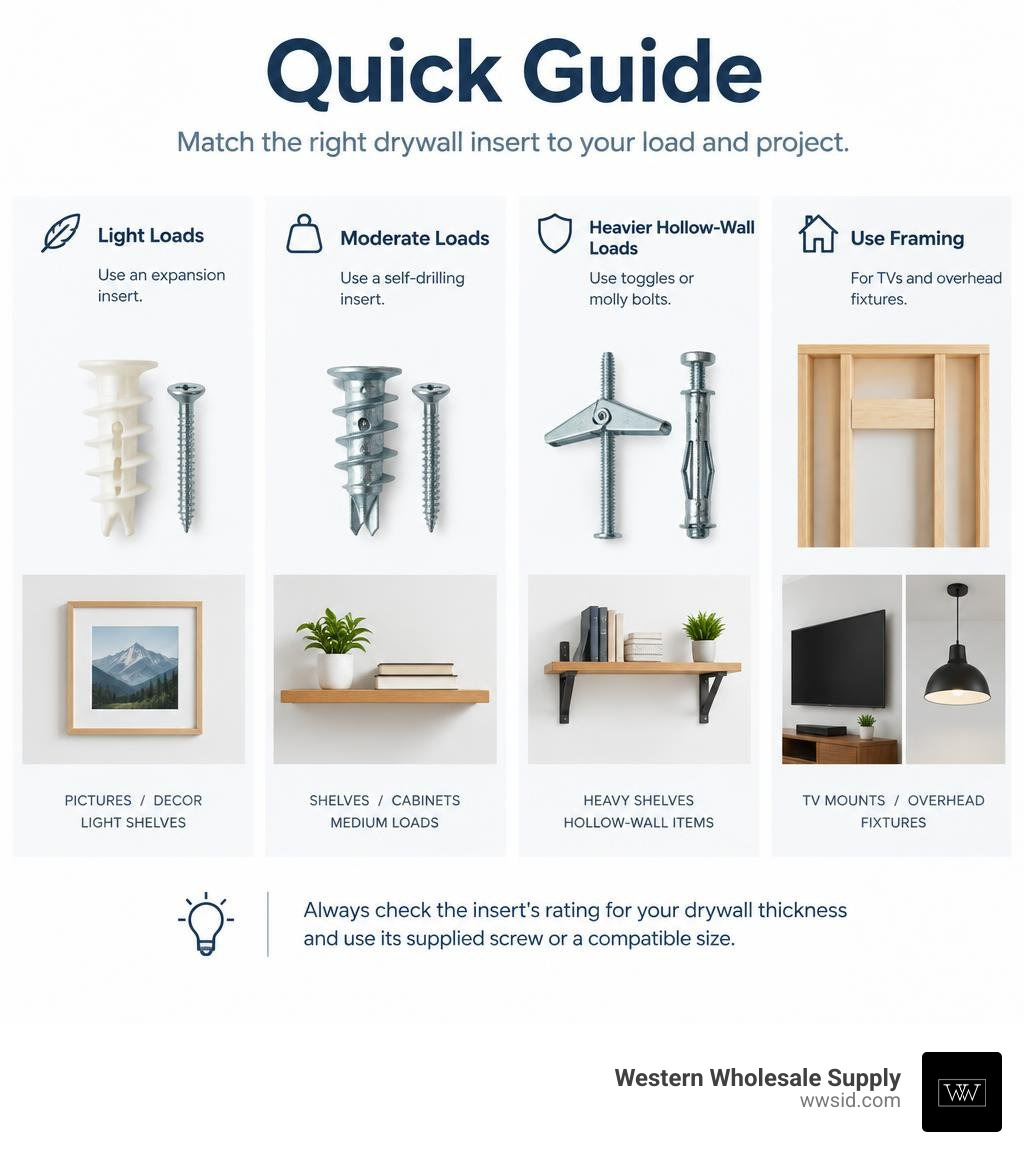
Choose drywall inserts for screws by checking the wall, the load, and the screw. Use a plastic expansion insert for a light item, a self-drilling insert for a moderate wall load, or a toggle or molly bolt when the job needs a stronger hold in hollow drywall. Follow the insert’s rating for your drywall thickness, and use its supplied screw or a compatible size.
An insert gives the screw more grip than drywall alone. But for a TV mount, a heavily loaded shelf, or an overhead fixture, plan to fasten into framing or another support designed for that load. If you use a Grabber screw with an insert, check the insert maker’s screw-size requirements first.
At Western Wholesale Supply, our building materials professionals have served contractors across Eastern Idaho and Western Wyoming for decades. We bring that practical materials experience to choosing drywall inserts for screws that fit the wall and the job.
Drywall inserts for screws terms explained:
- Drywall anchors
- anchors for hanging pictures
- drill bit for drywall screws
Primary Types of Drywall Inserts for Screws and How They Work
Hanging fixtures on interior walls requires understanding the structural nature of sheetrock. Drywall consists of a soft gypsum plaster core pressed between thick sheets of facer and backer paper. Because gypsum is brittle and crumbles under point-load pressure, driving standard drywall screws directly into drywall without a backing stud provides virtually no holding strength.

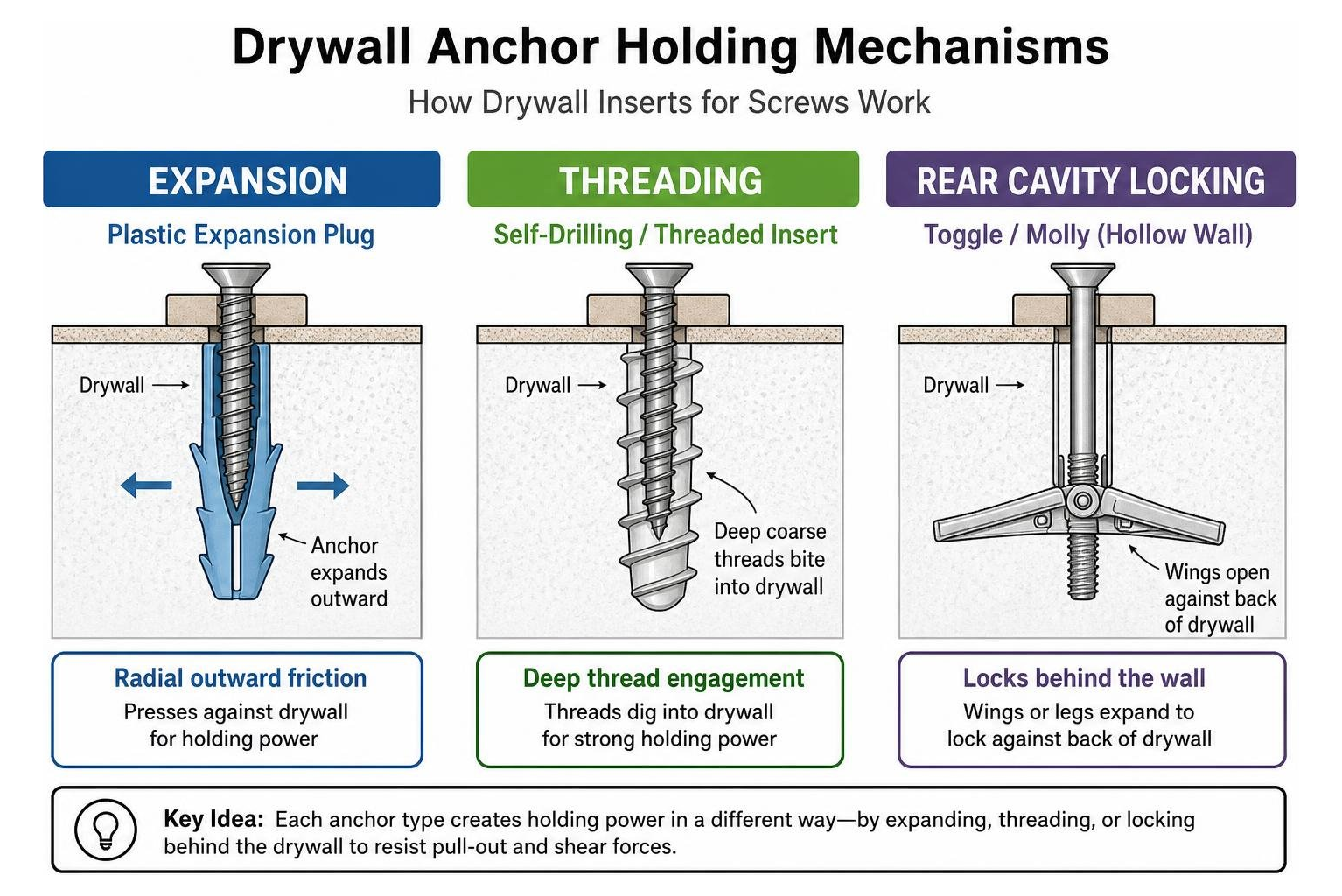
Drywall inserts solve this problem by distributing clamping forces across a larger surface area or locking mechanically against the back of the panel. Fastener manufacturers produce distinct styles of anchors to match specific substrates and weight classes. To choose the right fastener, explore how each type works:
| Anchor Type | Primary Holding Mechanism | Recommended Substrate | Typical Shear Strength | Typical Pull-Out (Tension) Strength | Safe Working Load Range |
|---|---|---|---|---|---|
| Plastic Expansion Plug | Radial outward friction | Drywall, Solid Plaster, Concrete | 20 to 30 lbs | 10 to 20 lbs | 5 to 15 lbs |
| Self-Drilling / Threaded | Deep coarse external thread bite | 1/2″ to 5/8″ Drywall | 40 to 75 lbs | 25 to 50 lbs | 15 to 40 lbs |
| Molly Bolt (Hollow Wall Drive) | Collapsing slotted metal legs | 3/8″, 1/2″, 5/8″ Drywall | 40 to 95 lbs | 25 to 50 lbs | 20 to 50 lbs |
| Spring Toggle Bolt | Spring-loaded expanding metal wings | Hollow Drywall, Plaster, Ceilings | 75 to 250 lbs | 50 to 150 lbs | 40 to 100 lbs |
| Solid Strap Toggle | Solid metal pivoting channel bar | Hollow Drywall, Cinder Block | Up to 356 lbs | Up to 265 lbs | 75 to 150 lbs |
Plastic Expansion and Ribbed Conical Plugs
Standard plastic expansion anchors and ribbed plastic wall plugs are manufactured from high-density polyethylene (HDPE) or flexible nylon sleeves. When driven into a pre-drilled pilot hole, driving the fastener forces the split shank of the sleeve outward against the surrounding gypsum core.
These work best in solid materials like masonry, brick, or dense plaster. In hollow drywall, their holding power is limited because gypsum easily powders under concentrated radial expansion. Keep these sleeves strictly reserved for lightweight items such as smoke detectors, thermostat plates, and small picture frames weighing under 10 to 15 pounds.
Self-Drilling Threaded Drywall Anchors
Self-drilling inserts—often made of glass-filled nylon or cast zinc alloy—feature deep, wide external threads and a pointed, self-tapping tip. These anchors eliminate the need for a separate pilot drill bit in standard 1/2-inch sheetrock. As you turn them into the wall with a manual screwdriver or a dimpler bit, the wide threads carve directly into the gypsum without pulverizing the core.
When using self-drilling styles, review practical self-drill drywall screws tips for 2026 to avoid stripping the wall face. Once the anchor sits flush against the paper, inserting the matching #8 screw pushes open the split tip inside the cavity, creating a firm mechanical lock that easily handles medium-duty mirrors, clocks, and small shelving units.
Heavy-Duty Toggle Bolts and Strap Toggles
Toggle bolts offer dependable strength when mounting heavier items into hollow walls without direct stud access. Traditional toggle assemblies use a machine screw fitted with spring-actuated metal wings. Once pushed through a drilled hole, the spring snaps the wings flat against the hidden back face of the gypsum board.
Modern strap toggles (channel toggles) take this holding strength even further. They feature a solid steel channel bar connected to adjustable plastic guide straps. The metal bar is pivoted through a 1/2-inch hole and pulled tightly against the rear of the wall panel while a sliding cap locks it securely on the exterior surface. Independent laboratory tests show high-strength strap toggles resisting up to 265 pounds of tension pull-out force and 356 pounds of downward shear load in 1/2-inch drywall.
Hollow Wall Drive Anchors (Molly Bolts)
Molly bolts are specialized steel sleeves with longitudinal expansion slots and an internally threaded nose cone. The user inserts the sleeve into a drilled hole and tightens the integral machine screw. As the screw turns, it draws the threaded end backward, causing the slotted metal legs to buckle outward and clamp flat against the backside of the drywall panel.
Once fully compressed, the steel casing remains permanently anchored inside the wall. The machine screw can be removed and re-inserted repeatedly without diminishing the anchor’s grip, making molly bolts ideal for fixtures that require regular servicing or replacement, such as paper towel dispensers, towel rings, or commercial wall brackets.
Weight Ratings and Load Limits for Drywall Inserts for Screws
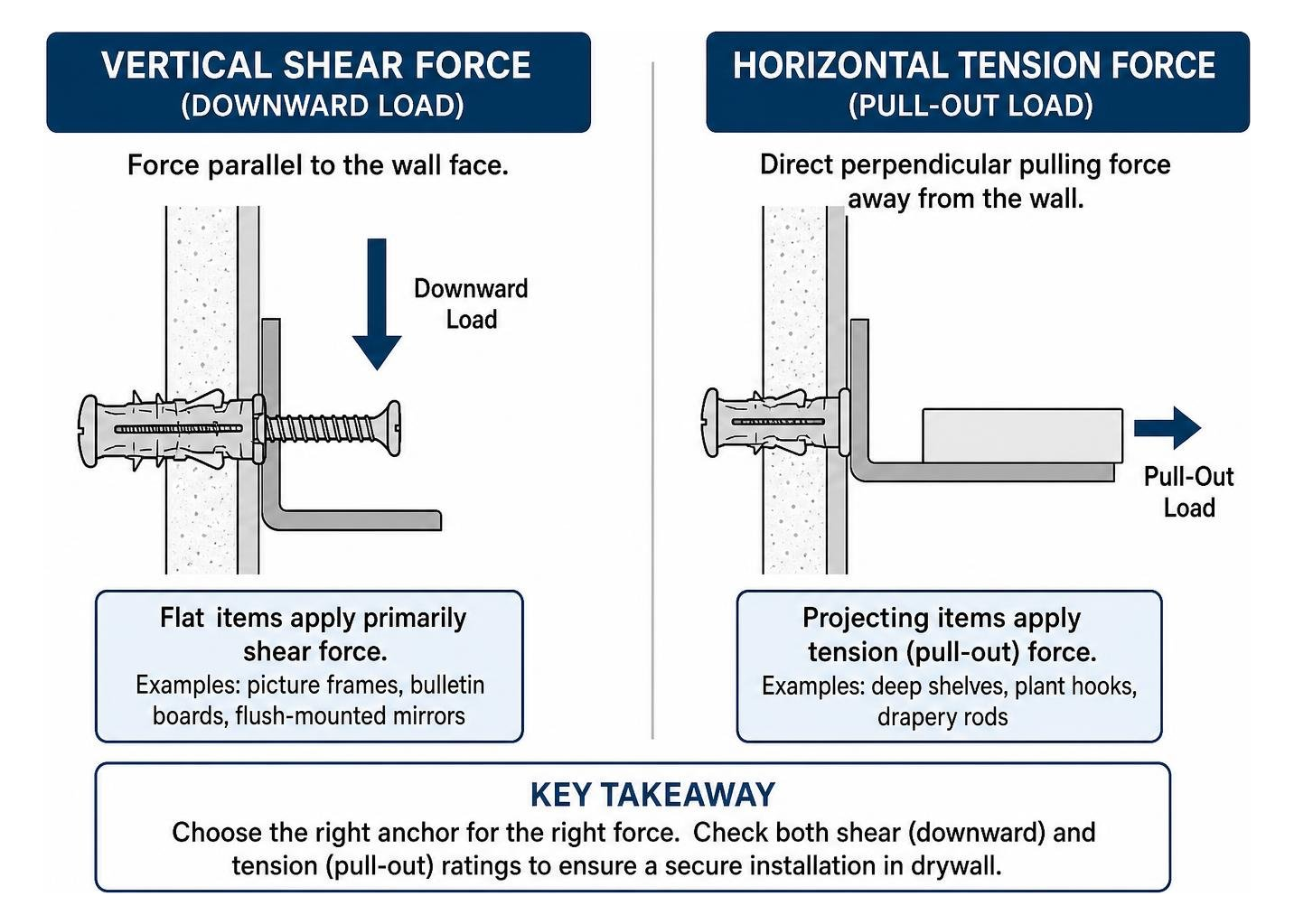
Every hanging project involves two fundamental structural forces: vertical shear load and horizontal tension (pull-out) load. Choosing an anchor based solely on a product’s maximum laboratory rating without checking these vector directions often leads to loose fixtures or damaged drywall.
Shear Strength vs. Tension Pull-Out Strength
- Shear Strength (Downward Load): The force exerted parallel to the wall face. Flat items like picture frames, bulletin boards, and flush-mounted mirrors apply primarily shear force, pushing straight down on the anchor shank.
- Tension Strength (Pull-Out Load): The direct perpendicular pulling force away from the wall. Items that project outward—such as deep floating shelves, cantilevered plant hooks, or heavy drapery rods—exert constant tension on the upper anchors as gravity tries to lever the top of the bracket out of the drywall.
Drywall holds significantly more shear load than tension pull-out force. For instance, a heavy-duty self-drilling anchor rated for 75 pounds of downward shear may fail under just 25 to 30 pounds of direct tension pull.
To ensure safety, structural building standards recommend applying a 4:1 safety factor ratio (using only 25% of an anchor’s ultimate tested maximum rating as your real-world working load limit). If an anchor package claims a 100-pound maximum ultimate limit, treat it as a safe 25-pound working load.
Weight Classification Matrix: Light, Medium, and Heavy Duty
Match your project requirements to these performance classes:
- Light Duty (0 to 20 lbs): Framed photographs, smoke alarms, decorative wall plaques. Suitable for standard plastic drywall anchors with screws and small nylon ribbed sleeves.
- Medium Duty (20 to 75 lbs): Large decorative mirrors, coat hooks, kitchen utensil racks, and curtain rod brackets. Use zinc or glass-fiber reinforced nylon self-drilling threaded anchors, or reliable 1/4-inch drive molly bolts. High-grade professional fasteners from brands like Grabber or Brighton Best ensure clean thread matching and structural dependability.
- Heavy Duty (75 to 150+ lbs): Wall-mounted medicine cabinets, multi-tier shelving units, utility racks, and structural brackets. Always use spring-loaded toggle bolts or heavy-duty steel strap toggles. Distributing heavy loads across multiple toggle anchors arranged horizontally increases overall wall stability, provided you space anchors at least 8 to 12 inches apart to prevent core fracture.
Step-by-Step Installation: How to Install Drywall Inserts Correctly
A successful installation depends on matching your tools to the anchor type. Having the right driver bits, setting tools, and fasteners prevents stripped drywall and loose wall plugs.
Installing Self-Drilling Threaded Inserts
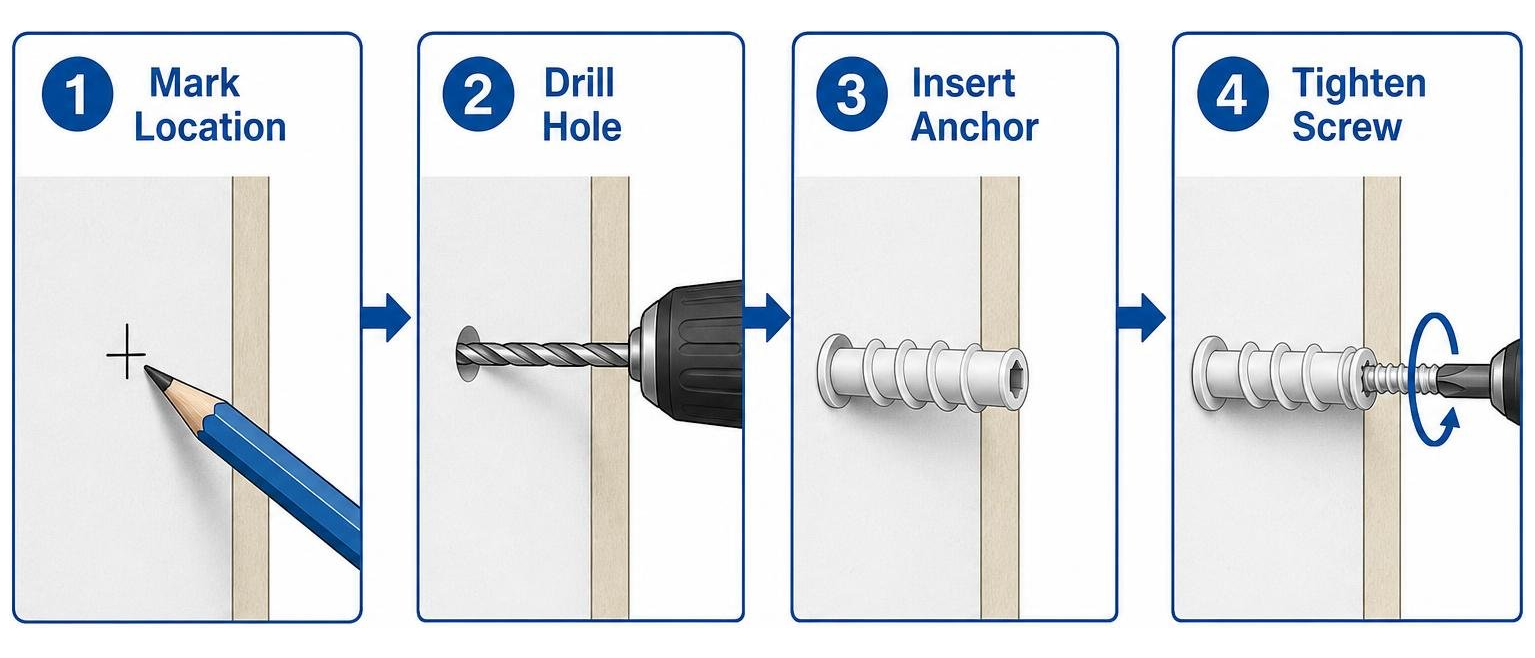
Self-drilling inserts are quick to install when handled properly:
- Mark Location: Mark your mounting spot using a pencil and level.
- Drive the Anchor: Place a standard #2 Phillips screwdriver or a drywall dimpler screw setter onto the anchor head. Press the sharp tip firmly into the drywall mark.
- Seat Flush: Rotate clockwise with steady forward pressure until the broad threads bite and draw the collar flush with the face paper. For professional consistency, adjust your drill clutch or driver depth so you set drywall screws to the perfect depth every single time.
- Fasten Fixture: Align your bracket and drive the supplied sheetrock screw through the item and into the anchor collar until snug. Stop as soon as you feel positive resistance.
Installing Expansion Plugs and Molly Bolts
For ribbed plastic plugs and steel molly sleeves:
- Drill the Pilot Hole: Select a drill bit diameter that matches the outer diameter of the sleeve. To prevent loose fits, size matters when you are screwing into sheetrock.
- Insert the Plug or Molly: Press the insert into the clean hole. Tap the flange gently with a small hammer until the anti-rotation barbs bite flat into the surface paper.
- Expand the Sleeve:
- For plastic plugs: Drive your screw directly into the center until it binds tightly.
- For molly bolts: Tighten the machine screw clockwise by hand. You will feel resistance as the back legs collapse flat against the inner wall face. Once tight, back the screw out completely, align your fixture bracket, and retighten.
Installing Heavy-Duty Spring and Strap Toggle Bolts
When hanging substantial weight in hollow wall cavities:
- Drill Clearance Hole: Drill a clean 3/8-inch to 1/2-inch hole (refer to the toggle’s packaging specs).
- Assemble the Spring Toggle: Thread your machine bolt through the bracket first, then spin the spring wings onto the bolt threads with the wing tips pointing toward the screw head.
- Insert into Wall: Compress the spring wings tightly between your fingers, push the assembly completely through the drilled opening, and listen for the wings to pop open inside the cavity.
- Lock and Tighten: Pull outward on the screw head to hold the opened wings firmly against the back of the drywall while tightening the bolt with a manual screwdriver.
Key Selection Factors, Mistakes, and Maintenance
Drywall comes in several standard residential and commercial thicknesses, most notably 1/2-inch standard interior sheetrock and 5/8-inch Type X fire-rated panels. Ensure your anchor’s grip range matches your wall thickness; using an anchor designed for 3/8-inch material in a 5/8-inch panel prevents the rear wings or expanding legs from locking correctly.
Critical Mistakes to Avoid During Installation
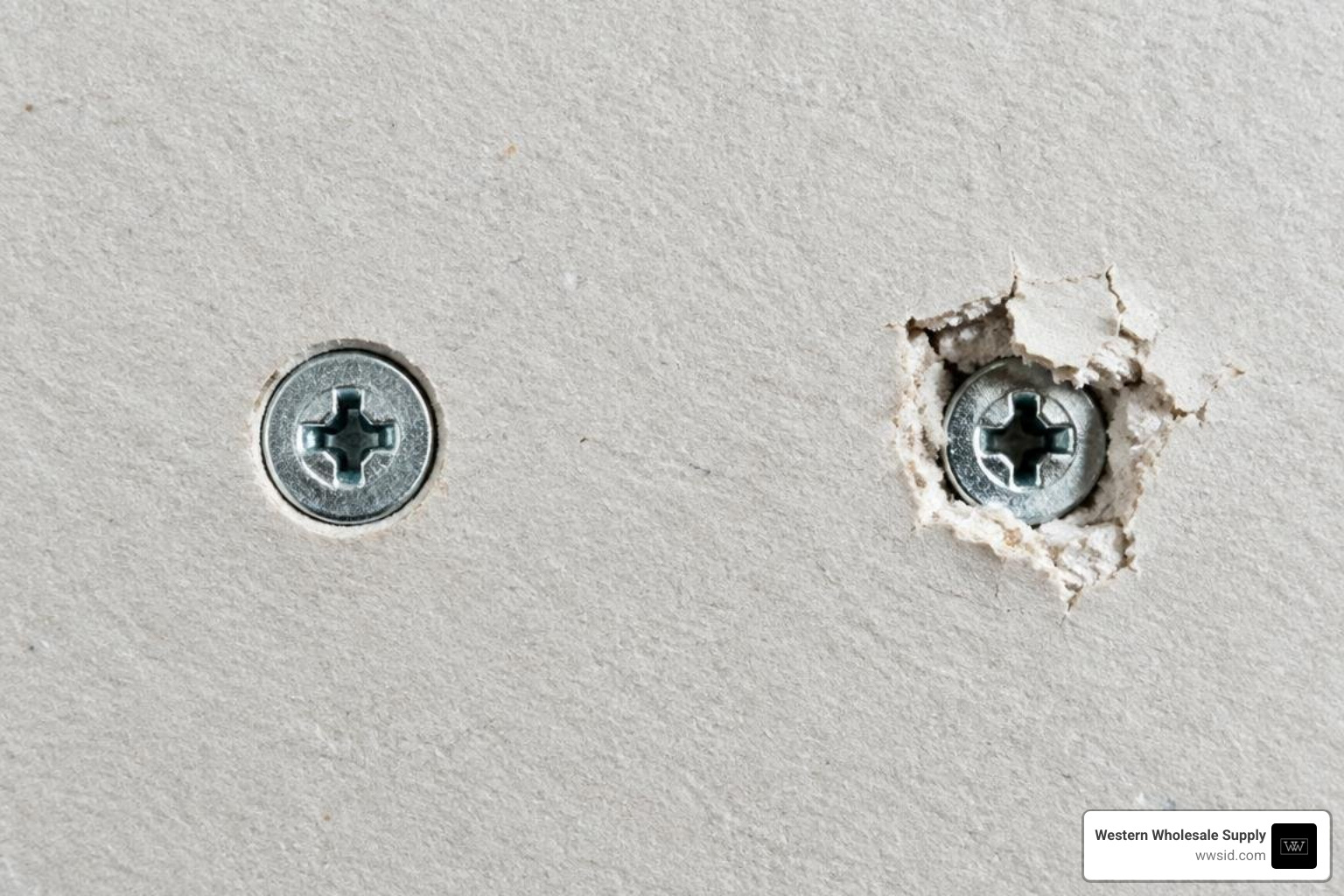
- Over-Torquing Screws: Using high-torque impact drivers on self-drilling anchors often strips out the surrounding gypsum core, turning the hole into loose white powder. Always use manual screwdrivers or clutch-protected low-speed drills.
- Using Expansion Plugs in Ceilings: Never rely on plastic friction plugs for overhead ceiling hanging. Gravity exerts pure, relentless tension pull, which can cause friction sleeves to slip out over time.
- Installing Too Close to Studs: If your pilot bit hits a wooden or steel framing stud behind the sheetrock, do not force a toggle or molly sleeve into the hole. Instead, drive a direct structural screw into that framing member.
- Over-Drilling Pilot Holes: Using an oversized or wobbling drill bit prevents the anchor’s anti-rotation fins from gripping, causing the insert to spin uselessly in place.
How to Remove Drywall Inserts for Screws Without Damaging Sheetrock
When redecorating or moving, remove old wall inserts cleanly without tearing the face paper:
- Self-Drilling Anchors: Insert a #2 Phillips manual screwdriver into the central channel, press lightly, and rotate counter-clockwise. The anchor will cleanly unscrew from the gypsum.
- Plastic Expansion Plugs: Thread a drywall screw two turns into the plug, grasp the screw head firmly with needle-nose pliers, and pull the plug straight out.
- Molly Bolts & Toggles: Drill out the outer raised flange of a molly sleeve using a 5/16-inch high-speed metal bit until the rim pops free, then push the remaining sleeve back into the wall cavity.
- Patching the Hole: Clear away loose gypsum dust. Apply joint compound or spackle across the depression using professional flexible taping knives from Hyde, USG Sheetrock Tools, Columbia Taping Tools, or Marshalltown. Smooth flush in thin layers, let dry, and sand lightly before painting.
Frequently Asked Questions About Drywall Inserts for Screws
What is the difference between a drywall insert and a masonry or concrete anchor?
Drywall inserts are engineered specifically for hollow substrates with low core density. They rely on broad-thread surface engagement, collapsing metal legs, or pivoting toggle bars to spread weight across fragile gypsum. In contrast, masonry and concrete anchors (such as wedge anchors, drop-ins, and masonry screws) require a solid, dense substrate that can withstand extreme radial expansion pressure without fracturing. Using a masonry plug in drywall generally results in early failure under load.
Can I use drywall inserts to mount heavy items like TVs or overhead ceiling fixtures?
Articulating television mounts should never be mounted solely to hollow drywall using inserts. Extending an arm out from the wall multiplies tension forces, which can easily pull anchors out of the sheetrock. Always secure television brackets, heavy ceiling fans, and large overhead light fixtures directly into solid wood framing, structural headers, or steel framing studs. For static, non-articulating medium-weight panels where stud alignment is impossible, use heavy-duty steel strap toggles.
How do I know what size screw to use with my drywall insert?
Most self-drilling and expansion anchor kits come pre-packaged with matched fasteners, commonly #6, #8, or #10 gauge screws. If replacing a lost fastener, match the screw diameter and thread pitch specified on the anchor body. The screw must be long enough to pass through your mounting bracket, pass through the entire anchor body, and extend at least 1/4-inch to 1/2-inch beyond the tip to ensure full expansion or toggle release.
Conclusion
Choosing the right drywall inserts for screws comes down to understanding load directions, calculating true working weights, and using proper installation techniques. Taking a moment to match your wall thickness to the correct fastener ensures your shelves, mirrors, and home decor remain securely anchored for years to come.
For complete project overviews, explore our in-depth guide to drywall anchors for hanging pictures to master every wall-hanging project with confidence.
At Western Wholesale Supply, we have supported professional contractors, commercial builders, and homeowners across Eastern Idaho and Western Wyoming since 1963. Whether you need CertainTeed ceiling systems, Quietrock EZ Snap acoustic panels, Durock backer board, commercial-grade fasteners from Grabber and Brighton Best, or wall finishing tools from Hyde, Marshalltown, and Columbia Taping Tools, we back every order with reliable, on-time delivery. Reach out to our experienced team today to find the right materials for your next build.
