

Choose the Right Bit and Protect the Drywall Paper
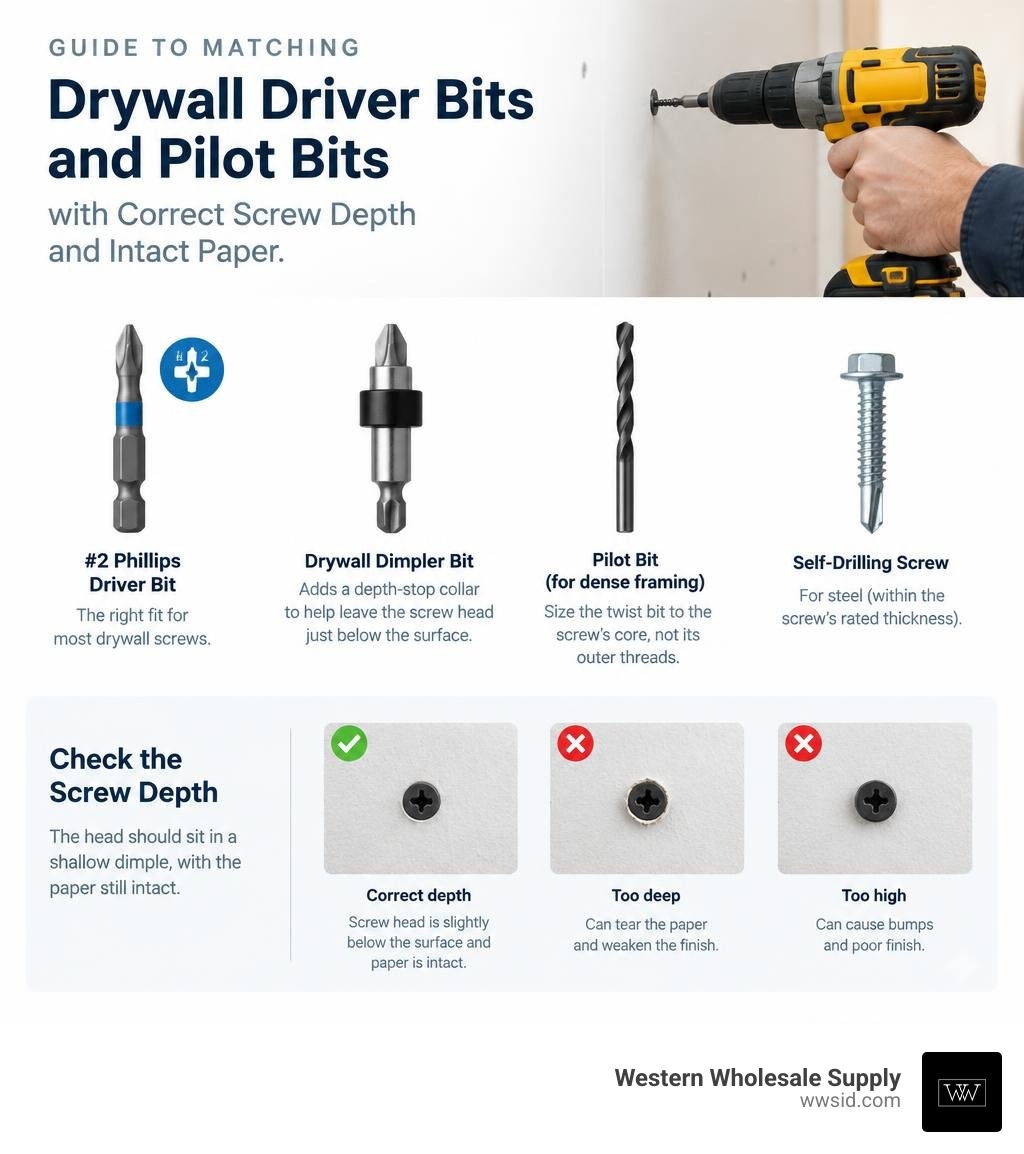
For most drywall screws, use a #2 Phillips driver bit. A drywall dimpler bit adds a depth-stop collar that helps leave the screw head just below the surface without tearing the paper. You usually do not need a pilot hole: drive sharp-point screws into wood or light-gauge steel, or choose self-drilling screws for steel within the screw’s rated thickness. If dense framing does call for a pilot hole, size the twist bit to the screw’s core, not its outer threads.
Check the first few screws before you pick up speed. Each head should sit in a shallow dimple, with the paper still intact. That check matters whether you use a standard drill or a dedicated screw gun with Grabber fasteners.
At Western Wholesale Supply, our team works directly with contractors on commercial and residential drywall and framing supplies. We’ll help you choose a drill bit for drywall screws and set a depth you can repeat across the job.
Drill bit for drywall screws word roundup:
Selecting the Best Drill Bit for Drywall Screws by Type and Fastener Gauge
Achieving a clean drywall installation comes down to matching your fastener with the right tool setup. A drywall panel relies entirely on the face paper’s surface tension to hold the board tightly against your wall framing. If your bit drives a fastener too deep and shears the face paper, the screw loses virtually all its holding value, leaving you with loose boards and popping fasteners later.

Drywall fasteners generally employ a #2 Phillips recess designed to handle high-RPM driving without stripping out immediately. However, not every #2 Phillips bit performs equally under commercial job site conditions.
- Standard Insert Bits: Compact 1-inch or 2-inch bits machined with a standard 1/4-inch hex shank. While inexpensive, standard bits require you to manually regulate the drill’s depth via your trigger finger or clutch.
- Dimpler Bits: Specialty bits engineered with an integrated steel stop collar. As the fastener seats, the collar makes contact with the drywall face, automatically disengaging the bit to form a perfect concave dimple without rupturing the paper core.
- Twist Pilot Bits: High-speed steel (HSS) twist bits used primarily when driving heavy-gauge fasteners into exceptionally dense studs or heavy structural steel framing.
| Bit Type | Drive / Shank Profile | Best Application | Key Benefit |
|---|---|---|---|
| Standard #2 Phillips Insert | 1/4″ Hex Shank / S2 Tool Steel | Wood studs using dedicated drywall screw guns | Low cost, easy replacement, fast tip swapping |
| Dimpler Driver Bit | 1/4″ Hex Shank / Depth Collar | General drywall hanging with standard drills | Prevents paper tearing with built-in depth stops |
| HSS Twist Drill Bit | Round or 1/4″ Quick-Change Hex | Pre-drilling pilot holes in heavy steel/dense wood | Eliminates stud splitting and prevents fastener shearing |
For high-volume gypsum installation, high-grade bits made from S2 shock-resistant tool steel hardened to an HRc 60 rating provide the durability needed to sink thousands of fasteners without excessive cam-out.
Why a Dimpler Drill Bit for Drywall Screws Prevents Paper Tearing
When hanging gypsum board with a regular variable-speed drill rather than an adjustable screw gun, a dimpler bit is essential. Top-tier options like the Magnus Industries Drywall Driver Dimpler Insert Bits feature a free-spinning steel collar built around a shock-resistant steel bit.
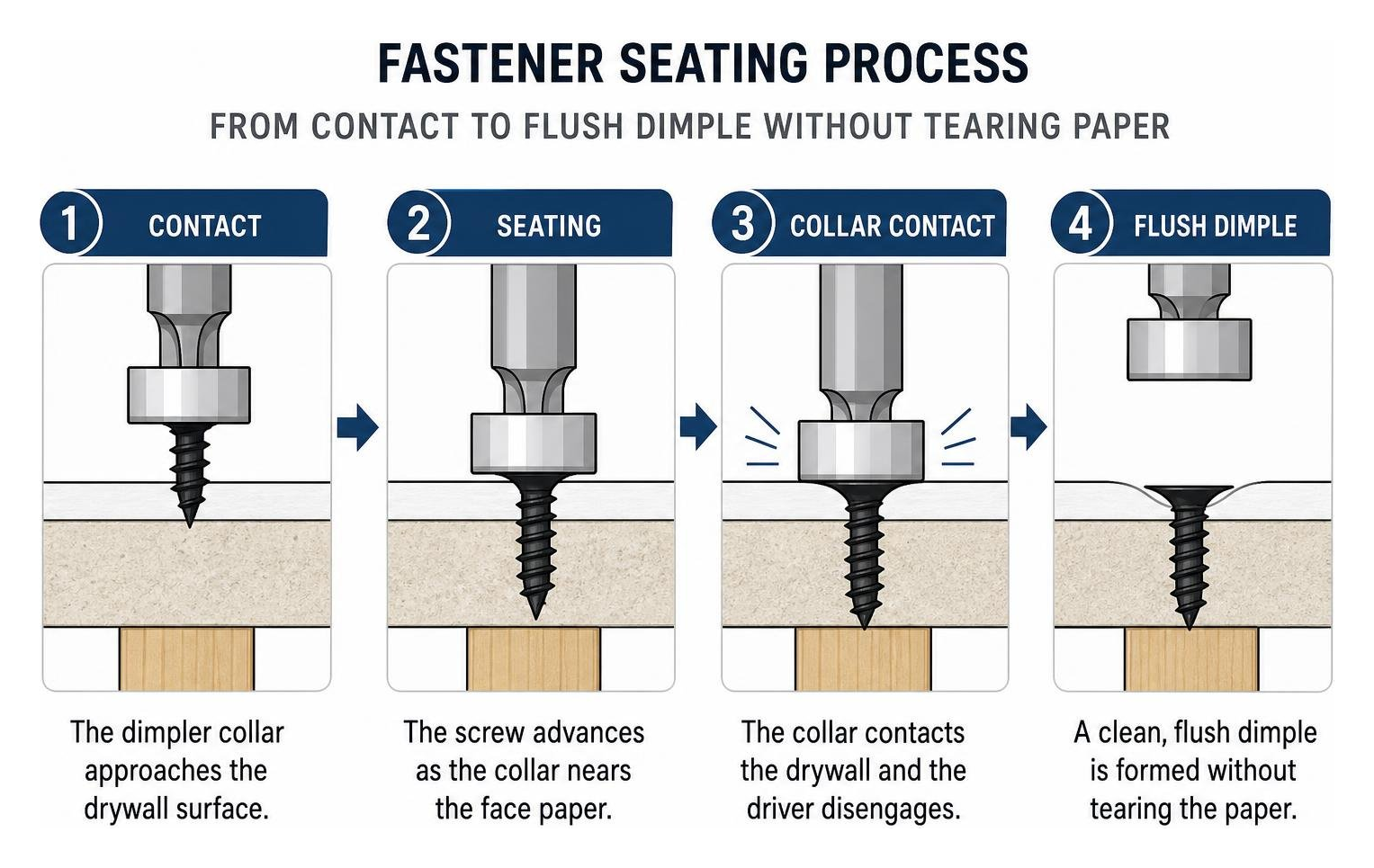
When you drive a screw, the bit seats the fastener until the outer collar presses against the board. Once it touches the face paper, the magnetic clutch mechanism disengages the driver tip. This creates a neat, shallow indentation that easily conceals your joint compound while keeping the paper fibers intact. Before starting a project, ensure you stock up on essential drywall gear you need before hanging your first sheet so you avoid surface blowouts from the start.
Matching the Correct Pilot Drill Bit for Drywall Screws Across Common Gauges
Most residential and light commercial drywall jobs do not require pilot holes when using sharp-point fasteners in wood or standard light-gauge steel. However, when working with dense, kiln-dried structural timbers, engineered lumber (such as LVL beams), or thicker structural steel framing, pre-drilling a pilot hole protects the fastener from snapping under excessive torque.
Always size your twist drill bit to match the screw’s minor core diameter (the solid inner shaft) rather than the outer thread diameter:
- #6 Gauge Drywall Screws: The industry standard for 1/2-inch wallboard. When pilot holes are necessary in dense framing lumber, use a 7/64-inch twist drill bit.
- #8 Gauge Drywall Screws: Commonly specified for multi-layer drywall systems, 5/8-inch Type X fire-rated assemblies, and dense tile backer boards like Durock. A 1/8-inch to 9/64-inch bit prevents core blowout.
- #10 Gauge Heavy-Duty Screws: Ideal for heavy-duty structural attachments and heavy commercial framing. Use a 5/32-inch bit to ensure clean threading without splitting the substrate.
Understanding fastener dimensions prevents costly framing headaches down the line; take a moment to review understanding why size matters when screwing into Sheetrock to pair your materials accurately.
How to Set Drywall Screws to the Exact Depth Every Single Time
Driving fasteners to a consistent depth requires understanding the difference between standard drill chucks, adjustable clutches, and dedicated drywall screw guns.
A dedicated drywall driver operates entirely differently from a regular drill. Tools like the Makita USA – Product Details -XSF03Z feature brushless motors spinning up to 4,000 RPM while weighing under 4 pounds. Equipped with Push Drive™ technology, the motor remains completely silent until the fastener makes physical contact with the drywall surface.
If you are using a standard cordless drill instead, adjust your drill’s mechanical clutch to a low torque setting (typically between 3 and 6). Test a few practice screws in scrap board until the clutch slips right as the screw head sinks roughly 1/32-inch beneath the face paper. For professionals considering dedicated equipment, check our battery screw gun buyer checklist to evaluate weight, balance, and RPM ratings.
Driving into Cold-Formed Steel and Metal Framing Without Cam-Out
Commercial assemblies frequently mount gypsum board over cold-formed steel (CFS) framing. Light-gauge studs (25 to 20 gauge) pair well with Fine Thread Drywall Screws from Grip-Rite, which feature sharp points that pierce thin metal quickly.
When fastening to structural steel (16 to 18 gauge, or 43 to 54 mils), standard sharp points tend to wander and skate. Instead, select professional fasteners from Brighton Best or Grabber, or use heavy-duty fasteners like Self-Drilling Drywall Screws from McMaster-Carr. These screws include an integrated #2 drill point that cuts through metal up to 0.105 inches thick without pre-drilling.
Keep your driver bit perfectly perpendicular to the metal stud face. Applying firm, steady pressure prevents the bit from slipping out of the fastener recess (cam-out), which strips screw heads and damages adjacent board paper. For detailed metal framing specifications, consult our guide to drywall to metal screws.
Using Dedicated Autofeed Systems and Collated Fasteners
For large-scale commercial drywall projects across Eastern Idaho and Western Wyoming, autofeed screw guns drastically accelerate production schedules. Systems utilizing collated fasteners—such as the Simpson DWFSD Drywall-to-CFS Screw available in 1,500-screw bulk cartons—feed fasteners automatically into an integrated nose cone.
Autofeed systems require extended-length driver bits (typically 5 to 7 inches long) machined specifically for the feeding mechanism. Ensure these bits feature heavy-duty yellow-zinc or black phosphate coatings to resist friction heat during continuous 4,000-RPM operation. Explore more installation strategies in our review of tips on self-drill drywall fasteners.
Maintenance, Bit Care, and Avoiding Costly Drywall Installation Mistakes
Drywall gypsum core material acts as a fine abrasive. Over time, gypsum dust combines with metal shavings to wear down the precision wings of your #2 Phillips bit. When bit edges round off, the driver repeatedly slips out of the screw head, creating paper blowouts and stripped screws that slow down finishing crews.
- Daily Dust Cleanout: Blow out your bit holders and dimpler collars with compressed air at the end of each shift to prevent drywall powder from locking up the depth-stop spring.
- Inspect the Bit Wings: Replace insert bits the moment you spot rounding or silvering on the drive edges. Using worn bits leads to immediate cam-out.
- Clear the Magnetic Core: Regularly wipe away fine steel burrs gathered inside the magnetic bit holder to ensure fasteners seat fully against the drive face.
- Maintain Driving Alignment: Always drive screws perpendicular to the stud face; angling the tool creates an uneven dimple that tears paper on one side while leaving the screw proud on the other.
Frequently Asked Questions About Drywall Bits and Fastening
What is the difference between a standard Phillips bit and a drywall dimpler bit?
A standard Phillips bit drives continuously as long as the drill trigger is depressed, making it easy to overdrive screws right through the gypsum core. A dimpler bit includes an integrated depth collar that disengages the drive tip the exact instant the screw reaches its optimal countersink depth, protecting the face paper.
Do self-drilling drywall screws require a pilot hole?
No. Self-drilling drywall screws feature an engineered drill point (such as a #2 drill point) at the tip that cuts cleanly through cold-formed steel studs up to 0.105 inches thick in a single motion, eliminating pre-drilling entirely.
How do you prevent overdriving drywall screws with a standard power drill?
Attach a dimpler insert bit to your standard drill chuck, reduce your drill’s torque clutch setting, and feather the trigger as the fastener nears the wallboard surface. The collar ensures the head sits just below the surface without rupturing the structural paper face.
Conclusion
Securing drywall quickly and accurately requires the right combination of fasteners and bits. By selecting premium #2 Phillips dimpler bits, setting the correct depth, and pairing your fasteners with reliable steel framing materials, you will achieve clean walls that are easy to tape and finish.
When it comes time to tape your seams, our showrooms carry industry-leading taping knives and finishing tools from trusted brands including Hyde, USG Sheetrock Tools, Columbia Taping Tools, and Marshalltown. For complete acoustical ceiling assemblies, we stock high-performance CertainTeed ceiling tiles, alongside specialty sound-damping boards like Quietrock EZ Snap and moisture-resistant Durock cement boards.
Serving contractors, builders, and trades across Idaho Falls, Pocatello, Jackson, Rexburg, Twin Falls, and surrounding communities since 1963, Western Wholesale Supply delivers reliable building materials straight to your job site. Ready to stock up on premium Grabber fasteners and accessories? Explore our professional fasteners and drywall supplies or visit our local showroom today!
