

The Fast Answer: Which Drywall Anchors Should You Use for Hanging Pictures?
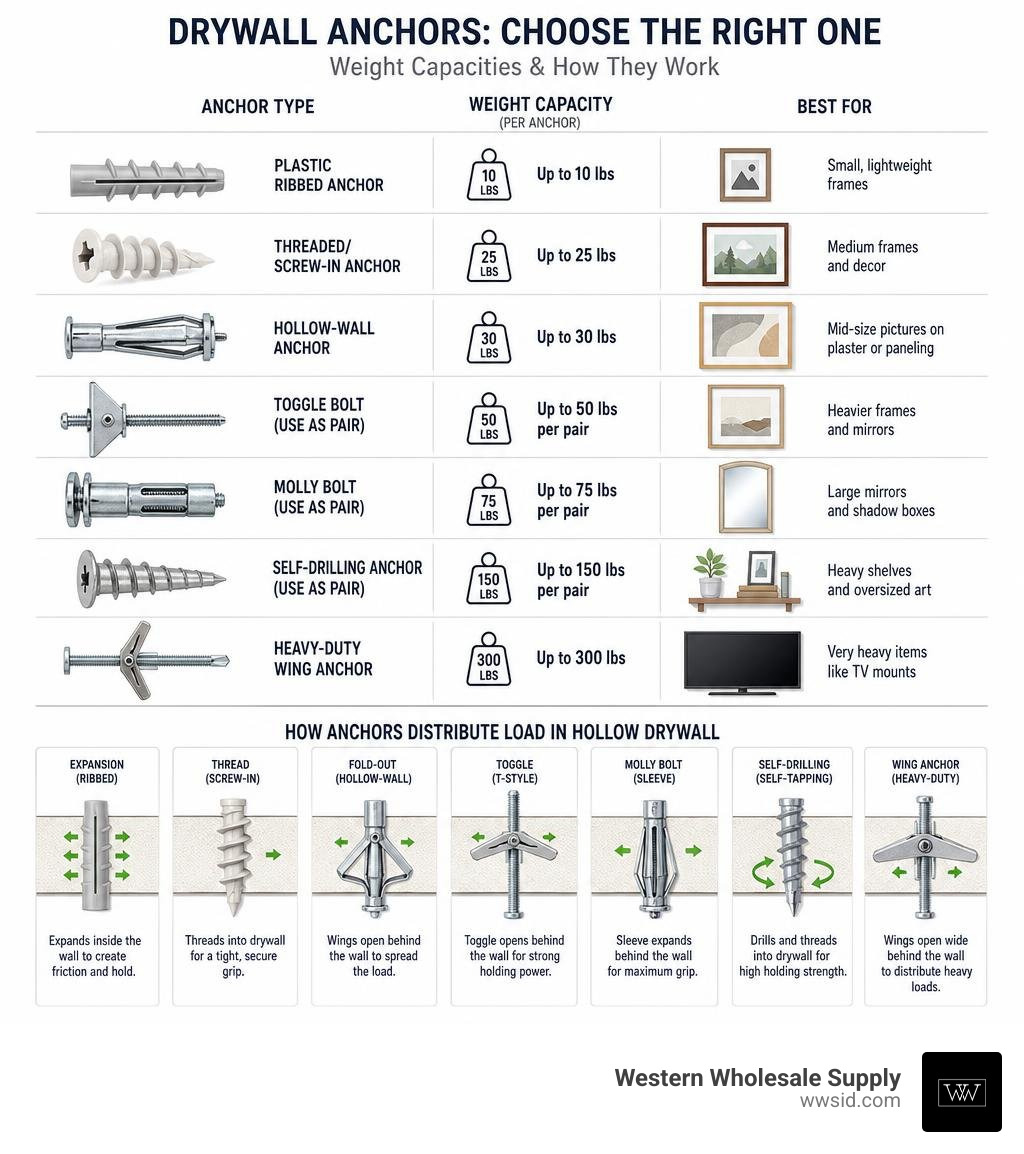
Using drywall anchors for hanging pictures is the right move any time you can’t hit a stud. Here’s a quick reference to find the right anchor for your picture’s weight:
| Anchor Type | Weight Capacity | Best For |
|---|---|---|
| Plastic ribbed anchor | Up to 10 lbs | Small, lightweight frames |
| Threaded/screw-in anchor | Up to 25 lbs | Medium frames and decor |
| Hollow-wall anchor | Up to 30 lbs | Mid-size pictures on plaster or paneling |
| Toggle bolt | Up to 50 lbs per pair | Heavier frames and mirrors |
| Molly bolts | Up to 75 lbs per pair | Large mirrors and shadow boxes |
| Self-drilling anchor | Up to 150 lbs per pair | Heavy shelves and oversized art |
| Heavy-duty wing anchor | Up to 300 lbs | Very heavy items like TV mounts |
Always choose an anchor rated higher than your picture’s actual weight, and add a 25–50% safety margin for peace of mind.
Bare walls are easy to ignore — until you try to do something about them. Hanging a picture sounds simple, but drywall is a hollow, gypsum-core material that can’t hold a nail or screw the way a wood stud can. Without the right anchor, even a moderately heavy frame can pull clean out of the wall, taking a chunk of drywall with it.
That’s where this guide comes in. Whether you’re hanging a small family photo or a large, heavy mirror, the right drywall anchor makes all the difference between a secure hang and a mess on the floor.
At Western Wholesale Supply, we are building materials professionals who have worked with contractors and builders across residential and commercial projects for years. Questions about drywall anchors for hanging pictures come up constantly — because getting this wrong is both frustrating and avoidable. Let’s walk through everything you need to know to get it right the first time.
Relevant articles related to drywall anchors for hanging pictures:
Identifying Your Wall Type: Drywall vs. Plaster or Concrete
Before you reach for your drill, you must know what lies beneath your wall’s paint. Different wall substrates require entirely different fastening strategies.
Drywall (Sheetrock)
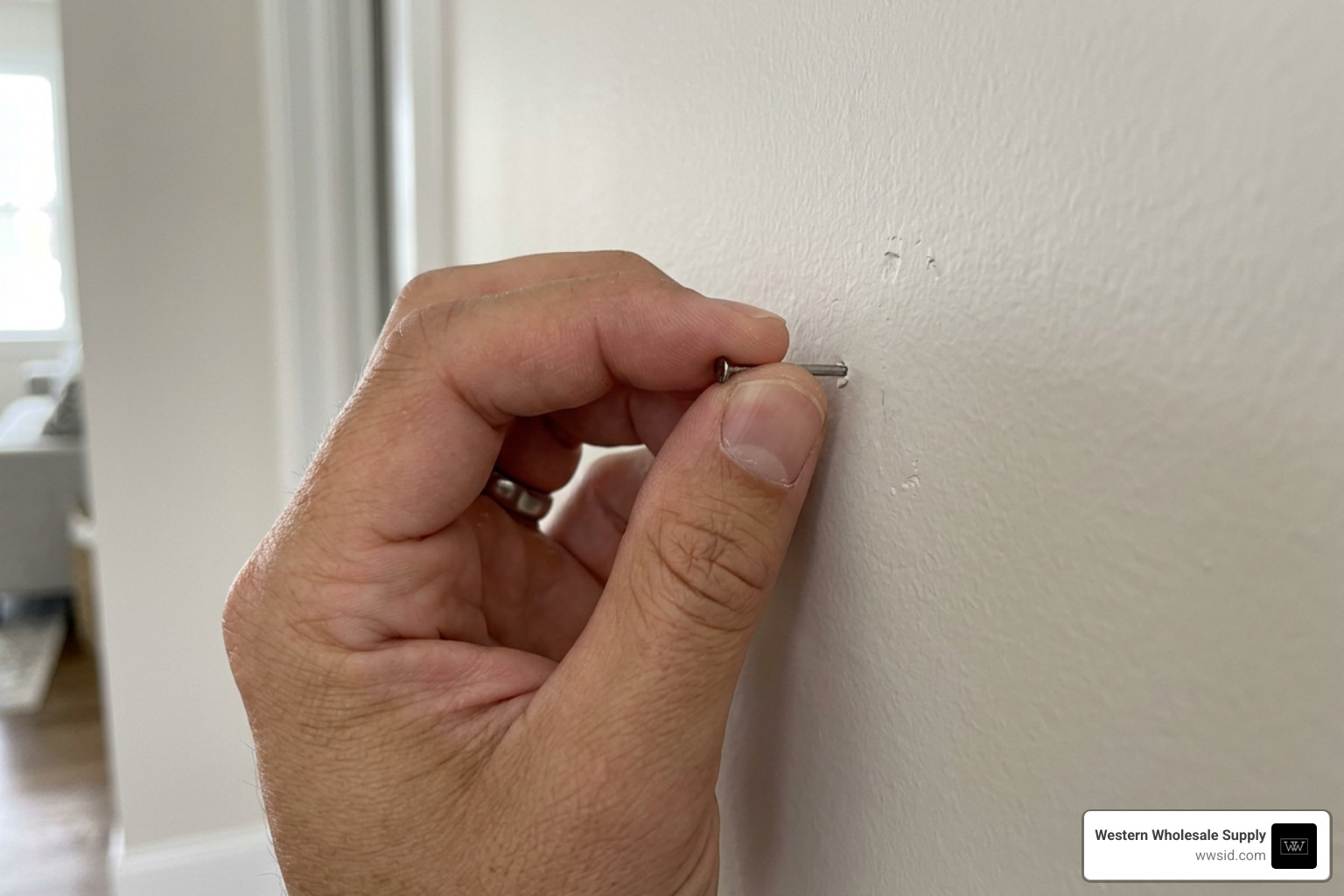
Drywall is the most common interior wall material in modern homes built after the 1960s. It consists of a compressed gypsum core sandwiched between heavy sheets of paper backing.
- The Sound Test: Knock on the wall. If you hear a hollow, airy sound, you are dealing with drywall.
- The Push Test: A small nail or pin can easily be pressed into drywall with a hammer.
- Stud Spacing: Drywall is typically attached to wood or light-gauge steel studs spaced 16 or 24 inches apart on center.
If you are dealing with damaged or poorly installed drywall, it is best to repair it before hanging heavy objects. You can learn more about finding the right professionals in our guide on Drywall Done Right: Discover Local Experts for Installation & Repair.
Plaster Walls
Common in homes built before World War II, plaster walls are made by layering wet plaster over wood strips (laths) or wire mesh.
- The Sound Test: Knocking on plaster produces a dense, solid thud.
- Characteristics: Plaster is much harder, thicker, and more brittle than drywall. Attempting to use standard self-drilling drywall anchors in plaster will often crack the wall or snap the anchor.
Concrete and Masonry
Found in basements, industrial lofts, or modern commercial structures, concrete and brick require specialized masonry anchors and masonry drill bits. Standard drywall anchors for hanging pictures will not penetrate these surfaces.
Choosing the Right Drywall Anchors for Hanging Pictures
Selecting the correct anchor is a balance of physics and safety. To ensure your cherished family photos or heavy gilded mirrors stay on the wall, you must understand how anchors function.
When selecting hardware, we always recommend using high-quality options like Grabber or Brighton Best fasteners. Using sub-par, generic screws can lead to stripped heads or sheared shafts under load. You can explore professional-grade options through our Explore Western Wholesale Supply Drywall Solutions.
Shear vs. Tension Load
- Shear Load (Downward Force): This is the primary force exerted when hanging a picture. The weight of the frame pulls straight down against the wall. Drywall anchors excel at resisting shear forces.
- Tension Load (Pull-Out Force): This is the force pulling directly outward, away from the wall. This occurs when hanging items that protrude significantly, such as deep shadow boxes or heavy shelving.
The Safety Margin
Never push an anchor to its absolute limit. In the building materials industry, we use a safety factor. A standard rule of thumb is to divide the manufacturer’s maximum shear load rating by 4 to find the safe working load. For example, if an anchor is rated for 100 pounds, its safe working load for a valuable or heavy item is 25 pounds.
Why You Need Drywall Anchors for Hanging Pictures
Drywall is incredibly weak when subjected to point loads. If you drive a standard wood screw or nail directly into drywall, the crumbly gypsum core will quickly deteriorate under the downward pull of the frame.
Drywall anchors solve this issue through load distribution. By expanding behind or within the gypsum core, the anchor increases the surface area of the connection point, transferring the weight of the picture across a much larger section of the wall. To understand the relationship between fastener dimensions and sheetrock integrity, read our article on Size Matters When You Are Screwing Into Sheetrock.
Weight Capacities of Drywall Anchors for Hanging Pictures
Let’s break down the specific weight capacities and characteristics of the most popular anchors available on the market today:
Plastic Ribbed Anchors
These are the most common anchors, often included in retail picture-frame kits. They work by expanding inside the pilot hole as the screw is driven in.
- Weight Capacity: Up to 10 lbs per pair.
- Best For: Small, lightweight frames, clocks, and light wall decor.
Threaded & Self-Drilling Anchors
These anchors feature deep external threads that cut directly into the drywall. They offer excellent holding power without requiring a pre-drilled pilot hole.
- Weight Capacity: Threaded zinc or plastic anchors can easily hold up to 25 lbs. Specialty designs like the Twist-N-Lock 75 lbs. Drywall Anchors (4-Pack) are rated for up to 75 lbs, while high-performance self-drilling anchors can support up to 150 lbs per pair.
- Popular Options: The Snap Skru supports up to 45 lbs, and zinc self-drilling kits like the Ansoon Self-Drilling Drywall Zinc Anchors with Screws Kit – 25 Dry … provide a rugged, reliable hold. You can also find comprehensive kits like the Amazon.com: Heavy Duty Drywall Anchors and Screws Kit Including … for multi-picture projects.
Specialty Claw Hangers
For tool-free installation, steel claw hangers push directly into the drywall and lock in place using hardened steel claws.
- Weight Capacity: Available in various ratings. The 3M CLAW™ Drywall Picture Hanger 15 lb with Temporary Spot Marker 3PH15M-5ES-ALT, 5 hangers, 5 markers | 3M Australia is perfect for lighter frames, while the 3M™ CLAW™ Drywall Picture Hanger 25 lb 3PH25-1ES, 1 hanger | 3M United States handles mid-sized pieces. For heavy-duty frames, the 3M CLAW™ 65 lb. Drywall Picture Hanger With Spot Markers holds up to 65 lbs without requiring a stud.
Molly Bolts (Hollow-Wall Anchors)
Molly bolts feature a metal sleeve that collapses and expands outward behind the drywall as you tighten the screw, gripping the backside of the drywall sheet.
- Weight Capacity: Up to 75 lbs per pair.
- Best For: Heavy mirrors, gallery walls, and items that may be frequently moved or adjusted.
Toggle Bolts
Toggle bolts feature a spring-loaded metal wing that folds flat to pass through a pre-drilled hole, then springs open behind the drywall.
- Weight Capacity: Up to 50 lbs per pair.
- Best For: Heavy-duty hanging when studs are completely inaccessible.
Heavy-Duty Structural Anchors
When dealing with exceptionally heavy art, architectural installations, or commercial displays, structural fasteners like the MASTER Anchor (rated up to 300 lbs in drywall) handle massive vector forces in 360 degrees. You can review the structural specifications of these heavy-duty systems in The World’s Strongest Fastener . For general hanging hardware collections, check out Hardware – Picture Hang Solutions .
Essential Tools and Preparation Steps
Hanging pictures like a pro requires a small, well-curated set of tools. Taking ten minutes to prepare will prevent uneven frames and unnecessary holes in your walls.
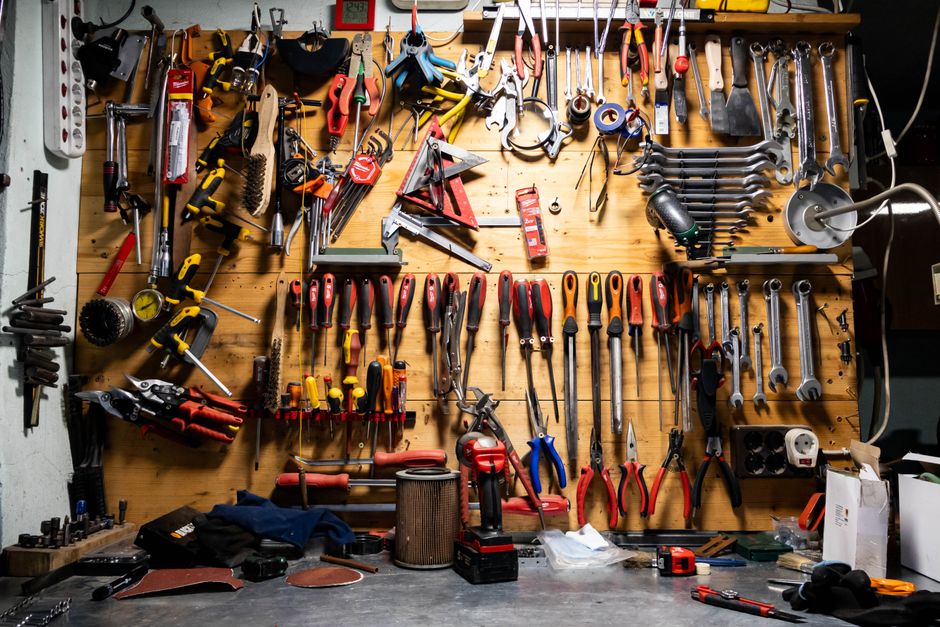
The Essential Checklist
- Stud Finder: Always try to find a stud first. Hanging directly into wood or steel framing is the most secure method.
- Spirit Level: Essential for ensuring your pictures hang perfectly straight.
- Pencil: For marking your drill points.
- Drill and Drill Bits: Standard twist bits are perfect for creating clean pilot holes.
- Hammer: For gently tapping plastic expansion anchors flush with the wall.
- Screwdriver: A manual Phillips screwdriver is highly recommended for the final tightening steps to prevent stripping the drywall.
For a deeper look into selecting and using the right equipment for your home projects, check out our guide on Drywall Tools 101.
How to Install Different Types of Drywall Anchors
Different anchors require specific installation techniques. Let’s look at how to properly install the most common varieties.
Plastic Expansion Anchors
- Drill a pilot hole slightly smaller than the width of the plastic sleeve.
- Insert the plastic anchor into the hole.
- Tap it gently with a hammer until the collar is flush with the drywall surface.
- Insert your Grabber screw and tighten until snug.
Self-Drilling (Threaded) Anchors
- Mark your hanging point.
- Place the tip of the self-drilling anchor (such as the Drywall Anchors, Pack of 60 | Self-Drilling, Supports Up to 30 lbs ) on the mark.
- Using a manual screwdriver or a drill on low speed, press firmly and screw the anchor clockwise into the wall until the collar sits perfectly flush.
- Insert the screw through your picture hanger and drive it into the anchor.
Molly Bolts
- Drill a pilot hole matching the diameter of the molly bolt’s sleeve.
- Tap the bolt assembly into the hole until the metal teeth on the collar bite into the face of the drywall.
- Tighten the screw. This pulls the backing mechanism tight against the rear of the drywall.
- Back the screw out slightly to hang your picture frame hardware. For advanced tips, check out our article on How to Use a Hollow Wall Anchor Tool in 7 Days.
Step-by-Step Guide to Installing Drywall Anchors for Hanging Pictures
Follow these steps to hang any picture frame perfectly:
- Mark the Wall: Hold your frame up to the wall at the desired height. Mark the top of the frame, then measure the distance from the top of the frame to the hanging wire or bracket. Mark this second point—this is where your anchor will go.
- Check for Studs: Run your stud finder over the mark. If you hit a stud, you do not need an anchor; simply drive a Grabber screw directly into the stud. If the wall is hollow, proceed with your anchor.
- Prep the Hole: Drill a clean pilot hole matching the size specified on your anchor packaging.
- Insert the Anchor: Tap or screw your anchor into place until it sits flush with the wall surface.
- Drive the Screw: Drive the screw into the anchor, leaving roughly a 1/2-inch gap between the screw head and the wall to catch your picture’s hanging wire or D-ring.
- Hang and Level: Place your picture on the screw and use your spirit level to make final adjustments.
Frequently Asked Questions about Wall Anchors
Can drywall anchors be removed or reused?
Most plastic ribbed and self-drilling anchors can be backed out of the wall by turning them counter-clockwise with a screwdriver. However, they will leave a hole behind. Because the drywall surrounding the hole has been compressed or cut, you should never reuse the same hole for a new anchor.
To repair the wall, gently scrape away any raised drywall paper, fill the hole with lightweight spackling compound, sand it flush once dry, and apply a touch-up coat of paint.
What are the most common mistakes to avoid when using drywall anchors?
- Over-tightening: Using a high-powered drill to drive screws into plastic or zinc anchors can easily strip the drywall core, causing the anchor to spin freely and lose all holding capacity.
- Skipping Pilot Holes: Attempting to hammer a plastic expansion anchor into solid drywall without a pilot hole will bend or ruin the anchor.
- Ignoring Weight Limits: Hanging a 40-pound mirror on a basic plastic ribbed anchor rated for 10 pounds is a recipe for broken glass.
How do you calculate the safe working load for multiple anchors?
If you are using two anchors to hang a single picture, do not simply double the weight rating. If the frame hangs slightly unevenly, one anchor will bear the majority of the weight. To safely calculate load distribution, ensure each individual anchor is capable of supporting at least 75% of the total weight of the object.
Conclusion
Hanging your favorite art, gallery collections, and mirrors doesn’t have to be a stressful task. By identifying your wall type, matching the weight of your item to the correct anchor, and using high-quality fasteners, you can ensure your decor remains safe and secure for years to come.
At Western Wholesale Supply, we’ve been helping builders, contractors, and homeowners get their projects done right since 1963. As an independent, veteran-owned, third-generation family business, we pride ourselves on supplying top-tier building materials—from CertainTeed drywall and acoustical systems to Quietrock EZ Snap panels, Durock, and professional-grade Grabber fasteners.
Whether you are working on a commercial build in Idaho Falls, updating a home in Jackson, or managing a project in Twin Falls, Pocatello, Rexburg, or anywhere across Eastern Idaho and Western Wyoming, we are here to help. Stop by one of our local yards or Explore Western Wholesale Supply Drywall Solutions today to find the professional-grade tools and materials you need for your next project.
