

Choosing a 25 lb Drywall Anchor for a Secure Hold
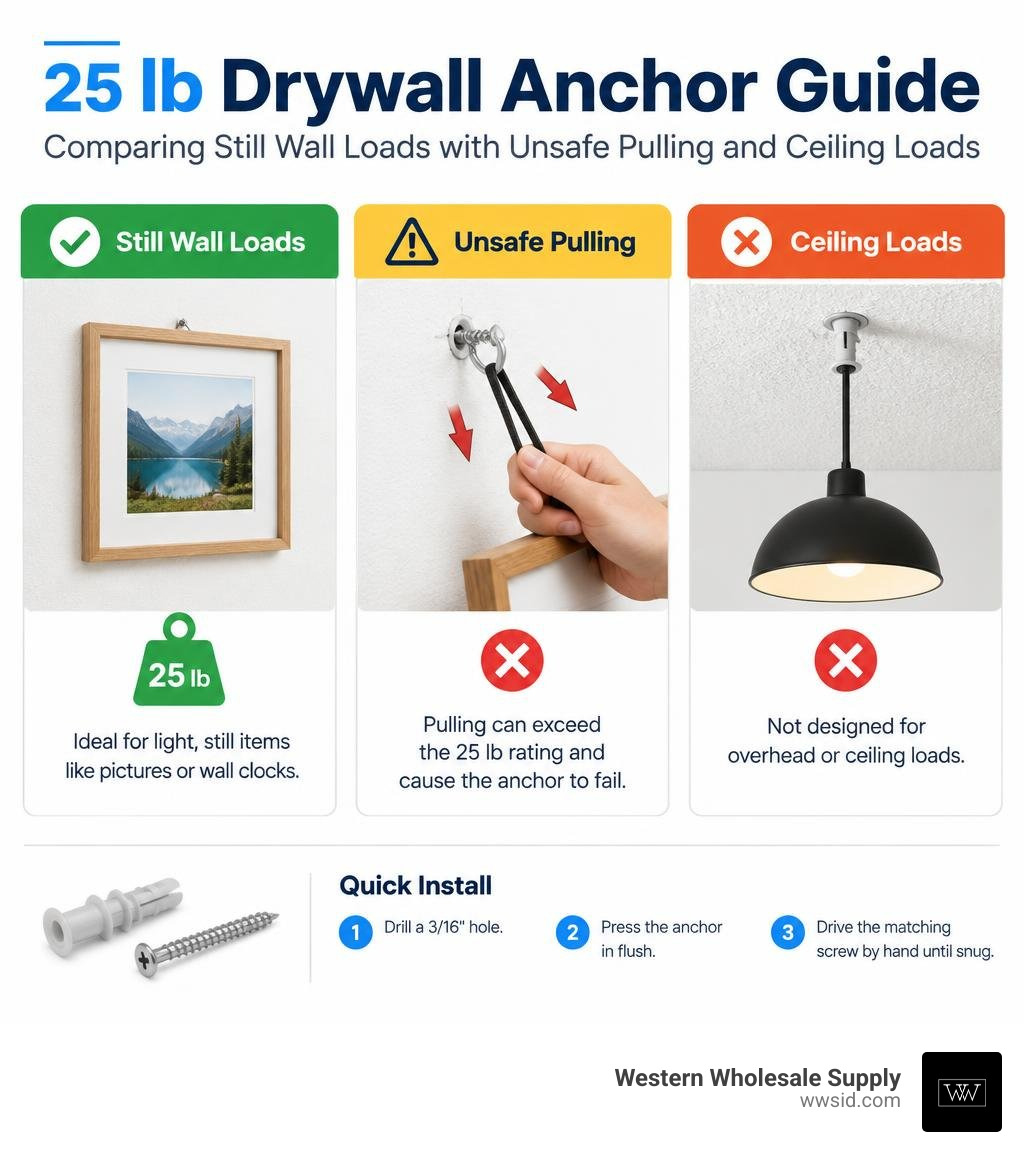
A 25 lb drywall anchor is best for a light, still item, such as a picture or wall clock. Check that its 25 lb rating applies to your wall. For a push-in anchor that calls for a 3/16-inch hole, drill the hole, press the anchor in flush, then drive the matching screw by hand until snug. If the item weighs close to 25 lb or may be pulled on, choose a stronger anchor or fasten it to a stud. Use the supplied screw; if you use a Grabber screw instead, confirm its size and length match the anchor’s instructions.
At Western Wholesale Supply, our building materials professionals work with drywall and fasteners every day. We will show you how to choose and install a 25 lb drywall anchor without putting too much trust in the number on the package.
Glossary for 25 lb drywall anchor:
Understanding the Mechanics of a 25 lb Drywall Anchor
Drywall consists of a compressed gypsum chalk core encased between layers of heavy paper. While drywall panels create smooth, fire-resistant walls, the gypsum core has limited tensile strength. Driving a standard screw directly into hollow sheetrock gives the threads nothing solid to grip; a light tug will strip out the paper and crumble the gypsum core.
A hollow wall fastener solves this by spreading force across a wider surface area of the gypsum panel. When you use a light-duty anchor, the hardware exerts mechanical grip against the back and sides of the hole. For basic homeowner projects, reading our beginners guide to choosing the right drywall anchor helps clarify how mechanical expansion locks fixtures onto bare gypsum board.
Selecting the Right 25 lb Drywall Anchor for Your Project
Light-duty fasteners fall into three main styles:
- Plastic Push-In / Expansion Sleeves: These require a pre-drilled 3/16-inch hole. As you insert the screw, the plastic sleeve splits and expands against the inner gypsum core.
- Threaded Self-Drilling Anchors (Nylon or Zinc): These feature wide outer threads that bite directly into the sheetrock without pre-drilling. They create a clean, mechanical grip.
- Winged Plastic Anchors: When the screw is driven home, two integrated plastic wings fold flat against the hidden back face of the sheetrock, creating a clamping action.
| Anchor Type | Material | Pre-Drilling Needed | Best Wall Thickness | Working Load Rating |
|---|---|---|---|---|
| Push-In Expansion Plug | Polyethylene / Nylon | Yes (3/16-inch bit) | 1/2-inch | 5 to 10 lbs |
| Self-Drilling Anchor | Cast Zinc Alloy | No (Self-tapping point) | 3/8-inch to 5/8-inch | 10 to 15 lbs |
| Winged Expansion Anchor | Nylon Composite | Yes (1/4-inch to 5/16-inch bit) | 1/2-inch | 15 to 20 lbs |
For high-grade structural holding across all sheetrock assemblies, we supply premium fasteners from Brighton Best and Grabber.
Safe Working Loads and Gypsum Board Thickness
A common homeowner mistake is treating the “25 lb” package label as an everyday operating limit. In hardware manufacturing, package numbers often represent the ultimate laboratory failure load under ideal conditions—the exact point where the anchor tears completely free from the wallboard.
To maintain safety in real homes, apply an industry safety factor by derating the anchor to 25% to 33% of its maximum rating for static loads. That means a single 25-pound rated anchor is safely suited for items weighing between 6 and 8 pounds. Board thickness also plays a primary role; a standard fastener holds significantly better in 5/8-inch Type X drywall than in thinner 3/8-inch or 1/2-inch wallboards. Understanding how size matters when you are screwing into sheetrock ensures you never overload your wall assemblies.
Step-by-Step Installation and Mounting Instructions
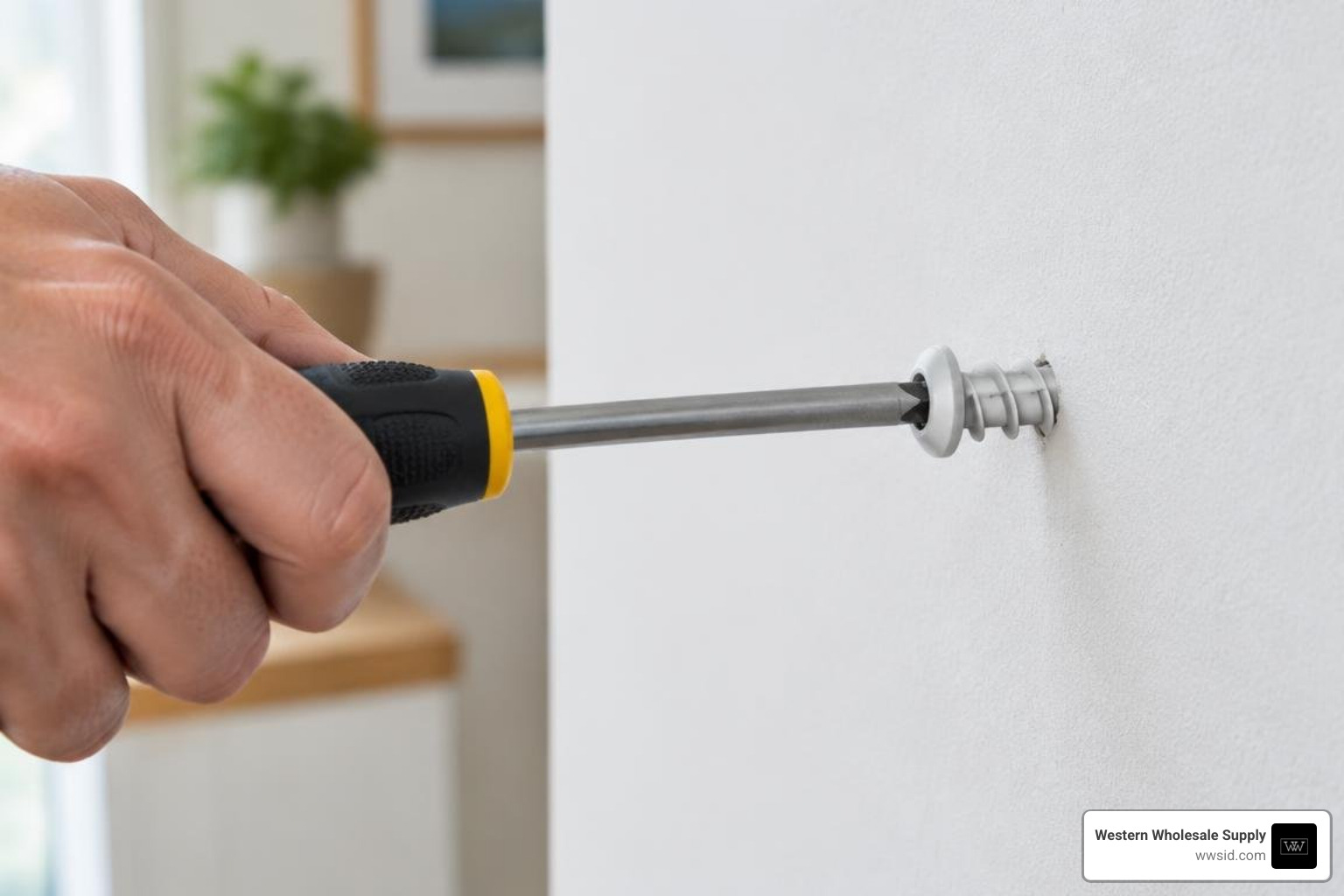
Installing light-duty anchors is straightforward when you use the right technique. Reviewing our definitive guide to drywall anchor types for easy installation gives you a clear visual breakdown of how various fastener profiles engage with sheetrock.
Essential Tools and Fastener Preparation
Gather these basic tools before mounting any wall hardware:
- Handheld #2 Phillips screwdriver (avoids stripping gypsum)
- Cordless drill with a 3/16-inch drill bit (for push-in style sleeves)
- Torpedo level and pencil
- Quality hardware kits, such as zinc self-drilling drywall anchors available from Western Wholesale Supply
For a complete rundown of everyday mounting gear, browse our primer on drywall tools 101.
How to Correctly Install a 25 lb Drywall Anchor
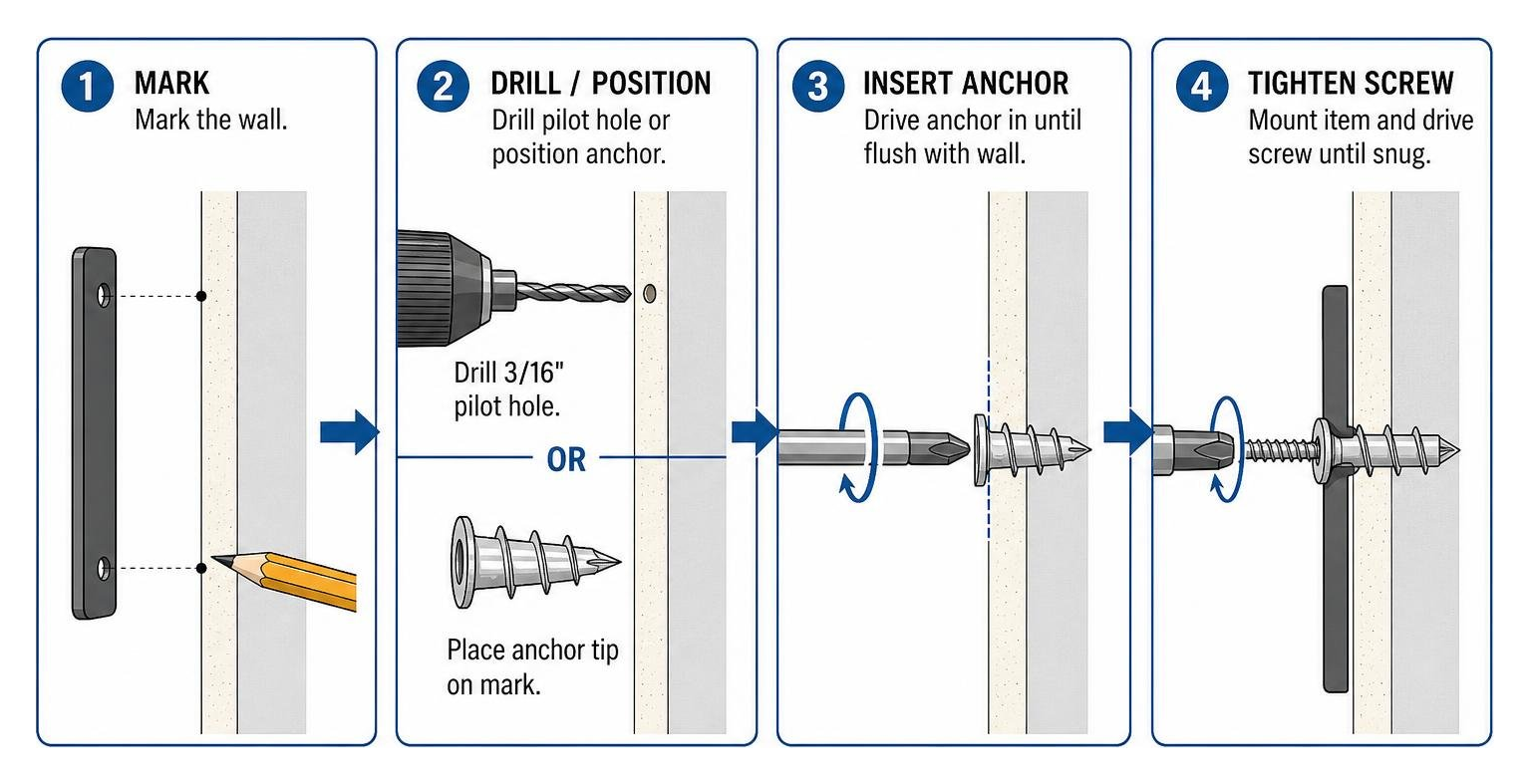
- Mark the Wall: Hold your fixture against the wall, check for level, and mark the mounting points lightly with a pencil.
- Prepare the Hole: If using plastic push-in sleeves, drill a clean 3/16-inch pilot hole. If using self-drilling zinc or nylon anchors, place the pointed anchor tip directly on the pencil mark.
- Seat the Anchor: Drive the anchor into the wall using a manual #2 Phillips screwdriver. Apply steady forward pressure until the head rests perfectly flush with the drywall surface. Do not drive it past the paper face.
- Mount the Item: Position your bracket or hanging hardware over the anchor hub.
- Drive the Screw: Insert the matching #6 or #8 screw and turn clockwise until snug. Stop as soon as firm resistance is felt.
Critical Installation Mistakes to Avoid
- Using High-Speed Impact Drivers: Power tools spin too fast and easily strip out the soft gypsum core, leaving the anchor spinning freely in a ruined hole.
- Drilling Oversized Pilot Holes: A loose pilot hole prevents the sleeve from gripping the drywall core.
- Hitting Hidden Framing: If you hit a wood or steel stud while installing a self-drilling anchor, stop immediately. Back the anchor out and drive a standard Grabber drywall or framing screw directly into the stud instead.
- Ignoring Fixture Thickness: Ensure your screw penetrates at least 1 inch past the back of the fixture so the anchor’s expansion mechanism engages fully.
Safe Hanging Applications and Weight Limits

Matching hardware to your specific wall decor prevents unnecessary wall damage and keeps framed items safe. When mounting artwork, our guide on how to choose the correct wall anchor for hanging pictures walks you through step-by-step weight estimations.
Ideal Lightweight Fixtures for 25-Pound Fasteners
Lightweight anchors excel at supporting static items where downward shear force remains constant:
- Small and medium framed family portraits
- Wall clocks and decorative wooden plaques
- Lightweight curtain rod brackets
- Small bathroom towel rings and robe hooks
- Compact 25 lb capacity hardwall hangers
When to Upgrade to Heavy-Duty Toggle and Molly Bolts
Certain items should never rely on light plastic or self-drilling expansion fasteners. If you are hanging floating shelves, full-length mirrors, large bathroom vanities, or flat-screen televisions, upgrade immediately to mechanical clamping fasteners.
Read the definitive guide to molly fasteners to understand how steel sleeve legs expand behind the wall to carry heavy loads. For televisions and heavy shelving, always secure mounts directly into wall studs or use structural 1/4-inch toggle bolts.
Frequently Asked Questions About Light-Duty Wall Anchors
Can Light-Duty Anchors Support Overhead Ceiling Fixtures?
No. Light-duty plastic or self-drilling anchors should never be installed in ceilings. Wall installations benefit from shear load (gravity pulling downward parallel to the wallboard). In ceiling installations, gravity exerts pure tensile pull, pulling the fastener straight out of the fragile gypsum core. For ceiling applications, fasten directly to joists or use through-bolted toggle hardware.
How Do You Remove and Patch Anchor Holes?
To remove a threaded self-drilling anchor, place a #2 Phillips screwdriver in the center and turn counterclockwise until it backs out cleanly. For plastic push-in sleeves that spin, gently tap the anchor head slightly below the drywall paper line with a hammer and nail set, or score off the raised rim with a utility knife.
Fill the depression with joint compound using professional finishing tools from Hyde, Columbia Taping Tools, USG Sheetrock Tools, or Marshalltown. Sand smooth once dry and touch up with matching paint.
What Is the Difference Between Shear Load and Tension Pull?
- Shear Load: Downward force parallel to the wall (like a flush picture frame). Anchors are strongest in shear.
- Tension Load: Outward force pulling perpendicular to the wall face (like a deep floating shelf or swinging bracket). Tension exerts leverage on the anchor, significantly reducing its safe holding capacity.
Conclusion
Light-duty wall fasteners make mounting home decor quick and reliable when installed with proper care and conservative load margins. By matching your fixture weight to the right hardware, avoiding power driver over-tightening, and understanding sheetrock limits, you can hang items cleanly without damaging your walls.
For full residential decor projects, check out our comprehensive guide to drywall anchors for hanging pictures.
At Western Wholesale Supply, we have served contractors and homeowners across Eastern Idaho, Western Wyoming, and surrounding areas since 1963. Whether you are stocking up on professional fastener packs from Brighton Best and Grabber, finishing sheetrock with Marshalltown taping tools, or installing Quietrock EZ Snap acoustic panels, Durock tile backer, and CertainTeed acoustical ceiling systems, our team delivers the quality materials and technical expertise you need for every build.
