

What Are Mineral Fiber Tiles? A Quick-Start Guide for Contractors
Mineral fiber tiles are one of the most widely used ceiling products in commercial and residential construction — and for good reason.
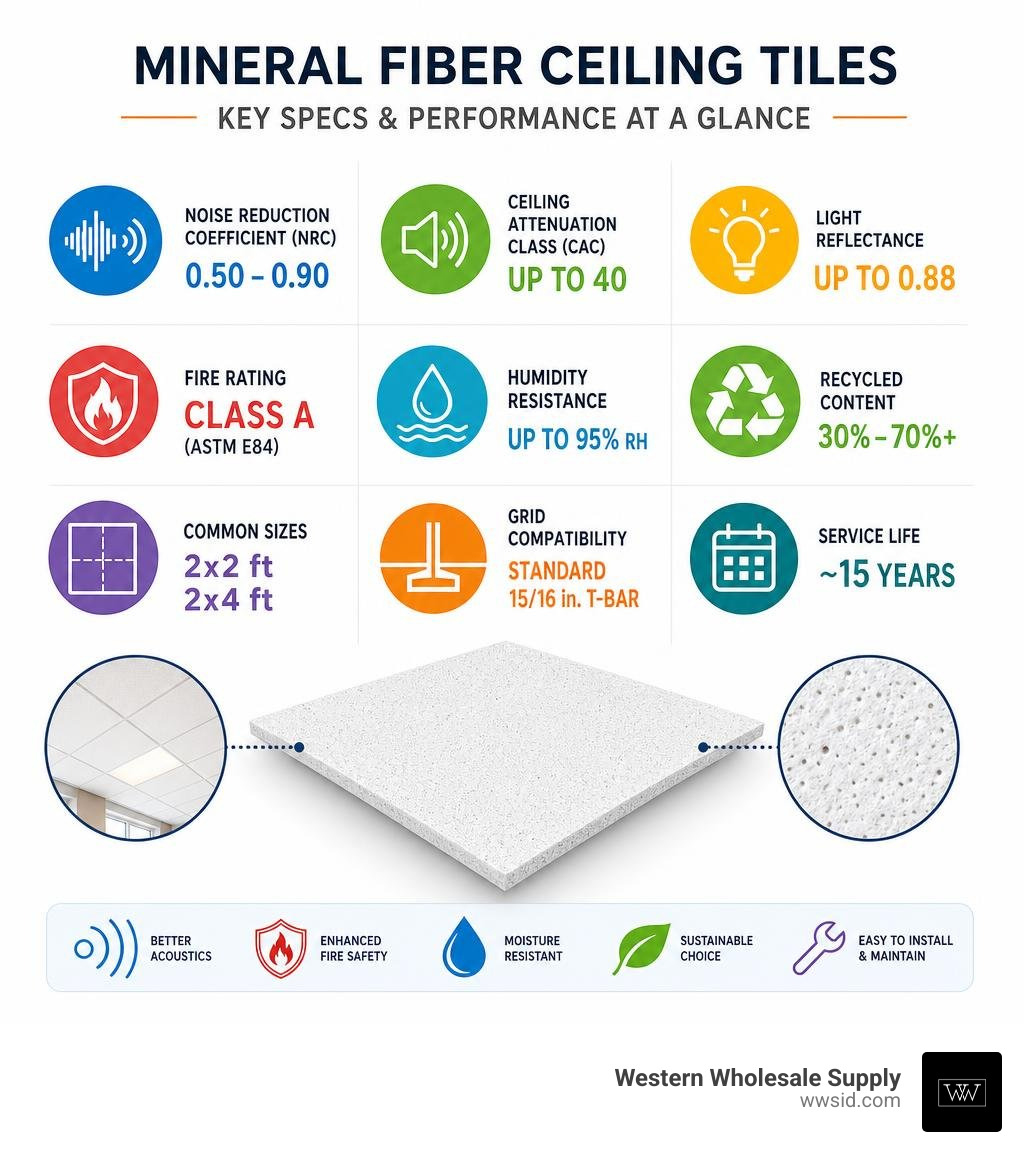
Here is what you need to know at a glance:
| Feature | Typical Range |
|---|---|
| Noise Reduction Coefficient (NRC) | 0.50 – 0.90 |
| Ceiling Attenuation Class (CAC) | Up to 40 |
| Light Reflectance | Up to 0.88 |
| Fire Rating | Class A (ASTM E84) |
| Humidity Resistance | Up to 95% RH |
| Recycled Content | 30% – 70%+ |
| Common Sizes | 2×2 ft, 2×4 ft |
| Grid Compatibility | Standard 15/16 in. T-bar |
| Service Life | ~15 years |
Mineral fiber ceiling tiles first gained widespread use after World War II, during the post-war building boom. Contractors needed a fast, affordable way to finish commercial ceilings while hiding mechanical, electrical, and plumbing systems above. The suspended ceiling was the answer — and mineral fiber became its most popular tile.
Decades later, these tiles are still a go-to solution. They deliver strong acoustic control, solid fire safety ratings, and straightforward installation at a cost that works for most budgets. Whether you are finishing a school, an office, a healthcare facility, or a basement, mineral fiber tiles remain a practical and proven choice.
At Western Wholesale Supply, we have helped contractors and builders across Eastern Idaho and Western Wyoming specify and source mineral fiber tiles for projects of all sizes. In the sections below, we will walk you through everything you need to make a confident decision.
Mineral fiber tiles vocabulary:
Composition, Manufacturing, and Design of Mineral Fiber Tiles
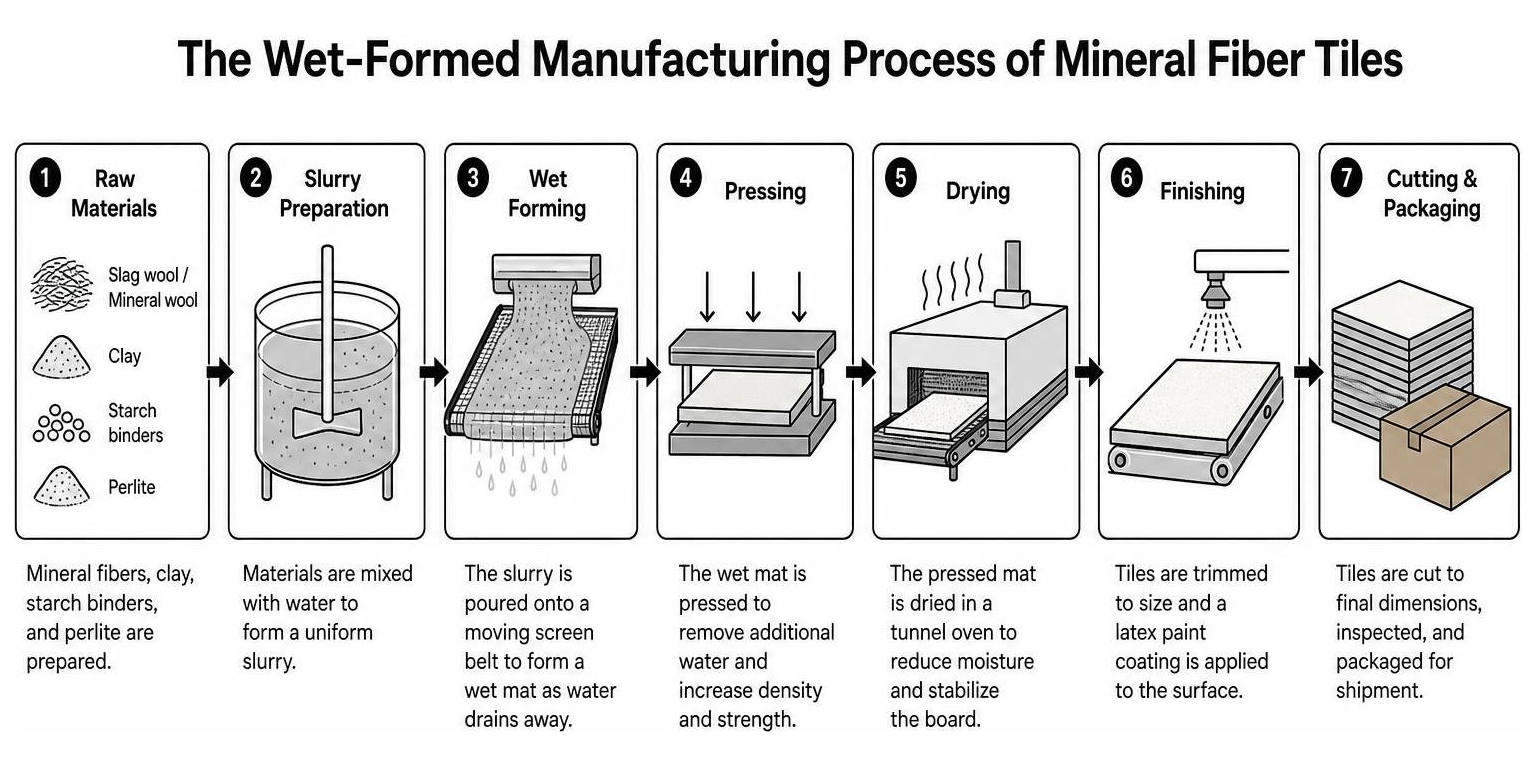
To understand why mineral fiber tiles perform so well, it helps to look at how they are made. These tiles are manufactured primarily through a wet-formed process, which blends raw materials into a thick slurry before draining, pressing, and baking them into rigid, durable boards.
The core ingredients of a standard mineral fiber tile include:
- Slag wool (or mineral wool): A fibrous material made by spinning molten industrial slag or basalt rock.
- Clay: Adds density, strength, and fire-resistant properties.
- Starch binders: Holds the mineral fibers and clay together during the forming process.
- Perlite: Often added to improve lightweight thermal insulation and sag resistance.
Once dried, these boards have a typical density of 260 to 280 kg/m³. They are then cut to size, and the surface is finished with a factory-applied latex paint. This face coating seals the tile, establishing a reliable moisture barrier that helps prevent sagging and microbial growth.
For high-quality solutions, we highly recommend looking at CertainTeed Mineral Fiber Ceiling Panels. These panels are engineered for excellent durability and provide a fantastic balance of sound absorption and sound blocking. If you want to dive deeper into suspended ceilings, check out our A Comprehensive Guide To Acoustical Ceilings.
Manufacturing and Composition of Mineral Fiber Tiles
The use of natural mineral wool and post-industrial slag makes these tiles a highly sustainable choice. Many wet-formed mineral fiber panels contain between 30% and 70% post-industrial recycled content.
This high recycled content makes them a favorite for green building initiatives and projects aiming for LEED certification. For example, high-grade options like Ellson Mineral Fiber Acoustic Ceiling Tiles EM13 boast up to 70% recycled content. They also feature a thermal insulation rating of 0.03 W/(m·K), helping to keep indoor temperatures stable while remaining completely asbestos-free and formaldehyde-free for superior indoor air quality.
Design and Aesthetic Options for Mineral Fiber Tiles
Gone are the days when choosing an acoustic ceiling meant settling for a boring, industrial look. Today’s mineral fiber tiles come in a wide variety of textures, patterns, and edge details to complement any design style:
- Edge Profiles: You can choose from a standard Square Edge (where the tile sits flush with the grid), a Tegular Edge (which features a rabbeted edge to create a clean, recessed shadow line), or a Micro Look / Concealed Edge for a nearly monolithic appearance.
- Visual Textures: Options range from classic fissured and pin-perforated patterns to ultra-smooth, microperforated finishes that mimic the clean look of premium drywall.
- Non-Directional Patterns: Many modern panels feature non-directional visual patterns. This is a massive timesaver for installers because they do not have to spend time aligning the direction of each tile. It also reduces material waste, as off-cuts can often be reused in other areas of the room.
- Sizes: Standard configurations are 2×2 feet and 2×4 feet, with thicknesses typically ranging from 1/2 inch to 5/8 inch (and up to 3/4 inch or 20mm for high-performance acoustic models).
Understanding the Performance of Mineral Fiber Tiles
Acoustics, fire safety, and moisture resistance are the three pillars of any high-performing commercial ceiling. Selecting the right tile requires matching these technical metrics to the specific needs of your space.

For a closer look at how these tiles keep commercial spaces comfortable, read our article on Why Acoustical Lay In Ceiling Tiles Are The Unsung Heroes Of Your Office.
Acoustic Metrics: NRC vs. CAC
When evaluating acoustic ceiling tiles, you will encounter two primary metrics: NRC (Noise Reduction Coefficient) and CAC (Ceiling Attenuation Class). Understanding the difference is crucial for achieving speech privacy and noise control.
- Noise Reduction Coefficient (NRC): This measures how much sound a tile absorbs within a room. NRC ratings range from 0.0 (perfect reflection) to 1.0 (perfect absorption). A standard mineral fiber tile typically has an NRC of 0.50 to 0.65, while high-performance acoustic tiles can reach up to 0.90. High-NRC tiles are essential in large, open spaces like school cafeterias, call centers, and hospital corridors to reduce echo and lower overall noise levels.
- Ceiling Attenuation Class (CAC): This measures how much sound the tile blocks from traveling between adjacent rooms through a shared ceiling plenum. It is measured in decibels (dB). A CAC of 35 or higher is considered high performance. High-CAC tiles are critical for private offices, conference rooms, and classrooms where confidential conversations must not carry into the next room.
By choosing a tile that balances both metrics, you get the best of both worlds: a quiet room with minimized echo, and excellent speech privacy.
Fire Safety and Humidity Resistance
Safety is non-negotiable in commercial construction. Fortunately, because mineral fiber tiles are made from rock wool and clay, they feature exceptional fire safety ratings. Most standard mineral fiber panels carry a Class A fire rating tested under ASTM E84, meaning they have low flame-spread and smoke-development indexes. While fiberglass tiles can withstand temperatures up to 800°C, high-density mineral fiber tiles can withstand temperatures exceeding 1,200°C, making them highly reliable in fire-rated assemblies.
Humidity resistance is another area where modern manufacturing has made massive strides. Standard untreated mineral fiber is naturally hydroscopic, meaning it absorbs moisture from the air, which can lead to sagging and mold. However, modern high-humidity panels are treated with a factory-applied vinyl latex coating.
These treated tiles can withstand up to 85% or even 95% relative humidity (RH) without sagging. They are also tested under ASTM D6329 for microbial and mold resistance. While these coatings protect against ambient moisture, they will not protect the tile from active overhead water leaks from plumbing or a damaged roof.
Mineral Fiber vs. Fiberglass Ceiling Panels
Contractors often find themselves choosing between mineral fiber and fiberglass ceiling tiles. While they look similar on a grid, their physical properties and performance characteristics are quite different.
| Performance Metric | Mineral Fiber Tiles | Fiberglass Tiles |
|---|---|---|
| Primary Material | Slag wool, clay, starch | Glass microfibers, resin |
| Acoustics (NRC) | 0.50 – 0.90 (Good absorption) | 0.70 – 1.00+ (Excellent absorption) |
| Acoustics (CAC) | 35 – 40 (Excellent sound blocking) | Under 25 (Poor sound blocking) |
| Weight | Heavier (~1.0 lb/sq ft) | 30% – 40% Lighter |
| Fire Resistance | High (Up to 1,200°C+) | Moderate (Up to 800°C) |
| Moisture Resistance | Requires specialized latex coatings | Inherently moisture/sag resistant |
| Service Life | ~15 years | 10 – 12 years |
| Cutability & Rigidity | High structural rigidity, clean cuts | Soft, prone to edge damage |
Fiberglass tiles are incredibly lightweight, which can reduce installer fatigue on massive commercial jobs. Because they are made of glass fibers, they are also naturally resistant to water damage and sagging, making them perfect for high-humidity areas like locker rooms or indoor pools.
However, fiberglass is highly porous, meaning it has a very low CAC rating. Sound will pass right through a fiberglass tile into the ceiling plenum and travel into the next room. Mineral fiber, with its dense clay-and-wool core, is much better at blocking sound transmission, making it the superior choice for private offices and schools. To explore how to design your grid for the best possible sound control, take a look at Grid Ceiling Tiles Your Blueprint For Better Acoustics.
Installation, Maintenance, and Common Mitigation Strategies
Installing mineral fiber tiles is a straightforward process, but keeping them looking great for their full 15-year service life requires proper handling and maintenance.
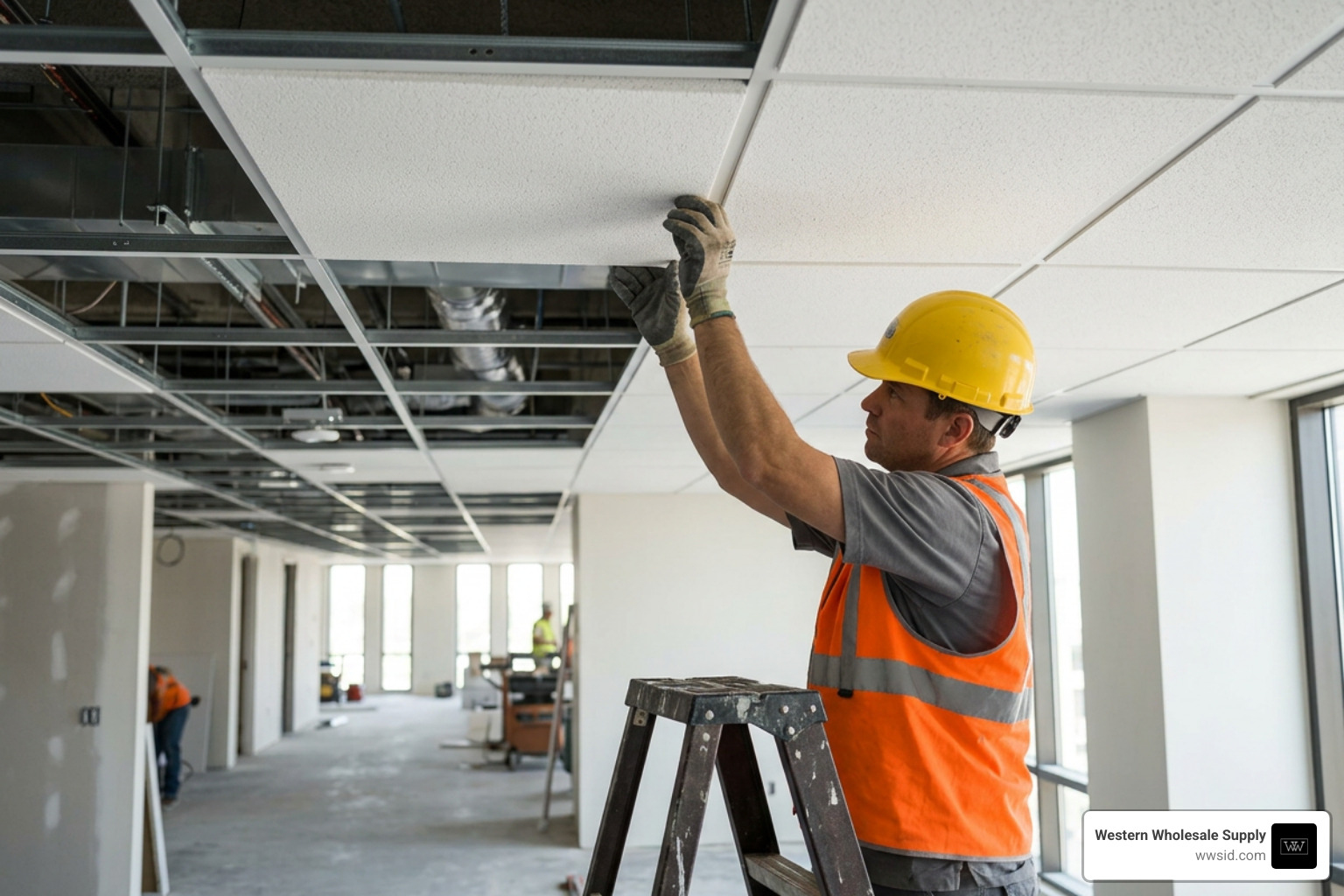
Most mineral fiber panels are designed to lay into a standard 15/16-inch T-bar suspension grid. CertainTeed panels, in particular, are highly regarded by local contractors for their “superior cutability.” They cut cleanly with a standard utility knife without crumbling, which speeds up installation around perimeters, columns, and non-standard utility penetrations.
To learn more about the installation process, check out our guides on Acoustic Ceiling Installation A Diyers Dream Come True and Ceiling Grid Supply Your Comprehensive Guide To Components And Materials.
Maintenance and Cleaning Best Practices
To keep your ceiling looking pristine, follow these simple maintenance tips:
- Dusting and Vacuuming: Regularly clean the tiles using a vacuum cleaner equipped with a soft brush attachment. This prevents dust from settling into the microperforations.
- Dry Cleaning: For light smudges or dirt, use a dry, chemical rubber sponge to gently wipe the surface. Avoid using wet cloths on standard mineral fiber tiles, as moisture can damage the paint finish.
- Handling Water Stains: If a tile gets a yellow-brown water stain from an overhead leak, you must resolve the plumbing issue first. Once the leak is fixed, you can replace the stained tile.
- Retrofitting and Overlays: If you are dealing with older, damaged mineral fiber ceilings but want to avoid the mess and landfill waste of a complete tear-out, you can look into lightweight thermoplastic or PVC faux mineral fiber overlays. These thin, washable panels can be installed directly over existing tiles, refreshing the space’s look while actually increasing the overall thermal and acoustic insulation of the ceiling.
Frequently Asked Questions about Acoustical Ceilings
What is the difference between high NRC and high CAC?
NRC (Noise Reduction Coefficient) measures sound absorption inside a room. High NRC (0.85+) is ideal for open-concept offices, school cafeterias, and hotel lobbies where you want to reduce echo and background chatter.
CAC (Ceiling Attenuation Class) measures sound blocking between rooms. High CAC (35+) is necessary for private offices, medical exam rooms, and classrooms where you want to prevent sound from traveling through the ceiling cavity into adjacent spaces.
Can you paint mineral fiber ceiling panels?
We highly advise against painting mineral fiber ceiling tiles. Painting them will void the manufacturer’s warranty. More importantly, paint fills the tiny fissures and microperforations that make the tile acoustic, significantly reducing its sound-absorption capabilities. It can also alter the tile’s flame-spread characteristics, potentially ruining its Class A fire rating.
How do these tiles contribute to energy efficiency?
Mineral fiber tiles with high light reflectance (0.85 or higher) act like a mirror for light, bouncing up to 88% of natural and artificial light back down into the room. This brightens the workspace and reduces the need for artificial lighting, leading to lower monthly energy bills.
Additionally, we supply robust thermal insulation solutions. For warehouse projects in our cold Intermountain West climate, maintaining high thermal values (such as R-30+ in ceilings and R-13+ in walls) can significantly lower heating and cooling demands.
Conclusion
When it comes to completing a commercial or residential space with a ceiling that is durable, fire-safe, and acoustically balanced, mineral fiber tiles are hard to beat. By choosing the right combination of NRC, CAC, and humidity resistance, you can create a quiet, safe, and beautiful environment that lasts for years.
At Western Wholesale Supply, we have been serving builders, contractors, and homeowners across Eastern Idaho and Western Wyoming since 1963. As an independent, veteran-owned, third-generation family business, we know what it takes to keep a job site running smoothly.
With locations and delivery services stretching through Idaho Falls, Pocatello, Rexburg, Rigby, Twin Falls, and over to Jackson, Wyoming, we pride ourselves on exceptional customer service and reliable, on-time delivery. We stock premium building materials, including CertainTeed ceiling systems, Quietrock EZ Snap drywall, Durock cement boards, and Grabber fasteners.
Ready to start your next ceiling project? Browse our full range of Acoustical Ceilings or contact us today to get a quote and schedule your delivery!
