

Plan Your Soundproofing Drywall Cost Before Ordering
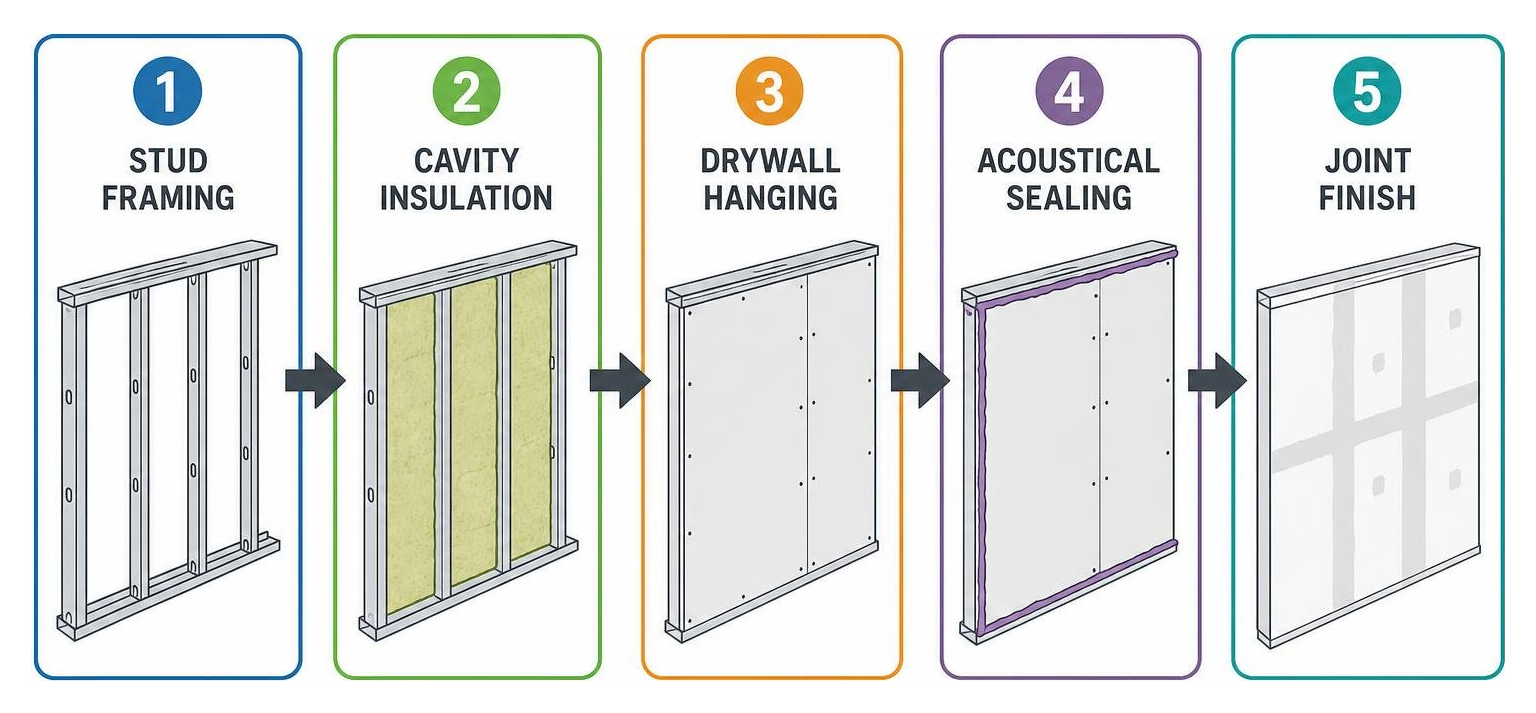
To estimate soundproofing drywall cost, measure the wall and ceiling area first, then choose the acoustic goal before you price panels. A basic upgrade may use a sound-dampening board such as Quietrock EZ Snap and sealed edges. Higher-performing assemblies can add cavity insulation, a second drywall layer, damping compound, isolation hardware, and acoustical sealant. Each layer improves sound control, but also adds material, handling, and labor.
Installing soundproofing drywall is most worthwhile on shared bedroom walls, home theaters, offices, and multi-family partitions where privacy matters. When addressing overhead noise, planning a soundproof drywall ceiling can outperform a standard drywall partition, though it cannot solve sound leaks through doors, HVAC openings, electrical boxes, or gaps around the wall perimeter. For a broader look at how acoustic assemblies perform, the Sound Transmission Class (STC) rating system provides a useful reference for comparing wall designs.
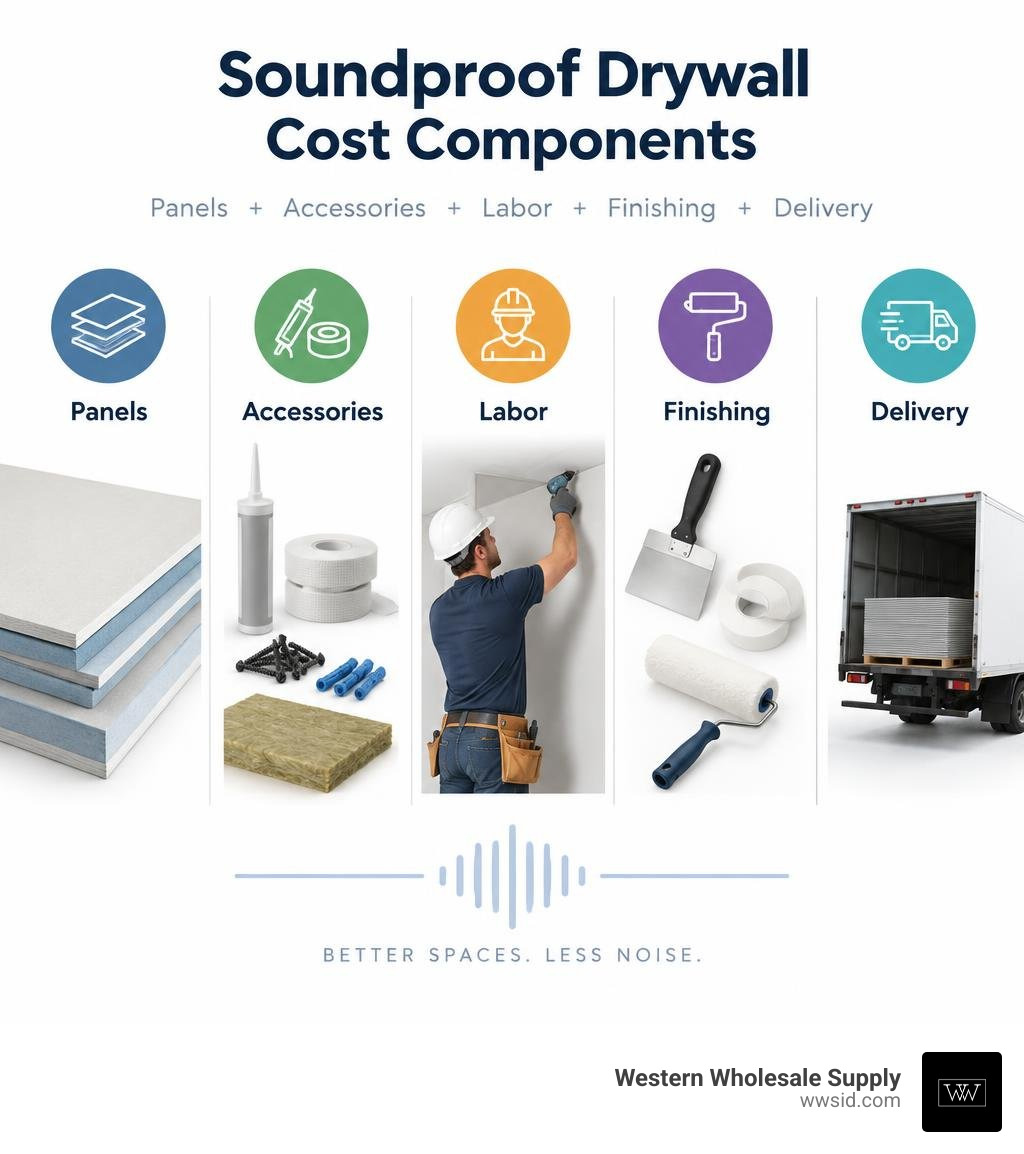
Your estimate should account for more than board selection:
- Wall and ceiling square footage, plus waste for cuts and openings.
- Panel type, thickness, and the target Sound Transmission Class (STC).
- Labor for hanging, taping, finishing, and any added layers.
- Accessories such as acoustic sealant, insulation, and Brighton Best or Grabber fasteners.
- Delivery, disposal, texture, and finish level requirements.
For related spaces, CertainTeed ceiling tiles may help manage room acoustics, while Durock is suited to moisture-prone tile assemblies rather than a substitute for acoustic drywall. Finish work also affects the budget: Hyde, USG Sheetrock Tools, Columbia Taping Tools, and Marshalltown tools support clean joints and paint-ready surfaces.
At Western Wholesale Supply, our building-materials professionals work directly with contractors on drywall, insulation, framing, and delivery planning across Idaho and Wyoming. Our experience with soundproofing drywall cost comes from practical material pricing and project support across residential and commercial builds.
Comprehensive Soundproofing Drywall Cost Breakdown and Per-Square-Foot Rates
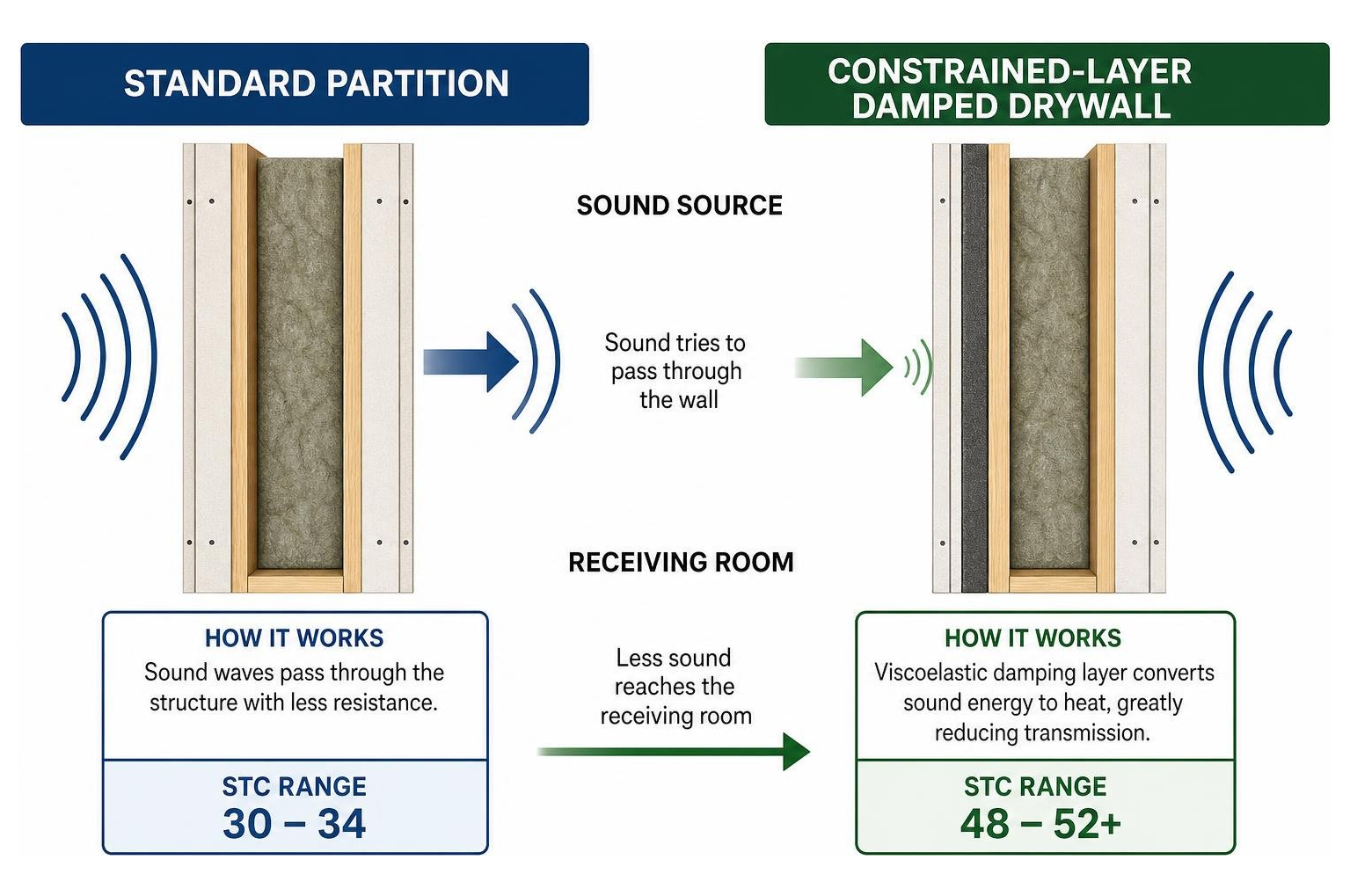
When mapping out an acoustic renovation, understanding how different drywall assemblies compare is crucial for maintaining your budget. A standard gypsum wall partition functions well for basic visual separation and basic thermal boundaries, but it falls short when you need to contain higher decibel volumes. Upgrading to engineered sound-dampening panels or multi-layer configurations increases the material investment, yet it delivers significant acoustic performance.
| Drywall Assembly Type | Common Thickness | Sound Transmission Class (STC) Range | Primary Application Focus | Relative Cost Tier |
|---|---|---|---|---|
| Standard Gypsum Board | 1/2″ | 30 – 34 | General interior partition walls | Baseline |
| Type X Fire-Rated Gypsum | 5/8″ | 35 – 38 | Garages, boiler rooms, utility corridors | Moderate |
| Moisture-Resistant Gypsum | 1/2″ – 5/8″ | 32 – 36 | Bathrooms, laundry rooms, kitchens | Moderate |
| Constrained-Layer Damped Drywall | 1/2″ – 5/8″ | 48 – 52+ | Home theaters, recording studios, master bedrooms | Premium |
| Double Standard Drywall + Viscoelastic Paste | 1″ – 1-1/4″ Total | 47 – 53 | Retrofit sound barriers, shared multi-family walls | Moderate to Premium |
Planning your project requires balancing the cost per square foot against the required acoustic isolation. While standard drywall serves everyday residential layouts, specialized soundproofing panels offer dense cores and internal polymer layers that dramatically curb sound vibration without requiring you to rebuild the framing structure.
Analyzing Material vs. Labor Soundproofing Drywall Cost per Square Foot
Every soundproofing quote consists of two primary operational pillars: materials and labor. Specialized acoustic panels incorporate constrained-layer damping technology, which places viscoelastic polymers between dense gypsum cores. Reviewing sound dampening drywall options helps clarify how products like Quietrock EZ Snap simplify installations. Because these panels score and snap cleanly like traditional gypsum board, they save significant crew hours compared to multi-layered, field-laminated drywall builds.
Labor rates reflect the weight and handling requirements of specialized boards. A standard sheet of 1/2-inch drywall is relatively light, but engineered acoustic boards or dense 5/8-inch panels carry substantial mass. Moving, lifting, and fastening these heavy panels requires proper crew sizing, adequate staging, and careful handling to prevent cracked cores. When hanging ceilings or tall partition walls, installers must work at a steady pace to ensure tight perimeter joints and consistent fastener depth.
Standard Drywall vs. Sound-Dampening Gypsum Board Pricing
Standard 1/2-inch panels and 5/8-inch Type X boards are built for general wall construction and fire code compliance. In wet areas, moisture-resistant boards protect framing, while Durock cement board serves as an unyielding substrate behind heavy tile. However, none of these standard boards are designed specifically for acoustic vibration control. Knowing where to buy bulk drywall enables builders to allocate their savings toward high-performance acoustic materials on critical partition walls.
The investment difference between standard gypsum and specialized soundproofing boards is justified when evaluating decibel reduction. Standard assemblies often sit between STC 30 and 34, allowing ordinary conversation to easily filter into adjacent rooms. Constrained-layer damping panels elevate that performance above STC 50, turning loud entertainment spaces into quiet neighboring rooms. Choosing the right panel for each specific wall prevents overspending on secondary utility closets while ensuring adequate acoustic privacy in bedrooms and home offices.
Key Factors Influencing Wall and Bedroom Soundproofing Expenses

Acoustic performance depends heavily on room geometry, framing layout, and airtight perimeter detailing. Installing soundproof drywall on an expansive, unbroken wall is straightforward, but smaller rooms with multiple doors, windows, and closet alcoves demand extra cuts and joint sealing. Every opening breaks the acoustic barrier, requiring meticulous sealing to maintain the partition’s rated sound isolation.
Framing types also play a major role. Wood studs transmit structural vibrations differently than light-gauge steel studs. If you are framing an adjacent warehouse or storage facility, incorporating batt insulation—such as R-30+ in ceilings and R-13+ in exterior walls—delivers essential thermal performance while dampening reverberant airborne sound throughout the building envelope.
Total Project Estimates: Single Bedroom vs. Basements and Whole Homes
Project scope directly dictates material efficiency and contractor staging. Outfitting a single 12×12 bedroom requires isolating shared walls, sealing electrical penetrations, and treating the ceiling if foot traffic from above is a concern. Our guide to soundproofing drywall outlines how targeting only the common partition wall can deliver significant privacy improvements without the expense of gutting the entire room.
Larger spaces, such as finished basements, home theaters, or entire multi-family layouts, present different budget dynamics. While material orders benefit from pallet-tier volume deliveries, the overall project investment grows due to the higher number of penetrations, HVAC bulkheads, and structural columns. Treating mechanical rooms and entertainment suites simultaneously ensures consistent sound isolation across every living zone.
Ceiling Height, Framing Decoupling, and Sound Transmission Class Ratings
Ceiling height is a key labor variable that affects project timelines. Standard eight-foot walls allow installers to hang drywall quickly from floor level. Once wall heights reach ten feet or higher, crews must integrate rolling scaffolding, adjust lift equipment, and spend additional time positioning heavy acoustic panels. These staging logistics naturally extend installation schedules and increase labor expenses.
True sound isolation requires addressing flanking paths and structural vibrations. Decoupling the drywall from the framing members using resilient clips or isolation channels breaks the direct mechanical path that sound vibrations travel through. Learning how to double drywall for soundproofing provides a solid foundation for upgrading existing walls. For commercial rooms or dedicated home media suites, pairing dense wall panels with CertainTeed acoustical ceiling tiles controls airborne room reflections, yielding a fully balanced acoustic space.
Additional Finishing, Accessories, and Hidden Installation Expenses
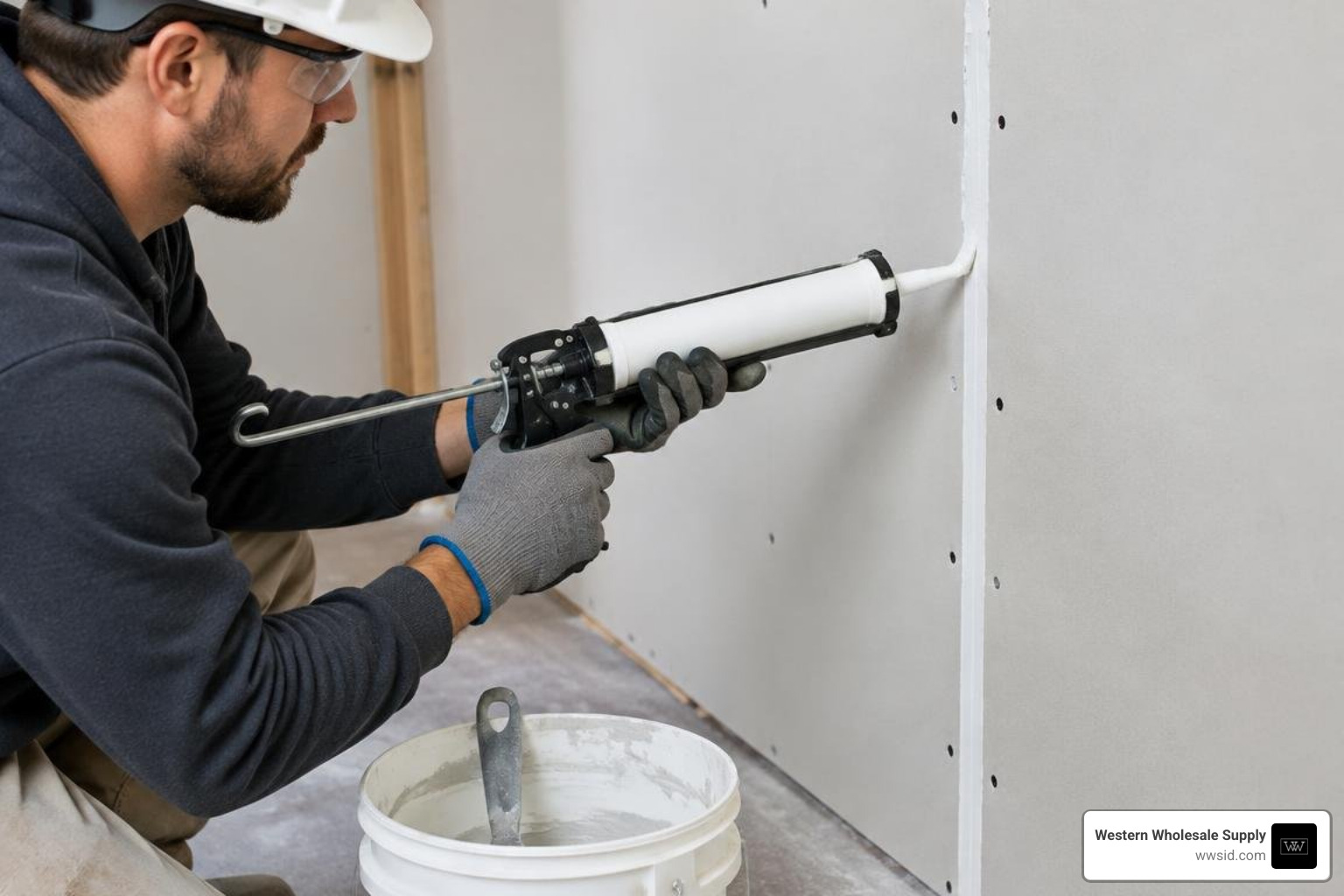
Finishing soundproof drywall assemblies involves specific accessory materials and finishing workflows that go beyond standard hanging. Because sound behaves like water, escaping through any minor opening, an acoustic installation is only as strong as its perimeter detailing. Overlooking sealants, specialty screws, or site waste factors can distort initial project budgets.
Evaluating Finishing Levels and Tool Requirements for Acoustic Assemblies
Drywall finish standards range from Level 1 up to a complete Level 5 skim coat. In residential bedrooms and commercial offices where standard flat or eggshell paints are applied under diffuse lighting, a standard Level 4 tape-and-mud finish is the industry benchmark. Achieving smooth transitions and seamless joints requires professional-grade equipment. Partnering with the best drywall supplier ensures your crew has direct access to dependable tools that streamline job site operations.
Our regional showrooms feature the industry’s most trusted finishing brands:
- Hyde: Precision joint knives and scrapers built for smooth mud spreading.
- USG Sheetrock Tools: Ergonomic corner trowels, mud pans, and durable hand tools.
- Columbia Taping Tools: High-capacity automatic taping tools and flat boxes for fast finishing.
- Marshalltown: Premium stainless-steel trowels and hawks that produce uniform wall surfaces.
Using professional taping tools allows finishers to complete mudding coats rapidly, minimizing sanding dust and keeping multi-room builds on schedule.
Calculating Additional Hardware, Acoustical Sealants, and Unexpected Costs
To build an accurate budget, account for the secondary hardware and job site accessories that maintain acoustic ratings:
- Non-Hardening Acoustical Sealant: Applied as a continuous bead along floor tracks, ceiling perimeters, and intersecting corners to block air and sound leaks.
- Acoustic Putty Pads: Wrapped around electrical junction boxes and switch housings to seal the back of wall penetrations.
- High-Quality Fasteners: Utilizing premium Brighton Best or Grabber fasteners ensures consistent pull-up strength and proper countersinking without tearing the face paper of specialized panels.
- Material Waste Allowances: Ordering an extra 10% to 15% in panel square footage covers angle cuts, door cutouts, and staging trimmings.
- Disposal and Delivery Logistics: Managing drywall scrap recycling, job site dumpster fees, and dedicated freight staging.
Reviewing our drywall price estimate checklist will help you track these auxiliary line items early in your planning process.
Balancing ROI, Sound Transmission Performance, and Regional Price Variations
Investing in acoustic isolation pays dividends in occupant comfort, daily productivity, and long-term property marketability. In modern open-concept floor plans or homes with dedicated telecommuting offices, quiet zones are highly desirable features. Balancing upfront material costs with functional performance ensures that every dollar spent translates directly into improved sound control.
Regional Labor Variations and Reducing Your Overall Soundproofing Drywall Cost
Labor markets and material availability vary between bustling metro centers and regional communities across Eastern Idaho and Western Wyoming. In rapidly expanding areas like Jackson, WY, or Idaho Falls, ID, high construction demand can shift trade schedules and labor availability. Working with reliable drywall wholesalers helps contractors secure consistent material inventories across regional distribution hubs.
You can lower your overall soundproofing drywall cost through smart planning:
- Focus on High-Priority Partitions: Soundproof only the shared bedroom, laundry, or mechanical walls rather than spending premium material allowances on every interior partition.
- Consolidate Job Deliveries: Bundle framing, drywall, fasteners, and insulation into consolidated shipments to reduce freight drop charges.
- Plan Around Peak Seasons: Schedule interior hanging and finishing during late autumn or winter months when regional subcontracting trades have wider scheduling availability.
Property Value Return on Investment and Acoustic Decibel Reduction
Appraising the value of sound isolation goes beyond simple square-footage metrics. For multi-family properties, robust sound control directly reduces tenant turnover and noise complaints, helping owners maintain steady occupancy rates. In single-family homes, dedicated media rooms and quiet bedrooms provide practical daily value that modern home buyers appreciate.
Understanding how acoustic systems operate helps you make practical investments. Guides on sound-dampening drywall demonstrate that combining dense panels with sealed perimeter joints delivers noticeable decibel drops. A ten-point increase in STC rating cuts perceived sound transmission roughly in half, turning disruptive television noise or conversation into a quiet, indistinct background murmur.
Frequently Asked Questions About Soundproofing Drywall
Is soundproof drywall worth the extra investment compared to standard panels?
Yes, soundproof drywall is worth the investment on critical walls where noise control is essential, such as master bedrooms, nurseries, home offices, and media suites. Constrained-layer damped panels achieve an STC rating above 50 in a single-layer installation. Achieving that same sound attenuation with standard gypsum requires hanging multiple sheets, applying damping compounds, and adding structural footprint. By minimizing wall thickness and cutting hanging labor down to a single pass, soundproof boards provide an efficient, space-saving solution.
How much does it cost to soundproof a standard 12×12 bedroom?
The overall investment to soundproof a standard 12×12 bedroom depends on whether you are isolating a single shared partition wall or treating all four walls and the ceiling. A typical room features between 400 and 550 square feet of wall area. Treating a single shared wall with high-performance panels, acoustic sealants, and cavity insulation remains an economical target. Soundproofing the full room—including perimeter acoustical caulk, upgraded fastener patterns, and ceiling decoupling—requires a larger budget to cover the additional panels, multi-day finishing labor, and waste allowances.
Can I install soundproof drywall over existing drywall to save money?
Yes, laminating a new layer of sound-dampening drywall directly over an existing wall is a proven retrofit strategy that eliminates the labor and disposal fees of demolition. When utilizing this approach, run a continuous bead of non-hardening acoustic damping compound between the old and new panels. Fasten the new board through the existing drywall directly into the structural framing using longer Grabber screws. Remember to budget for electrical box extender rings and door/window jamb extensions to accommodate the added wall thickness.
Conclusion
Successfully managing your acoustic project budget comes down to clear planning, realistic sound isolation targets, and sourcing reliable building supplies. By identifying high-priority partitions, selecting proven panels like Quietrock EZ Snap, and sealing perimeter gaps with professional sealants and Brighton Best or Grabber fasteners, you can build quiet, comfortable living spaces that perform for decades.
At Western Wholesale Supply, we take pride in supporting builders, remodelers, and property owners with prompt, on-time job site deliveries and professional industry expertise. Serving Eastern Idaho, Western Wyoming, and surrounding markets from our regional distribution hubs, we stock the premium materials, CertainTeed acoustical ceiling tiles, Durock backer boards, and finishing tools from Hyde, USG Sheetrock Tools, Columbia Taping Tools, and Marshalltown you need to complete your job properly.
For complete technical specifications and expert partition design strategies, explore our drywall soundproofing guide to get your next acoustic project started on solid ground.
