

What Are Acoustic Ceiling Clouds? A Quick Guide for Contractors and Builders
Acoustic ceiling clouds are suspended panels hung parallel to the ceiling that absorb sound in a room — reducing echo, reverberation, and noise in open spaces like offices, gyms, restaurants, and classrooms.
Here is a quick overview of what you need to know:
| Topic | Key Fact |
|---|---|
| What they do | Absorb sound traveling up to the ceiling and again as it bounces back down |
| NRC rating | Top-rated clouds reach 0.95 NRC, absorbing ~95% of mid-to-high frequency sound |
| Common sizes | 2×2 ft up to 4×4 ft and larger; custom sizes available |
| Materials | Fiberglass, recycled polyester, eco-friendly cotton/cellulose blends |
| Fire rating | Look for Class A (ASTM E84) for commercial use |
| Installation | Suspended from ceiling joists using wire cables and adjustable hardware |
| Best for | Open-concept spaces with limited wall area for treatment |
Open-plan spaces look great — but they often create serious noise problems. Hard surfaces, high ceilings, and a lack of soft materials let sound bounce freely, making it hard to concentrate or have a conversation. That is exactly the problem acoustic ceiling clouds are designed to solve, and they do it without covering every wall or disrupting the look of a space.
We are Western Wholesale Supply, third-generation building materials professionals with experience supplying contractors across commercial and residential projects — including acoustical ceiling systems. We will walk you through everything you need to know about acoustic ceiling clouds so you can spec and install them with confidence.
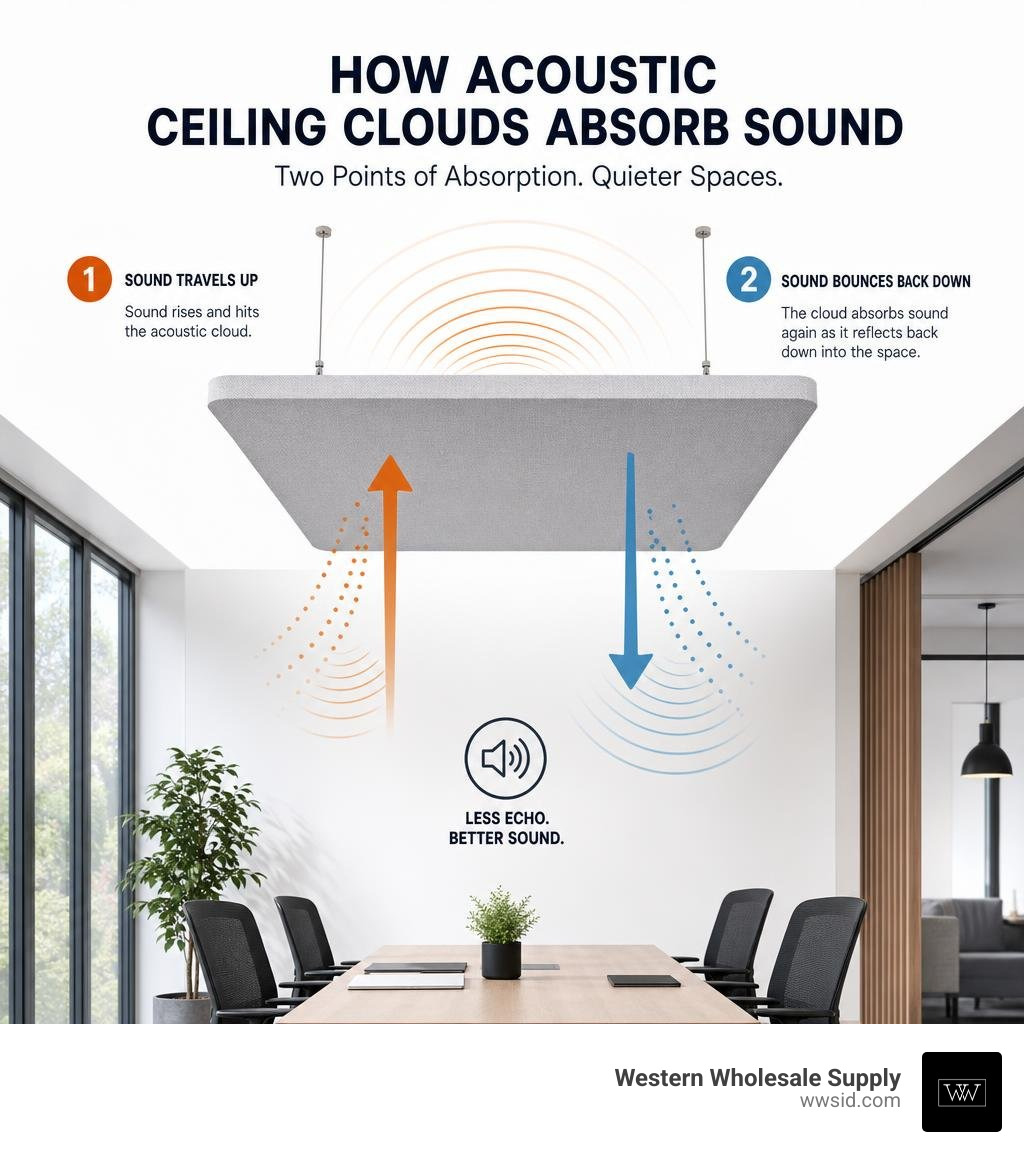
Quick look at acoustic ceiling clouds:
What Are Acoustic Ceiling Clouds and How Do They Work?
When sound waves are created in a room—whether from a heated debate in a conference room, clanging dishes in a busy restaurant, or a lecture in a university hall—they travel outward in all directions. In modern architecture, these waves quickly strike hard surfaces like concrete, glass, drywall, and hardwood floors. Instead of stopping, the sound bounces back into the room, creating a chaotic web of echoes and reverberation.
This is where Ceiling Clouds | Floating Acoustic Panels – Material LogIQ step in to save our ears. Unlike traditional ceiling treatments that lie flat against the ceiling deck, acoustic ceiling clouds are suspended horizontally, hovering below the ceiling like their meteorological namesakes.
By floating these panels in the upper volume of a room, we introduce a highly porous, sound-absorbing barrier directly in the path of rising sound waves. As sound enters the open, fibrous core of the cloud, the friction between the moving air molecules and the core fibers converts the acoustic energy into tiny amounts of thermal energy (heat). The result? A dramatic drop in reverberation time, making speech clearer and rooms significantly quieter. For a broader look at how to tackle noisy overhead spaces, check out our A Comprehensive Guide To Ceiling Sound Treatment.
Acoustic Ceiling Clouds vs. Wall Panels and Standard Drop Ceilings
If you are planning a commercial build or renovation in Eastern Idaho or Western Wyoming, you might wonder why you should choose acoustic ceiling clouds over wall panels or standard drop-ceiling systems. Each has its place, but suspended clouds offer distinct advantages in design flexibility, mechanical integration, and acoustic footprint.
| Feature | Acoustic Ceiling Clouds | Wall-Mounted Panels | Standard Drop Ceilings (Lay-In) |
|---|---|---|---|
| Aesthetic Impact | Modern, floating, architectural statement | Clean but can clutter wall space; prone to damage | Clean, uniform, traditional grid system |
| Acoustic Efficiency | High (utilizes dual-point absorption) | Moderate (single-sided absorption) | High overall coverage, but limits overhead volume |
| Wall Space Required | None | High (requires clear wall real estate) | None |
| Design Flexibility | Endless shapes, heights, angles, and colors | Limited to flat wall surfaces | Fixed to a rigid horizontal plane |
| Access to Utilities | Excellent (easy to reach HVAC, pipes, and wires) | N/A | Good (requires lifting tiles out of a grid) |
Traditional wall panels are highly effective, but they require valuable wall real estate. In modern offices with floor-to-ceiling glass partitions, or in restaurants with decorative murals, wall space is at a premium. Wall panels are also highly vulnerable to bumps, scuffs, and sticky fingers.
On the other hand, standard drop ceilings—while excellent for full-coverage sound control—can sometimes feel institutional or lower the perceived height of a room. For a deep dive into standard grid systems, read our guide on Quiet Comfort A Comprehensive Guide To Acoustic Ceiling Solutions or explore Grid Ceiling Tiles Your Blueprint For Better Acoustics.
By contrast, floating clouds preserve the open, industrial feel of high ceilings while strategically targeting noise hot spots. They allow the original ceiling structure, ductwork, and architectural features to remain visible while still delivering world-class sound control.
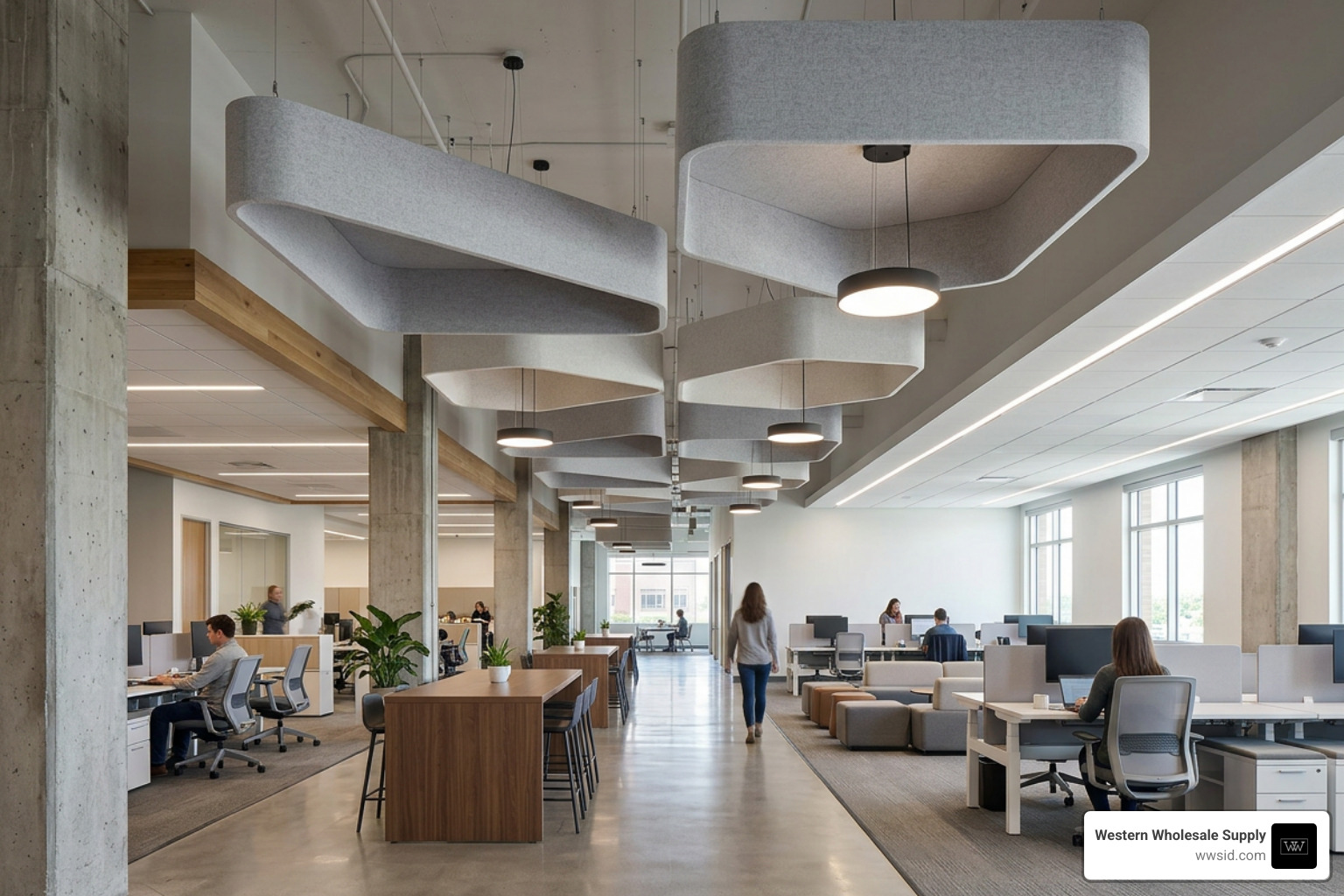
The Science of Dual-Point Sound Absorption
To understand why acoustic ceiling clouds are so incredibly efficient, we have to look at the physics of how they hang. When you mount an acoustic panel directly to a wall or ceiling, sound waves can only strike the front face of the panel.
However, because ceiling clouds are suspended with an air gap between the panel and the ceiling deck, they achieve what is known as dual-point sound absorption.
- First Pass: Sound waves travel upward from the floor, striking the exposed bottom face of the suspended cloud. A massive portion of the sound energy is absorbed here.
- Second Pass: The remaining sound waves pass through the panel, enter the air gap above, and strike the hard ceiling deck. As they bounce back down toward the floor, they must pass through the top face of the acoustic cloud a second time, suffering another round of heavy absorption.
This double-pass mechanism means that a single suspended cloud can deliver up to double the absorbing power of an identical panel mounted directly to a wall. High-performance models, such as AcoustiCloud Ceiling Clouds – Acoustical Solutions , leverage this exact physical principle to maximize noise reduction in high-traffic commercial environments.
Key Specifications: Sizes, Materials, and Ratings
Selecting the right acoustic ceiling clouds for your project requires looking past aesthetics and diving into the technical specifications. From core materials to fire safety, every detail affects how well the clouds perform and how they comply with local building codes in regions like Twin Falls, Idaho Falls, or Jackson.
Understanding NRC Ratings and Thicknesses
The standard metric used to measure a material’s ability to absorb sound is the Noise Reduction Coefficient (NRC). NRC ratings range from 0.0 (perfect reflection, like a solid concrete wall) to 1.0 or higher (perfect absorption).
An acoustic cloud with a 0.95 NRC rating absorbs an average of 95% of echoes, reverberations, and mid-to-high frequencies, reflecting only 5% back into the room. This frequency range is crucial because it covers human speech, phone ringtones, and the clatter of keyboard typing—the exact sounds that make open offices so distracting.
The thickness of the panel plays a vital role in its acoustic performance:
- 1-Inch Thickness: Excellent for mid-to-high frequency absorption (speech, click-clack of heels, telephone rings). These panels typically offer NRC ratings between 0.80 and 0.85. They are lightweight and ideal for general office spaces.
- 2-Inch Thickness: The industry sweet spot. A 2-inch panel often achieves an NRC of 0.95 to 1.15. The extra depth allows the panel to absorb lower frequencies, such as the low-frequency hum of HVAC systems or heavy bass from a sound system.
- 3-Inch to 5-Inch Thickness: Primarily used as broadband absorbers or bass traps in music rooms, recording studios, or auditoriums where low-frequency control is paramount.
Eco-Friendly and Fire-Rated Materials for Acoustic Ceiling Clouds
Modern construction demands materials that are both safe for the environment and safe for building occupants. When spec’ing acoustic clouds, you will encounter three primary core materials:
- Acoustical Fiberglass: The traditional heavyweight. Fiberglass offers exceptional acoustic performance and is naturally fire-resistant. It is wrapped in high-quality fabrics, such as Guilford of Maine textiles, to prevent fibers from escaping into the air.
- eco-C-tex®: An outstanding eco-friendly option made from 100% recycled cotton and cellulose fibers (largely post-consumer newspaper). Not only is it completely fiberglass-free and safe to handle, but eco-C-tex® sound absorption material requires 1/10th the amount of energy to produce compared to traditional fiberglass, and 1/40th of the energy of acoustic foam.
- VicPET Wool: Made primarily from recycled plastic bottles, this high-density material offers exceptional medium-to-high frequency absorption. Products like the Penray 01 Cloud Suspended Acoustic Cloud – Vicoustic showcase how recycled PET can be molded into stunning, award-winning geometric designs that double as modern art.
Regardless of the core material you choose, commercial projects in Idaho and Wyoming require strict adherence to fire safety codes. Always verify that your chosen acoustic clouds carry a Class A Fire Rating (ASTM E84). This ensures the panels have a flame spread index of 0–25 and a smoke developed index of 0–450, meeting the highest safety standards for public buildings.
To learn more about ceiling materials that balance safety, aesthetics, and sound control, read our comprehensive resource on Sound Absorbing Ceilings The Secret To A Quieter Environment.
Installation and Mounting Hardware Options
Proper installation is what keeps a beautiful acoustic ceiling cloud from becoming a safety hazard. Because these panels hang directly over people’s heads, using the correct hardware and techniques is non-negotiable.
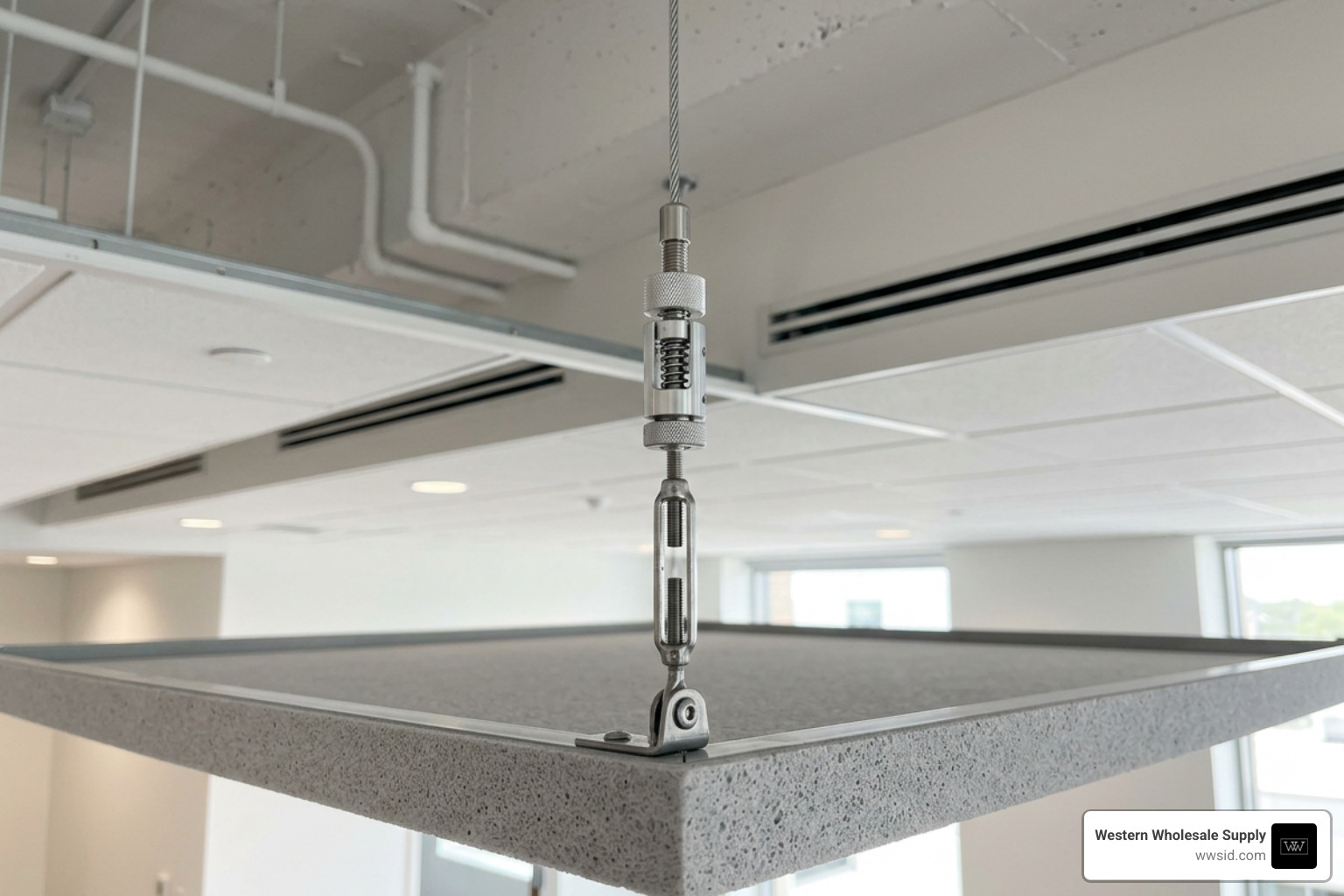
Comparing Hardware Kits
When purchasing your ceiling clouds, you will generally choose between two types of mounting systems:
- Adjustable Cloud Kits: These systems suspend panels on high-strength wire cables, turnbuckles, and adjustable grippers (such as Gripple hangers). The standout feature of an adjustable cloud kit is that it supports heavier loads and provides full control over height and tilt after installation compared to standard ceiling panel kits. This makes it incredibly easy to level the clouds or intentionally angle them to match a sloped ceiling or create a dynamic visual wave effect.
- Fixed Ceiling-Panel Kits: These kits typically use screw hooks, S-hooks, and eye screws to mount the panels close to the ceiling deck (typically about 2.5 inches below). While simpler, they offer zero post-installation height adjustment and are best suited for perfectly flat ceilings where a minimal profile is desired.
Ceiling Compatibility and Structural Support
Before drilling any holes, you must identify the structural material of your ceiling deck. Different substrates require different fasteners to ensure a secure, long-lasting hold:
- Wood Joists: The easiest substrate to work with. You can screw eye-hooks or screw-eyes directly into the center of the wood joists. We highly recommend using premium Grabber fasteners to guarantee a secure bite into the wood.
- Concrete Ceilings: Requires drilling pilot holes with a masonry bit and using concrete anchors or expansion bolts to secure the hanging hardware.
- Metal Framing: Requires self-tapping metal screws and appropriate toggle bolts or grid clips if you are hanging from an existing metal T-grid system.
Always check local building codes, especially in seismic-active zones of Western Wyoming and South East Idaho, to ensure your suspension methods meet local safety standards. For a visual step-by-step walkthrough of the physical installation process, check out this helpful video: How to PROPERLY Install Acoustic Clouds | ADAM Audio & Music … .
DIY vs. Professional Installation
Can a single person install acoustic ceiling clouds? Technically, yes—especially for smaller 2×2 ft panels. However, for larger panels (such as 4×4 ft or 4×8 ft clouds which can weigh up to 22 lbs or more), we strongly recommend a two-person installation.
Trying to hold a heavy, fabric-wrapped panel perfectly level while standing on a ladder and trying to thread a wire cable is a recipe for dropped panels, damaged walls, or personal injury. Having a second set of hands to hold the weight while you secure and level the hardware makes the job safer, faster, and infinitely cleaner.
For large-scale commercial installations, multi-layer ceilings, or complex layouts involving integrated lighting and HVAC, hiring a professional is always the smartest route. If you are looking for qualified local installers in our region, you can browse verified specialists through Find Acoustic Ceilings Contractors in Idaho Falls, ID – Procore .
Frequently Asked Questions About Acoustic Clouds
How do you clean and maintain acoustic ceiling clouds?
Because they hang horizontally, acoustic ceiling clouds can act as dust shelves over time. Fortunately, keeping them clean is straightforward:
- Weekly Dusting: Use a soft brush attachment on a vacuum cleaner to gently remove surface dust. Always vacuum in the direction of the fabric weave to prevent pilling.
- Spot Cleaning: For minor smudges on fabric-wrapped clouds, use a water-based cleaning agent or a mild upholstery cleaner. Always test it on an inconspicuous spot (like the top of the cloud) first.
- Coated Options: Some specialized clouds feature a High-Performance Coating (HPC) over a melamine foam core. This coating makes the surface durable, water-resistant, and incredibly easy to wipe down with a damp cloth—making them perfect for high-humidity areas like indoor pools or commercial kitchens.
What are the typical costs and lead times for ceiling clouds?
While hardware-only kits are highly standardized and often ship the same or next business day, pre-fabricated, fabric-wrapped acoustic clouds are typically built to order.
Lead times for custom clouds can range from 2 to 6 weeks depending on the manufacturer, the choice of fabric, and the complexity of the shapes. Most suppliers offer a 30-day return window on standard sizes, though custom-cut or custom-printed panels are generally non-returnable. Be sure to factor these lead times into your project schedule to avoid construction delays.
Can you integrate lighting and HVAC with ceiling clouds?
Yes! Modern acoustic clouds are highly customizable. Many architectural systems are designed to allow lighting fixtures, pendant lights, or HVAC diffusers to pass directly through the panel.
During the planning phase, you can specify factory-cut penetrations for sprinkler heads, recessed lights, and ventilation. This ensures your safety systems and utilities remain fully functional and code-compliant while maintaining a clean, uninterrupted ceiling design.
Conclusion
If you are struggling with noise, echo, or harsh reverberations in an open-concept space, acoustic ceiling clouds offer the perfect marriage of acoustic science and modern architectural design. They deliver exceptional dual-point sound absorption, keep your walls clear, and allow you to create stunning, floating visual designs overhead.
At Western Wholesale Supply, we have been serving contractors, builders, and architects across Eastern Idaho and Western Wyoming since 1963. As an independent, veteran-owned, third-generation family business, we pride ourselves on delivering top-tier building materials—including drywall, steel framing, insulation, and high-performance acoustical ceiling systems. Whether your project is in Idaho Falls, Pocatello, Jackson, or Twin Falls, our 60+ years of experience ensure you get reliable, on-time delivery and expert advice.
Ready to transform your ceiling and quiet down your space? Explore our full range of solutions by checking out our Acoustical Ceilings resources, read up on Why Acoustical Lay In Ceiling Tiles Are The Unsung Heroes Of Your Office, or go deep with A Comprehensive Guide To Acoustical Ceilings.
For personalized support, material takeoffs, or to place an order, please Contact Western Wholesale Supply today. Let us help you build a quieter, more comfortable environment!
