

Why Mineral Wool Insulation Outperforms on Commercial and Residential Job Sites
Mineral wool insulation is a dense, non-combustible fiber insulation made by spinning molten rock or industrial slag into fibers — delivering strong thermal, fire, and acoustic performance in a single product.
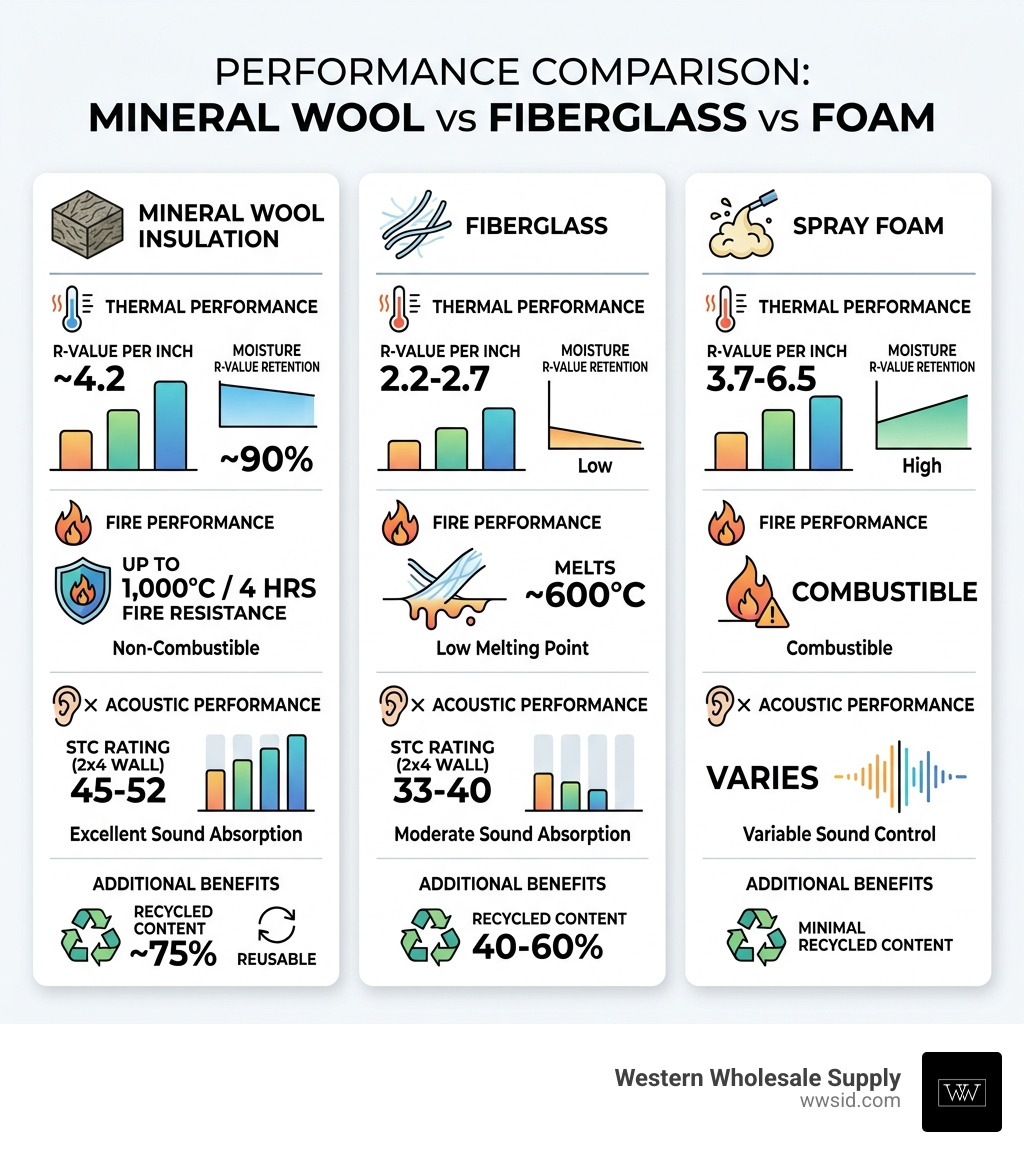
Here is how it stacks up at a glance:
| Performance Category | Mineral Wool | Fiberglass | Spray Foam |
|---|---|---|---|
| R-Value per Inch | 4.2 | 2.2–2.7 | 3.7–6.5 |
| Fire Resistance | Up to 1,000°C / 4 hrs | Melts ~600°C | Combustible |
| STC Rating (2×4 wall) | 45–52 | 33–40 | Varies |
| Moisture R-Value Retention | ~90% | Low | High |
| Recycled Content | ~75% | 40–60% | Minimal |
| Price vs. Fiberglass | 20–40% premium | Baseline | Higher |
Contractors today are under pressure to meet tighter energy codes, stricter fire ratings, and better acoustic standards — all at once. Most single insulation products fall short in at least one of those categories. Mineral wool checks all three boxes, which is why it has become a go-to choice on commercial projects where performance cannot be compromised.
That said, it is not perfect for every situation. It is heavier than fiberglass, costs more upfront, and has some installation quirks worth knowing before you order.
This guide breaks down what mineral wool actually does well, where it falls short, and how it compares to fiberglass and foam — so you can spec the right product for your next project.
We are Western Wholesale Supply, a third-generation building materials professional team that has sourced and supplied mineral wool insulation to contractors across residential and commercial projects throughout the region. In this guide, we’ll share the practical knowledge that comes from years on the supply side of real job sites, so you can make confident decisions without wading through manufacturer marketing.
Mineral wool insulation terms at a glance:
What is Mineral Wool Insulation and How is it Made?
At Western Wholesale Supply, we often get asked what exactly goes into a bag of mineral wool insulation. While it looks a bit like fiberglass, the two materials are cousins rather than twins. Mineral wool is a fibrous material formed by spinning or drawing molten mineral or rock materials, such as slag and ceramics.
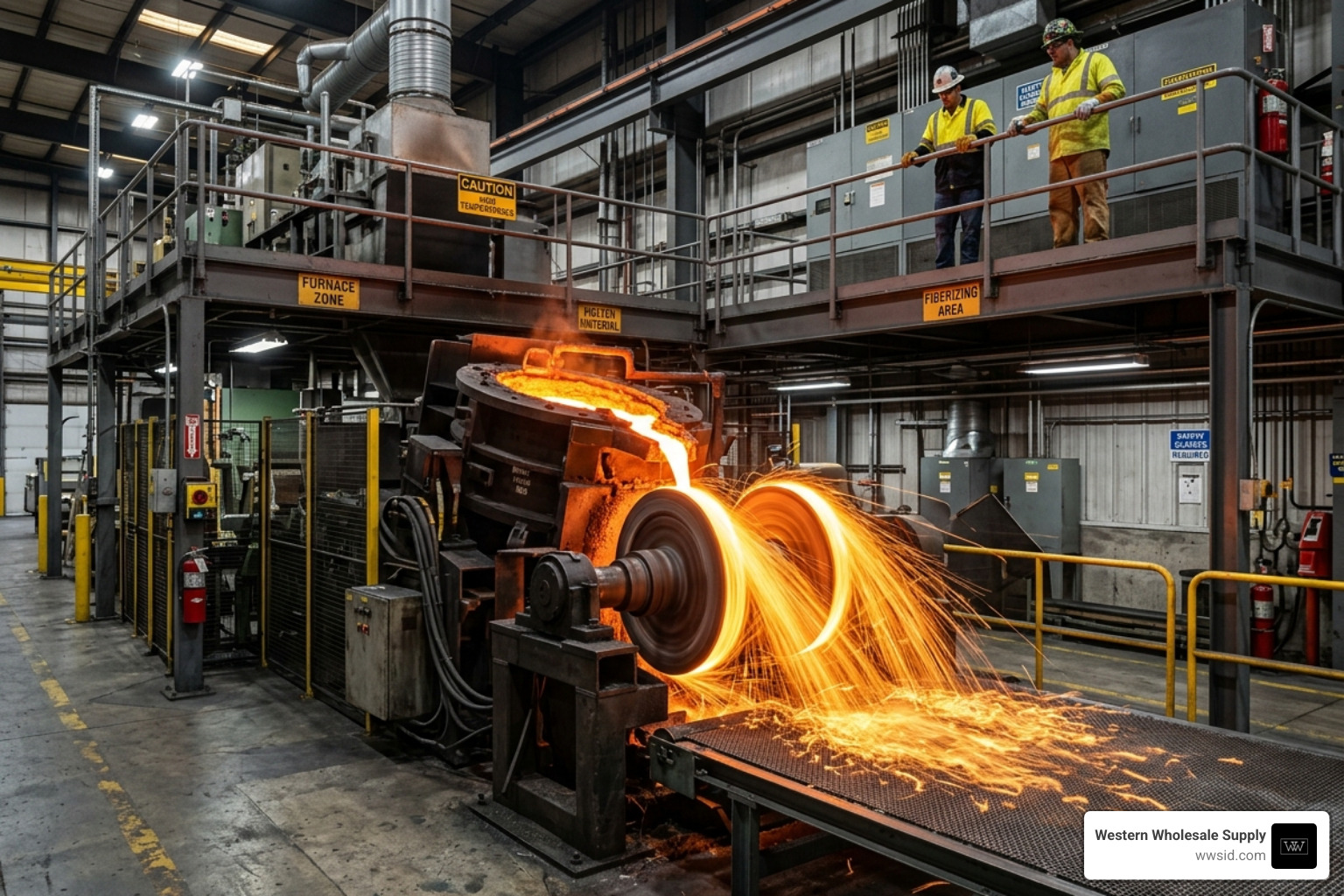
The manufacturing process is a feat of industrial engineering. Raw materials are heated in a furnace to temperatures exceeding 1600°C (about 2900°F). Once the material reaches a molten state, it is spun into thin fibers using high-speed spinning heads—much like the process used to make cotton candy. These fibers are then bound together with a small amount of binder and oils to create the batts and boards we use on-site.
According to the Mineral Wool Insulation: Properties and Uses guide, this process results in a material that is significantly denser and more heat-resistant than traditional glass-based alternatives.
The Difference Between Rock Wool and Slag Wool
There are two primary types of mineral wool you’ll encounter in our inventory:
- Rock Wool (Stone Wool): This is made from natural volcanic rocks, typically basalt or diabase. It is the gold standard for high-heat applications.
- Slag Wool: This variety is manufactured from blast furnace slag, which is a byproduct of steel production.
Both types offer excellent performance, but slag wool often boasts a slightly higher recycled content because it utilizes industrial waste that would otherwise end up in a landfill.
Material Composition and Sustainability
Sustainability is a major driver for modern construction in Eastern Idaho and Western Wyoming. Mineral wool insulation is a champion in this category, containing an average of 75% post-industrial recycled content. For comparison, cellulose contains about 82-85%, but mineral wool provides a level of fire and moisture resistance that cellulose simply cannot match.
Using these inorganic fibers can help projects earn LEED credits and meet the rigorous sustainability standards required for high-performance building envelopes in April 2026.
Key Performance Benefits for Commercial Projects
When we talk to contractors in Rigby or Jackson, the conversation usually centers on three things: fire, sound, and water. Mineral wool insulation excels in all three.
One of its most impressive feats is its fire resistance. Mineral wool can withstand temperatures in excess of 1000°C. In a fire-rated assembly, it can protect a building’s structure for up to 4 hours, whereas fiberglass typically begins to melt at around 600°C. This makes it an essential component for high-occupancy commercial buildings and multi-family residential units.
Furthermore, as discussed in our article Banish Basement Blues Choosing The Right Water Resistant Insulation, mineral wool is naturally water-repellent. It is highly breathable, allowing moisture vapor to pass through, and it retains approximately 90% of its R-value even after being exposed to moisture. It does not promote the growth of rot, fungi, or mold, which is a massive advantage in the varied climates of South East Idaho.
Acoustic Performance of mineral wool insulation
If you are building a recording studio, a hospital wing, or an apartment complex near a busy road, sound attenuation is non-negotiable. Mineral wool achieves Sound Transmission Class (STC) ratings of 45-52 in standard 2×4 stud wall assemblies. For context, standard fiberglass usually lands between 33 and 40.
To maximize these benefits, we recommend integrating mineral wool with Quietrock EZ Snap sound-damping drywall. This combination creates a professional-grade acoustic partition that virtually eliminates noise transfer between rooms.
Thermal Efficiency and R-Values
Thermal performance is the bread and butter of any insulation. Mineral wool insulation typically offers an R-value of 4.2 per inch.
In warehouse environments, where energy costs can skyrocket, we aim for specific performance targets. According to the Insulation Materials | Department of Energy guidelines, high-performance warehouses should target:
- Ceilings: R-30 or higher.
- Walls: R-13 or higher.
Because mineral wool is denser than fiberglass, it doesn’t sag or settle over time, ensuring that those R-values remain consistent for the life of the building.
Comparing Mineral Wool to Fiberglass and Foam
Choosing the right material often comes down to a trade-off between performance and budget. In our guide Beyond Batts A Comprehensive Look At Building Insulation Materials, we highlight that mineral wool is a “heavyweight” in every sense of the word.
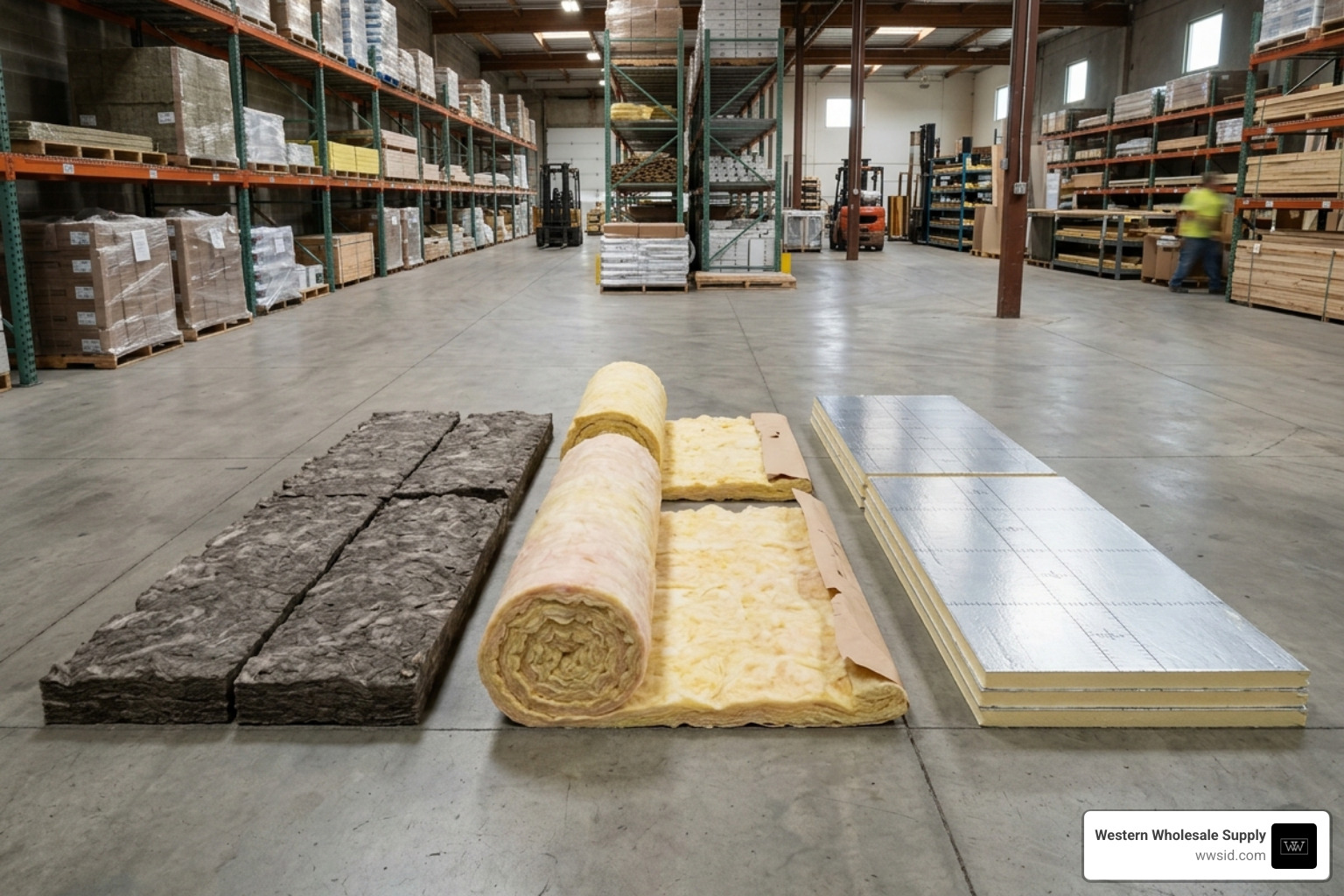
Mineral wool weighs approximately 8 pounds per cubic foot. A single 2-inch thick, 4’ x 8’ board can weigh over 40 lbs. Fiberglass, by contrast, is much lighter and easier to toss around a job site. However, the density of mineral wool is what gives it its superior fire and sound properties.
While mineral wool carries a 20-40% price premium over comparable R-value fiberglass batts, the performance gap is clear. For example, a high-density fiberglass batt for a 2×4-inch wall typically provides an R-15 value, which is a significant step up from the R-11 found in low-density types, but mineral wool provides that same R-15 with added fire and sound protection that fiberglass lacks.
Installation Challenges: Weight and Cost
The weight of mineral wool means that labor requirements are often higher. When installing rigid mineral wool boards as continuous insulation on an exterior, you may need two laborers to handle the larger 4′ x 8′ sheets safely.
To ensure a secure fit, we supply high-quality Grabber fasteners and Brighton Best hardware. Using the right fasteners is critical because the weight of the material can cause cheaper screws to shear or pull through over time.
Professional Installation and Handling Best Practices
For a successful installation, “friction fit” is the name of the game. Mineral wool batts are slightly wider than the stud cavity, allowing them to stay in place without the need for staples or wire. This is particularly useful in steel stud assemblies common in commercial projects across Rexburg and Idaho Falls.
When using mineral wool as continuous insulation, it is often installed over a nailable substrate like plywood or integrated with Durock cement board for exterior finishes. For more on industrial applications, see The Ultimate Guide To Warehouse Insulation Materials.
We also see mineral wool used frequently in CertainTeed acoustical ceiling systems to enhance sound absorption in offices and schools.
Cutting and Fitting for Custom Jobs
Unlike fiberglass, which can be torn or compressed, mineral wool requires precision. We recommend using a long, serrated blade (like a bread knife or a specialized insulation saw) to make clean cuts.
- Precision Fitting: Cut the batt about 1/2 inch wider than the space to ensure a snug friction fit.
- Gap Elimination: Ensure there are no gaps around electrical boxes or plumbing. Mineral wool is easy to carve, so take the time to notch the material around obstacles rather than stuffing it behind them.
- Thermal Bridging: On exterior applications, ensure the boards are tightly butted together to prevent thermal bridging.
Safety Protocols and PPE
While mineral wool is safe and has no hazardous classifications, it is made of stone and slag fibers that can be abrasive.
- Skin Protection: Wear long sleeves and gloves to prevent the “itch” associated with the fibers.
- Respiratory Safety: Use a dust mask or N95 respirator, especially when cutting the material in confined spaces like attics or crawlspaces.
- Eye Protection: Safety glasses are a must to keep floating fibers out of your eyes.
Modern mineral wool is bio-soluble, meaning if fibers are inhaled, they dissolve in body fluids within weeks and are cleared from the lungs. This has led to an IARC Group 3 classification (not classifiable as to carcinogenicity to humans), making it a safer long-term choice for installers.
Frequently Asked Questions
Is mineral wool insulation safe to handle?
Yes, it is safe, but it can be irritating. The fibers are coarser than fiberglass, so they can cause temporary skin itching. Always use PPE, including long sleeves and a mask. It is classified by the IARC as Group 3, meaning it is not considered a carcinogen.
Does mineral wool require a separate vapor barrier?
In many climates, yes. Mineral wool is highly vapor-permeable (it breathes). While this is great for drying out assemblies, it means you must follow local building codes (like IBC Section 1404.3) regarding vapor retarders. In our cold Idaho and Wyoming winters, a separate vapor barrier on the warm side of the wall is typically required to prevent interstitial condensation.
How does mineral wool perform in warehouse environments?
It is one of the best materials for warehouses. We recommend targeting R-30+ for ceilings and R-13+ for walls. Its fire-rated properties mean you can often skip the additional ignition barriers required for foam plastics, and its durability ensures it won’t sag even in high-humidity or high-vibration industrial settings.
Conclusion
At Western Wholesale Supply, we’ve spent over 60 years helping contractors in Eastern Idaho and Western Wyoming build better. As a veteran-owned, third-generation family business, we understand that your reputation is built on the quality of the materials you use.
Whether you are insulating a new commercial warehouse in Pocatello, a high-end residential build in Jackson, or a renovation in Driggs, mineral wool insulation offers a performance profile that is hard to beat. From its 1000°C fire threshold to its exceptional acoustic damping, it is a professional-grade solution for April 2026 and beyond.
We pride ourselves on reliable, on-time delivery to job sites across our region, including Victor, Rigby, Shelley, and Twin Falls. Contact our team for a professional quote and let us help you get the high-performance supplies you need for your next project.
