

How to Choose an FRP Panel for Manufacturing
Choose an FRP panel for manufacturing based on what the wall must withstand. For washdown areas, look for a smooth, easy-to-clean surface and sealed joints. For busy equipment corridors, check impact resistance. Before ordering, confirm the required fire rating, chemical resistance, panel size, and installation method for the site.
At Western Wholesale Supply, our team of building materials professionals works directly with contractors on material selection and delivery. That practical experience shapes our approach to sourcing an frp panel for manufacturing.
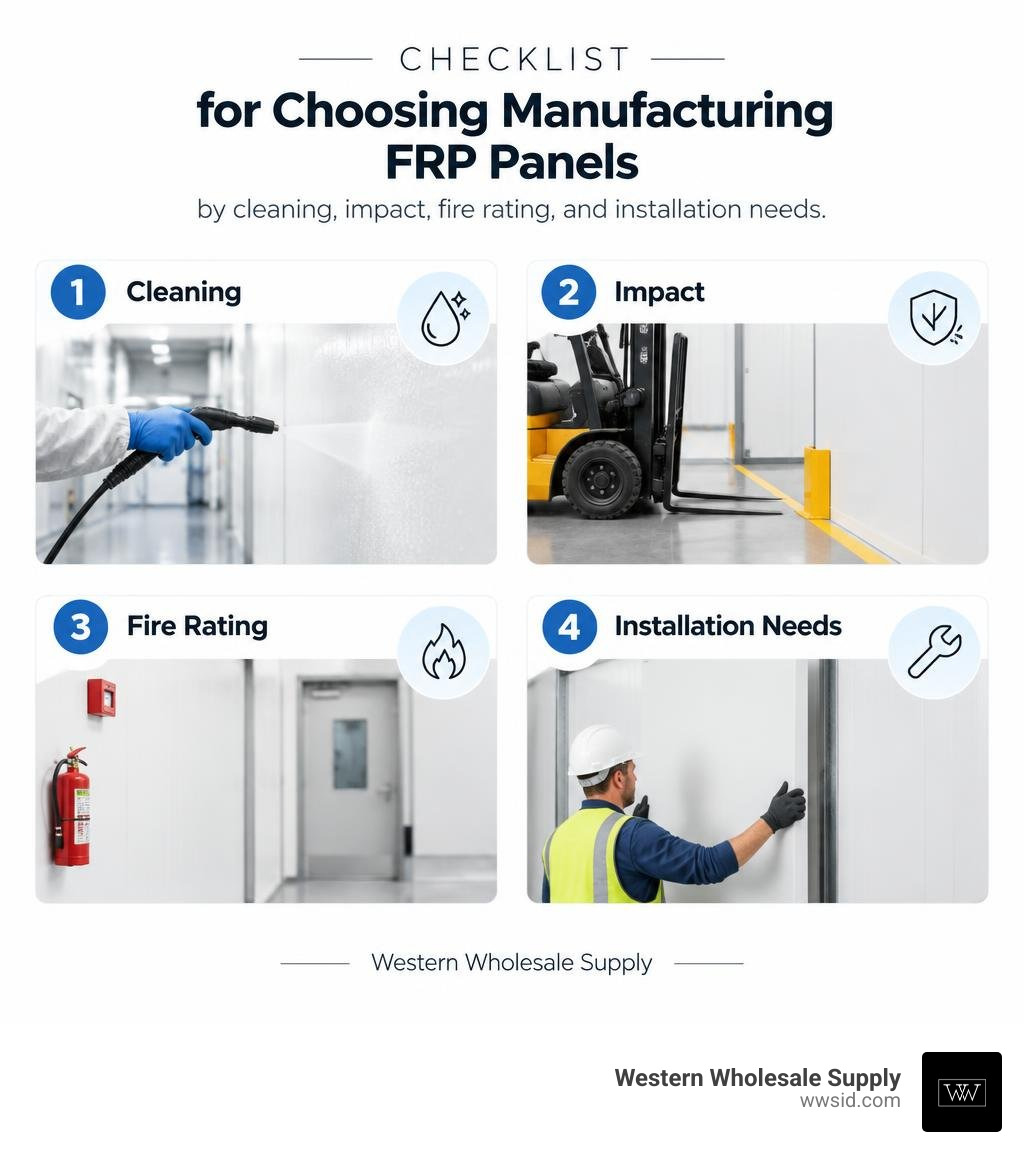
Simple frp panel for manufacturing word guide:
Core Material Properties of an FRP Panel for Manufacturing Facilities
Fiberglass Reinforced Plastic (FRP) is a composite material engineered by embedding high-strength glass fiber reinforcements into a durable thermoset polymer matrix. When manufacturing plants evaluate wall surfaces, they need materials that survive punishing operating conditions. Heavy cart impacts, continuous moisture exposure, aggressive sanitizers, and caustic washdowns will quickly degrade traditional finishes. FRP solves these problems by pairing structural rigidity with broad chemical inertness.
The mechanical integrity of high-grade FRP comes from woven roving fiberglass reinforcements. This construction yields high tensile strength and flexural modulus while keeping overall weight remarkably low. Unlike sheet metal, an industrial FRP panel for manufacturing offers non-conductive dielectric properties and zero magnetic interference. This makes it safe around sensitive electronics and automation bays. In processing plants that experience wild temperature shifts, FRP provides thermal non-conductivity that helps stabilize interior surface temperatures.
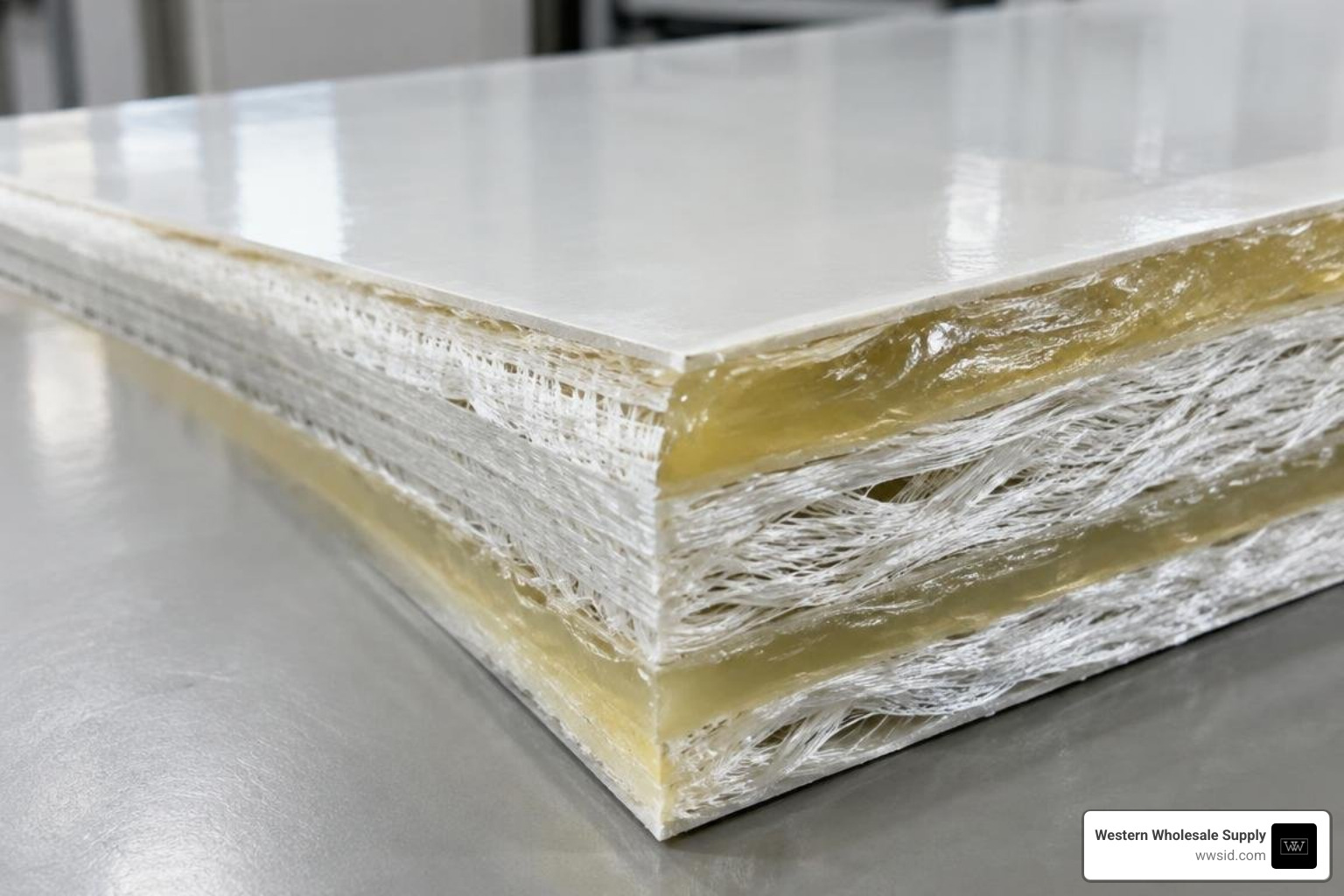
When paired with insulated warehouse envelopes—where thermal performance target benchmarks often include ceilings at R-30+ and walls at R-13+—FRP provides a protective interior shield that stops interior humidity from compromising underlying assemblies. Standard commercial sheets are manufactured in thicknesses ranging from 0.090 inches up to 0.120 inches for solid wall cladding, with heavy-duty structural profiles reaching up to 10 millimeters for dedicated process housings.
Solid vs. Sandwich Composite Core Construction
Industrial manufacturing plants typically select between solid monolithic laminates and composite sandwich panels based on structural and span requirements:
- Solid Fiberglass Laminates: Ranging from 0.090 inches (approx. 2.3 mm) to 0.25 inches (6 mm) thick, solid panels are glued directly over stable backer boards. They provide superior surface hardness, puncture resistance, and seamless hygiene in spaces like processing corridors and washdown rooms.
- Structural Sandwich Panels: These panels bond high-strength FRP exterior skins to an engineered internal core, increasing panel stiffness without adding excessive dead weight.
The core material directly dictates structural performance:
- Structural PVC Foam Cores: Utilizing a closed-cell structural PVC foam core reduces total panel weight by up to 50 percent compared to solid composite sheets of equal stiffness. These closed-cell cores limit water absorption to under 0.5 percent per ASTM D2842 testing, preventing internal rot, moisture retention, and core delamination across decades of thermal cycling.
- Polypropylene Honeycomb Cores: Honeycomb geometries provide exceptional strength-to-weight ratios and superior energy absorption against side-impact collisions from pallet jacks and rolling carts.
- Plywood Cores: Ranging in core thicknesses from 0.25 inches to 1.5 inches, fiberglass-reinforced plywood provides incredible structural holding power for direct equipment mounting.
Resin Matrix Systems and Chemical Resistance
The resin matrix binds the glass fibers together and serves as the primary barrier against chemical degradation. Specifying the correct resin chemistry prevents matrix softening, surface pitting, and structural breakdown:
- Isophthalic Polyester Resin: The industrial standard for general manufacturing and commercial utilities. It offers balanced resistance against splash exposure from mild acids, alkaline cleaning detergents, and water vapor up to 90 degrees Celsius.
- Vinyl Ester Resin: Engineered for harsh chemical processing environments, battery manufacturing, and plating plants. Vinyl ester provides exceptional resistance to concentrated mineral acids, strong oxidizers, and caustic solutions up to 130 degrees Celsius.
- Structural Epoxy Resin: Delivers maximum mechanical strength, high fatigue endurance, and tight dimensional stability. It is ideal for clean manufacturing environments, electronics manufacturing, and aerospace assembly suites.
- Phenolic Resin: Formulated specifically for extreme fire resistance, delivering low flame spread, minimal smoke toxicity, and temperature tolerance reaching 200 degrees Celsius.
High-grade industrial panels feature factory-applied, UV-stabilized polyester or vinyl ester gel coats. These non-porous surface coatings create an impenetrable, abrasion-resistant barrier that will not support fungal colonization or discolor under UV exposure.
Fire Safety Classifications and Regulatory Compliance Standards
Commercial and industrial building codes demand strict verification of surface-burning characteristics. Interior wall finishes must satisfy life safety regulations dictated by the International Building Code (IBC) and NFPA 101 Life Safety Code. Flame spread and smoke generation are evaluated through standard ASTM E84 testing (Standard Test Method for Surface Burning Characteristics of Building Materials).
Class A, B, and C Fire Ratings Explained
Under ASTM E84 criteria, interior wall panels fall into three primary fire safety classifications:
- Class A (Class I): Flame Spread Index of 0 to 25; Smoke Development Index of 0 to 450. Class A panels are mandatory in fire-rated escape corridors, stairwells, boiler rooms, furnace rooms, and high-heat manufacturing areas.
- Class B (Class II): Flame Spread Index of 26 to 75; Smoke Development Index of 0 to 450. Common in standard commercial corridors, mechanical service spaces, and light assembly environments.
- Class C (Class III): Flame Spread Index of 76 to 200; Smoke Development Index of 0 to 450. Economical and hard-wearing for general industrial storage, utility rooms, and service enclosures where building codes do not require elevated fire-resistive linings.
Selecting the proper rating during the design phase ensures your facility meets commercial inspection standards while protecting plant assets and personnel.
Selecting an FRP Panel for Manufacturing in Cleanrooms and Food Plants
Hygienic manufacturing—such as food processing, dairy bottling, pharmaceutical manufacturing, and dietary supplement production—demands wall surfaces that hold up under strict sanitation regimens. Industrial FRP panels meet these demands with certifications from the USDA/FSIS, Canadian Food Inspection Agency, and Agriculture Canada.
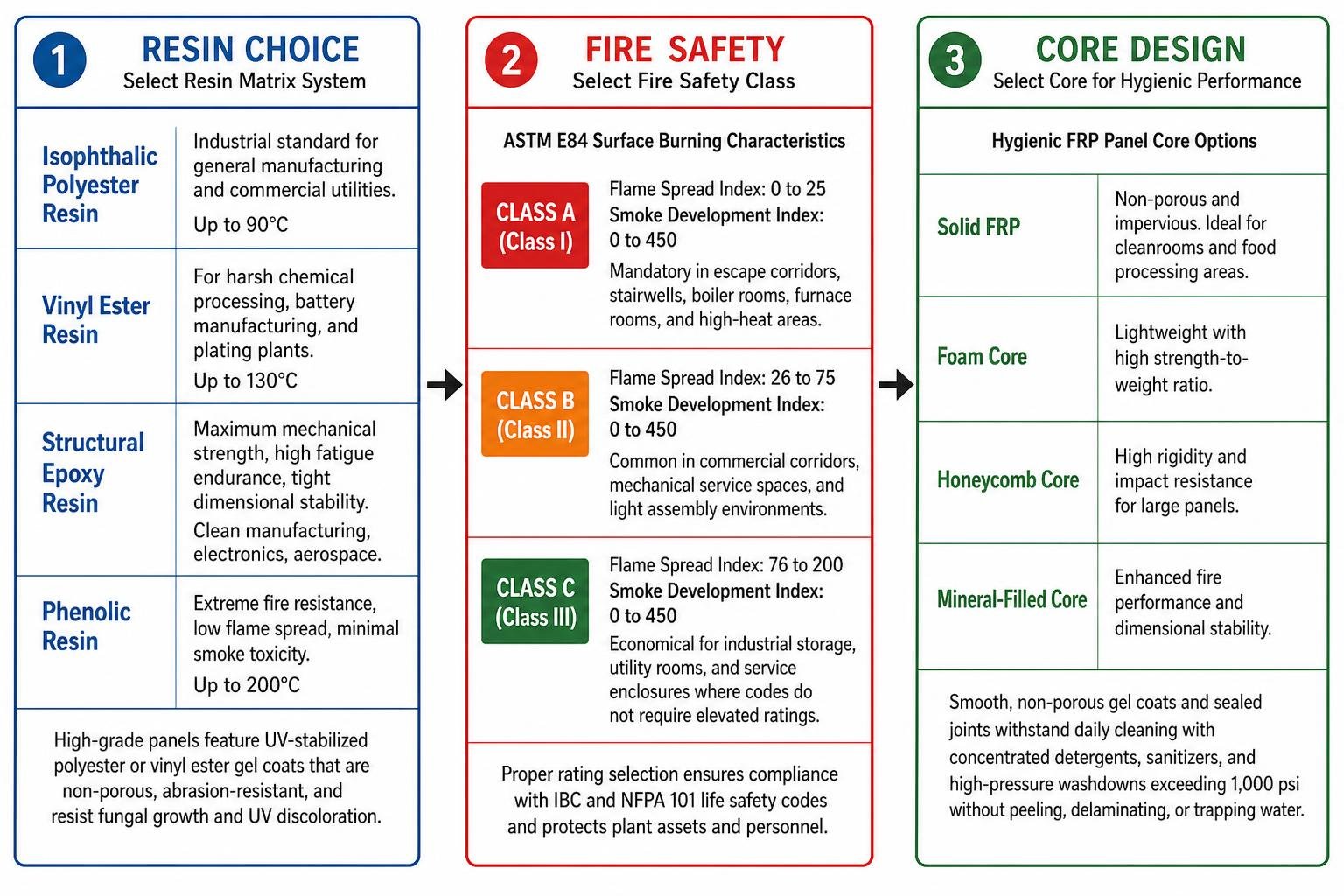
A hygienic facility benefits from particle-resistant cleanroom FRP systems that feature smooth, non-porous gel coats. These surfaces will not harbor bacteria, mold, or microbial contamination. Sealed with continuous color-matched silicone or welded joints, they withstand daily cleaning cycles using concentrated foaming detergents, quaternary sanitizers, and high-pressure hot-water washdowns exceeding 1,000 psi without peeling, delaminating, or trapping water.
Material Comparison: FRP vs. Stainless Steel, Aluminum, and Polycarbonate
Industrial facility managers frequently balance upfront material costs against long-term maintenance cycles. The following table illustrates performance differences across major industrial wall protection systems:
| Performance Metric | FRP Panels (Class A / Structural) | 304/316 Stainless Steel | Anodized Aluminum | Polycarbonate Sheet |
|---|---|---|---|---|
| Material Cost | Moderate | High to Very High | Moderate to High | Moderate |
| Corrosion Resistance | Excellent (Acids, Salts, Alkalis) | High (Vulnerable to Chlorides) | Moderate (Pits from Caustics) | Moderate (Solvent Sensitive) |
| Impact & Dent Tolerance | Exceptional (Elastic recovery) | Moderate (Dents permanently) | Low (Dents easily) | High (Scratch vulnerable) |
| Weight | Very Low | High | Low | Very Low |
| Thermal Expansion | Low to Moderate | Low | Moderate | High |
| 30-Year Lifecycle Maintenance | Minimal (Maintenance-free) | Low (Requires polish/passivation) | Moderate (Re-coating needed) | High (Surface haze/scratching) |
Understanding these trade-offs is essential when consulting the ultimate guide to fiberglass reinforced panels for commercial retrofits.
Durability, Maintenance, and Lifecycle Cost Evaluation
While painted galvannealed steel or aluminum cladding can dent or corrode within 5 to 8 years in coastal or wet processing spaces, high-density FRP panels deliver an operational service life of 30+ years with virtually zero structural maintenance.
FRP absorbs mechanical impacts from hand trucks, forklift forks, and tool carts by flexing elastically and springing back to its original shape, avoiding the permanent dents and gouges common to sheet metal.
Because the color is molded directly into the gel-coat resin matrix, scratches remain inconspicuous and won’t rust or expose bare metal to oxidation. Over a facility’s 30-year lifecycle, the total cost of ownership for FRP is significantly lower than metallic or coated drywall alternatives.
Installation Engineering: Adhesives, Mechanical Fasteners, and Expansion Tolerances
A reliable FRP wall system depends on careful surface preparation, proper adhesive selection, and correct joint engineering to handle thermal expansion.
- Substrate Preparation: FRP panels must be installed over clean, flat, dry, and structurally sound backer walls. Recommended substrates include Durock cement board, exterior-grade plywood, or cured concrete block. Durock cement board provides a stable, moisture-impervious backing ideal for wet processing areas.
- Thermal Expansion Allowances: FRP expands and contracts with ambient temperature shifts. Always maintain a minimum 1/8-inch expansion gap at all panel joints, ceiling trims, and inside corners, and a 1/4-inch gap above finished floors. Omitting expansion gaps can lead to panel bulging and joint failure.
- Trim Integration: Use matching PVC or heavy-duty aluminum division bars (H-moldings), inside corners, outside corners, and base end-caps to finish joints and maintain water-tight perimeter seals.
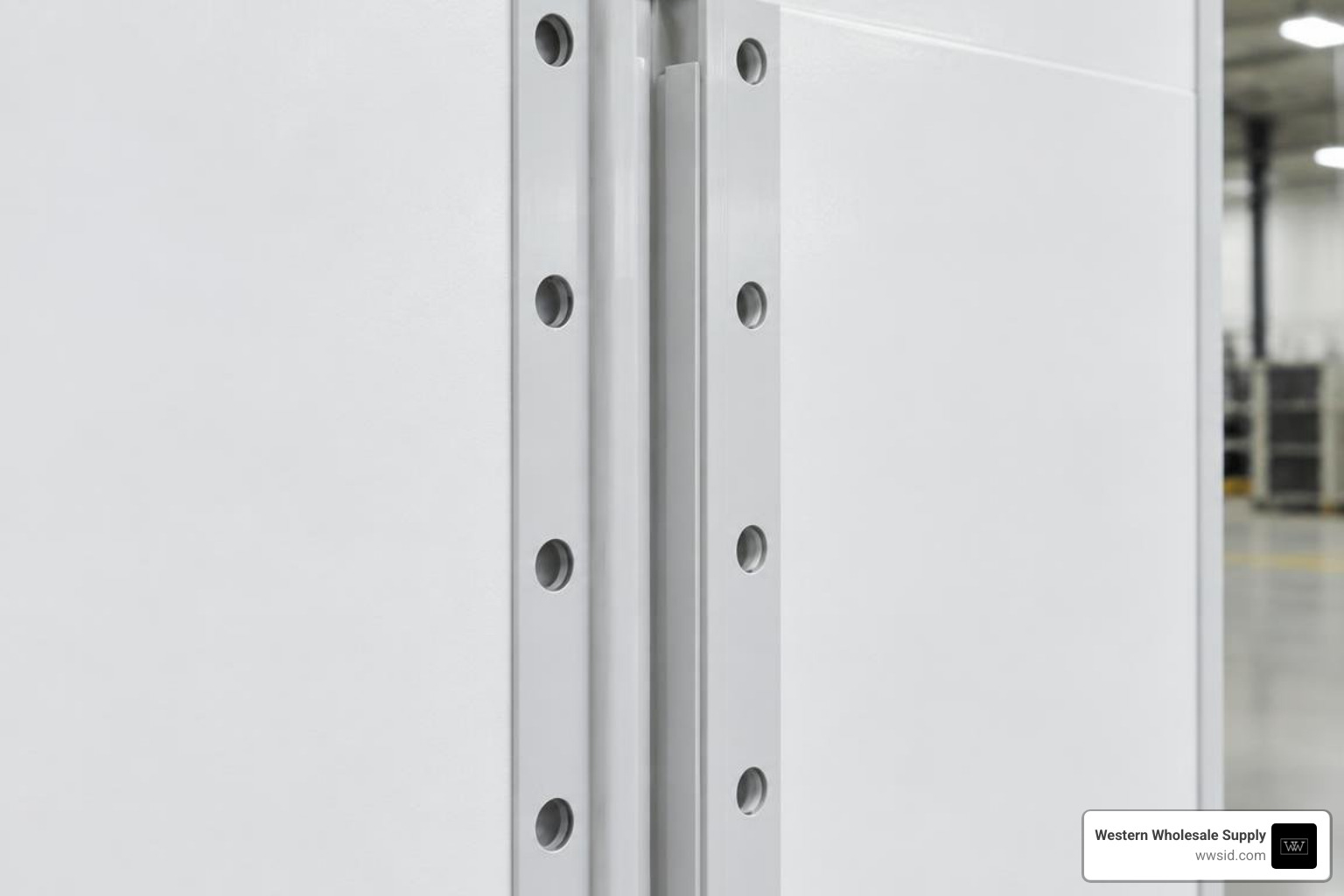
Fastening Protocols with Grabber Fasteners and Structural Adhesives
For a permanent mechanical and chemical bond, combine high-strength FRP adhesives with corrosion-resistant mechanical fasteners:
- Adhesive Application: Apply professional-grade, low-VOC moisture-cure structural adhesive across the entire panel back using a 100% coverage V-notch trowel (3/16″ wide × 1/4″ deep × 1/2″ spacing). Never install panels using spot bonding or adhesive “paddles,” as this creates hollow air pockets that trap moisture. Roll the panel firmly with an industrial laminate roller from top to bottom and center to edge.
- Mechanical Fastening: When securing panels over non-porous backings or in high-vibration equipment rooms, reinforce the adhesive with Grabber corrosion-resistant fasteners. Use non-corrosive nylon drive rivets or Grabber exterior-coated screws fitted with sealing washers.
- Pre-Drilling Clearances: Always pre-drill fastener clearance holes 1/8-inch larger than the fastener shank diameter. This allows the panel to slide freely around the fastener during thermal expansion without buckling or cracking.
Specifying an FRP Panel for Manufacturing Heavy Equipment Corridors
When developing a facility-wide fiberglass wall cladding specification, align panel surface texture with the traffic demands of the space:
- Embossed Pebble-Textured Finish: Ideal for busy loading docks, packaging lines, and high-traffic forklift corridors. The textured pebble finish scatters reflected light to hide scuffs, scratches, and minor abrasions.
- Smooth High-Gloss Gel Coat Finish: Recommended for laboratories, clean packaging bays, food processing rooms, and sterile washdown areas. Smooth surfaces eliminate crevices to make sanitation quick and comprehensive.
- Wainscot Protection Layouts: For general manufacturing plants with standard 10-to-14-foot wall heights, install heavy 0.120-inch embossed FRP wainscoting horizontally up to 4 or 8 feet from the floor—the primary impact zone—with lighter panels or moisture-resistant assemblies above.
When working in the field, read up on cutting tough FRP wall sheets using fine-tooth carbide blades to ensure clean, chatter-free cuts on every panel.
Frequently Asked Questions About Industrial FRP Panels
What is the service life of industrial FRP panels in harsh chemical environments?
In chemical processing, wastewater treatment, and marine-adjacent manufacturing plants, industrial FRP panels deliver a maintenance-free service life of 30+ years. Because the composite resin matrix is chemically inert and non-metallic, it will not rust, oxidize, pit, rot, or delaminate—even under daily contact with acids, salt brines, caustic cleaning chemicals, and high-humidity washdowns.
How do closed-cell PVC foam cores improve structural panel performance?
Structural closed-cell PVC foam cores reduce overall panel weight by up to 50 percent compared to solid composite sheets of equivalent flexural stiffness. The closed-cell structure limits water absorption to less than 0.5 percent by volume per ASTM D2842 testing. This prevents the panel from absorbing moisture, rotting, or debonding in damp or temperature-controlled rooms. The core also adds continuous thermal insulation across structural spans.
Can FRP panels meet strict USDA and cleanroom compliance standards?
Yes. Industrial-grade smooth FRP panels with high-performance gel coats are certified for cleanroom, pharmaceutical, and food-production environments, meeting strict USDA/FSIS guidelines. Their non-porous surfaces prevent bacteria, mold, and mildew growth. When paired with sealed joints, they withstand automated clean-in-place (CIP) regimens, hot caustic chemical foaming, and high-pressure spray washing up to 1,200 psi without degrading.
Conclusion
Choosing the right wall protection protects your manufacturing plant against costly structural repairs, sanitary violations, and unexpected downtime. By matching the right resin chemistry, fire rating, surface texture, and core construction to each area of your plant, you create a tough, low-maintenance wall system designed to perform for decades.
Western Wholesale Supply has supported commercial builders, plant engineers, and specialty drywall contractors since 1963. As an independent, veteran-owned, third-generation family business, we provide dependable, on-time jobsite delivery across Eastern Idaho, Western Wyoming, and neighboring industrial corridors. Our supply yards in Idaho Falls, Pocatello, Burley, Twin Falls, and Jackson are fully stocked with high-performance commercial wall systems, drywall assemblies, and grab-and-go contractor tools.
Whether you need heavy-duty structural cement backer boards like Durock, high-strength Grabber fasteners, or specialized wall systems, our team has the technical inventory to keep your project on schedule. Contact our commercial supply team today to discuss your project requirements, request material submittals, or explore our engineered commercial FRP wall systems.
