

Why Acoustic Ceiling Systems Matter More Than You Think
Acoustic ceiling systems are ceiling assemblies designed to control sound in a space — either by absorbing sound within a room, blocking it from traveling to adjacent spaces, or both.
Here’s a quick breakdown of the main types to help you compare at a glance:
| System Type | Best For | Sound Absorption (NRC) | Sound Blocking (CAC) |
|---|---|---|---|
| Drop-in tile (suspended grid) | Offices, schools, healthcare | Up to 1.00 | Up to 40+ |
| Surface-mount panels | Retrofits, low-clearance spaces | Varies by product | Moderate |
| Seamless acoustical (e.g., Ecophon FADE) | High-end commercial, monolithic look | 0.80–0.90 | 40+ |
| Wood lay-in panels | Hospitality, premium interiors | Up to 0.95 | Moderate |
| Metal/specialty panels | Retail, industrial, unique designs | Varies | Varies |
Noise is one of the most overlooked problems in commercial spaces — and one of the most fixable. Poor acoustics hurt productivity in offices, make learning harder in classrooms, and can even affect how comfortable people feel in a space. One real-world example: a high school cafeteria saw lunch participation jump 15% after installing the right acoustic ceiling and wall panels. That’s the kind of impact good sound control can have.
Whether you’re building out a medical clinic, a corporate office, or a school gymnasium, choosing the right acoustic ceiling system upfront saves rework and headaches later.
At Western Wholesale Supply, we are third-generation building materials professionals who have spent years sourcing and supplying acoustic ceiling systems for contractors across commercial and residential projects — so we’ll cut through the noise (pun intended) and give you what you actually need to make a smart decision.
Understanding Acoustic Ceiling Systems and How They Work
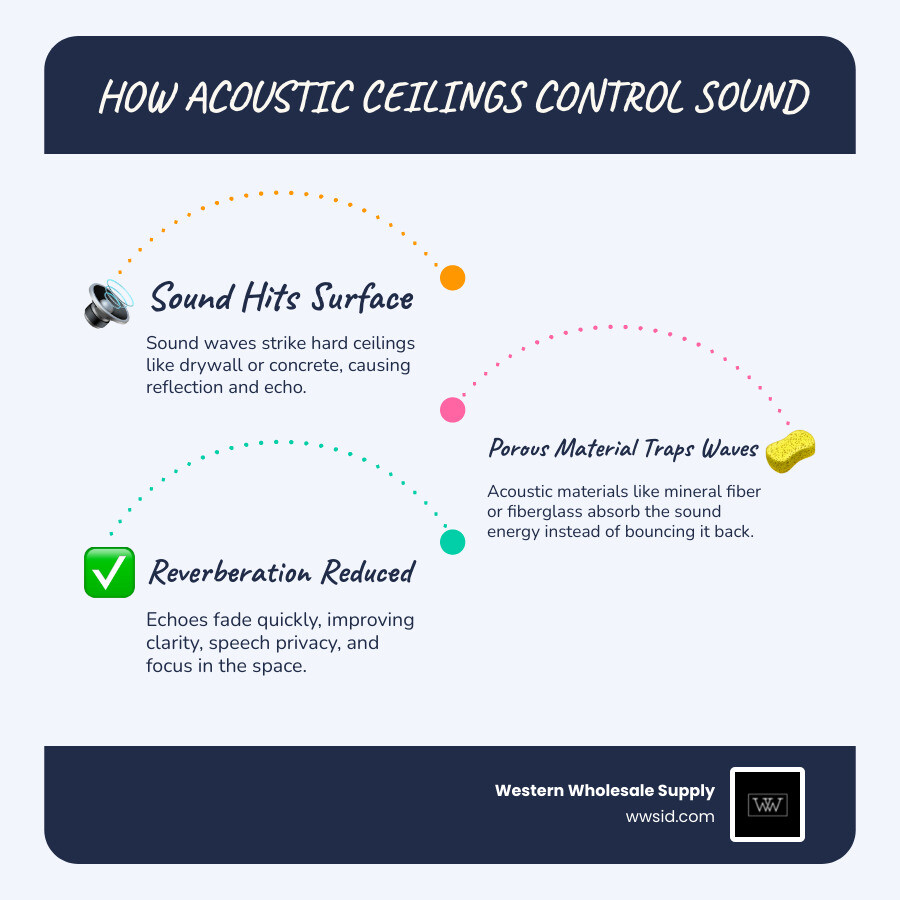
At their core, acoustic ceiling systems are functional tools used to manipulate the way sound behaves in an interior environment. When sound hits a hard surface, like a standard drywall ceiling or concrete deck, it bounces back, creating an echo. This echo increases “reverberation time,” which is just a fancy way of saying how long it takes for a sound to fade away. If the reverberation time is too high, speech becomes muddy and hard to understand.
Modern systems work by using porous materials—like mineral fiber or fiberglass—to trap those sound waves. Instead of bouncing back into the room, the energy is absorbed. This improves speech privacy and focus, making it easier to hold a conversation without the whole office hearing every word. For a deeper dive into these mechanics, check out A Comprehensive Guide To Acoustical Ceilings or learn why these systems are The Secret To A Quieter Environment.

The Science of Sound: NRC vs. CAC in Acoustic Ceiling Systems
When you’re looking at product data sheets, you’ll see two main acronyms: NRC and CAC. Understanding the difference is crucial for your sanity.
- NRC (Noise Reduction Coefficient): This measures sound absorption. It ranges from 0 to 1.0. If a tile has an NRC of 0.85, it means it absorbs 85% of the sound that hits it and reflects only 15%. High NRC is what you want in an open-plan office or a noisy restaurant to keep the “clatter” down.
- CAC (Ceiling Attenuation Class): This measures sound blocking. It tells you how well the ceiling prevents sound from traveling through the plenum (the space above the grid) into the next room. A CAC of 35 or higher is considered high performance for preventing your neighbor’s meeting from leaking into your office.
For a complete look at how these ratings impact your comfort, see our Comprehensive Guide To Acoustic Ceiling Solutions.
Material Composition and Performance
The materials used in acoustic ceiling systems dictate how they perform.
- Mineral Fiber: The workhorse of the industry. These panels are typically denser and offer excellent sound-blocking (CAC) capabilities.
- Fiberglass: These panels are often lighter and excel at sound absorption (NRC), sometimes reaching ratings of 0.90 to 1.00.
- Wood: For those looking for a premium aesthetic, Lay-in Wood Ceiling Panels from CertainTeed offer a refined upgrade. These can be perforated or grooved to achieve an NRC of up to 0.95 when used with an acoustic infill.
Comparing Types of Acoustic Ceiling Solutions
Choosing a system often comes down to a trade-off between look, cost, and accessibility.
| Feature | Drop-in (Grid) | Surface-Mount | Seamless (Monolithic) |
|---|---|---|---|
| Aesthetics | Visible grid lines | Low profile, clean | Looks like drywall |
| Accessibility | High (easy to pop tiles) | Limited | Requires access hatches |
| Installation | Fast suspended grid | Adhesive or direct-attach | Specialized plaster/spray |
While traditional drop ceilings are the standard for commercial interiors, we are seeing a shift in Commercial Interior Trends toward more integrated, high-design looks.

Seamless vs. Traditional Acoustic Ceiling Systems
For projects where you want the “quiet” without the “grid,” seamless systems are the gold standard. Products like Ecophon FADE provide a monolithic visual that looks identical to a Level 4 drywall finish but offers the acoustic performance of a high-end tile. These systems use a high-performance coreboard that is spray-applied with an acoustic plaster. It’s the perfect way to Elevate Your Projects without sacrificing the clean lines of modern architecture.
Specialty Wood and Metal Options
If you’re looking for something that makes a statement, specialty systems are the way to go. CertainTeed wood panels come in veneers like maple, oak, and cherry, and can be custom-engineered into unique shapes. Metal ceilings, on the other hand, are incredibly durable and often used in high-traffic retail or transportation hubs. You can explore these Linear Metal Ceiling Options to see how perforated patterns can blend industrial durability with sound control.
Key Benefits: Beyond Just Noise Reduction
While sound is the primary driver, acoustic ceiling systems offer several “hidden” benefits that can save you money and improve safety.
- Light Reflectance (LR): Many high-quality tiles have an LR of 0.83 to 0.87 or higher. This means they reflect more natural and artificial light back into the room, which can reduce energy costs for lighting.
- Fire Performance: Safety is paramount. Most commercial acoustic tiles are Class A fire-rated, meaning they have low flame spread and smoke development. You can learn more about Fire Rated Ceiling Solutions to ensure your building meets local codes in Idaho and Wyoming.
Sustainability and Green Building Standards
In April 2026, sustainability isn’t just a buzzword; it’s a requirement for many new builds. Many acoustic ceiling systems now feature up to 70% recycled content and are made from biobased materials. Choosing low-VOC (Volatile Organic Compound) materials ensures better indoor air quality, which is a major component of LEED and WELL building certifications. For more on eco-friendly options, refer to our Guide To Acoustic Ceiling Solutions.
Thermal Efficiency in Large Spaces
In our neck of the woods—from Jackson, WY to Twin Falls, ID—keeping heat in during the winter is a major concern, especially in large warehouses. While acoustic tiles provide some insulation, we recommend focusing on R-values for thermal efficiency. In warehouse settings, we often look for Ceilings with R-30+ and Walls with R-13+ to ensure energy savings. This thermal barrier, combined with the sound-dampening qualities of the ceiling, creates a much more comfortable working environment.
Installation and Maintenance for Long-Term Performance
A ceiling is only as good as its installation. For a standard suspended grid, the process involves installing a perimeter channel, attaching hanger wire to the structure above, and then setting the main beams and cross tees.
We always recommend using high-quality fasteners like Grabber or Brighton Best to ensure the grid stays level and secure for decades. Those Little Things That Hold It All Together are often the difference between a professional finish and a sagging mess.
Estimating Materials and Costs
Before you start, you need an accurate count. You’ll need to calculate the total square footage of the room and then account for waste—usually about 5% to 10% depending on the complexity of the room shape. Using a Ceiling Tile Calculator can help you avoid over-ordering. If you want to dive deeper into the math, we have a guide on Mastering The Grid that covers everything from main beams to perimeter trim.
Durability and Cleaning Protocols
Modern acoustic ceiling systems are built to last. Many CertainTeed products feature humidity and sag resistance, which is vital in the varying climates of Eastern Idaho and Western Montana. To keep them looking new:
- Mold/Mildew Resistance: Look for tiles with antimicrobial treatments if you are installing in high-humidity areas.
- Cleaning: Most tiles can be cleaned with a soft brush or vacuum. For healthcare settings, certain panels are designed to withstand fogging or spraying with EPA-approved disinfectants.
- Small Grid Impact: Sometimes the choice of grid—like a 9/16″ system versus a standard 15/16″—can impact both the look and the durability of the installation. Learn more about 9/16 Ceiling Systems.
Frequently Asked Questions about Acoustic Ceilings
Are acoustic ceiling tiles effective for soundproofing?
It depends on what you mean by “soundproofing.” If you want to stop an echo inside a room, yes—high NRC tiles are incredibly effective at Hushing Your Room. However, if you are trying to stop sound from leaving a room entirely, you need a system with a high CAC rating or even specialized drywall like Quietrock EZ Snap in the walls to truly isolate the space.
How do I choose the right product for a healthcare facility?
Healthcare facilities have strict sanitary standards. You should look for smooth, cleanable surfaces like CertainTeed Symphony Rx. These are designed to be water-repellent and resistant to bacteria growth while still providing excellent sound absorption to help patients rest. Explore more Acoustical Ceiling Solutions tailored for medical environments.
What is the typical cost for quality tiles?
While we don’t list specific prices here due to market fluctuations, budgeting for acoustic ceiling systems involves looking at the material grade. Basic fissured tiles are the most budget-friendly, while high-performance fiberglass or specialty wood panels sit at the premium end. Our Buyers Guide for 2026 provides a great framework for understanding how performance levels impact your overall project budget.
Conclusion
At Western Wholesale Supply, we’ve seen how the right acoustic ceiling systems can transform a chaotic, noisy room into a productive, peaceful environment. As a veteran-owned, third-generation family business, we’ve been serving Eastern Idaho, Western Wyoming, and Western Montana since 1963.
Whether you’re in Idaho Falls, Jackson, or Twin Falls, our team is dedicated to providing reliable, on-time delivery and the expert advice you need to get the job done right. From CertainTeed ceiling tiles to Grabber fasteners and Durock panels, we stock the quality materials that keep your projects on track.
Ready to find the perfect quiet for your next project? Explore our full range of Acoustical Ceilings today.
