

Why Fiberglass Ceiling Panels Belong in Your Next Project
Fiberglass ceiling panels are a category of drop ceiling tile made from glass fibers and resin binders, designed to outperform traditional mineral fiber tiles in moisture resistance, sound absorption, and long-term durability.
Quick answer — here’s what you need to know:
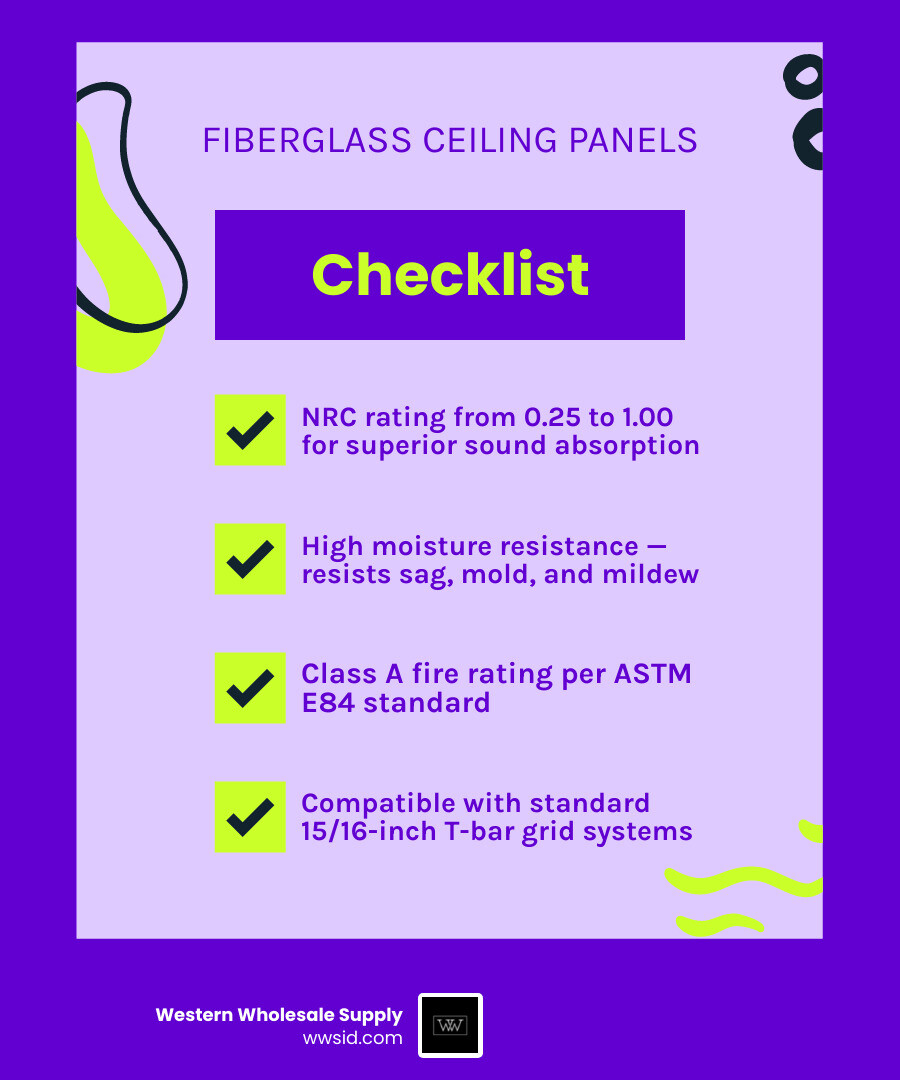
| Feature | Fiberglass Ceiling Panels |
|---|---|
| Best for | Basements, offices, kitchens, schools, home theaters |
| NRC rating | 0.25 (standard) up to 0.95–1.00 (premium) |
| Moisture resistance | High — resists sag, mold, and mildew |
| Fire rating | Class A (ASTM E84) |
| Grid compatibility | Standard 15/16-inch T-bar systems |
| Edge styles | Tegular (recessed) or flat lay-in |
| Can you paint them? | No — voids warranty and alters fire rating |
If your ceilings are crumbling, sagging, or turning into a mold magnet, fiberglass is worth a serious look. Unlike the scratchy, brittle fiberglass tiles from the 1970s, today’s panels are durable, clean-looking, and built to handle real-world conditions — including the occasional minor water leak that would completely destroy a standard mineral fiber tile.
At Western Wholesale Supply, we have helped contractors and builders across Eastern Idaho and Western Wyoming source the right fiberglass ceiling panels for everything from basement remodels to large-scale commercial upgrades. In the sections below, we’ll break down every major type, compare them head-to-head, and help you choose the right panel for your project.
Basic fiberglass ceiling panels glossary:
What Are Fiberglass Ceiling Panels?
Modern fiberglass ceiling panels represent a major leap forward in suspended ceiling technology. Instead of relying on heavy, dust-prone mineral aggregates, these panels leverage the lightweight strength of fine glass fibers. If you are looking to install a ceiling that combines clean, contemporary aesthetics with high-performance physical properties, understanding how these tiles are manufactured and styled is the first step.
At Western Wholesale Supply, we frequently recommend high-quality options from trusted manufacturers like CertainTeed. These products are engineered to provide a crisp, fabric-like or canvas-textured finish that makes any residential basement or commercial office feel brighter and more modern. To understand how these systems function in a broader building context, you can refer to A Comprehensive Guide to Acoustical Ceilings.
Composition and Core Materials of Fiberglass Ceiling Panels
The core of a fiberglass ceiling tile is composed of inorganic glass wool fibers bonded together with thermosetting resins. This substrate is highly stable and does not absorb moisture, which is the secret behind the material’s legendary sag resistance.
To complete the panel, manufacturers apply a specialized facing material over the fiberglass core. Depending on the intended application, this facing can be:
- Vinyl Facing: Highly washable, durable, and perfect for areas requiring regular cleaning.
- Fabric or Fiberglass Scrim Facing: Offers a high-end, textured, canvas-like aesthetic while remaining acoustically transparent, allowing sound waves to pass easily into the core for maximum absorption.
Because the core materials are completely inorganic, they do not provide a food source for mold or mildew. This “inherent performance” makes them a reliable choice for humid environments without requiring heavy chemical treatments.
Aesthetic Options: Tegular vs. Flat Edge
When designing a drop ceiling, the edge detail of your tiles determines the final visual pattern of your ceiling plane. Fiberglass panels generally come in two primary edge configurations:
- Flat Lay-In (Square Edge): These tiles sit flush with the ceiling grid, creating a clean, monolithic, and traditional look. They are straightforward to install and require no special perimeter detailing.
- Tegular (Recessed Edge): Tegular tiles feature a rabbeted or stepped edge that allows the face of the tile to hang slightly below the metal grid. This creates a shadowline effect, adding depth and architectural interest to the room.
Some modern products, such as certain high-performance dual-sided tiles, actually feature a tegular edge on one side and a flat edge on the other. This unique design gives contractors and DIYers incredible flexibility, allowing them to choose their preferred visual style on-site using a single inventory product.
To explore how these edge profiles interact with different grid layouts, check out our guide on Grid Ceiling Tiles Your Blueprint for Better Acoustics.
Fiberglass vs. Mineral Fiber Ceiling Tiles
Choosing between fiberglass and mineral fiber is one of the most common decisions builders face. While mineral fiber tiles remain a staple for budget-conscious commercial spaces with stable climate control, fiberglass panels are rapidly gaining ground due to their superior physical characteristics.
Here is a direct comparison of how these two materials stack up:
| Performance Characteristic | Fiberglass Ceiling Tiles | Mineral Fiber Ceiling Tiles |
|---|---|---|
| Primary Composition | Glass fibers and resin | Mineral wool, clay, perlite, and starch |
| Weight | Extremely lightweight (~4 lbs per 2×4 panel) | Heavy and rigid |
| Acoustic Absorption (NRC) | High (0.90 to 1.00 typical) | Moderate (0.50 to 0.70 typical) |
| Moisture & Sag Resistance | Excellent; unaffected by high humidity | Vulnerable; can sag or warp in high humidity |
| Durability | Flexible; does not crumble or break easily | Brittle; prone to chipped corners and dust |
| Installation Ease | Very easy to cut, handle, and fit | Brittle; requires careful handling |
For a deep dive into traditional mineral fiber options, read our A-Z Guide to Mineral Fiber Tile Options.
Weight and Handling Differences
One of the first things installers notice when handling fiberglass ceiling panels is how light they are. A standard 5/8-inch thick, 2×4 fiberglass tile weighs only about 4 pounds. In contrast, mineral fiber tiles are significantly heavier and stiffer.
This weight difference has a massive impact on the job site:
- Less Strain: Carrying cartons of fiberglass tiles up stairs or overhead during installation is far less physically demanding.
- Flexibility: Fiberglass panels are flexible and can bend slightly without snapping. This makes them much easier to slide into tight plenum spaces where clearance between the grid and the floor joists is minimal.
- Clean Cuts: Cutting fiberglass is highly efficient. You can easily score and snap the panels with a utility knife without generating the heavy, crumbly dust associated with mineral fiber.
Cost and Long-Term Value
While fiberglass ceiling tiles typically require a higher initial investment than basic mineral fiber tiles, they provide exceptional long-term value.
Mineral fiber tiles rely on starch binders that dissolve when exposed to moisture. If a roof or pipe leak occurs, a mineral fiber tile will rapidly absorb the water, sag, stain, and eventually disintegrate. This requires immediate replacement.
Fiberglass, however, is highly resilient. If a minor leak occurs, a fiberglass panel can often dry out without losing its structural integrity or sagging. Over the lifespan of a building, the dramatically lower replacement rate of fiberglass easily offsets its higher upfront cost.
Fiberglass Panels vs. FRP (Fiberglass Reinforced Plastic)

It is common to confuse acoustical fiberglass ceiling tiles with FRP (Fiberglass Reinforced Plastic) panels, but they are entirely different products designed for completely different environments.
FRP is a solid, dense, and non-porous sheet material. It is engineered for maximum impact resistance, extreme washability, and strict sanitation. For technical specifications on FRP sheets, you can view the FRP Fiberglass Sheet – Moisture and Impact Resistant Wall and Ceiling Panels.
Best Applications for FRP Panels
FRP panels are ideal for heavy-duty, high-moisture, and sanitary environments where acoustic absorption is not a priority. Common applications include:
- Commercial Kitchens and Food Processing Plants: FRP meets USDA and Agriculture Canada certifications, resisting chemical sanitizers and frequent washdowns.
- Car Washes and Public Restrooms: 100% moisture-proof and highly impact-resistant, achieving an Izod Impact Resistance rating of around 7.0 ft-lbs/in.
- Wastewater Treatment Facilities: Resistant to chemical exposure and thermal shock.
FRP panels can be adhered directly to solid wall surfaces (like plywood or gypsum) using trowel-on adhesives, or they can be dropped into a ceiling grid as heavy-duty, cleanable panels.
Best Applications for Acoustical Fiberglass Panels
Acoustical fiberglass ceiling panels, on the other hand, are designed to control sound while providing a soft, attractive visual finish. They are porous, allowing sound waves to enter the fiberglass core and dissipate. Excellent applications include:
- Residential Basements: Reclaiming vertical space with thin-profile panels while absorbing overhead floor noise.
- Corporate Offices and Open-Plan Spaces: Reducing conversational distractions and echo.
- Home Theaters and Auditoriums: Maximizing sound absorption to deliver crisp, clear audio.
Key Benefits of Fiberglass Ceiling Panels
Whether you are updating a commercial suite in Idaho Falls or finishing a basement in Jackson, WY, fiberglass ceiling panels deliver a suite of high-performance benefits that traditional materials simply cannot match.
Acoustic Performance of Fiberglass Ceiling Panels
Sound control is where fiberglass truly shines. In any busy space, controlling echo and reverberation is critical for comfort and productivity. To understand how sound-absorbing ceilings improve indoor environments, read Sound Absorbing Ceilings The Secret to a Quieter Environment.
Fiberglass panels regularly achieve Noise Reduction Coefficient (NRC) ratings of 0.90 to 1.00. An NRC of 0.95 means the panel absorbs 95% of the sound energy that strikes it, reflecting only 5% back into the room. This makes them incredibly effective in open-plan offices, call centers, and classrooms where speech clarity and noise reduction are paramount.
Moisture Resistance in High-Humidity Environments
High humidity can cause standard ceiling tiles to bow, sag, and eventually fall out of the grid. Because fiberglass is inherently moisture-resistant, it maintains its flat, clean profile even in areas with high relative humidity, such as:
- Basements: Frequently prone to dampness and seasonal humidity fluctuations.
- Commercial Kitchens: Subject to steam, heat, and moisture from cooking.
- Indoor Swimming Pools & Locker Rooms: Environments with constant, high airborne moisture levels.
Additionally, because fiberglass does not support the growth of mold or mildew, it contributes to healthier indoor air quality without the need for chemical biocide additives.
Installation Requirements and Grid Compatibility
Installing fiberglass ceiling panels is highly approachable, but achieving a professional, level finish requires matching your tiles to the correct suspension grid and planning your cuts carefully.
Grid Compatibility and T-Bar Systems
Before purchasing your tiles, you must verify the width of your ceiling grid.
- Standard Grid (15/16-inch): Most residential and commercial suspended ceilings use a standard 15/16-inch wide T-bar system. Standard fiberglass panels are designed to sit perfectly in this grid size.
- Narrow Grid (9/16-inch): Some high-end architectural ceilings use a narrow 9/16-inch grid. Standard fiberglass tiles will not fit these systems properly.
To make sure you source the correct grid components, cross-reference our Ceiling Grid Supply Your Comprehensive Guide to Components and Materials.
How to Install Fiberglass Ceiling Panels
Installing fiberglass panels in an existing grid is a straightforward DIY or professional task.
- Prep Your Tools: You will need a sharp utility knife, a straightedge, and safety glasses.
- Measure and Cut: Measure the border openings carefully. When cutting fiberglass, lay the tile face-up and use a straightedge to guide your utility knife. Score the face cleanly, then cut through the fiberglass core.
- Detailing Tegular Edges: If you are using tegular-edged tiles, you will need to cut a matching recessed lip (rabbet cut) along the cut edge of your border tiles to ensure they sit level in the grid. Take your time to ensure these border reveals match the factory-cut edges.
- Drop in the Panels: Tilt each panel slightly, slide it through the grid opening, and let it settle flat onto the T-bars.
For step-by-step guidance on the entire grid installation process, refer to Acoustic Ceiling Installation A DIYers Dream Come True.
Material Estimation and Planning
When ordering your ceiling tiles, always account for waste. Standard rooms are rarely perfectly square, meaning you will have to make border cuts along the perimeter.
- Calculate Your Square Footage: Multiply the length of the room by the width.
- Add a Waste Factor: Add 5% to 10% extra tiles to account for perimeter cuts, mistakes, and future attic stock (spare tiles kept for replacements if a localized leak occurs).
To quickly determine exactly how many tiles, main runners, and cross tees you need, use our Acoustic Ceiling Material Calculator Easiest Way to Calculate Materials.
Frequently Asked Questions about Fiberglass Ceilings
Can fiberglass ceiling panels be painted?
No, you should never paint fiberglass ceiling panels. Painting them will void the manufacturer’s warranty and can cause several serious issues:
- Acoustic Degradation: Paint seals the porous facing of the tile, preventing sound waves from entering the fiberglass core and drastically reducing its sound-absorbing performance.
- Fire Rating Impact: Most fiberglass panels carry a Class A fire rating. Applying standard paint can alter the flame-spread and smoke-development characteristics of the material.
- Warpage: The moisture in water-based paints can compromise the facing material, causing the tiles to warp or peel.
How do fiberglass panels perform in basements?
Fiberglass panels are arguably the best choice for residential basements. Basements are naturally prone to dampness, cool temperatures, and overhead noise from the main living areas.
Fiberglass panels handle basement humidity beautifully without sagging, while their high sound absorption helps dampen the sound of footsteps and voices traveling through the floor joists. Furthermore, fiberglass offers excellent thermal insulation properties, helping to keep your basement space warmer and more comfortable.
What certifications should I look for?
When selecting fiberglass tiles for commercial or residential spaces, keep an eye out for these key certifications:
- ASTM E84 Class A Fire Rating: Ensures the panels meet strict building codes for flame spread (25 or less) and smoke development (50 or less).
- Low VOC Emissions: Look for compliance with the California Department of Public Health (CDPH) Standard Method v1.2, which guarantees the tiles do not off-gas harmful chemicals into classrooms or offices.
- Recycled Content: Many modern fiberglass tiles utilize a high percentage of recycled glass, contributing to LEED green building points.
Conclusion
Fiberglass ceiling panels are a premier solution for anyone seeking a durable, sag-resistant, and highly acoustic ceiling. By understanding the differences in composition, edge profiles, and applications compared to mineral fiber and FRP, you can select the exact material needed to elevate your next project.
At Western Wholesale Supply, we’ve been serving contractors, builders, and homeowners across Eastern Idaho and Western Wyoming since 1963. As an independent, veteran-owned, third-generation family business, we pride ourselves on providing exceptional customer service and reliable, on-time delivery. From our locations in Idaho Falls, Pocatello, Jackson, and beyond, we supply top-tier drywall, steel framing, high-performance insulation, and premium acoustical ceilings.
Ready to find the perfect ceiling solution? Elevate Your Projects Discover Western Wholesale Supplys Acoustical Ceiling Solutions or stop by one of our showrooms today to discuss your project with our experienced team.
